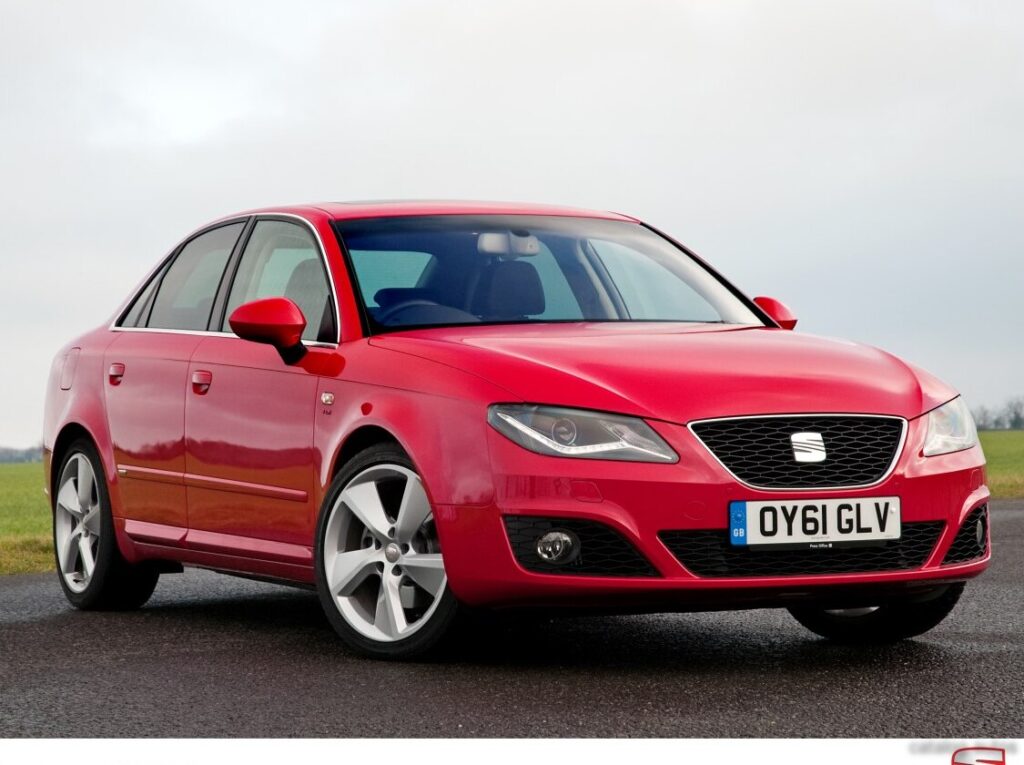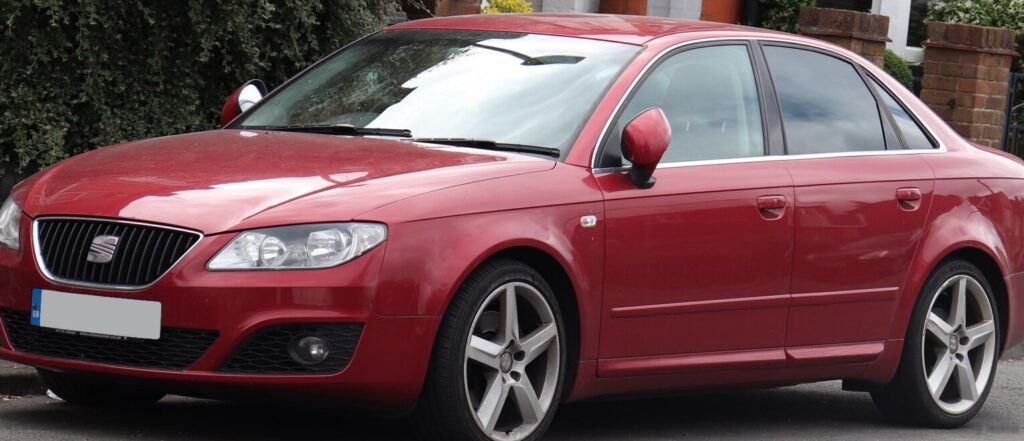
The Seat Exeo 1.6, producing 102 horsepower, was a variant of the Exeo executive car produced by the Spanish manufacturer Seat between June 2009 and September 2010. Positioned as the entry-level model in the Exeo range, it aimed to offer a more affordable option within a segment traditionally dominated by German manufacturers. The Exeo itself was a significant vehicle for Seat, representing an attempt to move upmarket and compete directly with cars like the Audi A4, BMW 3 Series, and Mercedes-Benz C-Class. It was based on the B7 generation Audi A4 (internally known as the 1HX0/A3 platform), a result of Seat’s ownership under the Volkswagen Group. This 1.6-liter engine and manual transmission combination was intended to appeal to buyers prioritizing fuel efficiency and lower running costs over outright performance.
Technical Specifications
| Brand | Seat |
| Model | Exeo |
| Generation | Exeo |
| Type (Engine) | 1.6 (102 Hp) |
| Start of production | June, 2009 |
| End of production | September, 2010 |
| Powertrain Architecture | Internal Combustion engine |
| Body type | Sedan |
| Seats | 5 |
| Doors | 4 |
| Fuel consumption (urban) | 10.6 l/100 km (22.2 US mpg, 26.6 UK mpg, 9.4 km/l) |
| Fuel consumption (extra urban) | 5.8 l/100 km (40.6 US mpg, 48.7 UK mpg, 17.2 km/l) |
| Fuel consumption (combined) | 7.5 l/100 km (31.4 US mpg, 37.7 UK mpg, 13.3 km/l) |
| Fuel Type | Petrol (Gasoline) |
| Acceleration 0 – 100 km/h | 12.6 sec |
| Acceleration 0 – 62 mph | 12.6 sec |
| Acceleration 0 – 60 mph | 12 sec |
| Maximum speed | 190 km/h (118.06 mph) |
| Emission standard | Euro 5 |
| Weight-to-power ratio | 12.8 kg/Hp, 77.9 Hp/tonne |
| Weight-to-torque ratio | 8.9 kg/Nm, 113 Nm/tonne |
| Power | 102 Hp @ 5600 rpm |
| Power per litre | 63.9 Hp/l |
| Torque | 148 Nm @ 3800 rpm (109.16 lb.-ft. @ 3800 rpm) |
| Engine layout | Front, Longitudinal |
| Engine Model/Code | ALZ |
| Engine displacement | 1595 cm3 (97.33 cu. in.) |
| Number of cylinders | 4 |
| Engine configuration | Inline |
| Cylinder Bore | 81 mm (3.19 in.) |
| Piston Stroke | 77.4 mm (3.05 in.) |
| Compression ratio | 10.5:1 |
| Number of valves per cylinder | 2 |
| Fuel injection system | Multi-port manifold injection |
| Engine aspiration | Naturally aspirated engine |
| Valvetrain | OHC |
| Engine oil capacity | 3.6 l (3.8 US qt | 3.17 UK qt) |
| Kerb Weight | 1310 kg (2888.06 lbs.) |
| Max. weight | 1870 kg (4122.64 lbs.) |
| Max load | 560 kg (1234.59 lbs.) |
| Trunk (boot) space – minimum | 460 l (16.24 cu. ft.) |
| Fuel tank capacity | 70 l (18.49 US gal | 15.4 UK gal) |
| Length | 4661 mm (183.5 in.) |
| Width | 1772 mm (69.76 in.) |
| Height | 1430 mm (56.3 in.) |
| Wheelbase | 2642 mm (104.02 in.) |
| Front track | 1522 mm (59.92 in.) |
| Rear (Back) track | 1523 mm (59.96 in.) |
| Minimum turning circle | 11.2 m (36.75 ft.) |
| Drivetrain Architecture | The Internal combustion engine (ICE) drives the front wheels of the vehicle. |
| Drive wheel | Front wheel drive |
| Number of gears and type of gearbox | 6 gears, manual transmission |
| Front suspension | Independent, type McPherson with coil spring and anti-roll bar |
| Front brakes | Ventilated discs |
| Rear brakes | Disc |
| Assisting systems | ABS (Anti-lock braking system) |
| Steering type | Steering rack and pinion |
| Power steering | Hydraulic Steering |
| Tires size | 205/55 R16; 225/45 R17; 225/40 R18 |
| Wheel rims size | 7J x 16 ET45; 7.5J x 17 ET42; 8J x 18 ET42 |
Powertrain & Engine Architecture
The Seat Exeo 1.6 was powered by the ALZ engine code, a 1.6-liter inline-four cylinder petrol engine. This engine was part of the Volkswagen Group’s EA827 family, known for its relatively simple design and durability. It featured a multi-point fuel injection system, delivering fuel directly into the intake ports. The engine utilized a single overhead camshaft (OHC) valvetrain, operating two valves per cylinder. The 102 horsepower output was achieved at 5600 rpm, while peak torque of 148 Nm (109 lb-ft) was delivered at 3800 rpm. The engine was mounted longitudinally in the front of the vehicle, driving the front wheels through a six-speed manual transmission. This transmission was chosen to maximize fuel efficiency and provide a reasonable driving experience for the target market.
Driving Characteristics
The 1.6-liter Exeo offered a comfortable, but not particularly sporty, driving experience. Acceleration from 0-60 mph took around 12 seconds, and top speed was limited to 190 km/h (118 mph). Compared to the more powerful 2.0 TDI and 1.8 TSI variants, the 1.6 felt noticeably slower, especially when fully loaded or tackling inclines. The six-speed manual transmission helped to keep the engine in its optimal power band, but required frequent shifting to maintain momentum. The gear ratios were tuned for fuel economy rather than outright performance. Steering was light and precise, making it easy to maneuver in urban environments. The suspension provided a comfortable ride, absorbing bumps and imperfections in the road surface effectively.
Equipment & Trim Levels
The Exeo 1.6 typically came with a reasonable level of standard equipment, reflecting its position as an entry-level model. Standard features included air conditioning, electric front windows, central locking, and an audio system with CD player. Safety features such as ABS, traction control, and front airbags were also standard. Interior upholstery was typically cloth, and the dashboard featured a straightforward design with easy-to-use controls. Optional extras included alloy wheels, rear parking sensors, a sunroof, and upgraded audio systems. Higher trim levels, such as the Stylance and Sport, added features like leather upholstery, automatic climate control, and sports suspension.
Chassis & Braking
The Exeo 1.6 utilized a McPherson strut front suspension setup with coil springs and an anti-roll bar. The rear suspension employed a multi-link system, providing a good balance between ride comfort and handling. Braking duties were handled by ventilated discs at the front and solid discs at the rear. ABS (Anti-lock Braking System) was standard, enhancing braking performance and stability. The Exeo’s chassis was derived from the Audi A4, providing a solid and well-engineered foundation. The weight distribution was relatively balanced, contributing to predictable handling characteristics.
Market Reception & Comparison
The Seat Exeo 1.6 received mixed reviews from automotive critics. While praised for its comfortable ride, spacious interior, and good value for money, it was often criticized for its lack of performance and somewhat bland styling. Compared to the 2.0 TDI and 1.8 TSI variants, the 1.6 offered significantly lower fuel economy and slower acceleration. However, it was more affordable to purchase and maintain. The 1.6 appealed to buyers who prioritized practicality and fuel efficiency over driving excitement. It competed with other entry-level executive cars, such as the Ford Mondeo and Vauxhall/Opel Insignia.
Legacy
The Seat Exeo, including the 1.6 variant, was discontinued in 2010 due to poor sales. However, the ALZ 1.6-liter engine proved to be relatively reliable, and examples are still found on the used car market today. Common issues are generally limited to routine maintenance items, such as timing belt replacement and oil leaks. The Exeo 1.6 remains an affordable option for buyers seeking a comfortable and practical executive car, but potential buyers should be aware of its limited performance and the age-related issues common to older vehicles. Its legacy lies in being Seat’s attempt to establish itself in a more competitive segment, paving the way for future models like the Leon and Ateca.