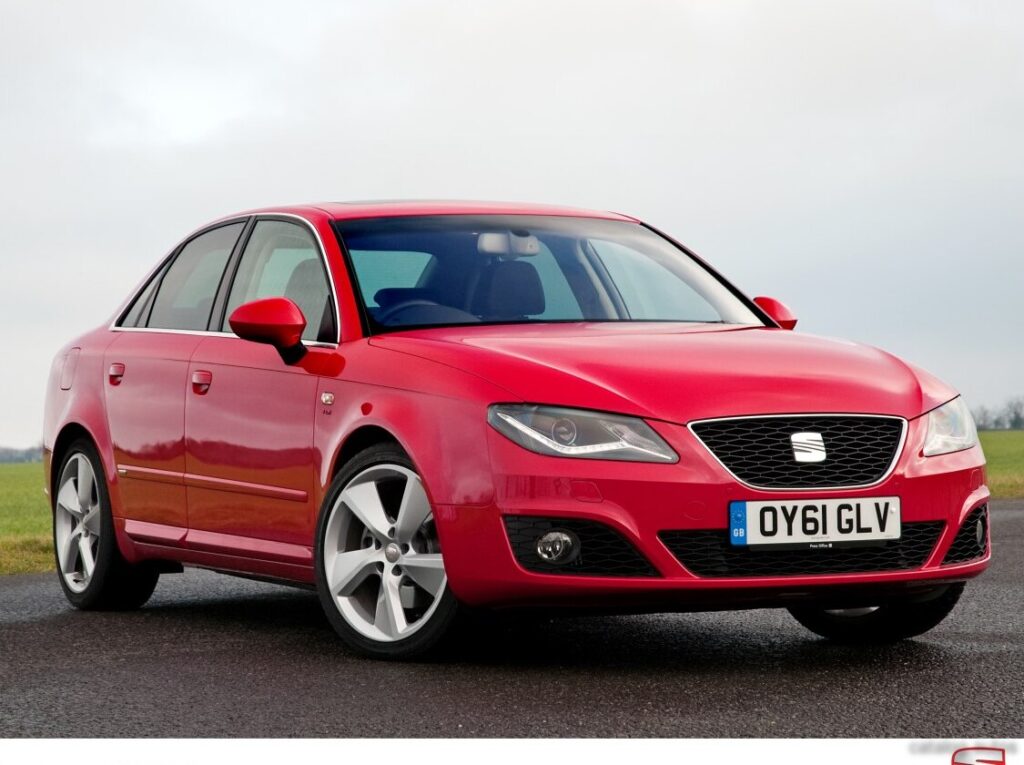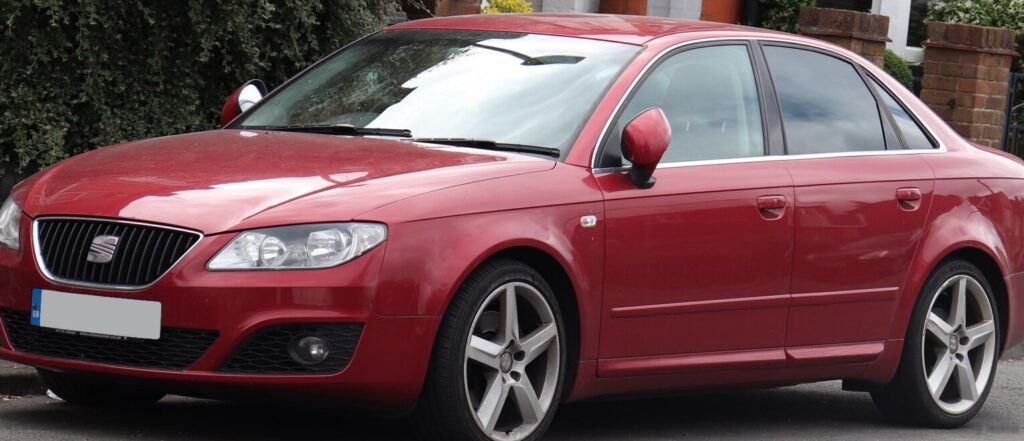
The Seat Exeo 1.8 TSI (160 hp) was a four-door, five-seat sedan produced by the Spanish automaker Seat between May 2010 and September 2011. Positioned as a mid-range offering within the Exeo lineup, it represented a blend of performance and efficiency aimed at buyers seeking a comfortable and reasonably sporty executive car. The Exeo itself was a significant model for Seat, representing their entry into a segment previously dominated by German manufacturers. It was based on the B7 generation Audi A4 (internally known as the 1HX0/A3 platform), a result of Seat’s ownership under the Volkswagen Group. This variant, with its 1.8-liter turbocharged engine, offered a compelling alternative to the diesel options and the more powerful 2.0 TSI models.
Technical Specifications
| Brand | Seat |
| Model | Exeo |
| Generation | Exeo |
| Type (Engine) | 1.8 TSI (160 Hp) |
| Start of production | May, 2010 |
| End of production | September, 2011 |
| Powertrain Architecture | Internal Combustion engine |
| Body type | Sedan |
| Seats | 5 |
| Doors | 4 |
| Fuel consumption (urban) | 10.2 l/100 km (23.1 US mpg, 27.7 UK mpg, 9.8 km/l) |
| Fuel consumption (extra urban) | 5.6 l/100 km (42 US mpg, 50.4 UK mpg, 17.9 km/l) |
| Fuel consumption (combined) | 7.3 l/100 km (32.2 US mpg, 38.7 UK mpg, 13.7 km/l) |
| Fuel Type | Petrol (Gasoline) |
| Acceleration 0 – 100 km/h | 8.6 sec |
| Acceleration 0 – 62 mph | 8.6 sec |
| Acceleration 0 – 60 mph | 8.2 sec |
| Maximum speed | 225 km/h (139.81 mph) |
| Emission standard | Euro 5 |
| Weight-to-power ratio | 9.3 kg/Hp, 107 Hp/tonne |
| Weight-to-torque ratio | 6 kg/Nm, 167.2 Nm/tonne |
| Power | 160 Hp @ 4500-6200 rpm |
| Power per litre | 89 Hp/l |
| Torque | 250 Nm @ 1500-4500 rpm (184.39 lb.-ft. @ 1500-4500 rpm) |
| Engine layout | Front, Longitudinal |
| Engine Model/Code | CDHB |
| Engine displacement | 1798 cm3 (109.72 cu. in.) |
| Number of cylinders | 4 |
| Engine configuration | Inline |
| Cylinder Bore | 82.5 mm (3.25 in.) |
| Piston Stroke | 84.2 mm (3.31 in.) |
| Compression ratio | 9.6:1 |
| Number of valves per cylinder | 4 |
| Fuel injection system | Direct injection |
| Engine aspiration | Turbocharger, Intercooler |
| Engine oil capacity | 4.6 l (4.86 US qt | 4.05 UK qt) |
| Kerb Weight | 1495 kg (3295.91 lbs.) |
| Max. weight | 1980 kg (4365.15 lbs.) |
| Max load | 485 kg (1069.24 lbs.) |
| Trunk (boot) space – minimum | 460 l (16.24 cu. ft.) |
| Fuel tank capacity | 70 l (18.49 US gal | 15.4 UK gal) |
| Length | 4661 mm (183.5 in.) |
| Width | 1772 mm (69.76 in.) |
| Height | 1430 mm (56.3 in.) |
| Wheelbase | 2642 mm (104.02 in.) |
| Front track | 1522 mm (59.92 in.) |
| Rear (Back) track | 1523 mm (59.96 in.) |
| Minimum turning circle | 11.2 m (36.75 ft.) |
| Drivetrain Architecture | The Internal combustion engine (ICE) drives the front wheels of the vehicle. |
| Drive wheel | Front wheel drive |
| Number of gears and type of gearbox | 6 gears, manual transmission |
| Front suspension | Independent multi-link suspension |
| Rear suspension | Independent on trapezoidal lever |
| Front brakes | Ventilated discs |
| Rear brakes | Disc |
| Assisting systems | ABS (Anti-lock braking system) |
| Steering type | Steering rack and pinion |
| Power steering | Electric Steering |
| Tires size | 205/55 R16 |
| Wheel rims size | 7J x 16 |
Powertrain & Engine Architecture
The heart of the Exeo 1.8 TSI was the CDHB engine, a 1.8-liter inline-four cylinder gasoline engine equipped with a turbocharger and direct fuel injection. This engine was part of Volkswagen Group’s EA888 family, known for its robust design and tunability. Direct injection allowed for precise fuel delivery, improving both power and fuel efficiency. The turbocharger, coupled with an intercooler, boosted power output significantly. The engine produced 160 horsepower at 4500-6200 rpm and 250 Nm (184 lb-ft) of torque between 1500-4500 rpm. The six-speed manual transmission was standard, offering a good balance between fuel economy and driver engagement. The engine’s longitudinal mounting was a carryover from the Audi A4 platform, influencing the drivetrain layout.
Driving Characteristics
The 1.8 TSI Exeo offered a noticeably more spirited driving experience than the base diesel models. While not a performance car in the truest sense, the turbocharger provided a good surge of power for overtaking and highway cruising. The six-speed manual transmission allowed drivers to keep the engine in its optimal power band. Acceleration from 0-60 mph took around 8.2 seconds, and the car had a top speed of 139.81 mph. Compared to the 2.0 TSI variants, the 1.8 TSI felt less urgent, but it offered a more manageable power delivery and better fuel economy. The gear ratios were tuned for a balance of acceleration and fuel efficiency, with a relatively long sixth gear for comfortable highway driving.
Equipment & Trim Levels
The 1.8 TSI trim typically included standard features such as air conditioning, power windows, power mirrors, a CD stereo system, and alloy wheels. Higher trim levels, such as the Sport and Stylance, added features like automatic climate control, a multi-function steering wheel, upgraded upholstery, and parking sensors. Optional extras included a sunroof, leather seats, a navigation system, and a premium sound system. Interior upholstery was typically cloth on the base models, with leather available as an upgrade. The dashboard layout was functional and well-built, reflecting the Audi A4 origins of the platform.
Chassis & Braking
The Exeo utilized a fully independent suspension system, with a multi-link setup at the front and a trapezoidal lever arrangement at the rear. This provided a comfortable ride and good handling characteristics. The front brakes were ventilated discs, while the rear brakes were solid discs. Anti-lock Braking System (ABS) was standard. The suspension was tuned to provide a balance between comfort and handling, leaning towards the comfort side for a more refined driving experience. Stabilizer bars were fitted front and rear to reduce body roll during cornering.
Market Reception & Comparison
The Seat Exeo 1.8 TSI was generally well-received by automotive critics. It was praised for its comfortable ride, good handling, and efficient engine. However, some critics noted that it lacked the brand cachet of its German rivals. Compared to the 2.0 TSI models, the 1.8 TSI offered a more affordable entry point into the Exeo range, with lower running costs. Fuel economy was a strong point, with combined figures around 32.2 US mpg. Reliability was generally good, benefiting from the proven technology of the Volkswagen Group. The 1.8 TSI was often seen as a sensible choice for buyers who prioritized fuel efficiency and comfort over outright performance.
Legacy
The Seat Exeo, while short-lived, represented a bold attempt by Seat to compete in the executive car segment. The 1.8 TSI engine proved to be a reliable and efficient powerplant, and examples continue to be found on the used car market today. The EA888 engine family has continued to be developed and refined by the Volkswagen Group, and remains a popular choice in a wide range of vehicles. While the Exeo itself is no longer in production, it remains a testament to Seat’s engineering capabilities and its ambition to create a truly competitive executive car.