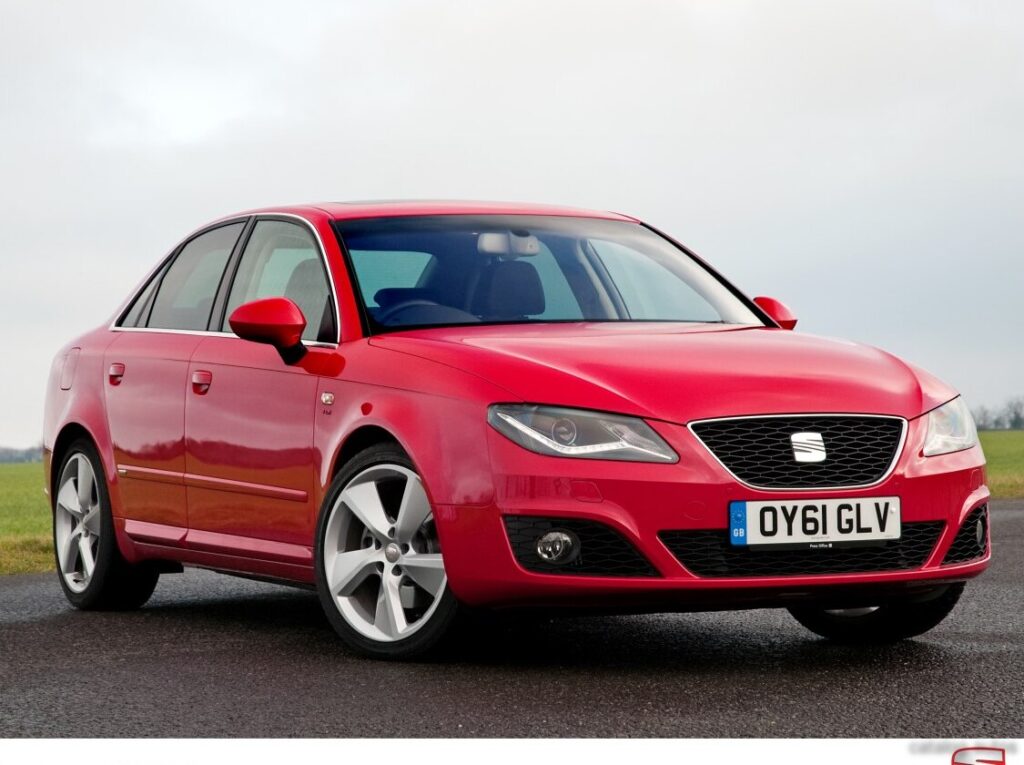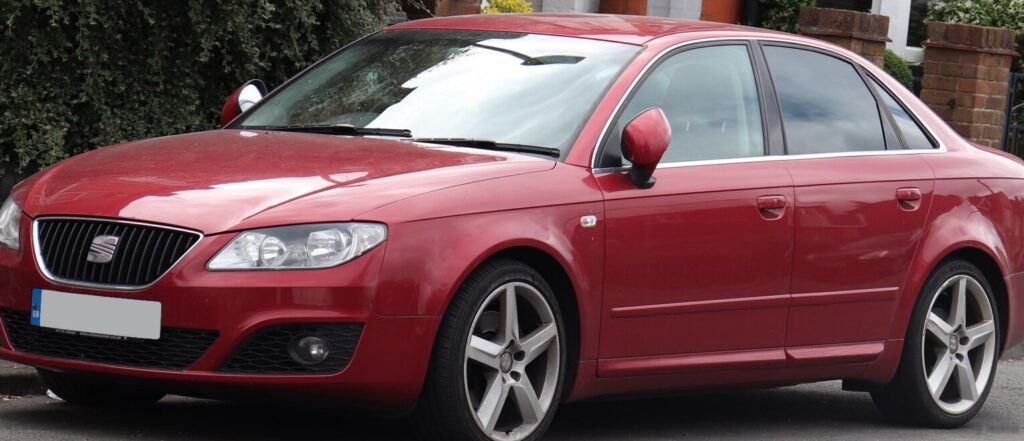
The SEAT Exeo 2.0 TDI with 143 horsepower, produced between December 2008 and September 2011, represented a significant offering in the mid-size executive car segment for the Spanish automaker. Built on the Volkswagen Group’s B7 (Typ 4A) platform – shared with the Audi A4 and Škoda Superb of the same era – the Exeo aimed to provide a more premium experience than SEAT had traditionally offered. This particular 2.0 TDI variant, equipped with a diesel particulate filter (DPF), was positioned as a balance between performance, fuel efficiency, and cost within the Exeo lineup, appealing to drivers seeking a refined and economical saloon.
Technical Specifications
| Brand | Seat |
| Model | Exeo |
| Generation | Exeo |
| Type (Engine) | 2.0 TDI (143 Hp) DPF |
| Start of production | December, 2008 |
| End of production | September, 2011 |
| Powertrain Architecture | Internal Combustion engine |
| Body type | Sedan |
| Seats | 5 |
| Doors | 4 |
| Fuel consumption (urban) | 7.6 l/100 km (30.9 US mpg, 37.2 UK mpg, 13.2 km/l) |
| Fuel consumption (extra urban) | 4.3 l/100 km (54.7 US mpg, 65.7 UK mpg, 23.3 km/l) |
| Fuel consumption (combined) | 5.5 l/100 km (42.8 US mpg, 51.4 UK mpg, 18.2 km/l) |
| Fuel Type | Diesel |
| Acceleration 0 – 100 km/h | 9.2 sec |
| Acceleration 0 – 62 mph | 9.2 sec |
| Acceleration 0 – 60 mph | 8.7 sec |
| Maximum speed | 214 km/h (132.97 mph) |
| Emission standard | Euro 5 |
| Weight-to-power ratio | 10 kg/Hp, 100 Hp/tonne |
| Weight-to-torque ratio | 4.5 kg/Nm, 223.8 Nm/tonne |
| Power | 143 Hp @ 4000 rpm |
| Power per litre | 72.7 Hp/l |
| Torque | 320 Nm @ 2500 rpm (236.02 lb.-ft. @ 2500 rpm) |
| Engine layout | Front, Longitudinal |
| Engine Model/Code | CAGA, CJCA |
| Engine displacement | 1968 cm3 (120.09 cu. in.) |
| Number of cylinders | 4 |
| Engine configuration | Inline |
| Cylinder Bore | 81 mm (3.19 in.) |
| Piston Stroke | 95.5 mm (3.76 in.) |
| Compression ratio | 16.5:1 |
| Number of valves per cylinder | 2 |
| Fuel injection system | Diesel Commonrail |
| Engine aspiration | Turbocharger, Intercooler |
| Valvetrain | OHC |
| Engine oil capacity | 4.3 l (4.54 US qt | 3.78 UK qt) |
| Coolant | 8 l (8.45 US qt | 7.04 UK qt) |
| Kerb Weight | 1430 kg (3152.61 lbs.) |
| Max. weight | 1990 kg (4387.2 lbs.) |
| Max load | 560 kg (1234.59 lbs.) |
| Trunk (boot) space – minimum | 460 l (16.24 cu. ft.) |
| Fuel tank capacity | 70 l (18.49 US gal | 15.4 UK gal) |
| Length | 4661 mm (183.5 in.) |
| Width | 1772 mm (69.76 in.) |
| Height | 1430 mm (56.3 in.) |
| Wheelbase | 2642 mm (104.02 in.) |
| Front track | 1522 mm (59.92 in.) |
| Rear (Back) track | 1523 mm (59.96 in.) |
| Minimum turning circle | 11.2 m (36.75 ft.) |
| Drivetrain Architecture | The Internal combustion engine (ICE) drives the front wheels of the vehicle. |
| Drive wheel | Front wheel drive |
| Number of gears | 6 gears, manual transmission |
| Front suspension | Independent, type McPherson with coil spring and anti-roll bar |
| Front brakes | Ventilated discs |
| Rear brakes | Disc |
| Assisting systems | ABS (Anti-lock braking system) |
| Steering type | Steering rack and pinion |
| Power steering | Hydraulic Steering |
| Tires size | 205/55 R16; 225/45 R17; 225/40 R18 |
| Wheel rims size | 7J x 16 ET45; 7.5J x 17 ET42; 8J x 18 ET42 |
Powertrain & Engine Architecture
The heart of the Exeo 2.0 TDI was the Volkswagen Group’s common rail direct injection diesel engine, specifically the CAGA or CJCA engine codes. These 1968cc, four-cylinder engines featured a turbocharger with an intercooler to boost power and efficiency. The common rail system, operating at extremely high pressures, allowed for precise fuel delivery and optimized combustion. The engine utilized an overhead camshaft (OHC) valvetrain with two valves per cylinder. The DPF was a crucial component, reducing particulate matter emissions to meet stringent Euro 5 standards. The 6-speed manual transmission was standard, providing a good balance between fuel economy and driver control. The engine’s longitudinal mounting allowed for a more balanced weight distribution, contributing to improved handling.
Driving Characteristics
The 143 hp 2.0 TDI offered a respectable level of performance for everyday driving. Acceleration from 0-60 mph took around 8.7 seconds, and it could reach a top speed of 133 mph. While not a sports car, the engine provided ample torque – 320 Nm (236 lb-ft) – from as low as 2500 rpm, making it easy to overtake and maintain highway speeds. Compared to the more powerful 170 hp TDI variant, the 143 hp version felt less strained during acceleration, but lacked the outright punch of its sibling. The manual transmission’s gear ratios were well-chosen for both fuel efficiency and responsiveness. The Exeo’s ride quality was generally comfortable, absorbing bumps and imperfections in the road well.
Equipment & Trim Levels
The Exeo 2.0 TDI typically came with a reasonable level of standard equipment, including air conditioning, electric front windows, central locking, and an audio system. Higher trim levels, such as the Sport and Stylance, added features like alloy wheels, climate control, a multi-function steering wheel, and upgraded upholstery. Optional extras included a sunroof, leather seats, and a navigation system. Interior materials were generally of good quality, reflecting the Exeo’s positioning as a more premium offering. The dashboard layout was functional and easy to use, with clear instrumentation.
Chassis & Braking
The Exeo’s chassis featured independent suspension at the front, utilizing McPherson struts with coil springs and an anti-roll bar. The rear suspension employed a multi-link setup, providing a comfortable ride and good handling characteristics. Front brakes were ventilated discs, while rear brakes were solid discs. Anti-lock Braking System (ABS) was standard. The Exeo’s steering was hydraulic, offering a good balance between weight and responsiveness. The suspension was tuned to provide a comfortable ride without sacrificing handling precision.
Market Reception & Comparison
The SEAT Exeo was generally well-received by automotive critics, who praised its comfortable ride, spacious interior, and competitive pricing. However, it was often criticized for its somewhat bland styling and lack of brand recognition compared to its Audi and Volkswagen counterparts. The 2.0 TDI 143 hp variant was seen as a sensible choice for drivers prioritizing fuel economy and practicality. Compared to the 170 hp TDI, it offered similar fuel efficiency with a slightly lower purchase price. The 1.8-liter TSI petrol engine was also available, but the TDI variants were more popular due to their superior fuel economy and torque.
Legacy
The SEAT Exeo was discontinued in 2011, with SEAT opting to focus on more mainstream models. However, the Exeo remains a relatively reliable and affordable used car option. The 2.0 TDI engine, in particular, is known for its durability and longevity, provided it has been properly maintained. The DPF can be a potential source of issues if the vehicle has been primarily used for short journeys, but regular servicing and the use of quality diesel fuel can help to prevent problems. Today, the Exeo 2.0 TDI represents a good value proposition for buyers seeking a comfortable, economical, and well-equipped mid-size saloon.