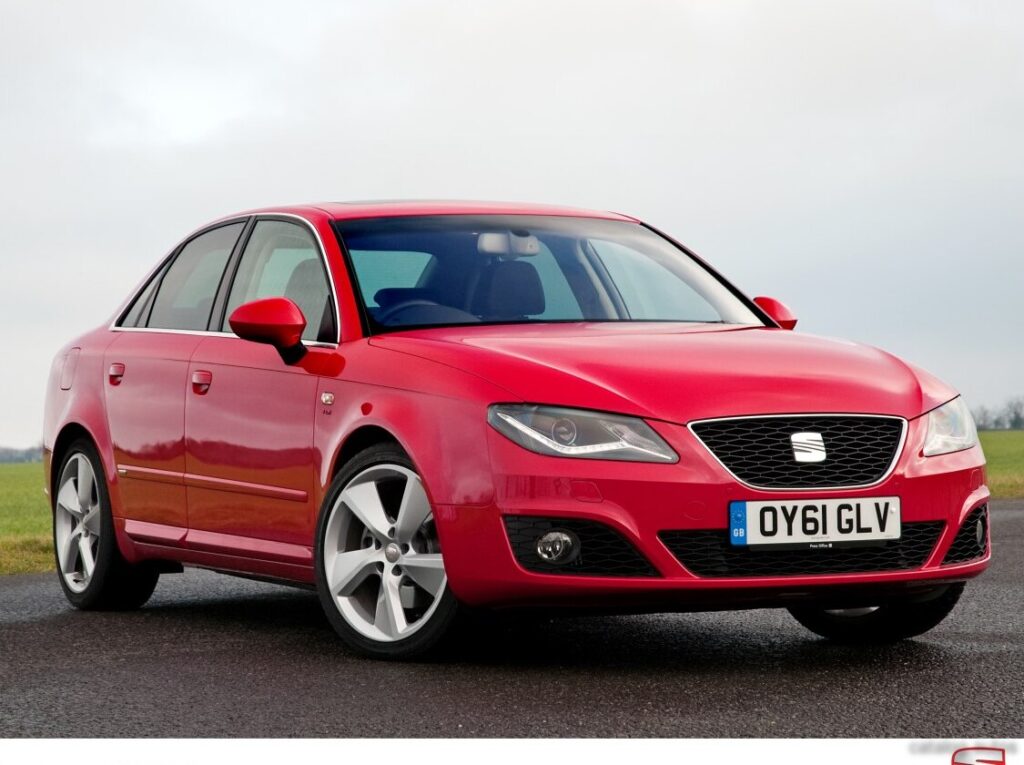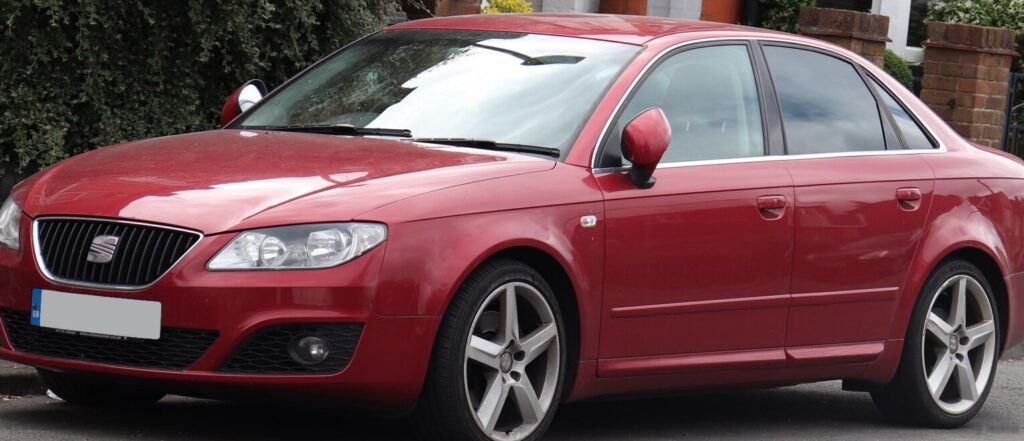
The Seat Exeo 2.0 TSI (211 hp) was a performance-oriented variant of the Exeo, a mid-size executive car produced by the Spanish manufacturer Seat between 2008 and 2011. Positioned as a more powerful offering within the Exeo range, it aimed to provide a sportier driving experience compared to the lower-powered engine options. Production of this specific variant ran from May 2010 to September 2011. The Exeo itself was notable for being based on the outgoing Audi B7 platform, a result of Seat’s ownership under the Volkswagen Group. This gave it a more sophisticated foundation than previous Seat models.
Technical Specifications
| Brand | Seat |
| Model | Exeo |
| Generation | Exeo |
| Type (Engine) | 2.0 TSI (211 Hp) |
| Start of production | May, 2010 |
| End of production | September, 2011 |
| Powertrain Architecture | Internal Combustion engine |
| Body type | Sedan |
| Seats | 5 |
| Doors | 4 |
| Fuel consumption (urban) | 9.6 l/100 km (24.5 US mpg) |
| Fuel consumption (extra urban) | 5.3 l/100 km (44.4 US mpg) |
| Fuel consumption (combined) | 6.9 l/100 km (34.1 US mpg) |
| Fuel Type | Petrol (Gasoline) |
| Acceleration 0 – 100 km/h | 7.1 sec |
| Acceleration 0 – 62 mph | 7.1 sec |
| Acceleration 0 – 60 mph | 6.7 sec |
| Maximum speed | 244 km/h (151.61 mph) |
| Emission standard | Euro 5 |
| Weight-to-power ratio | 7.1 kg/Hp |
| Weight-to-torque ratio | 4.7 kg/Nm |
| Power | 211 Hp @ 4600-6000 rpm |
| Torque | 320 Nm @ 1500-4600 rpm (236.02 lb.-ft.) |
| Engine layout | Front, Longitudinal |
| Engine Model/Code | CDND |
| Engine displacement | 1984 cm3 (121.07 cu. in.) |
| Number of cylinders | 4 |
| Engine configuration | Inline |
| Cylinder Bore | 82.5 mm (3.25 in.) |
| Piston Stroke | 92.8 mm (3.65 in.) |
| Compression ratio | 9.6:1 |
| Number of valves per cylinder | 4 |
| Fuel injection system | Direct injection |
| Engine aspiration | Turbocharger, Intercooler |
| Engine oil capacity | 4.6 l (4.86 US qt | 4.05 UK qt) |
| Kerb Weight | 1505 kg (3317.96 lbs.) |
| Max. weight | 1990 kg (4387.2 lbs.) |
| Max load | 485 kg (1069.24 lbs.) |
| Trunk (boot) space – minimum | 460 l (16.24 cu. ft.) |
| Fuel tank capacity | 70 l (18.49 US gal | 15.4 UK gal) |
| Length | 4661 mm (183.5 in.) |
| Width | 1772 mm (69.76 in.) |
| Height | 1430 mm (56.3 in.) |
| Wheelbase | 2642 mm (104.02 in.) |
| Front track | 1522 mm (59.92 in.) |
| Rear (Back) track | 1523 mm (59.96 in.) |
| Minimum turning circle | 11.2 m (36.75 ft.) |
| Drivetrain Architecture | Front wheel drive |
| Number of gears | 6 gears, manual transmission |
| Front suspension | Independent multi-link suspension |
| Rear suspension | Independent on trapezoidal lever |
| Front brakes | Ventilated discs |
| Rear brakes | Disc |
| Tires size | 225/45 R17 |
| Wheel rims size | 7.5J x 17 |
INTRODUCTION
The Seat Exeo 2.0 TSI, introduced in 2010, represented the top-of-the-line performance option for the Exeo model range. Built on the Volkswagen Group’s B7 platform – shared with the Audi A4 (B7) – the Exeo aimed to offer a more premium and engaging driving experience than previous Seat offerings. The 2.0 TSI engine, a turbocharged direct-injection unit, provided a significant power boost over the naturally aspirated and diesel options available, making it a direct competitor to other executive sedans in the European market. The Exeo, while a relatively short-lived model for Seat, was an important step in the brand’s attempt to move upmarket.
Powertrain & Engine Architecture
At the heart of the Exeo 2.0 TSI lies the CDND engine code, a 1.984-liter inline-four cylinder engine. This engine is part of the Volkswagen Group’s EA888 family, known for its robust design and tuning potential. The engine utilizes direct fuel injection (FSI – Fuel Stratified Injection) which allows for precise fuel delivery and improved combustion efficiency. A single turbocharger, coupled with an intercooler, provides forced induction, boosting power output to 211 horsepower and 320 Nm (236 lb-ft) of torque. The engine features a dual overhead camshaft (DOHC) valvetrain with four valves per cylinder, optimizing airflow for increased performance. The six-speed manual transmission was standard, providing drivers with full control over the engine’s power. The transmission’s gear ratios were tuned to balance acceleration and fuel economy, with a relatively long sixth gear for efficient cruising.
Driving Characteristics
The Exeo 2.0 TSI offered a noticeably more engaging driving experience than its lower-powered siblings. The 211 hp engine provided brisk acceleration, with a 0-60 mph time of around 6.7 seconds. The turbocharger delivers a surge of power from around 1500 rpm, providing strong mid-range acceleration for overtaking and merging. Compared to the 1.8-liter turbocharged engine available in other Exeo models, the 2.0 TSI offered a more substantial power increase and a broader torque curve. While the manual transmission was standard, the gear ratios were well-matched to the engine’s characteristics, allowing for smooth and responsive shifts. The Exeo’s suspension, while tuned for comfort, provided decent body control, making it a capable handler on winding roads. However, it wasn’t a dedicated sports sedan; the focus remained on providing a comfortable and refined driving experience.
Equipment & Trim Levels
The 2.0 TSI variant of the Exeo typically came with a higher level of standard equipment than the base models. Standard features often included alloy wheels, automatic climate control, a multi-function steering wheel, and a basic audio system. Interior upholstery was typically cloth, but leather options were available. Optional extras included a navigation system, parking sensors, a premium audio system, and heated seats. The dashboard layout was functional and well-built, reflecting the Exeo’s Audi-derived origins. Trim levels varied slightly depending on the market, but the 2.0 TSI was generally positioned as a mid-to-high-range offering.
Chassis & Braking
The Exeo 2.0 TSI utilized a fully independent suspension system, with a multi-link setup at the front and a trapezoidal lever arrangement at the rear. This provided a good balance between ride comfort and handling precision. Braking duties were handled by ventilated discs at the front and solid discs at the rear, providing adequate stopping power for the car’s weight and performance. Anti-lock Braking System (ABS) was standard, enhancing safety and stability during emergency braking. The steering system was a rack-and-pinion setup with electric power assistance, offering a responsive and precise feel.
Market Reception & Comparison
The Seat Exeo 2.0 TSI was generally well-received by automotive critics, who praised its performance, handling, and comfortable ride. However, it faced stiff competition from established executive sedans such as the Audi A4, BMW 3 Series, and Mercedes-Benz C-Class. Compared to the lower-powered Exeo variants, the 2.0 TSI offered a significant performance upgrade, but it also came with a higher price tag. Fuel economy was respectable for a car of its class, averaging around 34.1 US mpg in combined driving. Reliability was generally good, benefiting from the Volkswagen Group’s engineering expertise, although some owners reported minor issues with the turbocharger and fuel injection system.
Legacy
The Seat Exeo, and particularly the 2.0 TSI variant, represents a unique chapter in Seat’s history. While the model was discontinued after a relatively short production run, it demonstrated Seat’s ability to produce a competitive executive sedan. The 2.0 TSI engine proved to be a reliable and durable unit, and examples are still found on the used car market today. The Exeo’s Audi-derived platform and well-engineered powertrain make it an attractive option for buyers seeking a comfortable, well-equipped, and reasonably priced executive car. Its relative rarity has also contributed to a growing enthusiast following, ensuring that the Exeo 2.0 TSI will be remembered as a capable and distinctive vehicle.