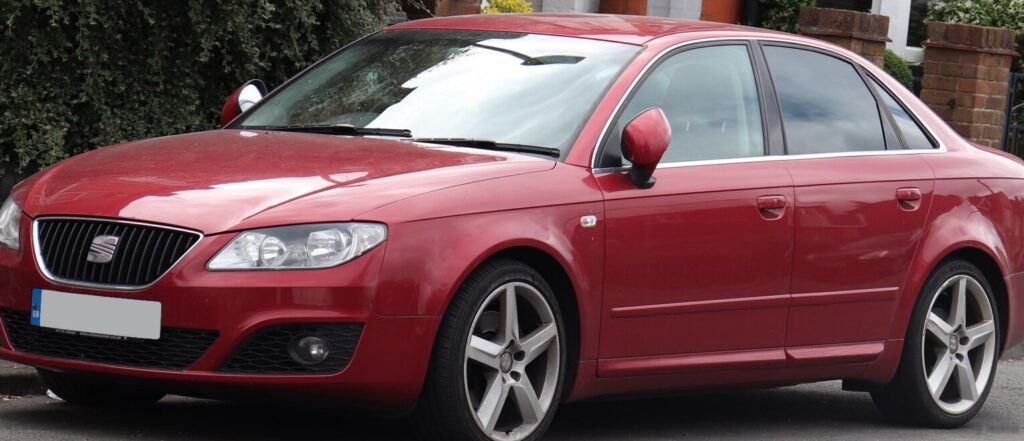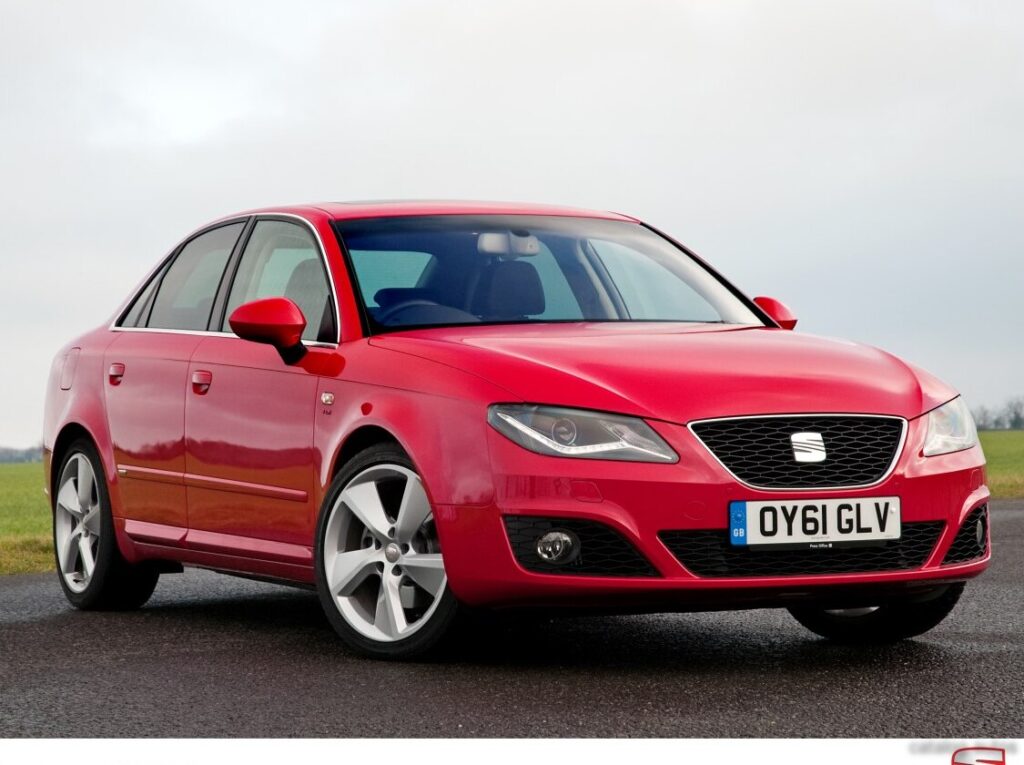
The Seat Exeo 1.8 TSI (120 hp) was a mid-size executive car produced by the Spanish manufacturer Seat between September 2011 and May 2013, as part of the Exeo facelift. This variant occupied the entry-level to mid-range position within the Exeo lineup, offering a balance between fuel efficiency and acceptable performance. The Exeo itself was based on the B7 generation Audi A4 (internally known as the 1HX0/A3 platform), a result of Seat’s ownership under the Volkswagen Group. The 1.8 TSI model aimed to provide a more accessible price point compared to the more powerful 2.0 TSI versions, while still offering a modern turbocharged engine.
The 1.8 TSI engine, designated CDHA, is a 1.8-liter inline-four cylinder gasoline engine. It utilizes direct fuel injection (FSI) and is coupled with a turbocharger and intercooler to boost power output. The engine’s architecture is based on the Volkswagen Group’s EA888 engine family, known for its robust design and tuning potential. The fuel injection system is a sophisticated direct injection system, delivering fuel directly into the combustion chamber for improved efficiency and reduced emissions. The valvetrain employs a dual overhead camshaft (DOHC) configuration with four valves per cylinder, optimizing airflow for enhanced performance. The engine produces 120 horsepower at 3650-6200 rpm and 230 Nm (169.64 lb-ft) of torque between 1500-3650 rpm. While the Exeo was offered with both manual and automatic transmissions, this specific variant was commonly paired with a six-speed automatic transmission, designed to provide smooth and convenient gear changes.
In real-world driving conditions, the 1.8 TSI automatic Exeo offered adequate performance for everyday commuting and highway cruising. Acceleration from 0 to 100 km/h (0-62 mph) took approximately 10.6 seconds, and 0-60 mph was achieved in around 10.1 seconds. While not particularly sporty, the engine provided sufficient power for overtaking maneuvers. The automatic transmission, while smooth, wasn’t known for its particularly quick shifts, and could sometimes feel hesitant during downshifts. Compared to the more powerful 2.0 TSI models, the 1.8 TSI felt noticeably less responsive, but it offered a significant improvement in fuel economy. The gear ratios were tuned for a balance between fuel efficiency and drivability, prioritizing comfortable cruising over outright acceleration.
The 1.8 TSI Exeo typically came equipped with a reasonable level of standard features. Interior upholstery was generally cloth, although leather options were available as upgrades. The dashboard layout was functional and well-built, reflecting the Exeo’s Audi A4 origins. Standard equipment often included air conditioning, power windows, power mirrors, a basic audio system, and ABS brakes. Optional extras included a more advanced infotainment system, leather upholstery, sunroof, parking sensors, and alloy wheels. Trim levels varied depending on the market, but generally offered progressively more features and cosmetic enhancements.
The Exeo 1.8 TSI utilized an independent suspension system on both the front and rear axles. The front suspension featured a multi-link setup with a transverse stabilizer bar, while the rear suspension employed a trapezoidal lever design, also with a stabilizer bar. This configuration provided a comfortable ride quality, although it wasn’t particularly sporty in handling. Braking duties were handled by ventilated discs on the front wheels (288×25 mm) and solid discs on the rear wheels (245×10 mm). ABS (Anti-lock Braking System) was standard, enhancing braking performance and stability. The steering system was a hydraulic rack and pinion setup, providing a reasonably direct and responsive feel.
Critics generally viewed the 1.8 TSI Exeo as a sensible and practical choice for buyers seeking a comfortable and fuel-efficient executive car. It was praised for its build quality, spacious interior, and refined ride. However, it was often criticized for its relatively modest performance compared to its rivals and the more powerful Exeo variants. Fuel economy was a strong point, with combined fuel consumption figures around 7.3 l/100 km (32.2 US mpg). Reliability was generally good, benefiting from the EA888 engine’s proven track record. However, like many turbocharged engines, it was susceptible to carbon buildup if not properly maintained. Compared to the 2.0 TSI, the 1.8 TSI offered lower running costs but less excitement. The 1.9 TDI diesel variant provided even better fuel economy but at the expense of refinement.
| Engine Model/Code | EA888 / CDHA |
| Engine displacement | 1798 cm3 (109.72 cu. in.) |
| Number of cylinders | 4, Inline |
| Cylinder Bore | 82.5 mm (3.25 in.) |
| Piston Stroke | 84.2 mm (3.31 in.) |
| Compression ratio | 9.6:1 |
| Power | 120 Hp @ 3650-6200 rpm |
| Torque | 230 Nm (169.64 lb.-ft.) @ 1500-3650 rpm |
| Fuel Type | Petrol (Gasoline) |
| Fuel consumption (urban) | 10.2 l/100 km (23.1 US mpg) |
| Fuel consumption (extra urban) | 5.6 l/100 km (42 US mpg) |
| Fuel consumption (combined) | 7.3 l/100 km (32.2 US mpg) |
| CO2 emissions | 169 g/km |
| Acceleration 0-100 km/h | 10.6 sec |
| Maximum speed | 202 km/h (125.52 mph) |
| Kerb Weight | 1420 kg (3130.56 lbs.) |
| Fuel tank capacity | 70 l (18.49 US gal) |
Today, the Seat Exeo 1.8 TSI can be found on the used car market at relatively affordable prices. The EA888 engine, when properly maintained, is known for its durability. However, potential buyers should be aware of the possibility of carbon buildup and ensure that the car has been regularly serviced. The Exeo 1.8 TSI remains a comfortable and practical option for those seeking a well-built and reasonably fuel-efficient executive car, offering a good value proposition in the used car segment. Its Audi A4 underpinnings contribute to a sense of quality and refinement that continues to appeal to buyers seeking a dependable and stylish vehicle.