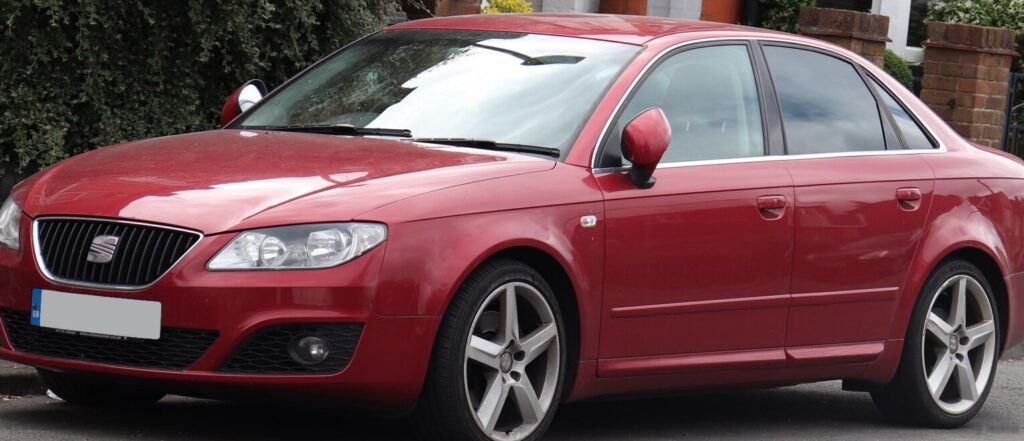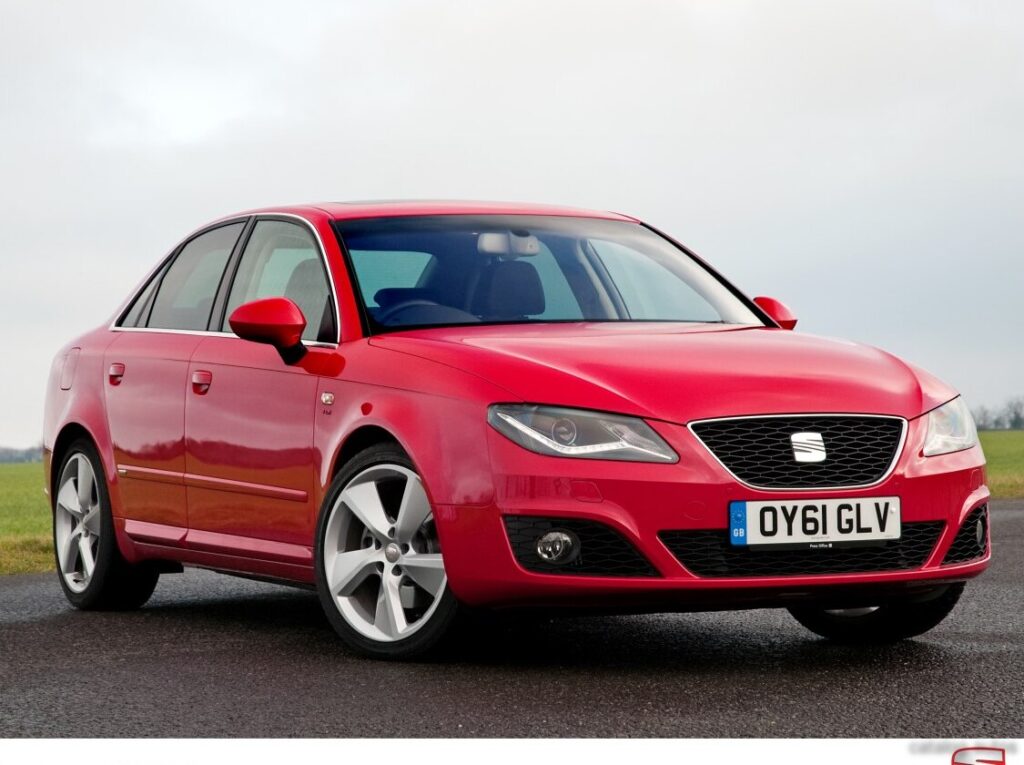
The Seat Exeo 2.0 TDI Ecomotive, produced from September 2011 to May 2013, represented a fuel-efficient variant within the Exeo lineup. The Exeo itself was a mid-size executive car, notable for being based on the B7 generation Audi A4 platform – a result of Seat’s ownership under the Volkswagen Group. The 2.0 TDI Ecomotive trim was positioned as an economy-focused option, appealing to drivers prioritizing fuel efficiency and lower running costs. It sat below the more powerful TDI variants and offered a more accessible entry point into the Exeo range compared to higher-specification models.
The Exeo 2.0 TDI Ecomotive was powered by the Volkswagen Group’s EA189 series 2.0-liter four-cylinder diesel engine, specifically the CJCC engine code. This engine utilized a common rail direct fuel injection system, delivering fuel directly into the cylinders at high pressure for improved combustion efficiency. The engine featured a single turbocharger with an intercooler to increase air density and boost power output. The valvetrain employed a dual overhead camshaft (DOHC) configuration with four valves per cylinder, optimizing gas flow for enhanced performance. The engine produced 120 horsepower at 4000 rpm and 290 Nm (213.89 lb-ft) of torque between 1750 and 2500 rpm. This power was delivered to the front wheels through a six-speed manual transmission, chosen to maximize fuel economy. An automatic transmission was not offered with this specific Ecomotive variant.
In real-world driving, the 2.0 TDI Ecomotive prioritized fuel efficiency over outright performance. Acceleration from 0 to 100 km/h (0-62 mph) took 10.5 seconds, and top speed was rated at 205 km/h (127.38 mph). While not particularly sporty, the engine provided adequate power for everyday driving and highway cruising. The six-speed manual transmission allowed drivers to keep the engine in its optimal torque band, contributing to responsive acceleration. Compared to the more powerful 170 hp TDI versions, the 120 hp model offered less spirited performance but significantly better fuel economy. The gear ratios were tuned for efficiency, with a relatively long final drive to reduce engine speed at cruising speeds.
The Ecomotive trim level included several standard features designed to enhance fuel efficiency and comfort. Interior appointments typically included cloth upholstery, air conditioning, and a basic audio system. Standard safety equipment included ABS, traction control, and multiple airbags. Optional extras available for the Exeo 2.0 TDI Ecomotive included alloy wheels, a more advanced audio system, parking sensors, and a sunroof. The dashboard layout was functional and straightforward, reflecting the car’s focus on practicality rather than luxury.
The Exeo’s chassis featured independent suspension on all four wheels. The front suspension utilized a multi-link setup with a transverse stabilizer bar, while the rear employed a trapezoidal lever arrangement, also with a stabilizer bar. This configuration provided a comfortable ride and decent handling characteristics. Braking duties were handled by ventilated discs at the front and solid discs at the rear. The Ecomotive variant, being a weight-conscious model, benefited from a relatively low kerb weight of 1430 kg (3152.61 lbs). This contributed to its improved fuel economy and handling.
Critics generally praised the Exeo 2.0 TDI Ecomotive for its fuel efficiency and comfortable ride. Fuel consumption figures were rated at 4.5 l/100 km (52.3 US mpg) on the combined cycle, with CO2 emissions of 117 g/km. Compared to the higher-output TDI models, the Ecomotive offered a noticeable improvement in fuel economy. However, some reviewers noted that the engine could feel strained when fully loaded or driving uphill. Reliability was generally good, benefiting from the proven Volkswagen Group technology. The Exeo, as a whole, offered a compelling alternative to more established executive cars, providing a good balance of practicality, comfort, and value.
| Fuel consumption (urban) | 5.6 l/100 km (42 US mpg) |
| Fuel consumption (extra urban) | 3.8 l/100 km (61.9 US mpg) |
| Fuel consumption (combined) | 4.5 l/100 km (52.3 US mpg) |
| CO2 emissions | 117 g/km |
| Fuel Type | Diesel |
| Acceleration 0-100 km/h | 10.5 sec |
| Acceleration 0-62 mph | 10.5 sec |
| Acceleration 0-60 mph | 10 sec |
| Maximum speed | 205 km/h (127.38 mph) |
| Emission standard | Euro 5 |
| Weight-to-power ratio | 11.9 kg/Hp |
| Power | 120 Hp @ 4000 rpm |
| Torque | 290 Nm @ 1750-2500 rpm (213.89 lb.-ft.) |
| Engine layout | Front, Longitudinal |
| Engine Model/Code | EA189 / CJCC |
| Engine displacement | 1968 cm3 (120.09 cu. in.) |
| Number of cylinders | 4 |
| Engine configuration | Inline |
| Cylinder Bore | 81 mm (3.19 in.) |
| Piston Stroke | 95.5 mm (3.76 in.) |
| Compression ratio | 16.5:1 |
| Number of valves per cylinder | 4 |
| Fuel injection system | Diesel Commonrail |
| Engine aspiration | Turbocharger, Intercooler |
| Valvetrain | DOHC |
| Engine oil capacity | 4.6 l (4.86 US qt | 4.05 UK qt) |
| Coolant capacity | 7.5 l (7.93 US qt | 6.6 UK qt) |
| Kerb Weight | 1430 kg (3152.61 lbs.) |
| Max. weight | 1990 kg (4387.2 lbs.) |
| Trunk (boot) space – minimum | 460 l (16.24 cu. ft.) |
| Trunk (boot) space – maximum | 833 l (29.42 cu. ft.) |
| Fuel tank capacity | 70 l (18.49 US gal | 15.4 UK gal) |
| Length | 4661 mm (183.5 in.) |
| Width | 1772 mm (69.76 in.) |
| Height | 1430 mm (56.3 in.) |
| Wheelbase | 2642 mm (104.02 in.) |
| Number of gears | 6 |
| Gearbox type | Manual |
Today, the Seat Exeo 2.0 TDI Ecomotive represents a relatively affordable and fuel-efficient used car option. Its long-term reliability is generally considered good, although regular maintenance is crucial for any diesel engine. The availability of parts is reasonable, given the Volkswagen Group’s widespread network. While it may not offer the latest technology or features, the Exeo 2.0 TDI Ecomotive remains a practical and economical choice for drivers seeking a comfortable and reliable mid-size sedan.