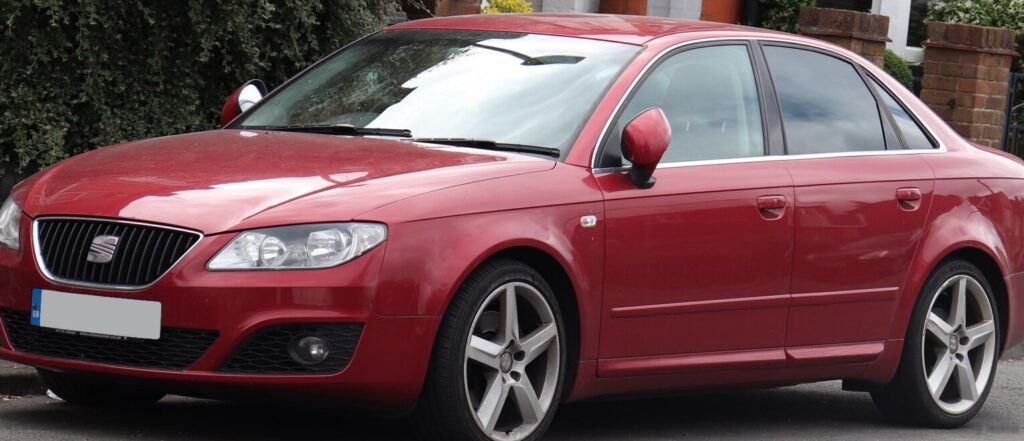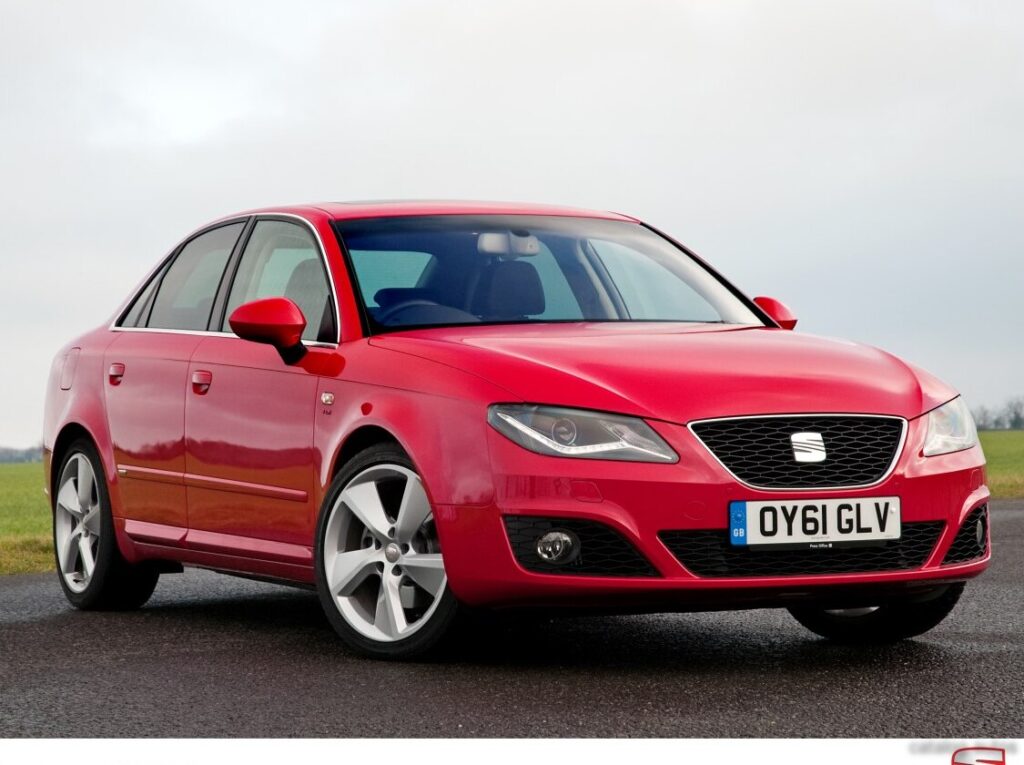
The Seat Exeo 2.0 TDI Ecomotive, produced from September 2011 to May 2013, represented a fuel-efficient variant within the Exeo lineup. The Exeo itself was a mid-size executive car, notable for being based on the B7 generation Audi A4 platform (internally designated 1HX0/A3). Positioned as an economy-focused option, the 2.0 TDI Ecomotive aimed to deliver a balance of practicality, comfort, and reduced running costs. It served as a more accessible entry point into the Exeo range compared to higher-powered versions and those with more luxurious appointments.
The heart of the Exeo 2.0 TDI Ecomotive is the EA189 series 2.0-liter inline four-cylinder diesel engine, specifically the CJCA code. This engine utilizes a common rail direct fuel injection system, delivering fuel directly into the combustion chamber at extremely high pressure for optimized combustion. The engine features a single turbocharger with an intercooler to increase air density and boost power output. The valvetrain employs a dual overhead camshaft (DOHC) design with four valves per cylinder, enhancing volumetric efficiency. The engine produces 143 horsepower at 4200 rpm and 320 Nm (236 lb-ft) of torque between 1750 and 2500 rpm. The engine is longitudinally mounted in the front of the vehicle. The Ecomotive variant included a Start & Stop system and a particulate filter to further reduce emissions.
In real-world driving, the 2.0 TDI Ecomotive offered respectable performance for everyday use. Acceleration from 0 to 100 km/h (0-62 mph) took approximately 9.2 seconds, while 0-60 mph was achieved in around 8.7 seconds. Top speed was rated at 216 km/h (134 mph). While not a sports car, the engine provided sufficient torque for comfortable cruising and overtaking. The six-speed manual transmission allowed for precise gear selection, although an automatic transmission was also available as an option. The gear ratios were tuned to prioritize fuel efficiency, meaning the engine didn’t feel overly stressed at highway speeds.
The Exeo 2.0 TDI Ecomotive typically came equipped with a reasonable level of standard features. Interior upholstery was generally cloth, with options for leather upgrades. The dashboard layout was functional and straightforward, prioritizing usability over extravagant design. Standard equipment included air conditioning, power windows, central locking, and an audio system. Optional extras included satellite navigation, parking sensors, and upgraded alloy wheels. The Ecomotive trim often featured specific aerodynamic enhancements to improve fuel efficiency, such as a lower ride height and optimized underbody panels.
The Exeo’s chassis featured independent suspension all around. The front utilized a multi-link setup with a transverse stabilizer bar, while the rear employed an independent trapezoidal lever arrangement, also with a stabilizer bar. This configuration provided a good balance between ride comfort and handling. Braking was accomplished via ventilated discs at the front (288x25mm) and solid discs at the rear (245x10mm). Anti-lock Braking System (ABS) was standard. The hydraulic power steering offered a responsive and precise feel.
Critics generally praised the Exeo 2.0 TDI Ecomotive for its fuel efficiency and comfortable ride. Fuel economy figures were impressive, achieving around 4.5 liters per 100 kilometers (52.3 US mpg) on the combined cycle, and CO2 emissions were rated at 117 g/km. Compared to the more powerful 2.0 TDI variants, the Ecomotive offered lower running costs but sacrificed some performance. It also provided a more economical alternative to the petrol-powered Exeo models. Reliability was generally considered good, although, like all diesel engines, it was susceptible to issues with the diesel particulate filter (DPF) if not properly maintained.
| Engine Model/Code | EA189 / CJCA |
| Engine displacement | 1968 cm3 (120.09 cu. in.) |
| Number of cylinders | 4, Inline |
| Cylinder Bore | 81 mm (3.19 in.) |
| Piston Stroke | 95.5 mm (3.76 in.) |
| Compression ratio | 16.5:1 |
| Power | 143 Hp @ 4200 rpm |
| Torque | 320 Nm @ 1750-2500 rpm (236.02 lb.-ft. @ 1750-2500 rpm) |
| Fuel consumption (urban) | 5.6 l/100 km (42 US mpg, 50.4 UK mpg, 17.9 km/l) |
| Fuel consumption (extra urban) | 3.8 l/100 km (61.9 US mpg, 74.3 UK mpg, 26.3 km/l) |
| Fuel consumption (combined) | 4.5 l/100 km (52.3 US mpg, 62.8 UK mpg, 22.2 km/l) |
| CO2 emissions | 117 g/km |
| Acceleration 0-100 km/h | 9.2 sec |
| Acceleration 0-60 mph | 8.7 sec |
| Maximum speed | 216 km/h (134.22 mph) |
| Kerb Weight | 1430 kg (3152.61 lbs.) |
| Max. weight | 1990 kg (4387.2 lbs.) |
| Trunk (boot) space (minimum) | 460 l (16.24 cu. ft.) |
| Trunk (boot) space (maximum) | 833 l (29.42 cu. ft.) |
| Fuel tank capacity | 70 l (18.49 US gal, 15.4 UK gal) |
Today, the Seat Exeo 2.0 TDI Ecomotive represents a relatively affordable and practical used car option. The EA189 engine, while generally reliable, is known to be susceptible to DPF issues if not regularly driven on longer journeys. Proper maintenance, including regular oil changes and DPF regeneration, is crucial for long-term reliability. Despite its age, the Exeo’s comfortable ride, spacious interior, and fuel-efficient engine continue to appeal to buyers seeking a well-rounded and economical executive car.