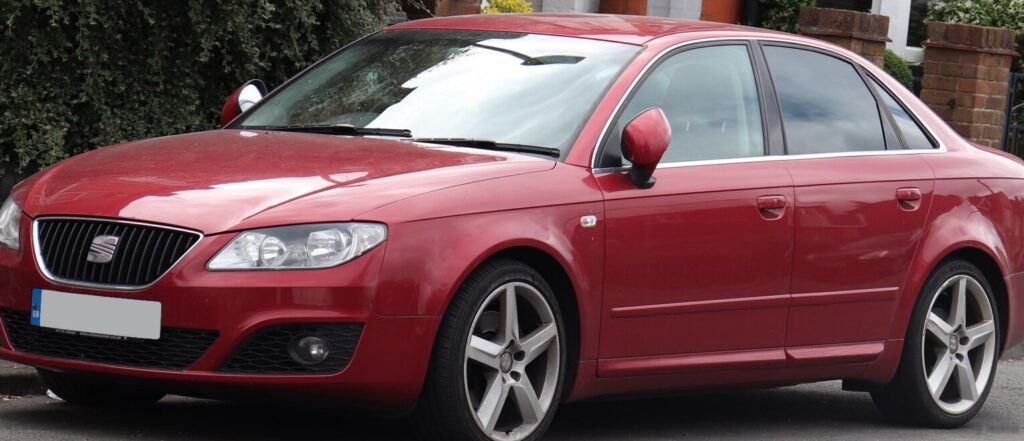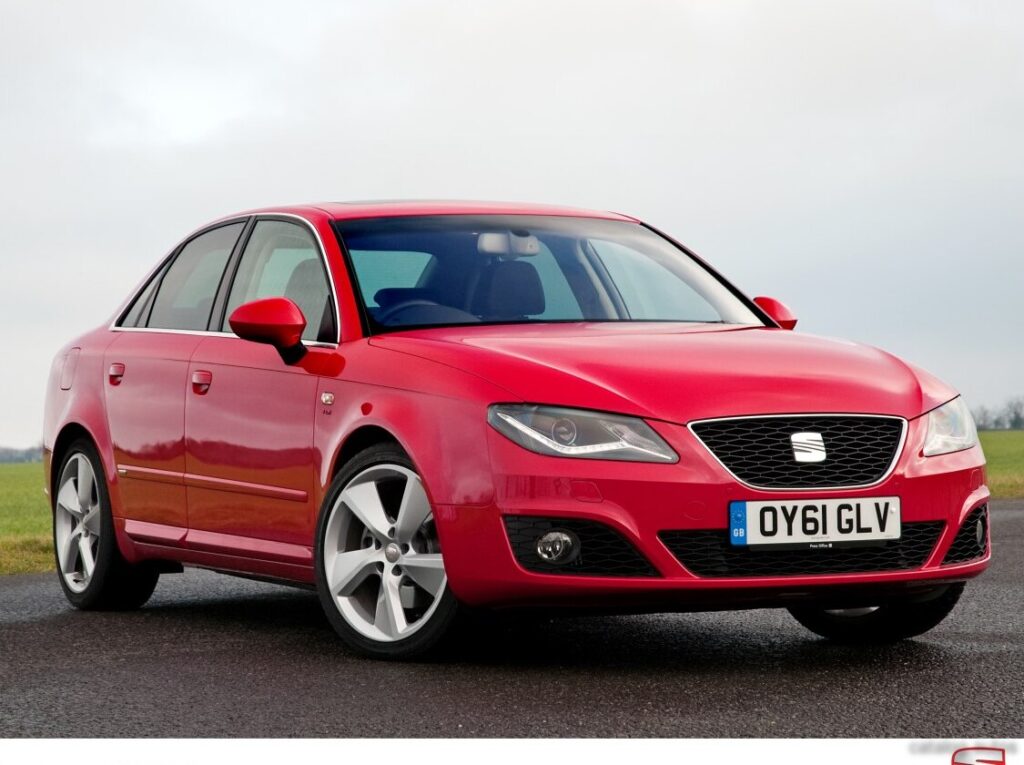
The Seat Exeo 2.0 TDI (143 hp) Multitronic, produced from September 2011 to May 2013, was a mid-range variant of the Exeo executive car. Positioned between the lower-powered diesel options and the flagship petrol models, it aimed to offer a balance of fuel efficiency, performance, and comfort. The Exeo itself was a significant model for Seat, representing an attempt to move upmarket and compete with established German brands. It was based on the B7 generation Audi A4 (internally known as the 1HX0/A3 platform), a result of Seat’s ownership under the Volkswagen Group. The 2.0 TDI Multitronic model specifically targeted buyers seeking a refined driving experience with the convenience of an automatic transmission and the economy of a diesel engine.
Powertrain & Engine Architecture
The heart of the Exeo 2.0 TDI Multitronic is the Volkswagen Group’s EA189 series 2.0-liter inline-four diesel engine, specifically the CJCA engine code. This engine is a turbocharged common rail direct injection diesel. It produces 143 horsepower (hp) at 4200 rpm and 320 Newton-meters (236 lb-ft) of torque between 1750 and 2500 rpm. The engine features a single overhead camshaft (DOHC) operating four valves per cylinder. The turbocharger, coupled with an intercooler, provides increased air density for improved combustion and power output. The common rail direct injection system delivers fuel directly into the cylinders at extremely high pressure, optimizing fuel atomization and combustion efficiency.
The “Multitronic” transmission is a continuously variable transmission (CVT) developed by Volkswagen. Unlike traditional automatic transmissions with fixed gear ratios, the Multitronic uses a chain and pulley system to provide a virtually infinite number of gear ratios within its operating range. This allows the engine to operate at its most efficient point for any given driving condition, contributing to improved fuel economy and smooth acceleration. The Multitronic in the Exeo 2.0 TDI is a six-speed unit designed to handle the engine’s torque output. It features a Tiptronic mode, allowing the driver to manually select gear ratios for more control.
Engine Specifications
The EA189 engine in this configuration has a bore of 81mm and a stroke of 95.5mm, resulting in a displacement of 1968 cubic centimeters (120.09 cubic inches). It boasts a compression ratio of 16.5:1. The engine is longitudinally mounted in the front of the vehicle, driving the front wheels.
Driving Characteristics
The Exeo 2.0 TDI Multitronic offered a comfortable and refined driving experience. The Multitronic transmission provided seamless acceleration, eliminating the noticeable gear shifts of a traditional automatic. While not a sports car, the 143 hp engine and 236 lb-ft of torque provided adequate performance for everyday driving and highway cruising. Acceleration from 0 to 62 mph (0-100 km/h) took approximately 9.3 seconds, and the car had a top speed of 129.25 mph (208 km/h). The Multitronic transmission’s ability to keep the engine in its optimal power band meant that the car felt responsive in most situations.
Compared to the lower-powered 1.6 TDI Exeo, the 2.0 TDI offered a noticeable improvement in performance, particularly when overtaking or climbing hills. However, it lacked the outright punch of the higher-output petrol engines, such as the 2.0 TFSI. The Multitronic transmission, while smooth, didn’t offer the same level of driver engagement as a traditional manual gearbox. Some drivers found the CVT’s tendency to hold engine revs at a constant level during acceleration to be slightly unnatural.
Equipment & Trim Levels
The Exeo 2.0 TDI Multitronic typically came equipped with a respectable level of standard features. These included air conditioning, electric windows and mirrors, a CD stereo system, alloy wheels, and ABS brakes. Higher trim levels, such as the Sport and Stylance, added features like leather upholstery, a sunroof, automatic climate control, parking sensors, and a more advanced audio system. Optional extras included satellite navigation, heated seats, and bi-xenon headlights. Interior upholstery was typically cloth on the base models, with leather available as an upgrade. The dashboard layout was functional and well-built, reflecting the Exeo’s Audi A4 origins.
Chassis & Braking
The Exeo 2.0 TDI Multitronic featured independent suspension on all four wheels. The front suspension utilized a multi-link setup with a transverse stabilizer bar, while the rear suspension employed a trapezoidal lever design, also with a stabilizer bar. This suspension configuration provided a comfortable ride and good handling characteristics. The front brakes were ventilated discs measuring 288x25mm, while the rear brakes were solid discs measuring 245x10mm. The car was equipped with ABS (Anti-lock Braking System) as standard, enhancing braking performance and stability. Steering was provided by a hydraulic power steering rack and pinion system.
Market Reception & Comparison
The Seat Exeo 2.0 TDI Multitronic was generally well-received by automotive critics. It was praised for its comfortable ride, refined interior, and fuel efficiency. The Multitronic transmission was noted for its smoothness and contribution to improved fuel economy. However, some critics found the car to be somewhat lacking in driver engagement compared to its rivals. Fuel economy figures were competitive, with combined fuel consumption averaging around 42.8 US mpg (51.4 UK mpg or 5.5 l/100 km).
Compared to other trims in the Exeo lineup, the 2.0 TDI Multitronic offered a good balance between performance and economy. The 1.6 TDI was more fuel-efficient but lacked the power of the 2.0 TDI. The petrol engines offered more performance but at the expense of fuel economy. In terms of reliability, the EA189 engine has been known to have some issues with diesel particulate filter (DPF) clogging and turbocharger failures, particularly on earlier models. However, the 2.0 TDI engine is generally considered to be more robust than the 1.6 TDI.
Technical Specifications
| Body Type | Sedan, 4 Doors, 5 Seats |
| Engine Type | 2.0 l Diesel |
| Engine Displacement | 1968 cm3 (120.09 cu. in.) |
| Engine Code | CJCA |
| Power Output | 143 hp @ 4200 rpm |
| Torque Output | 320 Nm (236 lb-ft) @ 1750-2500 rpm |
| Transmission | Multitronic (CVT), 6-speed |
| Drive Type | Front Wheel Drive |
| Acceleration 0-62 mph | 9.3 sec |
| Top Speed | 208 km/h (129.25 mph) |
| Fuel Consumption (Combined) | 5.5 l/100 km (42.8 US mpg, 51.4 UK mpg) |
| CO2 Emissions | 146 g/km |
| Kerb Weight | 1470 kg (3240.8 lbs) |
| Fuel Tank Capacity | 70 l (18.49 US gal, 15.4 UK gal) |
| Trunk Space (Minimum) | 460 l (16.24 cu. ft.) |
| Trunk Space (Maximum) | 833 l (29.42 cu. ft.) |
Legacy
The Seat Exeo, while a relatively short-lived model, represented a bold attempt by Seat to establish itself as a premium brand. The 2.0 TDI Multitronic variant remains a reasonably popular choice on the used car market, particularly for those seeking a comfortable and fuel-efficient executive car. The EA189 engine, despite its known issues, is generally considered to be reliable if properly maintained. Regular servicing, including DPF regeneration and oil changes, is crucial for ensuring the longevity of the engine and transmission. Today, these vehicles can be found at affordable prices, making them an attractive option for budget-conscious buyers looking for a well-equipped and comfortable car.