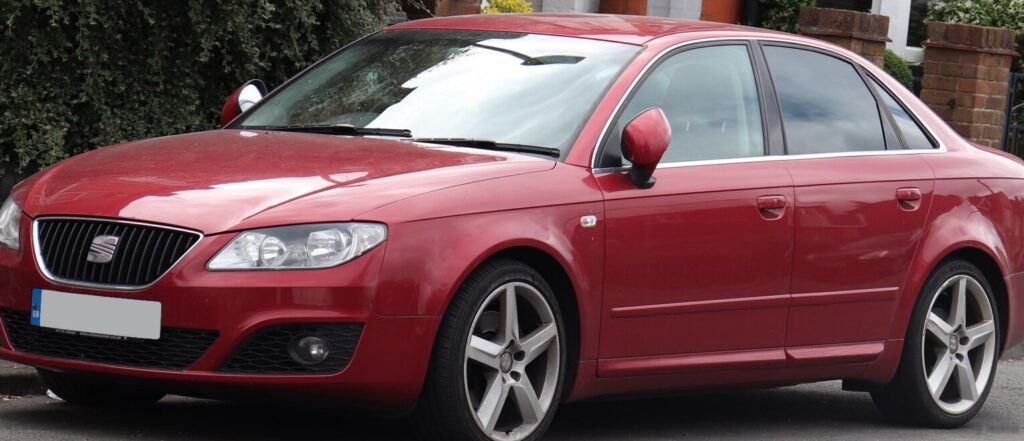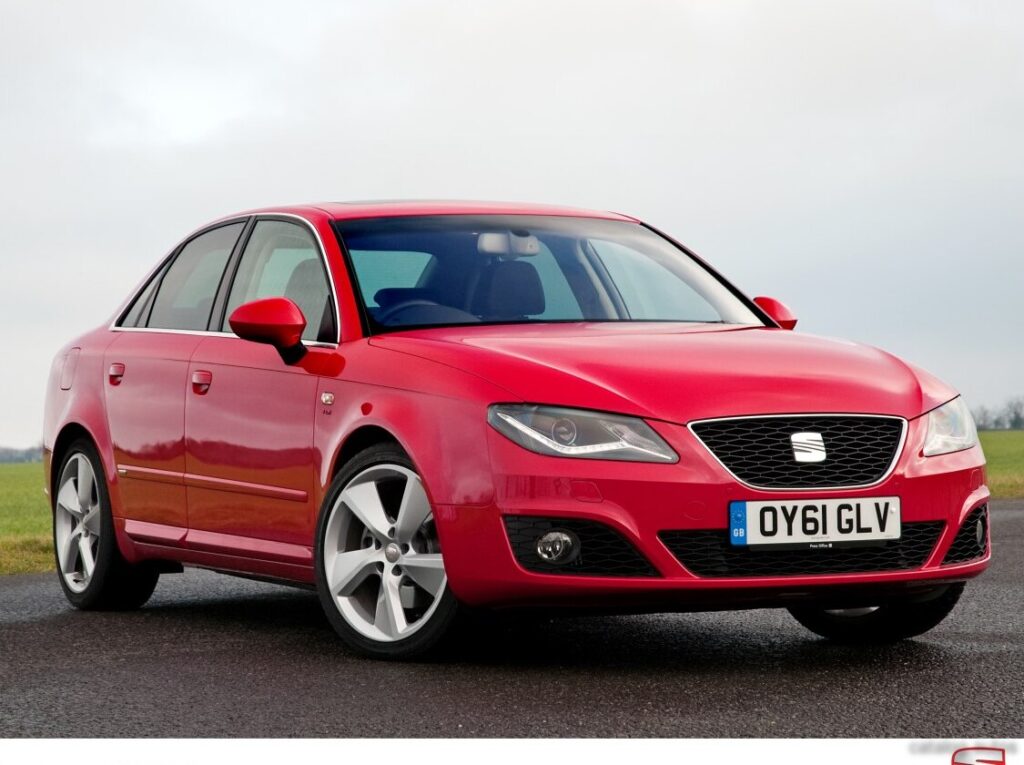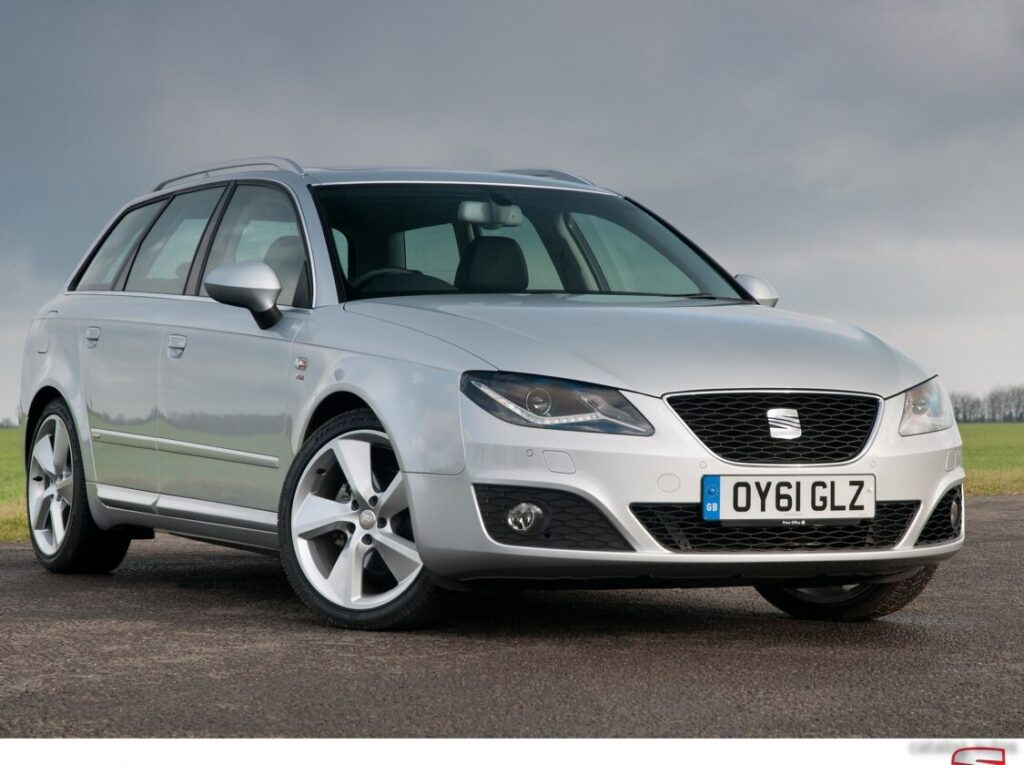
The Seat Exeo ST 2.0 TDI (143 hp) Multitronic, produced from September 2011 to May 2013, was a station wagon (estate) variant of the Exeo model, representing a mid-range offering within the lineup. Based on the Volkswagen B7 Passat, the Exeo was Seat’s attempt to enter the executive car segment. The ST designation signifies the “Sport Tourer” or station wagon body style. This particular variant combined a 2.0-liter turbocharged diesel engine with a continuously variable Multitronic automatic transmission, aiming to provide a balance of fuel efficiency, practicality, and comfortable driving dynamics. It sat between the lower-powered diesel options and the more potent petrol variants in terms of both performance and price.
Powertrain & Engine Architecture
The heart of the Exeo ST 2.0 TDI Multitronic is the EA189 series 2.0-liter inline-four cylinder diesel engine, specifically the CJCA engine code. This engine is a turbocharged common rail direct injection diesel, producing 143 horsepower at 4200 rpm and 320 Nm (236 lb-ft) of torque between 1750 and 2500 rpm. The engine features a 16.5:1 compression ratio and a double overhead camshaft (DOHC) valvetrain with four valves per cylinder. The turbocharger, coupled with an intercooler, significantly boosts power output. The common rail direct injection system, operating at high pressure, ensures precise fuel delivery for optimized combustion and reduced emissions.
The Multitronic transmission is a continuously variable transmission (CVT) developed by Volkswagen Group. Unlike traditional automatic transmissions with fixed gear ratios, the Multitronic utilizes a chain-driven system to provide a virtually infinite number of gear ratios within its operating range. This allows the engine to operate at its most efficient point more often, contributing to improved fuel economy. The Multitronic in the Exeo ST 2.0 TDI features six pre-selectable ratios and a manual mode for driver control. It’s known for its smooth operation and responsiveness, though it requires specific maintenance intervals with oil changes.
Engine Details
The EA189 engine family, while robust, has been subject to scrutiny regarding Dieselgate emissions issues. However, the CJCA variant, produced later in the EA189 lifecycle, generally exhibits fewer issues than earlier iterations. The engine incorporates a diesel particulate filter (DPF) to reduce particulate matter emissions, complying with Euro 5 emission standards. The engine oil capacity is 4.6 liters (4.86 US quarts / 4.05 UK quarts), and the coolant capacity is 8 liters (8.45 US quarts / 7.04 UK quarts). Regular oil changes using the manufacturer-specified oil are crucial for maintaining engine health and preventing premature wear.
Driving Characteristics
The Exeo ST 2.0 TDI Multitronic offers a comfortable and refined driving experience. The Multitronic transmission provides seamless acceleration, and the engine delivers ample torque for everyday driving and overtaking maneuvers. While not a sports car, the 0-100 km/h (0-62 mph) acceleration time of 9.6 seconds is respectable for a diesel-powered station wagon. The maximum speed is rated at 201 km/h (124.9 mph). The Multitronic transmission tends to hold lower gears for longer during acceleration, maximizing torque delivery. Compared to the manual transmission versions of the 2.0 TDI, the Multitronic offers greater convenience, especially in urban traffic. However, some drivers may find the CVT’s lack of distinct gear shifts less engaging than a traditional automatic or manual gearbox. Compared to the higher-output petrol versions (like the 2.0 TSI), the 2.0 TDI Multitronic prioritizes fuel efficiency over outright performance.
Equipment & Trim Levels
The Exeo ST 2.0 TDI Multitronic typically came equipped with a reasonable level of standard features. These included air conditioning, electric windows, electric mirrors, a CD stereo system, and alloy wheels. Higher trim levels, such as the Sport or Stylance, added features like leather upholstery, a sunroof, parking sensors, and a more advanced infotainment system. Optional extras included satellite navigation, heated seats, and bi-xenon headlights. Interior upholstery was typically cloth on the base models, with leather available as an upgrade. The dashboard layout was functional and well-built, reflecting the Exeo’s origins as a Volkswagen-derived vehicle. Safety features included ABS, traction control, and multiple airbags.
Chassis & Braking
The Exeo ST 2.0 TDI Multitronic utilizes an independent multi-link suspension system at the front and an independent trapezoidal lever suspension at the rear, both incorporating a transverse stabilizer bar. This suspension setup provides a comfortable ride and good handling characteristics. The front brakes are ventilated discs measuring 288×25 mm, while the rear brakes are solid discs measuring 245×10 mm. The steering is a hydraulic power-assisted rack and pinion system, offering precise and responsive steering feel. The kerb weight of the vehicle is 1530 kg (3373.07 lbs), influencing the braking performance and handling dynamics. Tire sizes varied depending on the trim level, ranging from 205/55 R16 to 225/40 R18.
Market Reception & Comparison
The Seat Exeo ST 2.0 TDI Multitronic was generally well-received by automotive critics as a practical and comfortable station wagon. It was praised for its fuel efficiency, spacious interior, and refined driving experience. However, it was often criticized for lacking the brand prestige of its German counterparts (Audi, BMW, Mercedes-Benz) and for its somewhat understated styling. Fuel economy figures are rated at 7.1 l/100 km (33.1 US mpg / 39.8 UK mpg) in urban conditions, 4.6 l/100 km (51.1 US mpg / 61.4 UK mpg) on the extra-urban cycle, and 5.5 l/100 km (42.8 US mpg / 51.4 UK mpg) combined. CO2 emissions are 146 g/km. Compared to the petrol versions, the 2.0 TDI Multitronic offered significantly better fuel economy, making it a popular choice for drivers covering long distances. Reliability was generally good, although the Multitronic transmission requires regular maintenance to prevent issues.
Technical Specifications
| Brand | Seat |
| Model | Exeo ST |
| Generation | Exeo ST (facelift 2011) |
| Type (Engine) | 2.0 TDI (143 Hp) Multitronic |
| Start of production | September, 2011 |
| End of production | May, 2013 |
| Powertrain Architecture | Internal Combustion engine |
| Body type | Station wagon (estate) |
| Seats | 5 |
| Doors | 5 |
| Fuel consumption (urban) | 7.1 l/100 km (33.1 US mpg) |
| Fuel consumption (extra urban) | 4.6 l/100 km (51.1 US mpg) |
| Fuel consumption (combined) | 5.5 l/100 km (42.8 US mpg) |
| CO2 emissions | 146 g/km |
| Fuel Type | Diesel |
| Acceleration 0 – 100 km/h | 9.6 sec |
| Acceleration 0 – 62 mph | 9.6 sec |
| Acceleration 0 – 60 mph | 9.1 sec |
| Maximum speed | 201 km/h (124.9 mph) |
| Emission standard | Euro 5 |
| Weight-to-power ratio | 10.7 kg/Hp |
| Power | 143 Hp @ 4200 rpm |
| Torque | 320 Nm @ 1750-2500 rpm (236.02 lb.-ft.) |
| Engine layout | Front, Longitudinal |
| Engine Model/Code | EA189 / CJCA |
| Engine displacement | 1968 cm3 (120.09 cu. in.) |
| Number of cylinders | 4 |
| Engine configuration | Inline |
| Cylinder Bore | 81 mm (3.19 in.) |
| Piston Stroke | 95.5 mm (3.76 in.) |
| Compression ratio | 16.5:1 |
| Number of valves per cylinder | 4 |
| Fuel injection system | Diesel Commonrail |
| Engine aspiration | Turbocharger, Intercooler |
| Valvetrain | DOHC |
| Engine oil capacity | 4.6 l (4.86 US qt | 4.05 UK qt) |
| Coolant | 8 l (8.45 US qt | 7.04 UK qt) |
| Kerb Weight | 1530 kg (3373.07 lbs.) |
| Max. weight | 2090 kg (4607.66 lbs.) |
| Trunk (boot) space – minimum | 422 l (14.9 cu. ft.) |
| Trunk (boot) space – maximum | 1354 l (47.82 cu. ft.) |
| Fuel tank capacity | 70 l (18.49 US gal | 15.4 UK gal) |
| Length | 4666 mm (183.7 in.) |
| Width | 1772 mm (69.76 in.) |
| Height | 1454 mm (57.24 in.) |
| Wheelbase | 2642 mm (104.02 in.) |
| Gearbox | automatic transmission Multitronic |
Legacy
The Seat Exeo ST 2.0 TDI Multitronic, while discontinued in 2013, remains a relatively affordable and practical option in the used car market. The CJCA engine, when properly maintained, is known for its durability. However, potential buyers should be aware of the maintenance requirements of the Multitronic transmission, including regular oil changes. The DPF can also require attention, particularly on vehicles that have primarily been used for short journeys. Overall, the Exeo ST 2.0 TDI Multitronic offers a compelling combination of space, fuel efficiency, and comfort, making it a worthwhile consideration for those seeking a used executive station wagon.