
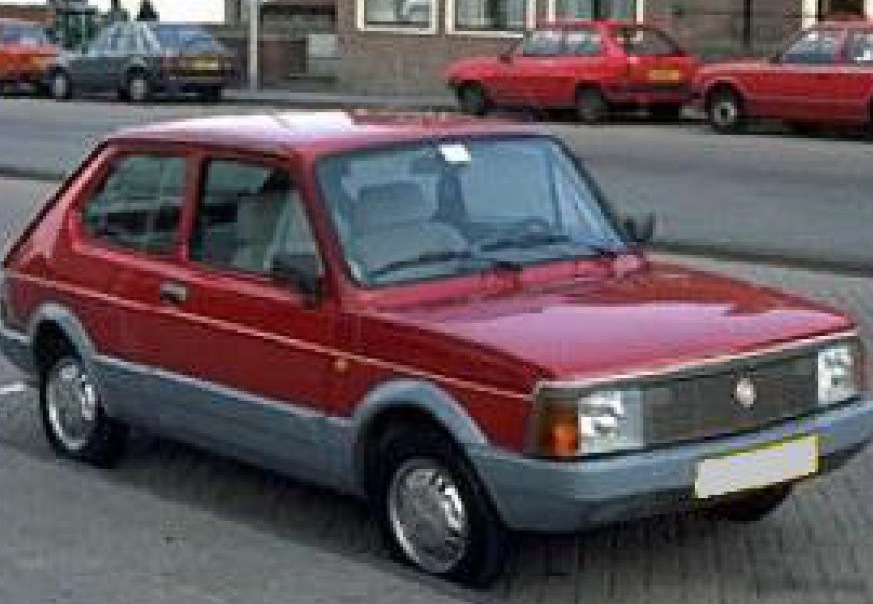
The Seat Fura, produced between 1981 and 1986, was a small, economical hatchback built by the Spanish automaker SEAT, then a subsidiary of Fiat. The 0.9-liter, 43 horsepower variant (designated 025A) represented the entry-level model within the Fura range, offering basic transportation at a competitive price point. It was a key component of SEAT’s strategy to provide affordable motoring to the Spanish market during a period of economic transition. The Fura itself was based on the Fiat 127, inheriting much of its mechanical underpinnings and design. This particular 0.9L engine and configuration was the mainstay of the Fura lineup for the majority of its production run, appealing to buyers prioritizing fuel efficiency and low running costs over outright performance.
The 0.9L Fura: Entry-Level Economics
The 0.9L Fura occupied the bottom rung of the Fura model ladder. While SEAT did offer slightly more powerful versions, including a 1.0-liter engine, the 0.9L remained the most popular due to its affordability. It was aimed at first-time car buyers, families needing a second vehicle for city use, and those for whom fuel economy was paramount. The Fura, in general, was designed as a practical and robust vehicle, and the 0.9L variant amplified these qualities by prioritizing simplicity and minimizing weight. It was a direct competitor to other small European hatchbacks of the era, such as the Renault 5 and the Citroën 2CV, though generally offered a more modern, albeit still basic, driving experience.
Powertrain & Engine Architecture
The heart of the 0.9L Fura was the SEAT 127-derived engine, a naturally aspirated, inline-three cylinder petrol engine. While officially rated at 43 horsepower (32 kW) at 6000 rpm, real-world output often fell slightly short due to variations in manufacturing and tuning. The engine featured a single overhead camshaft (SOHC) operating two valves per cylinder. Fuel delivery was managed by a Weber carburetor, a common setup for vehicles of this era. The engine’s block was cast iron, providing durability, while the cylinder head was aluminum, helping to reduce weight. The compression ratio was 8.8:1. The engine code for this variant is generally referenced as 025A, though variations existed depending on the specific year of manufacture.
The Fura 0.9L was exclusively offered with a four-speed manual transmission. This transmission was a conventional setup, known for its robustness but lacking in sophistication. It featured synchromesh on the upper three gears, making shifting relatively smooth, but requiring a degree of skill when downshifting into first gear. The transmission was directly coupled to the engine, transmitting power to the front wheels. There was no automatic transmission option available for this specific Fura variant.
Driving Characteristics
The driving experience in the 0.9L Fura was decidedly unhurried. With only 43 horsepower propelling a vehicle weighing around 780 kg (1720 lbs), acceleration was modest. 0 to 60 mph (0 to 97 km/h) took approximately 18-20 seconds, and top speed was around 85 mph (137 km/h). However, the Fura’s light weight and nimble handling made it surprisingly enjoyable to drive around town. The steering was direct and responsive, and the suspension, while basic, provided a reasonably comfortable ride on smooth surfaces. The four-speed gearbox required frequent shifting to maintain momentum, especially when tackling hills. The engine was relatively noisy, particularly at higher revs, but this was characteristic of small, three-cylinder engines of the period. Compared to the slightly more powerful 1.0L Fura, the 0.9L felt noticeably slower, particularly in highway situations. However, the 0.9L offered superior fuel economy, making it a more attractive option for those primarily using the car for short trips.
Equipment & Trim Levels
The 0.9L Fura was deliberately spartan in its equipment levels, reflecting its position as the entry-level model. Standard features were minimal, typically including cloth upholstery, vinyl floor covering, and basic instrumentation consisting of a speedometer, fuel gauge, and warning lights. The seats were relatively simple in design, prioritizing durability over comfort. The dashboard was constructed from hard plastic and featured minimal trim. Options were limited, but could include a radio, a heater, and upgraded seat upholstery. The exterior trim was also basic, with black plastic bumpers and steel wheels with hubcaps. The Fura did not offer power steering, power windows, or air conditioning. The focus was on providing a functional and reliable vehicle at the lowest possible cost.
Chassis & Braking
The Fura’s chassis was a monocoque construction, providing a reasonable level of rigidity. The front suspension consisted of independent coil springs and wishbones, while the rear suspension utilized a trailing arm setup with coil springs. This suspension configuration provided a comfortable ride, although it was prone to some body roll during cornering. The steering was a rack and pinion system, offering precise control. The braking system was relatively simple, featuring drum brakes on all four wheels. While adequate for normal driving conditions, the drum brakes lacked the stopping power of disc brakes, particularly in wet conditions. The Fura did not feature anti-lock brakes (ABS) or any other advanced braking aids.
Market Reception & Comparison
The Seat Fura 0.9L was generally well-received in the Spanish market, where it was seen as a practical and affordable option for everyday transportation. Critics praised its fuel economy, reliability, and ease of maintenance. However, they also noted its lack of performance and basic equipment levels. Compared to the 1.0L Fura, the 0.9L offered significantly better fuel economy – typically around 45-50 mpg (5.2-5.7 L/100km) – but at the expense of performance. The 0.9L was also cheaper to insure and maintain, making it an attractive option for budget-conscious buyers. In terms of reliability, the Fura 0.9L proved to be a robust and dependable vehicle, with relatively few major mechanical issues. However, like all cars of this era, it was susceptible to rust, particularly in coastal areas.
Technical Specifications
| Body Type | 3-Door Hatchback |
| Engine Type | Inline-Three, Petrol (Gasoline) |
| Engine Displacement | 898 cc (54.8 cu in) |
| Power Output | 43 hp (32 kW) @ 6000 rpm |
| Torque | 58 lb-ft (79 Nm) @ 3000 rpm |
| Fuel System | Weber Carburetor |
| Transmission | 4-Speed Manual |
| Drivetrain | Front-Wheel Drive |
| Weight | 780 kg (1720 lbs) |
| Top Speed | 85 mph (137 km/h) |
| 0-60 mph | 18-20 seconds (approx.) |
| Fuel Economy | 45-50 mpg (5.2-5.7 L/100km) |
Legacy
The Seat Fura, and particularly the 0.9L variant, holds a significant place in Spanish automotive history. It represented a period of modernization for SEAT and provided affordable transportation to a wide range of buyers. Today, the Fura 0.9L is a relatively rare sight on the roads, but it has gained a following among classic car enthusiasts. Its simplicity, reliability, and affordability make it an attractive option for those seeking a nostalgic driving experience. Parts availability can be challenging, but many components are interchangeable with those from the Fiat 127. While not a performance car by any means, the Fura 0.9L remains a charming and practical reminder of a bygone era in automotive design. The engine, while basic, is known for its durability and relatively straightforward maintenance, making it a viable option for those willing to invest the time and effort in keeping it running. The Fura 0.9L’s legacy is one of providing dependable, economical transportation to the masses during a crucial period of Spanish economic development.
