
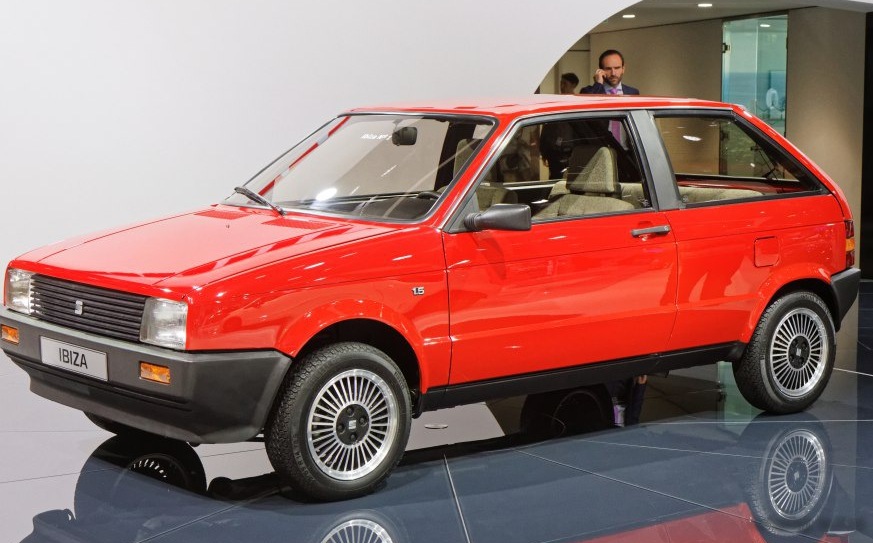
The Seat Ibiza Mark I 0.9, produced between 1986 and 1993, represents the entry point into the first generation of the popular Spanish hatchback. Positioned as the most affordable model in the Ibiza I range, it aimed to provide economical transportation for budget-conscious buyers. This variant utilized a small-displacement, naturally aspirated engine paired with a five-speed manual transmission, distinguishing it from later, more powerful versions like the 1.5 and 1.6-liter models. The Ibiza I, built on the Volkswagen Polo Mk2 platform (internally designated 1HX0), was a significant vehicle for SEAT, representing their first foray into a modern, front-wheel-drive hatchback after years of producing largely rebadged Fiat models.
Powertrain & Engine Architecture
The heart of the Ibiza 0.9 is the 146A engine, a 903cc (55.1 cubic inches) inline-four cylinder gasoline engine. This engine, while modest in output, was known for its relative simplicity and durability. It featured a single overhead camshaft (SOHC) operating two valves per cylinder. Fuel delivery was managed by a carburetor, a common feature for vehicles of this era and price point. The compression ratio was set at 9:1. The engine produced 44 horsepower (hp) at 5800 rpm and 63 Newton-meters (46.47 lb-ft) of torque at 3000 rpm. The engine’s power-to-weight ratio was 19.1 kg/hp, and the torque-to-weight ratio was 13.3 kg/Nm.
The Ibiza 0.9 was exclusively offered with a five-speed manual transmission. This transmission was a standard unit for the Volkswagen Group at the time, known for its robust construction and relatively smooth shifting. The gear ratios were optimized for fuel efficiency and acceptable acceleration, prioritizing usability over outright performance. First gear was relatively short, aiding in starting from a standstill, while higher gears were spaced to allow for comfortable cruising at highway speeds, though maintaining those speeds required significant engine effort.
Engine Specifications
Key engine specifications include a cylinder bore of 65mm and a piston stroke of 68mm. The engine required 3.6 liters (3.8 US quarts) of engine oil and 5 liters (5.28 US quarts) of coolant. The engine was transversely mounted in the front of the vehicle, driving the front wheels.
Driving Characteristics
The driving experience in the Ibiza 0.9 was characterized by its economy and ease of use, rather than exhilarating performance. Acceleration from 0 to 100 km/h (0 to 62 mph) took approximately 22 seconds, and 0 to 60 mph took around 20.9 seconds. The top speed was limited to 129 km/h (80.16 mph). The engine felt strained at higher speeds, and overtaking maneuvers required careful planning. However, within urban environments, the Ibiza 0.9 proved nimble and easy to maneuver. The five-speed gearbox allowed drivers to select the appropriate gear for optimal fuel efficiency and responsiveness. Compared to the more powerful 1.5 and 1.6-liter versions, the 0.9 offered significantly less power and torque, resulting in a slower and less refined driving experience. However, it also provided superior fuel economy, making it an attractive option for those prioritizing cost savings.
Equipment & Trim Levels
The Ibiza 0.9 was typically offered in a basic trim level, reflecting its position as the entry-level model. Standard features generally included cloth upholstery, a basic dashboard layout with analog gauges, and manual windows and door locks. Power steering and central locking were typically not standard equipment, but could be added as optional extras. The interior was functional and durable, prioritizing practicality over luxury. The exterior featured steel wheels with hubcaps, and minimal chrome trim. Optional extras included a sunroof, upgraded audio system, and different exterior color options. The interior space was adequate for a small hatchback, offering seating for five passengers, although rear passenger space was limited.
Chassis & Braking
The Ibiza 0.9 utilized a relatively simple chassis design. Front suspension consisted of a spring strut setup, while the rear also employed a spring strut configuration. The front brakes were disc brakes, providing adequate stopping power for the vehicle’s weight and performance. However, the rear brakes were drum brakes, which offered less stopping power and were more prone to fading under heavy use. The steering system was a steering rack and pinion, providing reasonably precise steering feel. The vehicle rode on 155/80 R13 tires mounted on 5J x 13 steel wheels. The curb weight of the Ibiza 0.9 was 840 kg (1851.88 lbs), and the maximum weight was 1315 kg (2899.08 lbs). The maximum load capacity was 475 kg (1047.2 lbs).
Market Reception & Comparison
The Seat Ibiza 0.9 was generally well-received as an affordable and economical hatchback. Critics praised its fuel efficiency and ease of driving, but noted its lack of power and refinement compared to more expensive rivals. Fuel consumption was rated at 8.8 l/100 km (26.7 US mpg) in urban conditions and 5.3 l/100 km (44.4 US mpg) in extra-urban conditions. Compared to the 1.5-liter Ibiza, the 0.9 offered significantly better fuel economy, but at the cost of performance. The 0.9 was primarily targeted at first-time car buyers, students, and those seeking a low-cost, reliable mode of transportation. It competed with other small hatchbacks of the era, such as the Fiat Uno, Renault 5, and Peugeot 205.
Technical Specifications
| Brand | Seat |
| Model | Ibiza |
| Generation | Ibiza I |
| Type (Engine) | 0.9 (44 Hp) |
| Start of production | 1986 |
| End of production | 1993 |
| Body type | Hatchback |
| Seats | 5 |
| Doors | 3-5 |
| Fuel consumption (urban) | 8.8 l/100 km (26.7 US mpg) |
| Fuel consumption (extra urban) | 5.3 l/100 km (44.4 US mpg) |
| Fuel Type | Petrol (Gasoline) |
| Acceleration 0-100 km/h | 22 sec |
| Acceleration 0-62 mph | 22 sec |
| Acceleration 0-60 mph | 20.9 sec |
| Maximum speed | 129 km/h (80.16 mph) |
| Weight-to-power ratio | 19.1 kg/Hp |
| Engine displacement | 903 cm3 (55.1 cu. in.) |
| Power | 44 Hp @ 5800 rpm |
| Torque | 63 Nm @ 3000 rpm (46.47 lb.-ft. @ 3000 rpm) |
| Engine Model/Code | 146A |
| Number of cylinders | 4 |
| Engine configuration | Inline |
| Cylinder Bore | 65 mm (2.56 in.) |
| Piston Stroke | 68 mm (2.68 in.) |
| Compression ratio | 9:1 |
| Fuel injection system | Carburettor |
| Engine oil capacity | 3.6 l (3.8 US qt | 3.17 UK qt) |
| Coolant | 5 l (5.28 US qt | 4.4 UK qt) |
| Kerb Weight | 840 kg (1851.88 lbs.) |
| Max. weight | 1315 kg (2899.08 lbs.) |
| Trunk (boot) space – minimum | 320 l (11.3 cu. ft.) |
| Trunk (boot) space – maximum | 1200 l (42.38 cu. ft.) |
| Fuel tank capacity | 50 l (13.21 US gal | 11 UK gal) |
| Length | 3685 mm (145.08 in.) |
| Width | 1610 mm (63.39 in.) |
| Height | 1410 mm (55.51 in.) |
| Wheelbase | 2445 mm (96.26 in.) |
| Number of gears | 5 |
| Gearbox type | Manual transmission |
Legacy
The Seat Ibiza 0.9, while not a performance icon, holds a significant place in the history of SEAT. It represented the brand’s transition to modern, front-wheel-drive vehicles and helped establish the Ibiza as a popular choice in the European hatchback market. The 146A engine, while simple, proved to be relatively reliable, and many examples are still on the road today. In the used car market, the Ibiza 0.9 is valued for its affordability and simplicity. However, potential buyers should be aware of the engine’s limited power and the age-related issues common to vehicles of this era. Parts availability is generally good, thanks to the widespread use of Volkswagen Group components. The Ibiza 0.9 remains a popular choice for classic car enthusiasts and those seeking a low-cost, economical vehicle.
