
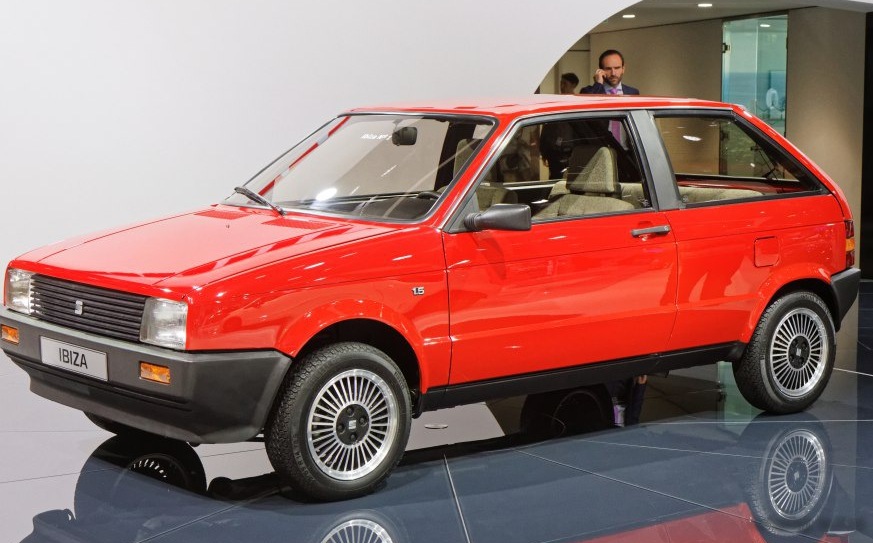
The Seat Ibiza I 1.2 i (71 hp) was an entry-level variant of the first-generation Seat Ibiza, produced between 1989 and 1993. Positioned as the most affordable model in the Ibiza range, it served as a practical and economical hatchback aimed at budget-conscious buyers. The Ibiza I, based on the Volkswagen Polo Mk2 platform (internally designated 1HX0/A3), represented Seat’s first foray into a truly modern, front-wheel-drive hatchback, moving away from the older, rear-wheel-drive designs that had characterized the Spanish automaker’s earlier offerings. This 1.2-liter version was crucial in establishing the Ibiza as a viable competitor in the European supermini segment.
Powertrain & Engine Architecture
The heart of the Ibiza 1.2 i was the 021A1 engine, a 1.2-liter inline four-cylinder gasoline engine. This engine, derived from the Volkswagen Polo’s powerplant, featured a relatively simple design with a single overhead camshaft (SOHC) operating two valves per cylinder. The engine’s bore and stroke measured 75mm x 67.5mm, resulting in a displacement of 1193 cc (72.8 cubic inches). Fuel delivery was handled by a multi-port manifold injection system, a significant upgrade over the carburetors used in older Seat models. While not particularly powerful, the 021A1 engine was known for its reliability and fuel efficiency.
The Ibiza 1.2 i was exclusively offered with a five-speed manual transmission. This transmission was a standard, non-synchronized unit designed for durability and ease of maintenance. The gear ratios were optimized for fuel economy and everyday driving, rather than outright performance. The front wheels were driven via standard driveshafts. An automatic transmission was *not* offered with this engine configuration.
Engine Specifications
The 021A1 engine produced 71 horsepower at 6000 rpm and 120 Nm (88.51 lb-ft) of torque at 4000 rpm. This resulted in a power-to-weight ratio of 12.5 kg/hp and a torque-to-weight ratio of 7.4 kg/Nm. The compression ratio was set at 10.8:1. The engine required approximately 3.3 liters (3.49 US quarts) of engine oil and 7.5 liters (7.93 US quarts) of coolant.
Driving Characteristics
The Seat Ibiza 1.2 i offered modest performance. Acceleration from 0 to 100 km/h (0-62 mph) took approximately 12.8 seconds, while 0 to 60 mph was achieved in around 12.2 seconds. The top speed was rated at 157 km/h (97.56 mph). The engine felt somewhat strained at higher speeds, and overtaking required careful planning. The five-speed manual transmission allowed drivers to keep the engine in its optimal power band, but the overall driving experience was geared towards practicality and economy rather than sporty handling. Compared to the later 1.5 and 2.0-liter versions of the Ibiza I, the 1.2 i felt significantly underpowered. The 1.5-liter offered a noticeable improvement in acceleration and highway cruising ability, while the 2.0-liter (often the GLX or GTI trims) provided a much more engaging and performance-oriented driving experience.
The steering was light and precise, making the Ibiza easy to maneuver in urban environments. The suspension, while basic, provided a reasonably comfortable ride, absorbing most road imperfections adequately. However, it wasn’t designed for spirited cornering.
Equipment & Trim Levels
The Ibiza 1.2 i was typically offered in a basic trim level, focusing on essential features. Standard equipment generally included cloth upholstery, a basic dashboard layout with analog gauges, and manual windows and door locks. The interior was functional and durable, but lacked the refinement of higher-spec Ibiza models. Optional extras were limited, but could include a radio/cassette player, upgraded interior trim, and occasionally, power steering. The exterior styling was simple and understated, with steel wheels and black plastic trim. The 3-door and 5-door body styles were both available, with the 5-door version offering increased practicality for families.
Chassis & Braking
The Ibiza 1.2 i utilized a front-wheel-drive chassis with a MacPherson strut suspension at the front and a twist-beam suspension at the rear. The front brakes were disc brakes, providing adequate stopping power, while the rear brakes were drum brakes, a cost-saving measure common in entry-level vehicles of the time. The steering system was a rack and pinion setup, offering precise and responsive steering. The standard tire size was 165/65 SR14. The curb weight of the Ibiza 1.2 i was approximately 890 kg (1962.11 lbs), contributing to its relatively nimble handling.
Market Reception & Comparison
The Seat Ibiza 1.2 i was generally well-received as an affordable and reliable supermini. Critics praised its fuel efficiency and practicality, but noted its lack of power. Compared to rivals like the Ford Fiesta, Renault Clio, and Peugeot 205, the Ibiza 1.2 i offered a competitive price point but lacked the driving refinement and performance of some of its competitors. Within the Ibiza lineup, the 1.2 i served as the entry point, attracting buyers who prioritized economy over performance. The 1.5-liter Ibiza offered a better balance of performance and fuel economy, while the 2.0-liter models appealed to drivers seeking a more sporty driving experience. Fuel consumption figures were respectable for the time, averaging around 6.6 l/100 km (35.6 US mpg) combined.
Technical Specifications
| Brand | Seat |
| Model | Ibiza |
| Generation | Ibiza I |
| Type (Engine) | 1.2 i (71 Hp) |
| Start of production | 1989 |
| End of production | 1993 |
| Body type | Hatchback |
| Seats | 5 |
| Doors | 3-5 |
| Fuel consumption (urban) | 9 l/100 km (26.1 US mpg) |
| Fuel consumption (extra urban) | 4.9 l/100 km (48 US mpg) |
| Fuel consumption (combined) | 6.6 l/100 km (35.6 US mpg) |
| Fuel Type | Petrol (Gasoline) |
| Acceleration 0 – 100 km/h | 12.8 sec |
| Acceleration 0 – 62 mph | 12.8 sec |
| Acceleration 0 – 60 mph | 12.2 sec |
| Maximum speed | 157 km/h (97.56 mph) |
| Weight-to-power ratio | 12.5 kg/Hp |
| Weight-to-torque ratio | 7.4 kg/Nm |
| Power | 71 Hp @ 6000 rpm |
| Torque | 120 Nm @ 4000 rpm (88.51 lb.-ft. @ 4000 rpm) |
| Engine layout | Front, Transverse |
| Engine Model/Code | 021A1 |
| Engine displacement | 1193 cm3 (72.8 cu. in.) |
| Number of cylinders | 4 |
| Engine configuration | Inline |
| Cylinder Bore | 75 mm (2.95 in.) |
| Piston Stroke | 67.5 mm (2.66 in.) |
| Compression ratio | 10.8:1 |
| Number of valves per cylinder | 2 |
| Fuel injection system | Multi-port manifold injection |
| Engine oil capacity | 3.3 l (3.49 US qt | 2.9 UK qt) |
| Coolant | 7.5 l (7.93 US qt | 6.6 UK qt) |
| Kerb Weight | 890 kg (1962.11 lbs.) |
| Max. weight | 1400 kg (3086.47 lbs.) |
| Max load | 510 kg (1124.36 lbs.) |
| Trunk (boot) space – minimum | 320 l (11.3 cu. ft.) |
| Trunk (boot) space – maximum | 1200 l (42.38 cu. ft.) |
| Fuel tank capacity | 50 l (13.21 US gal | 11 UK gal) |
| Length | 3685 mm (145.08 in.) |
| Width | 1610 mm (63.39 in.) |
| Height | 1410 mm (55.51 in.) |
| Wheelbase | 2445 mm (96.26 in.) |
| Front track | 1420 mm (55.91 in.) |
| Rear track | 1375 mm (54.13 in.) |
| Drivetrain | Front wheel drive |
| Number of gears | 5 |
| Gearbox type | Manual transmission |
| Front suspension | Spring Strut |
| Rear suspension | Spring Strut |
| Front brakes | Disc |
| Rear brakes | Drum |
| Tires size | 165/65 SR14 |
Legacy
The Seat Ibiza I 1.2 i, while not a performance icon, remains a fondly remembered entry-level car from the early 1990s. The 021A1 engine proved to be remarkably durable, and many examples are still on the road today, albeit often with significant mileage. In the used car market, these Ibizas are typically very affordable, appealing to those seeking a cheap and cheerful runabout. However, potential buyers should be aware of the age-related issues common to vehicles of this era, such as rust, worn suspension components, and potential electrical problems. The 1.2 i’s simplicity makes it relatively easy to maintain for those with basic mechanical skills, and parts availability, while not always abundant, is generally reasonable. It represents a significant step forward for Seat, marking its transition to modern front-wheel-drive technology and establishing a foothold in the competitive European hatchback market.
