
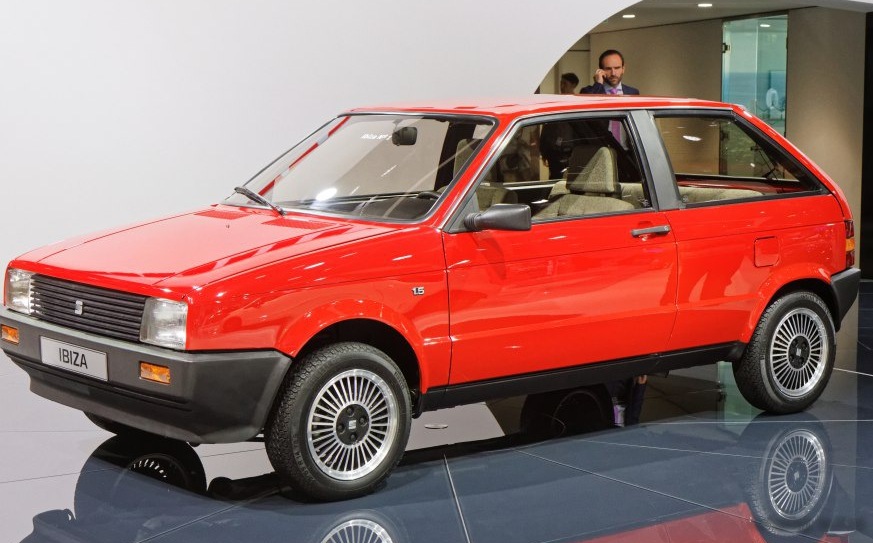
The Seat Ibiza I 1.7 i, produced between 1991 and 1993, represented a significant step forward for the Spanish automaker, marking its entry into the modern supermini segment. Built on the Volkswagen Group’s 1HX0 platform – shared with the first-generation Volkswagen Polo and Škoda Favorit – the Ibiza I aimed to provide a stylish, practical, and affordable vehicle for European buyers. The 1.7 i variant, producing 100 horsepower, occupied a mid-range position within the Ibiza I lineup, offering a balance between performance and economy. It sat above the base 1.5-liter models and below the more potent (and later introduced) 1.6-liter and 2.0-liter versions.
The 1.7 i Ibiza I: Positioning and Market Context
The early 1990s saw a growing demand for small, fuel-efficient hatchbacks in Europe. The original Seat Ibiza was designed to capitalize on this trend, offering a fresh alternative to established competitors like the Peugeot 205, Renault Clio, and Fiat Uno. The 1.7 i model was specifically targeted at buyers who desired a bit more performance than the entry-level engines offered, without the higher cost and insurance premiums associated with the larger displacement options. It was a popular choice for young drivers and small families seeking a versatile and reliable vehicle.
Powertrain & Engine Architecture
The heart of the Ibiza I 1.7 i is the 021B3 engine, a 1675 cc inline four-cylinder gasoline engine. This engine is a naturally aspirated unit featuring multi-port fuel injection, a significant upgrade over the carburetor systems found in earlier Seat models. The engine utilizes a two-valve-per-cylinder configuration and a compression ratio of 10.8:1. The 021B3 engine is closely related to those found in early Volkswagen Polos and Škoda Favorits, reflecting the shared platform and engineering resources within the Volkswagen Group. Engine oil capacity is 4 liters (4.23 US quarts), and the cooling system requires 7.5 liters (7.93 US quarts) of coolant.
While a five-speed manual transmission was standard on the 1.7 i, an optional three-speed automatic transmission was available. This automatic gearbox, while providing convenience, did impact performance and fuel economy compared to the manual version. The automatic transmission was a conventional hydraulic unit, lacking the electronic controls found in more modern automatics. It featured relatively wide gear ratios, prioritizing smooth operation over outright acceleration.
Driving Characteristics
The Seat Ibiza I 1.7 i, when equipped with the five-speed manual transmission, offered a reasonably engaging driving experience. The 100 hp output, while not overwhelming, provided sufficient power for everyday driving and even some spirited maneuvers. Acceleration from 0 to 60 mph took approximately 9.9 seconds, and the car could reach a top speed of 113.09 mph (182 km/h). The engine delivered its peak torque of 138 Nm (101.78 lb-ft) at 3800 rpm, providing a usable powerband for overtaking and climbing hills.
However, the automatic transmission version significantly altered the driving experience. The wider gear ratios and slower shift times resulted in noticeably slower acceleration – approximately 10.4 seconds to 62 mph. The automatic also tended to hold lower gears for longer, increasing engine noise and reducing fuel efficiency. While the automatic offered convenience, it was generally considered less enjoyable to drive than the manual counterpart. The weight-to-power ratio of 9.2 kg/Hp and weight-to-torque ratio of 6.6 kg/Nm reflect the car’s relatively light weight and decent power delivery.
Equipment & Trim Levels
The Ibiza I 1.7 i was typically equipped with a relatively basic level of standard features, reflecting its position as a mainstream supermini. Standard equipment generally included cloth upholstery, a basic instrument cluster, and manual windows and door locks. Power steering was often an optional extra. Interior trim was functional and durable, prioritizing practicality over luxury. Higher trim levels, often denoted by specific badges or option packages, could add features such as alloy wheels, a sunroof, and upgraded audio systems.
Optional extras for the 1.7 i included air conditioning, central locking, and electric windows. The availability of these options varied depending on the market and the specific year of production. The trunk (boot) space offered a practical 320 liters (11.3 cu. ft.) with the rear seats up, expanding to 1200 liters (42.38 cu. ft.) when folded down.
Chassis & Braking
The Ibiza I utilized a simple yet effective chassis design. Front suspension consisted of MacPherson strut springs, while the rear employed a twist-beam axle with coil springs. This setup provided a reasonable balance between ride comfort and handling. The front brakes were disc brakes, offering adequate stopping power, while the rear brakes were drum brakes – a cost-saving measure common in vehicles of this class. The steering system was a rack and pinion setup, providing precise and responsive steering feel.
The standard tire size was 185/60 R14, providing a good compromise between grip and ride comfort. The car’s relatively light weight (915 kg / 2017.23 lbs) contributed to its nimble handling characteristics. A stabilizer bar was included in the front suspension to reduce body roll during cornering.
Market Reception & Comparison
The Seat Ibiza I 1.7 i was generally well-received by automotive critics. It was praised for its stylish design, practical interior, and relatively affordable price. The 1.7-liter engine was considered a good compromise between performance and fuel economy. However, the optional automatic transmission was often criticized for its sluggish performance and reduced fuel efficiency. Compared to its rivals, the Ibiza I offered a distinctive Spanish flair and a slightly more sporty driving experience than some of its more conservative competitors.
Fuel economy figures for the 1.7 i were respectable for the time, with combined fuel consumption averaging 6.7 l/100 km (35.1 US mpg / 42.2 UK mpg). Reliability was generally good, although some owners reported minor issues with the electrical system. The 1.7 i proved to be a more reliable option than some of the earlier, smaller-displacement engines offered in the Ibiza I range.
Technical Specifications
| Brand | Seat |
| Model | Ibiza |
| Generation | Ibiza I |
| Type (Engine) | 1.7 i (100 Hp) |
| Start of production | 1991 |
| End of production | 1993 |
| Body type | Hatchback |
| Seats | 5 |
| Doors | 3-5 |
| Fuel consumption (urban) | 10.1 l/100 km (23.3 US mpg) |
| Fuel consumption (extra urban) | 5.1 l/100 km (46.1 US mpg) |
| Fuel consumption (combined) | 6.7 l/100 km (35.1 US mpg) |
| Fuel Type | Petrol (Gasoline) |
| Acceleration 0 – 100 km/h | 10.4 sec |
| Acceleration 0 – 60 mph | 9.9 sec |
| Maximum speed | 182 km/h (113.09 mph) |
| Kerb Weight | 915 kg (2017.23 lbs) |
| Max. weight | 1450 kg (3196.7 lbs) |
| Engine displacement | 1675 cm3 (102.21 cu. in.) |
| Power | 100 Hp @ 5700 rpm |
| Torque | 138 Nm @ 3800 rpm (101.78 lb.-ft. @ 3800 rpm) |
| Engine Code | 021B3 |
| Fuel tank capacity | 50 l (13.21 US gal) |
| Length | 3685 mm (145.08 in.) |
| Width | 1610 mm (63.39 in.) |
| Height | 1410 mm (55.51 in.) |
| Wheelbase | 2445 mm (96.26 in.) |
| Number of gears | 5 (manual) / 3 (automatic) |
Legacy
The Seat Ibiza I 1.7 i, while now a classic vehicle, remains a relatively affordable and accessible option in the used car market. The 021B3 engine is known for its durability and relatively simple maintenance requirements. However, potential buyers should be aware of the possibility of age-related issues, such as corrosion and wear on suspension components. The automatic transmission versions, while offering convenience, are generally less desirable due to their lower performance and potentially higher maintenance costs. Overall, the Ibiza I 1.7 i represents a significant milestone in Seat’s history, establishing the brand as a credible competitor in the European supermini segment.
