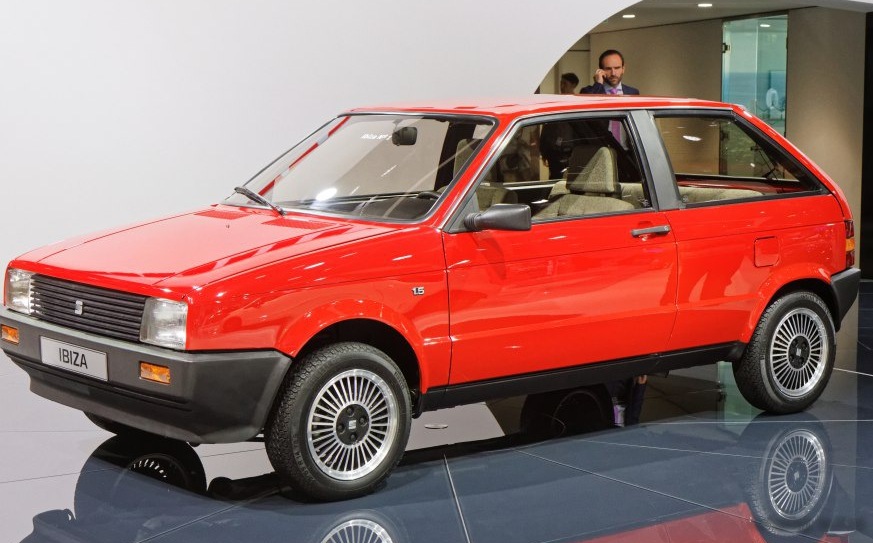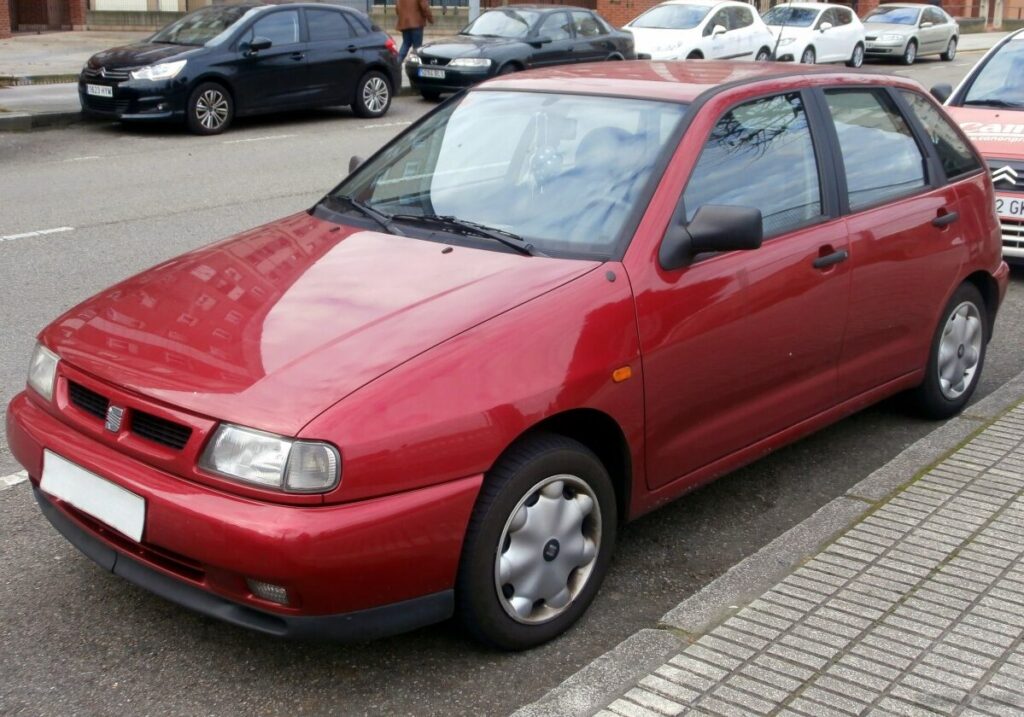
The Seat Ibiza II 1.05, produced between February 1993 and June 1996, represented the entry point into the second generation of Seat’s popular supermini. Positioned as the most affordable model in the Ibiza II range, it served as a practical and economical choice for first-time buyers and those seeking basic transportation. The Ibiza II, built upon the Volkswagen Group’s 1HX0/A3 platform (shared with the Volkswagen Polo Mk3 and the SEAT Cordoba), aimed to modernize Seat’s image and offer a more competitive product in the European small car market. The 1.05-liter variant, with its modest 45 horsepower, was specifically tailored for urban driving and fuel efficiency, prioritizing affordability over outright performance.
The 1.05L Engine and its Role in the Ibiza II Lineup
The 1.05-liter engine, designated the AAU engine code, was a key component of Seat’s strategy to offer a competitively priced vehicle. It was a naturally aspirated, inline-four cylinder engine with a displacement of 1043 cubic centimeters (63.65 cubic inches). This engine was not a performance powerhouse; instead, it was designed for reliability and low running costs. Within the Ibiza II lineup, it sat below the 1.4-liter and 1.6-liter gasoline engines, as well as the diesel options, offering a significantly lower price point. The target audience for the 1.05 was budget-conscious buyers who prioritized fuel economy and ease of use over sporty handling or rapid acceleration. It was often chosen by younger drivers, city commuters, and those needing a small, economical second car.
Powertrain & Engine Architecture
The AAU engine featured a single-point fuel injection system, a relatively simple technology for the time, contributing to its lower cost. It utilized an overhead camshaft (OHC) valvetrain with two valves per cylinder. The engine’s bore and stroke measured 75mm and 59mm respectively, resulting in a compression ratio of 10:1. The engine produced 45 horsepower at 5200 rpm and 76 Nm (56.05 lb-ft) of torque at 2800 rpm. The engine oil capacity was 3.5 liters (3.7 US quarts), and the cooling system required 4.2 liters (4.44 US quarts) of coolant. The engine was transversely mounted in the front of the vehicle, driving the front wheels.
The 1.05L Ibiza II was almost exclusively paired with a five-speed manual transmission. While an automatic transmission was offered on higher-spec Ibiza II models, it was not available with the 1.05L engine. This was likely due to the engine’s limited power output and the desire to maximize fuel efficiency. The manual gearbox featured typical gear ratios for a small, economy-focused car, prioritizing acceleration in lower gears and fuel efficiency at highway speeds.
Driving Characteristics
Driving the Seat Ibiza II 1.05 was an exercise in patience. Acceleration was slow, taking approximately 22.3 seconds to reach 100 km/h (62 mph) and 21.2 seconds to reach 60 mph. The top speed was limited to 140 km/h (87 mph). The engine felt strained when pushed hard, and overtaking required careful planning. However, in urban environments, the 1.05 proved surprisingly capable. The light steering and compact dimensions made it easy to maneuver in tight spaces, and the engine provided sufficient power for everyday driving. The five-speed manual transmission allowed drivers to keep the engine in its optimal power band, maximizing efficiency and minimizing strain. Compared to the 1.4 and 1.6-liter versions, the 1.05 offered significantly less performance, but it also delivered superior fuel economy.
Equipment & Trim Levels
The Ibiza II 1.05 was typically offered in a basic trim level, focusing on essential features. Standard equipment generally included front disc brakes, rear drum brakes, a steering rack and pinion, and 175/70 R13 tires on 5.5J x 13 steel wheels. Interior features were spartan, with basic cloth upholstery and a simple dashboard layout. Power steering and central locking were often optional extras. Air conditioning was rarely fitted to this base model. The 3-door hatchback configuration was the most common, although a 5-door version was also available. The interior offered seating for five passengers, but rear legroom was limited. Trunk space ranged from 270 liters (9.53 cubic feet) with the rear seats up to 580 liters (20.48 cubic feet) with the rear seats folded down.
Chassis & Braking
The Ibiza II 1.05 utilized a front-wheel-drive layout with a relatively simple suspension setup. The front suspension consisted of wishbones, while the rear suspension employed a spring strut arrangement. This setup prioritized ride comfort over sporty handling. The brakes were disc brakes on the front wheels and drum brakes on the rear wheels. An Anti-lock Braking System (ABS) was available as an optional extra, enhancing safety. The kerb weight of the vehicle was 895 kg (1973.14 lbs), contributing to its relatively low fuel consumption. The maximum weight capacity was 1370 kg (3020.33 lbs), allowing for a maximum load of 475 kg (1047.2 lbs).
Market Reception & Comparison
The Seat Ibiza II 1.05 received mixed reviews from automotive critics. While praised for its affordability and fuel economy (6.9 l/100 km combined, equivalent to 34.1 US mpg), it was often criticized for its lack of performance and basic interior. Compared to rivals like the Ford Fiesta and the Renault Clio, the Ibiza II 1.05 offered a similar level of practicality but lacked the refinement and driving dynamics of some competitors. However, its lower price point made it an attractive option for budget-conscious buyers. In terms of reliability, the AAU engine proved to be generally robust, although regular maintenance was essential. The simple design of the engine and fuel injection system made it relatively easy and inexpensive to repair.
Technical Specifications
| Brand | Seat |
| Model | Ibiza |
| Generation | Ibiza II |
| Type (Engine) | 1.05 (45 Hp) |
| Start of production | February, 1993 |
| End of production | June, 1996 |
| Powertrain Architecture | Internal Combustion engine |
| Body type | Hatchback |
| Seats | 5 |
| Doors | 3-5 |
| Fuel consumption (combined) | 6.9 l/100 km |
| Fuel consumption (US mpg) | 34.1 |
| Fuel consumption (UK mpg) | 40.9 |
| Fuel Type | Petrol (Gasoline) |
| Acceleration 0 – 100 km/h | 22.3 sec |
| Acceleration 0 – 62 mph | 22.3 sec |
| Acceleration 0 – 60 mph | 21.2 sec |
| Maximum speed | 140 km/h |
| Weight-to-power ratio | 19.9 kg/Hp |
| Engine Power | 45 Hp @ 5200 rpm |
| Engine Torque | 76 Nm @ 2800 rpm (56.05 lb.-ft. @ 2800 rpm) |
| Engine layout | Front, Transverse |
| Engine Model/Code | AAU |
| Engine displacement | 1043 cm3 (63.65 cu. in.) |
| Number of cylinders | 4 |
| Engine configuration | Inline |
| Cylinder Bore | 75 mm (2.95 in.) |
| Piston Stroke | 59 mm (2.32 in.) |
| Compression ratio | 10:1 |
| Number of valves per cylinder | 2 |
| Fuel injection system | Single-point injection |
| Engine aspiration | Naturally aspirated |
| Valvetrain | OHC |
| Engine oil capacity | 3.5 l (3.7 US qt | 3.08 UK qt) |
| Coolant capacity | 4.2 l (4.44 US qt | 3.7 UK qt) |
| Kerb Weight | 895 kg (1973.14 lbs.) |
| Max. weight | 1370 kg (3020.33 lbs.) |
| Max load | 475 kg (1047.2 lbs.) |
| Trunk (boot) space – minimum | 270 l (9.53 cu. ft.) |
| Trunk (boot) space – maximum | 580 l (20.48 cu. ft.) |
| Fuel tank capacity | 47 l (12.42 US gal | 10.34 UK gal) |
| Length | 3813 mm (150.12 in.) |
| Width | 1640 mm (64.57 in.) |
| Height | 1408 mm (55.43 in.) |
| Wheelbase | 2440 mm (96.06 in.) |
| Front track | 1429 mm (56.26 in.) |
| Rear track | 1394 mm (54.88 in.) |
| Drive wheel | Front wheel drive |
| Number of gears | 5 gears, manual transmission |
Legacy
The Seat Ibiza II 1.05, while not a particularly exciting vehicle, played a significant role in establishing Seat as a mainstream automotive manufacturer. Its affordability and fuel efficiency made it a popular choice for budget-conscious buyers, and its relatively simple design contributed to its long-term reliability. Today, the 1.05L Ibiza II is a relatively rare sight on the roads, but those that remain are often well-maintained by enthusiasts who appreciate their simplicity and low running costs. The AAU engine is known for its durability, and parts are still readily available. In the used car market, these vehicles are typically offered at very low prices, making them an attractive option for those seeking a cheap and cheerful runaround. However, potential buyers should be aware of the engine’s limited power output and the basic nature of the vehicle’s equipment.