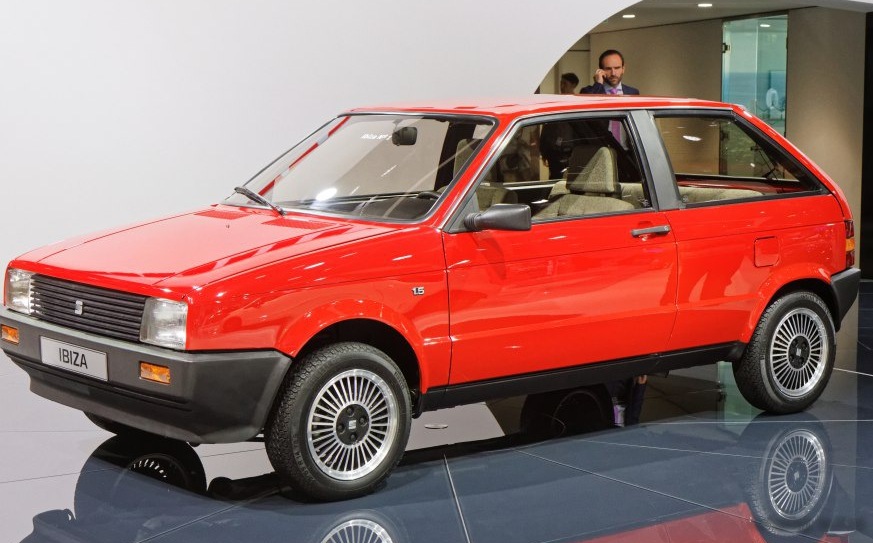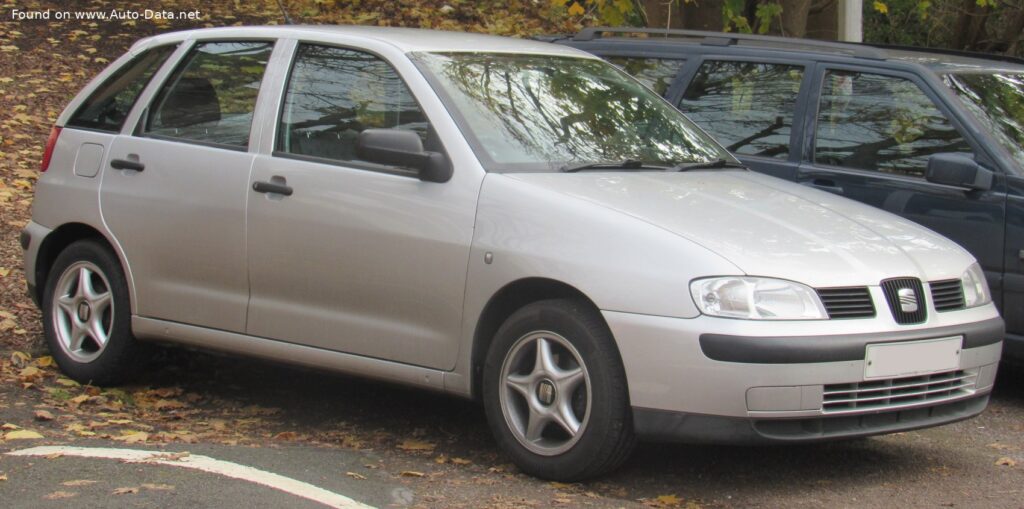
The Seat Ibiza II (facelift, introduced in 1999) 1.9 TDI represented a significant offering in the European subcompact hatchback market. Produced from March 1999 to May 2000, this variant was positioned as a fuel-efficient and relatively sporty option within the Ibiza II range, appealing to drivers seeking a blend of practicality and performance. It was built on the Volkswagen Group’s 1HX0/A3 platform, shared with models like the Volkswagen Polo and Škoda Fabia, benefiting from the economies of scale and engineering advancements of the group.
The 1.9 TDI: A Mid-Range Performer
The 1.9 TDI trim occupied a middle ground in the Ibiza II facelift lineup. Below it sat the lower-powered gasoline engines (typically 1.4 and 1.6 liter variants), aimed at budget-conscious buyers. Above it were the more expensive and performance-oriented options, such as the 2.0 liter gasoline models. The 1.9 TDI offered a compelling alternative, providing substantially more torque and better fuel economy than the gasoline engines, without the higher price tag of the larger displacement options. It targeted drivers who frequently undertook longer journeys or required a vehicle capable of carrying loads while maintaining reasonable running costs.
Powertrain & Engine Architecture
The heart of the Ibiza II 1.9 TDI was the Volkswagen Group’s ASV engine code, a 1.9-liter inline four-cylinder diesel engine. This engine was a direct-injection diesel, utilizing a Bosch EDC (Electronic Diesel Control) system to precisely meter fuel delivery. Direct injection, a relatively new technology at the time, allowed for higher compression ratios and more complete combustion, resulting in improved fuel efficiency and reduced emissions. The engine featured an overhead camshaft (OHC) valvetrain with two valves per cylinder. A turbocharger with an intercooler was employed to boost power output, increasing the engine’s breathing capacity and delivering 110 horsepower (hp) at 4150 rpm and 235 Newton-meters (173.33 lb-ft) of torque at 1900 rpm.
The engine was transversely mounted in the front of the vehicle. While a five-speed manual transmission was the most common pairing, an optional four-speed automatic transmission was available, though less frequently chosen. The automatic transmission, a conventional hydraulic unit, was geared towards providing smooth and comfortable shifts, prioritizing ease of use over outright performance. It was designed to handle the engine’s torque output, but its shift points were often criticized for being less responsive than the manual gearbox.
Driving Characteristics
The 1.9 TDI with the manual transmission offered brisk acceleration for its class, achieving 0-100 km/h (0-62 mph) in approximately 10.5 seconds. The engine’s strong low-end torque made it particularly well-suited to everyday driving, providing ample power for overtaking and navigating urban environments. The automatic transmission, however, noticeably dulled performance. The additional weight of the torque converter and the less-than-optimal gear ratios resulted in slower acceleration times. While the automatic provided a more relaxed driving experience, it came at the cost of responsiveness.
Handling was typical of a subcompact hatchback – competent and predictable, but not particularly engaging. The suspension setup, consisting of wishbones at the front and a spring strut arrangement at the rear, provided a reasonable balance between ride comfort and handling stability. The steering, utilizing a hydraulic power steering rack and pinion system, was light and easy to use, making maneuvering in tight spaces straightforward.
Equipment & Trim Levels
The Ibiza II 1.9 TDI (facelift) typically came equipped with a reasonable level of standard features. These included power steering, central locking, electric front windows, and an anti-lock braking system (ABS). Interior upholstery was generally cloth, with a relatively simple dashboard layout. Optional extras included air conditioning, alloy wheels, a radio/cassette player, and upgraded interior trim. Higher trim levels, often denoted by specific badges or package names, added features such as a sunroof, rear headrests, and more luxurious upholstery.
Chassis & Braking
The Ibiza II 1.9 TDI utilized a front-wheel-drive layout. The front brakes were ventilated discs, providing good stopping power, while the rear brakes were typically solid discs, although some earlier models may have featured drum brakes depending on the specific market and trim level. The kerb weight of the vehicle was approximately 1125 kg (2480.2 lbs), contributing to its relatively nimble handling. Stabilizer bars were fitted to both the front and rear axles to reduce body roll during cornering.
Market Reception & Comparison
The Seat Ibiza II 1.9 TDI was generally well-received by automotive critics. It was praised for its fuel efficiency, strong torque output, and overall practicality. Compared to the gasoline-powered Ibiza II models, the TDI offered significantly better fuel economy – around 6.4 l/100 km (36.8 US mpg) in urban driving and 4.0 l/100 km (58.8 US mpg) on the open road. However, the diesel engine was noticeably louder and less refined than the gasoline alternatives.
Compared to other subcompact hatchbacks of the era, such as the Volkswagen Polo and Ford Fiesta, the Ibiza II 1.9 TDI offered a competitive package. It often represented better value for money than the Polo, while providing a more engaging driving experience than the Fiesta. Reliability was generally good, although the direct-injection diesel system could be prone to issues if not properly maintained. Regular servicing, including fuel filter replacements and oil changes, was crucial to ensure long-term reliability.
Technical Specifications
| Brand | Seat |
| Model | Ibiza |
| Generation | Ibiza II (facelift 1999) |
| Type (Engine) | 1.9 TDI (110 Hp) |
| Start of production | March, 1999 |
| End of production | May, 2000 |
| Powertrain Architecture | Internal Combustion engine |
| Body type | Hatchback |
| Seats | 5 |
| Doors | 3-5 |
| Fuel consumption (urban) | 6.4 l/100 km (36.8 US mpg) |
| Fuel consumption (extra urban) | 4 l/100 km (58.8 US mpg) |
| Fuel Type | Diesel |
| Acceleration 0 – 100 km/h | 10.5 sec |
| Acceleration 0 – 62 mph | 10.5 sec |
| Acceleration 0 – 60 mph | 10 sec |
| Maximum speed | 193 km/h (119.92 mph) |
| Power | 110 Hp @ 4150 rpm |
| Torque | 235 Nm @ 1900 rpm (173.33 lb.-ft. @ 1900 rpm) |
| Engine layout | Front, Transverse |
| Engine Model/Code | ASV |
| Engine displacement | 1896 cm3 (115.7 cu. in.) |
| Number of cylinders | 4 |
| Engine configuration | Inline |
| Cylinder Bore | 79.5 mm (3.13 in.) |
| Piston Stroke | 95.5 mm (3.76 in.) |
| Compression ratio | 19.5:1 |
| Number of valves per cylinder | 2 |
| Fuel injection system | Direct injection |
| Engine aspiration | Turbocharger, Intercooler |
| Valvetrain | OHC |
| Engine oil capacity | 4.5 l (4.76 US qt | 3.96 UK qt) |
| Coolant | 6.8 l (7.19 US qt | 5.98 UK qt) |
| Kerb Weight | 1125 kg (2480.2 lbs.) |
| Max. weight | 1585 kg (3494.33 lbs.) |
| Max load | 460 kg (1014.13 lbs.) |
| Trunk (boot) space – minimum | 250 l (8.83 cu. ft.) |
| Trunk (boot) space – maximum | 785 l (27.72 cu. ft.) |
| Fuel tank capacity | 45 l (11.89 US gal | 9.9 UK gal) |
| Length | 3877 mm (152.64 in.) |
| Width | 1640 mm (64.57 in.) |
| Height | 1422 mm (55.98 in.) |
| Wheelbase | 2443 mm (96.18 in.) |
| Drivetrain Architecture | Front wheel drive |
| Number of gears and type of gearbox | 5 gears, manual transmission |
Legacy
The Seat Ibiza II 1.9 TDI, particularly the facelift models, have developed a reputation for being robust and reliable vehicles. The ASV engine, when properly maintained, is known to be capable of high mileage. Today, these cars are increasingly sought after by enthusiasts and those looking for an affordable and economical runabout. While finding well-maintained examples can be challenging, the 1.9 TDI remains a popular choice in the used car market, offering a compelling blend of practicality, fuel efficiency, and relatively low running costs. The automatic transmission versions, while less desirable to driving enthusiasts, still offer a comfortable and convenient option for those prioritizing ease of use.