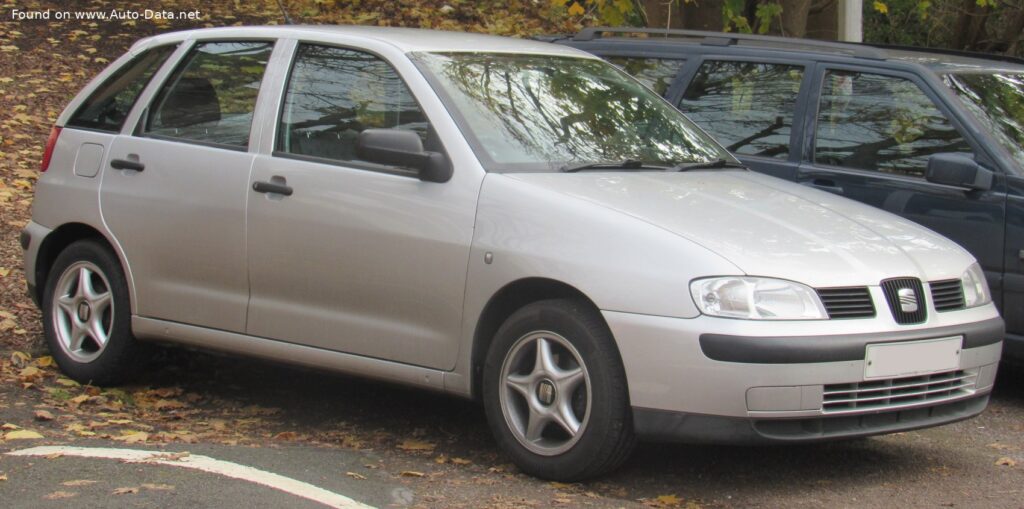
The Seat Ibiza II (facelift 1999) 1.9 TDI 90 hp represented a significant offering in the subcompact hatchback segment during its production run from April 1999 to May 2002. Positioned as a fuel-efficient and practical option, it formed part of the 6L series of the second-generation Ibiza, built on the Volkswagen Group’s 1HX0/A3 platform. This variant aimed to provide a balance between performance and economy, appealing to buyers seeking a versatile vehicle for daily commuting and occasional longer journeys. The facelift brought updated styling cues and minor mechanical refinements to the existing Ibiza II platform.
1.9 TDI 90 hp: Powertrain & Engine Architecture
At the heart of the Ibiza II 1.9 TDI 90 hp lay the AGR engine code, a 1.9-liter inline four-cylinder diesel engine. This engine was a mainstay in the Volkswagen Group’s lineup, known for its durability and relatively simple design. It featured direct fuel injection, a technology that improved fuel efficiency and reduced emissions compared to indirect injection systems. The AGR engine utilized a Bosch VE distributor-type fuel injection pump, delivering fuel at pressures up to 140 bar. The engine also incorporated a turbocharger with an intercooler, boosting power output to 90 horsepower at 4000 rpm and 202 Nm (148.99 lb-ft) of torque at 1900 rpm.
The engine’s valvetrain employed an overhead camshaft (OHC) configuration with two valves per cylinder. This design contributed to the engine’s smooth operation and relatively low maintenance requirements. The engine’s displacement was 1896 cm³ (115.7 cu. in.), with a bore of 79.5 mm (3.13 in.) and a stroke of 95.5 mm (3.76 in.). A compression ratio of 19.5:1 was typical for diesel engines of this era, contributing to efficient combustion. The engine required 4.5 liters (4.76 US qt) of engine oil, specified to meet manufacturer standards.
Transmission
The 1.9 TDI 90 hp Ibiza II was primarily equipped with a five-speed manual transmission. This gearbox was chosen to complement the engine’s torque characteristics, providing a good balance between acceleration and fuel economy. The transmission’s gear ratios were optimized for everyday driving, with a relatively tall fifth gear for efficient cruising on highways. While an automatic transmission was offered on some Ibiza II models, it was less common with the 1.9 TDI engine due to concerns about matching the transmission’s durability to the engine’s torque output.
Driving Characteristics
The Seat Ibiza II 1.9 TDI 90 hp offered a distinctly different driving experience compared to its gasoline-powered siblings or the higher-output TDI variants. The 90 hp engine provided adequate power for typical urban and highway driving, but it wasn’t particularly sporty. Acceleration from 0 to 100 km/h (0 to 62 mph) took approximately 12.1 seconds, and the top speed was around 180 km/h (111.85 mph). The engine’s strong low-end torque, however, made it feel more responsive in everyday driving situations than its horsepower figure might suggest.
The five-speed manual transmission allowed drivers to keep the engine in its optimal power band, maximizing efficiency and responsiveness. Compared to the 1.6-liter gasoline engine, the 1.9 TDI offered significantly more torque, making it easier to accelerate from a standstill or overtake other vehicles. However, the TDI engine was noticeably louder and less refined than the gasoline engines. The weight-to-power ratio of 12.2 kg/hp and weight-to-torque ratio of 5.4 kg/Nm reflected the engine’s focus on usability rather than outright performance.
Equipment & Trim Levels
The Ibiza II 1.9 TDI 90 hp typically came with a modest level of standard equipment. Base models included power steering, central locking, and front airbags. Interior upholstery was typically cloth, with a functional but basic dashboard layout. Optional extras included air conditioning, electric windows, and an upgraded audio system. Higher trim levels, such as the Stella or Sport, added features like alloy wheels, a sunroof, and more luxurious interior trim. The overall interior design prioritized practicality and durability over luxury.
Chassis & Braking
The Ibiza II 1.9 TDI 90 hp utilized a front-wheel-drive layout with a relatively simple suspension setup. The front suspension consisted of wishbones, while the rear suspension employed a spring strut arrangement. This setup provided a comfortable ride quality, although it wasn’t particularly sporty. The braking system featured disc brakes on the front wheels and drum brakes on the rear wheels. Anti-lock braking system (ABS) was standard equipment, enhancing safety by preventing wheel lockup during hard braking. The steering system was a rack and pinion type with hydraulic power assistance, providing precise and responsive steering feel. The vehicle rode on 185/60 R14 tires.
Market Reception & Comparison
The Seat Ibiza II 1.9 TDI 90 hp was generally well-received by automotive critics as a practical and fuel-efficient hatchback. It was praised for its strong torque, good fuel economy (6.1 l/100 km urban, 4.1 l/100 km extra urban), and relatively low running costs. However, it was also criticized for its somewhat unrefined engine and basic interior. Compared to the 1.6-liter gasoline versions, the TDI offered superior fuel economy and torque, but at the expense of refinement and initial purchase price. Compared to the more powerful TDI variants (e.g., 110 hp), the 90 hp version offered a more affordable entry point into the diesel Ibiza range, albeit with reduced performance.
Technical Specifications
| Brand | Seat |
| Model | Ibiza |
| Generation | Ibiza II (facelift 1999) |
| Type (Engine) | 1.9 TDI (90 Hp) |
| Start of production | April, 1999 year |
| End of production | May, 2002 year |
| Powertrain Architecture | Internal Combustion engine |
| Body type | Hatchback |
| Seats | 5 |
| Doors | 3 |
| Fuel consumption (urban) | 6.1 l/100 km (38.6 US mpg) |
| Fuel consumption (extra urban) | 4.1 l/100 km (57.4 US mpg) |
| Fuel Type | Diesel |
| Acceleration 0 – 100 km/h | 12.1 sec |
| Acceleration 0 – 60 mph | 11.5 sec |
| Maximum speed | 180 km/h (111.85 mph) |
| Kerb Weight | 1096 kg (2416.27 lbs) |
| Max. weight | 1555 kg (3428.19 lbs) |
| Engine displacement | 1896 cm3 (115.7 cu. in) |
| Number of cylinders | 4 |
| Power | 90 Hp @ 4000 rpm |
| Torque | 202 Nm @ 1900 rpm (148.99 lb.-ft. @ 1900 rpm) |
| Engine Code | AGR |
| Fuel tank capacity | 45 l (11.89 US gal) |
| Length | 3877 mm (152.64 in) |
| Width | 1640 mm (64.57 in) |
| Height | 1422 mm (55.98 in) |
| Wheelbase | 2443 mm (96.18 in) |
| Number of gears | 5 |
| Gearbox type | Manual transmission |
Legacy
The Seat Ibiza II 1.9 TDI 90 hp has proven to be a relatively reliable vehicle, particularly the engine itself. The AGR engine is known for its durability and ability to withstand high mileage. However, like any vehicle of this age, it is susceptible to wear and tear, and regular maintenance is essential. In the used car market, these Ibizas are often sought after by buyers looking for an affordable and fuel-efficient runabout. While not particularly collectible, they represent a practical and well-built example of a late-1990s/early-2000s subcompact hatchback. The 1.9 TDI engine remains a popular choice for those seeking a balance between economy and performance, and parts availability is generally good.