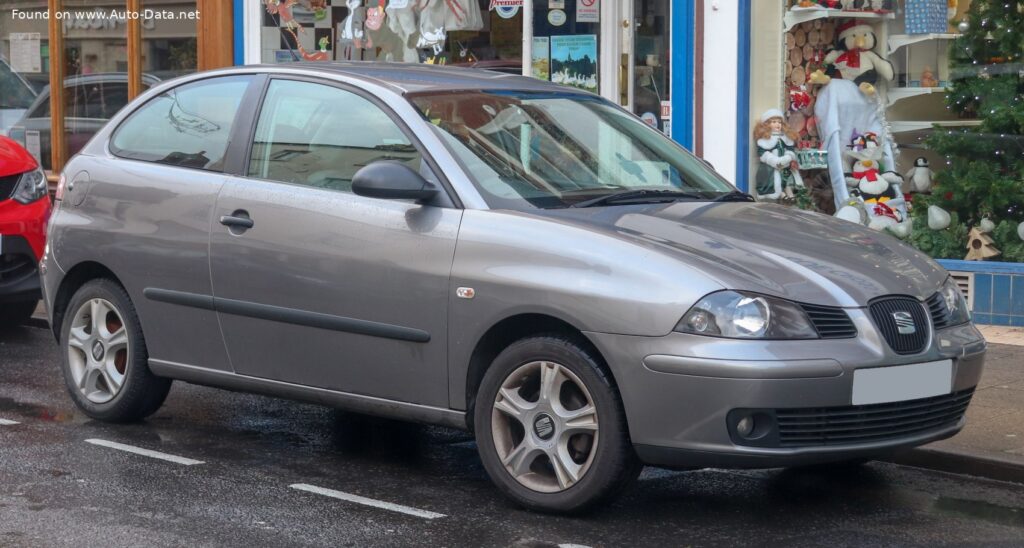
The Seat Ibiza III 1.4 16V, produced between 2002 and 2006, represented a significant step forward for the Spanish automaker, building upon the success of its predecessors. This variant, equipped with a 1.4-liter, 16-valve gasoline engine producing 100 horsepower, occupied a crucial mid-range position within the Ibiza III lineup. It aimed to balance affordability with a reasonable level of performance and equipment, appealing to buyers seeking a practical and economical hatchback. The Ibiza III itself was based on the Volkswagen Group’s PQ24 platform, also known as the 1HX0/A3 platform, shared with models like the Volkswagen Polo and Škoda Fabia.
The 1.4 16V Engine and Powertrain
The heart of the Ibiza III 1.4 16V is the AUB or BBZ engine code, a 1390cc inline four-cylinder gasoline engine. This engine featured multi-port fuel injection, a relatively common system at the time, delivering fuel directly into the intake ports just before the intake valves. The 16-valve configuration, with four valves per cylinder, enhanced breathing and contributed to the engine’s power output. The engine utilized an overhead camshaft (OHC) valvetrain, a design chosen for its simplicity and efficiency. Compression ratio was set at 10.5:1, a moderate figure balancing performance and fuel economy.
While a five-speed manual transmission was the most common pairing for this engine, an optional four-speed automatic transmission was also available. This automatic gearbox, though providing convenience, was a key differentiator in the driving experience. It was a traditional hydraulic automatic, lacking the efficiency and responsiveness of more modern transmissions. The automatic version was geared towards drivers prioritizing ease of use over sporty performance.
Engine Specifications
The 1.4 16V engine produced 100 hp at 6000 rpm and 126 Nm (92.93 lb-ft) of torque at 4400 rpm. This resulted in a power-to-weight ratio of 10.5 kg/hp, and a torque-to-weight ratio of 8.3 kg/Nm. The engine’s displacement was 1390 cm³ (84.82 cu. in.), with a bore of 76.5 mm (3.01 in.) and a stroke of 75.6 mm (2.98 in.). Engine oil capacity was 3.2 liters (3.38 US qt / 2.82 UK qt), and the cooling system required 5.6 liters (5.92 US qt / 4.93 UK qt) of coolant.
Driving Characteristics
The Ibiza III 1.4 16V, when equipped with the five-speed manual transmission, offered a reasonably engaging driving experience. Acceleration from 0 to 100 km/h (0-62 mph) took approximately 11.2 seconds, while 0-60 mph was achieved in around 10.6 seconds. Top speed was rated at 191 km/h (118.68 mph). The engine felt lively enough for everyday driving, with adequate power for overtaking and merging onto highways. However, it wasn’t a particularly powerful engine, and its performance was noticeably less than that of the higher-spec 1.8-liter 20V or the diesel options.
The automatic transmission version, while offering convenience, significantly impacted performance. The four-speed automatic lacked the close ratios needed to keep the engine in its optimal power band. Acceleration was slower, and the overall driving experience felt more sluggish. The automatic was best suited for urban driving and relaxed cruising, where outright performance wasn’t a priority. Fuel economy was also slightly reduced with the automatic transmission.
Equipment and Trim Levels
The Ibiza III 1.4 16V typically came with a reasonable level of standard equipment. This included power steering, central locking, electric front windows, and an anti-lock braking system (ABS). Interior upholstery was typically cloth, with a functional and durable design. The dashboard layout was straightforward and easy to use, with clearly labeled controls. Optional extras included air conditioning, alloy wheels, a CD player, and upgraded interior trim.
Trim levels varied depending on the market, but generally, the 1.4 16V served as a stepping stone between the base models and the more luxurious or performance-oriented trims. It offered a good balance of features and affordability, making it a popular choice for buyers seeking a well-rounded hatchback.
Chassis and Braking
The Ibiza III 1.4 16V utilized a front-wheel-drive layout. The front suspension consisted of wishbones, providing a comfortable and controlled ride. The rear suspension employed a spring strut setup, a cost-effective and space-efficient design. Braking duties were handled by ventilated discs at the front and discs at the rear, providing adequate stopping power for the vehicle’s weight and performance. The steering system was a rack and pinion setup with hydraulic power assistance, offering precise and responsive steering feel.
The standard tire size was 185/60 R14, providing a good balance of grip and ride comfort. The chassis was tuned to prioritize comfort and stability, rather than outright sportiness. This made the Ibiza III 1.4 16V a pleasant and easy car to drive in a variety of conditions.
Market Reception and Comparison
The Seat Ibiza III 1.4 16V was generally well-received by automotive critics. It was praised for its practicality, fuel efficiency, and reasonable price. However, the automatic transmission version was often criticized for its sluggish performance. Compared to the higher-spec 1.8-liter 20V, the 1.4 16V offered less power and performance, but it was also more affordable to purchase and operate. The 1.9 TDI diesel version provided superior fuel economy but came with a higher initial cost and potentially higher maintenance expenses.
Fuel consumption figures for the 1.4 16V were respectable, with combined fuel economy rated at 6.9 l/100 km (34.1 US mpg / 40.9 UK mpg / 14.5 km/l). Urban fuel consumption was 9.4 l/100 km (25 US mpg / 30.1 UK mpg / 10.6 km/l), while extra-urban fuel consumption was 5.5 l/100 km (42.8 US mpg / 51.4 UK mpg / 18.2 km/l).
Technical Specifications
| Brand | Seat |
| Model | Ibiza |
| Generation | Ibiza III |
| Type (Engine) | 1.4 16V (100 Hp) |
| Start of production | 2002 |
| End of production | 2006 |
| Body type | Hatchback |
| Seats | 5 |
| Doors | 3-5 |
| Fuel consumption (urban) | 9.4 l/100 km (25 US mpg) |
| Fuel consumption (extra urban) | 5.5 l/100 km (42.8 US mpg) |
| Fuel consumption (combined) | 6.9 l/100 km (34.1 US mpg) |
| Fuel Type | Petrol (Gasoline) |
| Acceleration 0 – 100 km/h | 11.2 sec |
| Acceleration 0 – 62 mph | 11.2 sec |
| Acceleration 0 – 60 mph | 10.6 sec |
| Maximum speed | 191 km/h (118.68 mph) |
| Power | 100 Hp @ 6000 rpm |
| Torque | 126 Nm @ 4400 rpm (92.93 lb.-ft. @ 4400 rpm) |
| Engine layout | Front, Transverse |
| Engine Model/Code | AUB, BBZ |
| Engine displacement | 1390 cm3 (84.82 cu. in.) |
| Number of cylinders | 4 |
| Cylinder Bore | 76.5 mm (3.01 in.) |
| Piston Stroke | 75.6 mm (2.98 in.) |
| Compression ratio | 10.5:1 |
| Kerb Weight | 1050 kg (2314.85 lbs.) |
| Trunk (boot) space (min) | 265 l (9.36 cu. ft.) |
| Trunk (boot) space (max) | 1030 l (36.37 cu. ft.) |
| Fuel tank capacity | 45 l (11.89 US gal) |
| Length | 3955 mm (155.71 in.) |
| Width | 1700 mm (66.93 in.) |
| Height | 1440 mm (56.69 in.) |
Legacy
The Seat Ibiza III 1.4 16V, particularly with the manual transmission, has proven to be a relatively reliable and durable vehicle. The engine is known for its longevity, provided it receives regular maintenance. The automatic transmission, however, is sometimes prone to issues and requires careful servicing. Today, these cars are readily available on the used car market at affordable prices. They represent a practical and economical option for buyers seeking a small hatchback, although potential buyers should be aware of the potential maintenance needs of the automatic transmission. The 1.4 16V engine, while not particularly powerful, remains a capable and reliable unit for everyday driving.