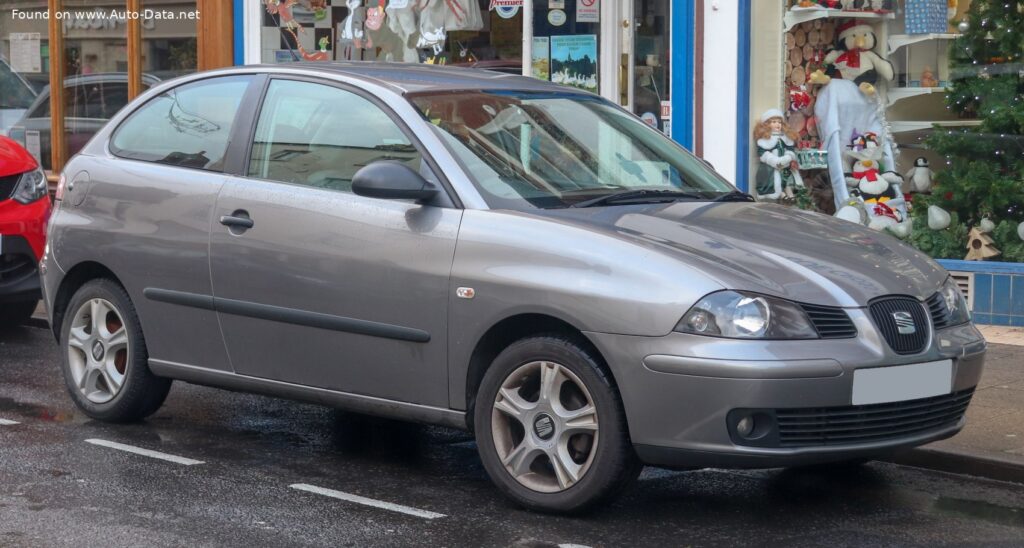
The Seat Ibiza III 1.4 16V Automatic, produced between 2002 and 2006, represented an entry-level offering within the third generation Ibiza (6L) range. Positioned as a more accessible option, it catered to buyers prioritizing affordability and ease of use over outright performance. This variant utilized a 1.4-liter, 16-valve gasoline engine paired with a four-speed automatic transmission, and was available in both three and five-door hatchback body styles. The Ibiza III itself was built on the Volkswagen Group’s PQ24 platform, also known as the A3 platform, shared with models like the Volkswagen Polo Mk4 and Škoda Fabia.
Powertrain & Engine Architecture
The heart of the Ibiza III 1.4 16V Automatic is the BBY or BKY engine code, a 1390cc inline four-cylinder gasoline engine. This engine featured multi-port fuel injection, delivering fuel directly into the intake ports rather than directly into the combustion chamber. The engine employed an overhead camshaft (OHC) valvetrain, operating four valves per cylinder – a 16-valve configuration designed to improve breathing and overall efficiency. Compression ratio was set at 10.5:1. The engine produced 75 horsepower (hp) at 5000 rpm and 94.41 lb-ft of torque at 3300 rpm.
The automatic transmission used in this variant was a conventional four-speed hydraulic automatic. While providing convenience, this transmission was known for its relatively conservative gear ratios, prioritizing fuel economy over rapid acceleration. It lacked the more modern features found in later automatic transmissions, such as manual shift modes or adaptive learning capabilities. The transmission was designed for durability and ease of maintenance, but its performance characteristics were a significant factor in the car’s overall driving experience.
Engine Codes: BBY vs. BKY
While both BBY and BKY engine codes were used, subtle differences existed. The BKY engine was generally found in vehicles meeting slightly stricter emissions standards. These differences were primarily related to the engine control unit (ECU) calibration and minor adjustments to the fuel injection system, rather than significant hardware changes. Both engines shared the same fundamental architecture and performance characteristics.
Driving Characteristics
The 1.4 16V Automatic Ibiza III offered a comfortable, but uninspiring, driving experience. Acceleration was leisurely, with a 0-60 mph time of approximately 14.8 seconds and a 0-100 km/h time of 15.6 seconds. The four-speed automatic transmission contributed to this, often requiring the engine to work harder during overtaking maneuvers or when climbing hills. The gear ratios were spaced to prioritize fuel efficiency, resulting in a noticeable lack of urgency. Compared to the manual transmission version of the 1.4, the automatic suffered a slight performance penalty. Furthermore, compared to the more powerful 1.8 20V or 1.9 TDI models, the 1.4 Automatic was significantly slower and less refined.
The power delivery was relatively linear, with peak torque arriving at 3300 rpm. This meant that the engine felt reasonably responsive in everyday driving situations, but lacked the punch of larger-displacement engines. The automatic transmission’s shift points were programmed for smoothness rather than performance, further contributing to the relaxed driving experience.
Equipment & Trim Levels
The Ibiza III 1.4 16V Automatic typically came with a modest level of standard equipment. Base models included power steering, central locking, front airbags, and an AM/FM radio. Air conditioning was often an optional extra, as were electric windows and alloy wheels. Interior upholstery was typically cloth, with a relatively simple dashboard layout. Higher trim levels, such as the ‘Stella’ or ‘Sport’ variants, added features like alloy wheels, upgraded interior trim, and sometimes a CD player. The overall interior design was functional and durable, prioritizing practicality over luxury.
Optional extras commonly included a sunroof, rear electric windows, and upgraded audio systems. Metallic paint was also an additional cost. The trim level significantly impacted the perceived value of the vehicle, with higher-spec models offering a more comfortable and aesthetically pleasing experience.
Chassis & Braking
The Ibiza III 1.4 16V Automatic utilized a front-wheel-drive layout with a relatively simple suspension setup. The front suspension consisted of wishbones, while the rear suspension employed a spring strut arrangement. This configuration provided a reasonable balance between ride comfort and handling. Stabilizer bars were typically fitted to both the front and rear axles, helping to reduce body roll during cornering. The suspension was tuned for comfort, resulting in a slightly softer ride compared to sportier Ibiza variants.
Braking was handled by ventilated discs on the front wheels and solid discs on the rear. Anti-lock Braking System (ABS) was standard equipment, enhancing safety by preventing wheel lockup during emergency braking. The braking system was adequate for the vehicle’s weight and performance, but lacked the stopping power of larger, more powerful Ibiza models. The hydraulic steering provided light and easy steering, making it well-suited for urban driving.
Market Reception & Comparison
The Seat Ibiza III 1.4 16V Automatic was generally well-received as an affordable and practical city car. Critics praised its fuel economy – achieving around 31.8 US mpg combined – and its ease of use. However, it was often criticized for its lack of performance and its somewhat dated automatic transmission. Compared to other trims in the Ibiza lineup, such as the 1.8 20V, the 1.4 Automatic offered significantly less power and refinement. The 1.9 TDI diesel variant provided superior fuel economy and torque, making it a popular choice for drivers covering long distances.
In terms of reliability, the 1.4 16V engine was generally considered to be robust and dependable. However, the automatic transmission was sometimes prone to issues, particularly if not properly maintained. Regular fluid changes were crucial to ensure its longevity. Overall, the Ibiza III 1.4 16V Automatic offered a good value proposition for buyers seeking a budget-friendly and practical hatchback.
Technical Specifications
| Brand | Seat |
| Model | Ibiza |
| Generation | Ibiza III |
| Type (Engine) | 1.4 16V (75 Hp) Automatic |
| Start of production | January, 2002 |
| End of production | 2006 |
| Fuel consumption (urban) | 10.2 l/100 km (23.1 US mpg) |
| Fuel consumption (extra urban) | 5.8 l/100 km (40.6 US mpg) |
| Fuel consumption (combined) | 7.4 l/100 km (31.8 US mpg) |
| Fuel Type | Petrol (Gasoline) |
| Acceleration 0 – 100 km/h | 15.6 sec |
| Acceleration 0 – 62 mph | 15.6 sec |
| Acceleration 0 – 60 mph | 14.8 sec |
| Maximum speed | 170 km/h (105.63 mph) |
| Power | 75 Hp @ 5000 rpm |
| Torque | 128 Nm @ 3300 rpm (94.41 lb.-ft. @ 3300 rpm) |
| Engine layout | Front, Transverse |
| Engine Model/Code | BBY, BKY |
| Engine displacement | 1390 cm3 (84.82 cu. in.) |
| Number of cylinders | 4 |
| Engine configuration | Inline |
| Cylinder Bore | 76.5 mm (3.01 in.) |
| Piston Stroke | 75.6 mm (2.98 in.) |
| Compression ratio | 10.5:1 |
| Number of valves per cylinder | 4 |
| Fuel injection system | Multi-port manifold injection |
| Engine oil capacity | 3.2 l (3.38 US qt | 2.82 UK qt) |
| Coolant capacity | 6 l (6.34 US qt | 5.28 UK qt) |
| Kerb Weight | 1035 kg (2281.78 lbs.) |
| Trunk (boot) space – minimum | 265 l (9.36 cu. ft.) |
| Trunk (boot) space – maximum | 1030 l (36.37 cu. ft.) |
| Fuel tank capacity | 45 l (11.89 US gal | 9.9 UK gal) |
| Length | 3955 mm (155.71 in.) |
| Width | 1700 mm (66.93 in.) |
| Height | 1440 mm (56.69 in.) |
| Wheelbase | 2460 mm (96.85 in.) |
| Number of gears and type of gearbox | 4 gears, automatic transmission |
| Front brakes | Ventilated discs |
| Rear brakes | Disc |
| Tires size | 185/60 R14 |
Legacy
The Seat Ibiza III 1.4 16V Automatic, while not a performance icon, remains a relatively common sight on used car markets. Its simple mechanical design and generally robust engine contribute to its longevity. However, potential buyers should be aware of the potential for issues with the automatic transmission, and a thorough inspection is recommended. Today, these vehicles are often sought after as affordable and reliable transportation for short commutes or as first cars for new drivers. The 1.4 Automatic Ibiza III represents a practical and economical choice for those prioritizing affordability and ease of use over driving excitement.