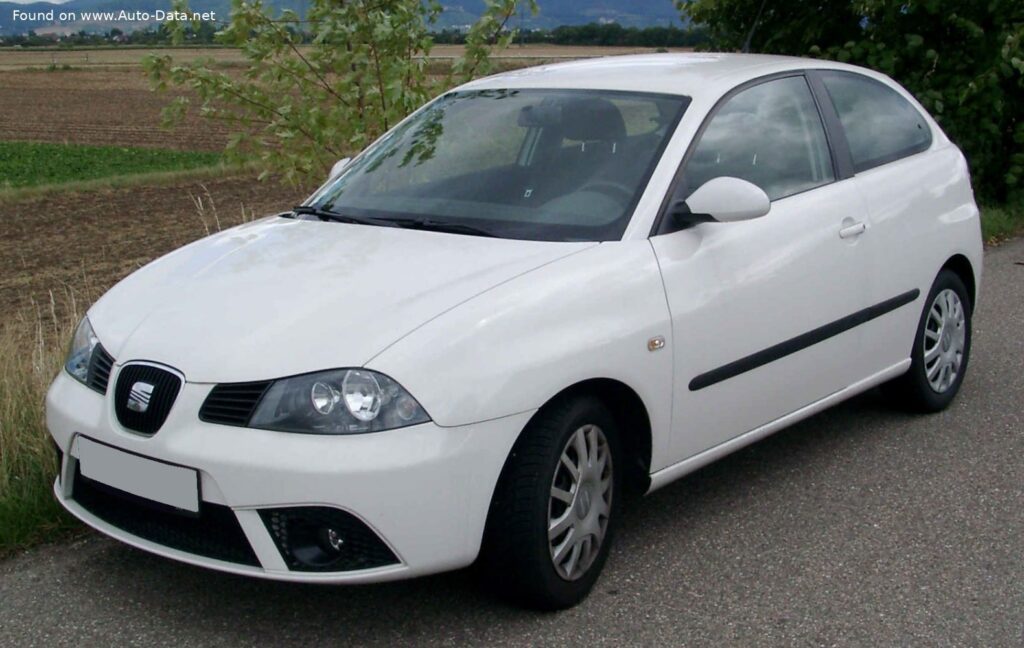
The Seat Ibiza III (facelift, introduced in 2006) 1.9 TDi 101 hp represents a significant iteration within the third generation of Seat’s popular supermini. Produced from 2006 to 2008, this variant occupied a middle ground in the Ibiza III lineup, offering a balance between fuel efficiency, performance, and practicality. It was based on the Volkswagen Group’s PQ24 platform, also known as the 1HX0/A3 platform, shared with models like the Volkswagen Polo and Škoda Fabia. The 1.9 TDi model aimed to appeal to drivers seeking economical motoring with a degree of refinement and capability beyond the base petrol engines.
1.9 TDi Powertrain & Engine Architecture
The heart of the Ibiza III 1.9 TDi is the Volkswagen Group’s 1.9-liter inline four-cylinder diesel engine. Specifically, the engines used were either the ATD or AXR engine codes, both representing robust and well-proven designs. This engine featured a cast iron block and an aluminum cylinder head, incorporating two valves per cylinder. A key characteristic of this engine was its pump-nozzle (Unit Injector) fuel injection system, a technology that allowed for precise fuel delivery and contributed to its fuel efficiency and relatively low emissions for its time. The turbocharger, coupled with an intercooler, boosted power output and torque.
The engine displaced 1,896 cubic centimeters (115.7 cubic inches) and produced 101 horsepower (75 kW) at 4,000 rpm. More importantly, it generated a substantial 240 Newton-meters (177.01 lb-ft) of torque at 1,800 rpm. This torque figure was a defining characteristic of the 1.9 TDi, providing strong pulling power from low engine speeds. The compression ratio was a high 19.5:1, typical for a diesel engine. Engine oil capacity was 4.3 liters (4.54 US quarts / 3.78 UK quarts), and the recommended oil specification varied depending on the specific market and year of production.
While a five-speed manual transmission was the most common pairing for this engine, an optional four-speed automatic transmission was also available, though less frequently chosen. The automatic transmission, while offering convenience, did impact fuel economy and acceleration compared to the manual version.
Transmission Details
The four-speed automatic transmission used in the Ibiza III 1.9 TDi was a conventional hydraulic automatic, designed for smooth operation and ease of use. It wasn’t known for particularly quick shifts or advanced features, but it provided a comfortable driving experience, especially in urban environments. The gear ratios were optimized for fuel efficiency and everyday drivability, rather than outright performance. The automatic transmission’s torque converter multiplied engine torque at lower speeds, aiding in acceleration, but also introduced some inherent efficiency losses.
Driving Characteristics
The Seat Ibiza III 1.9 TDi 101 hp offered a distinctly different driving experience compared to the petrol-powered versions of the same car. The abundant low-end torque meant that the car felt responsive and effortless in everyday driving situations. Overtaking maneuvers were executed with ease, and the engine didn’t require frequent downshifts. The 0-100 km/h (0-62 mph) acceleration time of 10.5 seconds was respectable for a supermini of this era, and the top speed of 188 km/h (116.82 mph) was more than adequate for most drivers.
Compared to the more powerful Ibiza Cupra or FR models, the 1.9 TDi lacked the outright excitement and sporty handling. However, it provided a more relaxed and refined driving experience, particularly on longer journeys. The automatic transmission, while convenient, did diminish the sense of driver involvement and resulted in slightly slower acceleration times than the manual version. The weight-to-power ratio of 11.1 kg/hp and weight-to-torque ratio of 4.7 kg/Nm indicated a good balance between performance and efficiency.
Equipment & Trim Levels
The 1.9 TDi variant of the Ibiza III typically came with a reasonable level of standard equipment. This generally included power steering, central locking, electric front windows, and an anti-theft system. Air conditioning was often an optional extra, as were alloy wheels, a CD player with MP3 compatibility, and upgraded interior trim. Interior upholstery was typically cloth, with a choice of colors and patterns. The dashboard layout was functional and straightforward, with clearly labeled controls. Higher trim levels, such as the Stylance, offered additional features like climate control, rear electric windows, and a trip computer.
Chassis & Braking
The Ibiza III 1.9 TDi utilized a MacPherson strut front suspension and a torsion beam rear suspension. This setup provided a good compromise between ride comfort and handling. The torsion beam rear suspension was a cost-effective solution that minimized complexity and weight. The front brakes were ventilated discs, providing ample stopping power, while the rear brakes were typically solid discs, although some earlier models may have featured drum brakes. Tire sizes varied depending on the trim level, with 185/60 R14 and 195/50 R15 being common options. A stabilizer bar was fitted to both the front and rear axles to reduce body roll during cornering.
Market Reception & Comparison
The Seat Ibiza III 1.9 TDi was generally well-received by automotive critics. It was praised for its fuel efficiency, strong torque, and comfortable ride. However, some reviewers noted that the engine could be somewhat noisy and that the automatic transmission wasn’t as responsive as some of its competitors. Compared to other trims in the Ibiza III lineup, the 1.9 TDi offered a more economical and practical alternative to the more performance-oriented models. It competed with other diesel-powered superminis, such as the Volkswagen Polo 1.9 TDi and the Ford Fiesta TDCi.
Fuel economy was a major selling point, with combined fuel consumption figures of around 4.9 l/100 km (48 US mpg / 57.6 UK mpg). Reliability was generally good, although, like all diesel engines, the 1.9 TDi could be susceptible to issues with the fuel injection pump and turbocharger if not properly maintained.
Technical Specifications
| Brand | Seat |
| Model | Ibiza |
| Generation | Ibiza III (facelift 2006) |
| Type (Engine) | 1.9 TDi (101 Hp) |
| Start of production | 2006 |
| End of production | 2008 |
| Body type | Hatchback |
| Seats | 5 |
| Doors | 3-5 |
| Fuel consumption (urban) | 6.4 l/100 km (36.8 US mpg / 44.1 UK mpg) |
| Fuel consumption (extra urban) | 4 l/100 km (58.8 US mpg / 70.6 UK mpg) |
| Fuel consumption (combined) | 4.9 l/100 km (48 US mpg / 57.6 UK mpg) |
| Fuel Type | Diesel |
| Acceleration 0-100 km/h | 10.5 sec |
| Acceleration 0-62 mph | 10.5 sec |
| Acceleration 0-60 mph | 10 sec |
| Maximum speed | 188 km/h (116.82 mph) |
| Power | 101 Hp @ 4000 rpm |
| Torque | 240 Nm @ 1800 rpm (177.01 lb.-ft. @ 1800 rpm) |
| Engine layout | Front, Transverse |
| Engine Model/Code | ATD, AXR |
| Engine displacement | 1896 cm3 (115.7 cu. in.) |
| Number of cylinders | 4 |
| Cylinder Bore | 79.5 mm (3.13 in.) |
| Piston Stroke | 95.5 mm (3.76 in.) |
| Compression ratio | 19.5:1 |
| Kerb Weight | 1125 kg (2480.2 lbs.) |
| Max. weight | 1585 kg (3494.33 lbs.) |
| Trunk (boot) space (minimum) | 265 l (9.36 cu. ft.) |
| Trunk (boot) space (maximum) | 1030 l (36.37 cu. ft.) |
| Fuel tank capacity | 45 l (11.89 US gal / 9.9 UK gal) |
| Length | 3977 mm (156.57 in.) |
| Width | 1698 mm (66.85 in.) |
| Height | 1441 mm (56.73 in.) |
Legacy
The Seat Ibiza III 1.9 TDi 101 hp remains a popular choice in the used car market, particularly for those seeking an economical and reliable supermini. The 1.9 TDi engine is known for its durability and longevity, although regular maintenance is essential to prevent issues. Parts availability is generally good, and the car’s relatively simple construction makes it relatively easy to repair. While not a particularly exciting car to drive, the Ibiza III 1.9 TDi offers a practical and affordable solution for everyday transportation. Its fuel efficiency and robust engine continue to appeal to budget-conscious buyers.