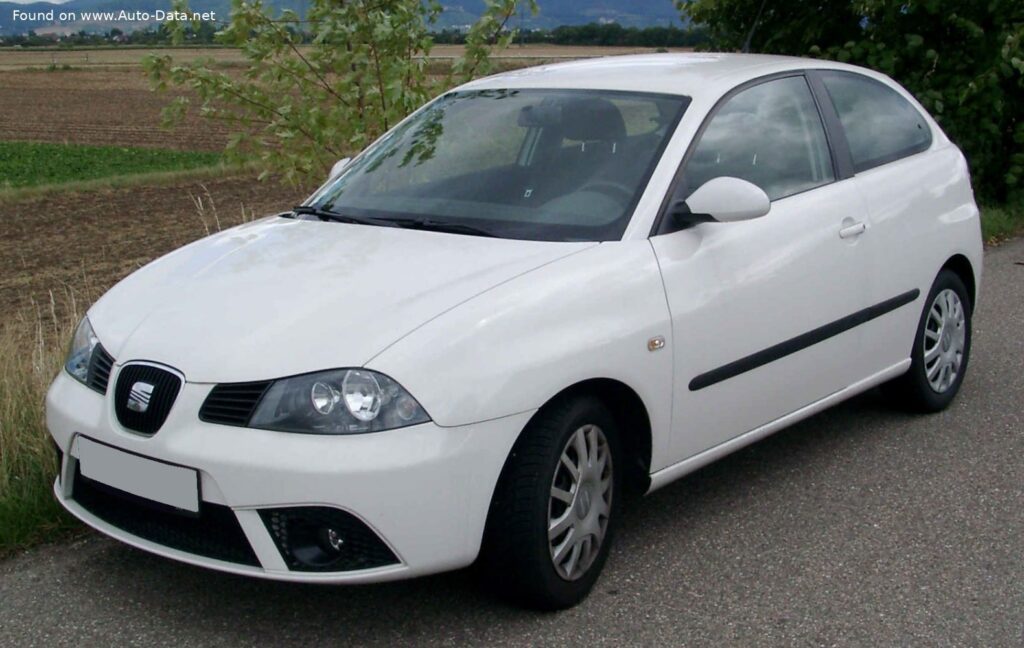
The Seat Ibiza III Cupra 1.8T (180 hp) was a performance-oriented hatchback produced between 2006 and February 2008 as part of the facelifted third generation of the Ibiza model range (Ibiza III, internally designated 6L). This variant represented the top-of-the-line performance option for the Ibiza, positioned above the base models and the more fuel-efficient versions. It was built on the Volkswagen Group’s PQ24 platform, also known as the A3 platform, shared with models like the Volkswagen Polo and Škoda Fabia. The Cupra 1.8T aimed to deliver a sporty driving experience with a turbocharged engine and enhanced styling, appealing to enthusiasts seeking a compact and agile hot hatch.
Powertrain & Engine Architecture
The heart of the Ibiza Cupra 1.8T is the BBU engine code, a 1.8-liter inline four-cylinder gasoline engine equipped with a turbocharger and intercooler. This engine produced 180 horsepower (hp) at 5800 rpm and 180.7 lb-ft of torque at 2000 rpm. The engine featured multi-port fuel injection and a double overhead camshaft (DOHC) valvetrain with four valves per cylinder. The compression ratio was set at 9.5:1. The turbocharger provided significant boost, enhancing power output compared to naturally aspirated versions of the 1.8-liter engine.
The engine’s transverse mounting and front-wheel-drive configuration were standard for the Ibiza. While a six-speed manual transmission was the most common pairing, a five-speed automatic transmission was also offered, though less frequently seen. The automatic transmission was a conventional hydraulic unit, designed for smooth shifts but sacrificing some of the responsiveness of the manual gearbox. Engine oil capacity was 4.5 liters (4.76 US quarts), and the coolant capacity was 5 liters (5.28 US quarts).
Engine Code Specifics
The BBU engine code is a member of the EA888 engine family, known for its robust construction and tuning potential. The EA888 family was widely used across the Volkswagen Group, appearing in various models and configurations. The BBU variant specifically utilized a Bosch Motronic engine control unit (ECU) to manage fuel delivery, ignition timing, and turbocharger boost. The engine’s design incorporated features to minimize knock and optimize combustion efficiency, allowing for relatively high boost pressures without requiring premium fuel.
Driving Characteristics
The Ibiza Cupra 1.8T with the manual transmission delivered brisk acceleration, achieving 0-62 mph (0-100 km/h) in approximately 7.3 seconds and a top speed of 142.29 mph (229 km/h). The automatic transmission version experienced a slight performance decrease due to the inherent losses in the torque converter and the less aggressive shift programming. Real-world driving revealed a responsive engine with strong mid-range torque, making it well-suited for both city driving and spirited backroad excursions.
The automatic transmission, while providing convenience, altered the driving experience. Gear changes were generally smooth, but lacked the directness and control offered by the manual. The automatic’s gear ratios were optimized for fuel efficiency and comfort, rather than outright performance. Compared to the manual version, the automatic Cupra felt slightly less engaging and required more planning when overtaking or accelerating quickly. The weight-to-power ratio of 6.5 kg/hp and weight-to-torque ratio of 4.8 kg/Nm contributed to the car’s lively feel.
Equipment & Trim Levels
The Cupra trim level was the highest specification available on the Ibiza III. Standard features included sports seats with unique upholstery, a leather-wrapped steering wheel, alloy wheels (typically 17-inch), and a sport-tuned suspension. The interior featured a distinctive dashboard design with aluminum trim accents. Air conditioning, power windows, and central locking were also standard.
Optional extras included a sunroof, upgraded audio system, and parking sensors. The Cupra also benefited from subtle exterior styling enhancements, such as a rear spoiler, unique front and rear bumpers, and side skirts. The interior trim was generally focused on a sporty aesthetic, with a dark color scheme and minimal chrome accents. The standard tire size was 205/40 R17, mounted on 7J x 17 alloy wheels.
Chassis & Braking
The Ibiza Cupra 1.8T featured a coil spring and wishbone suspension setup at the front, with a transverse stabilizer bar to reduce body roll. The rear suspension utilized a semi-dependent beam with a stabilizer bar, providing a balance between comfort and handling. The front brakes were ventilated discs, offering superior stopping power compared to the solid discs often found on lower-spec Ibiza models. The rear brakes were discs as well.
The steering system was a rack and pinion type with electric power steering, providing precise control and reasonable assistance. The ABS (Anti-lock Braking System) was standard, enhancing safety during emergency braking situations. The chassis was reinforced in key areas to handle the increased power output of the 1.8T engine and provide a more stable platform for spirited driving.
Market Reception & Comparison
The Ibiza Cupra 1.8T was generally well-received by automotive critics, who praised its sporty handling, responsive engine, and attractive styling. However, some reviewers noted that the automatic transmission diminished the driving experience compared to the manual version. Fuel economy was rated at 29.8-29.4 US mpg combined, which was reasonable for a performance hatchback of its era. CO2 emissions were 190-192 g/km, placing it within the Euro 4 emission standard.
Compared to other trims in the Ibiza lineup, the Cupra 1.8T offered a significant performance upgrade. The base models with smaller engines were more fuel-efficient but lacked the Cupra’s acceleration and handling prowess. The 1.9 TDI diesel version offered comparable fuel economy but a different driving character, prioritizing torque and efficiency over outright speed. The Cupra 1.8T occupied a niche between the economical base models and the more practical diesel variants, appealing to drivers who prioritized performance and driving enjoyment.
Technical Specifications
| Brand | Seat |
| Model | Ibiza |
| Generation | Ibiza III (facelift 2006) |
| Type (Engine) | Cupra 1.8 T (180 Hp) |
| Start of production | 2006 |
| End of production | February, 2008 |
| Powertrain Architecture | Internal Combustion engine |
| Body type | Hatchback |
| Seats | 5 |
| Doors | 3 |
| Fuel consumption (urban) | 10.9-11 l/100 km (21.6 – 21.4 US mpg) |
| Fuel consumption (extra urban) | 6.1-6.2 l/100 km (38.6 – 37.9 US mpg) |
| Fuel consumption (combined) | 7.9-8 l/100 km (29.8 – 29.4 US mpg) |
| CO2 emissions | 190-192 g/km |
| Fuel Type | Petrol (Gasoline) |
| Acceleration 0 – 100 km/h | 7.3 sec |
| Acceleration 0 – 62 mph | 7.3 sec |
| Acceleration 0 – 60 mph | 6.9 sec |
| Maximum speed | 229 km/h (142.29 mph) |
| Emission standard | Euro 4 |
| Weight-to-power ratio | 6.5 kg/Hp |
| Weight-to-torque ratio | 4.8 kg/Nm |
| Power | 180 Hp @ 5800 rpm |
| Torque | 245 Nm @ 2000 rpm (180.7 lb.-ft. @ 2000 rpm) |
| Engine layout | Front, Transverse |
| Engine Model/Code | BBU |
| Engine displacement | 1781 cm3 (108.68 cu. in.) |
| Number of cylinders | 4 |
| Engine configuration | Inline |
| Cylinder Bore | 81 mm (3.19 in.) |
| Piston Stroke | 86.4 mm (3.4 in.) |
| Compression ratio | 9.5:1 |
| Number of valves per cylinder | 4 |
| Fuel injection system | Multi-port manifold injection |
| Engine aspiration | Turbocharger, Intercooler |
| Valvetrain | DOHC |
| Engine oil capacity | 4.5 l (4.76 US qt | 3.96 UK qt) |
| Coolant | 5 l (5.28 US qt | 4.4 UK qt) |
| Kerb Weight | 1177 kg (2594.84 lbs.) |
| Max. weight | 1649 kg (3635.42 lbs.) |
| Trunk (boot) space – minimum | 267 l (9.43 cu. ft.) |
| Trunk (boot) space – maximum | 960 l (33.9 cu. ft.) |
| Fuel tank capacity | 45 l (11.89 US gal | 9.9 UK gal) |
| Length | 3992 mm (157.17 in.) |
| Width | 1698 mm (66.85 in.) |
| Height | 1441 mm (56.73 in.) |
| Wheelbase | 2460 mm (96.85 in.) |
| Drive wheel | Front wheel drive |
| Number of gears | 5 |
| Gearbox type | manual transmission |
Legacy
The Seat Ibiza Cupra 1.8T remains a popular choice among enthusiasts seeking an affordable and engaging hot hatch. The BBU engine, while not without its potential maintenance needs (such as turbocharger and fuel injector issues), is generally considered reliable when properly maintained. The availability of aftermarket performance parts allows owners to further enhance the engine’s power output. Today, well-maintained examples of the Ibiza Cupra 1.8T command a reasonable price on the used car market, reflecting its enduring appeal and the growing demand for classic hot hatches. The automatic transmission versions are typically less sought after, but can still provide a comfortable and enjoyable driving experience for those prioritizing convenience over outright performance.