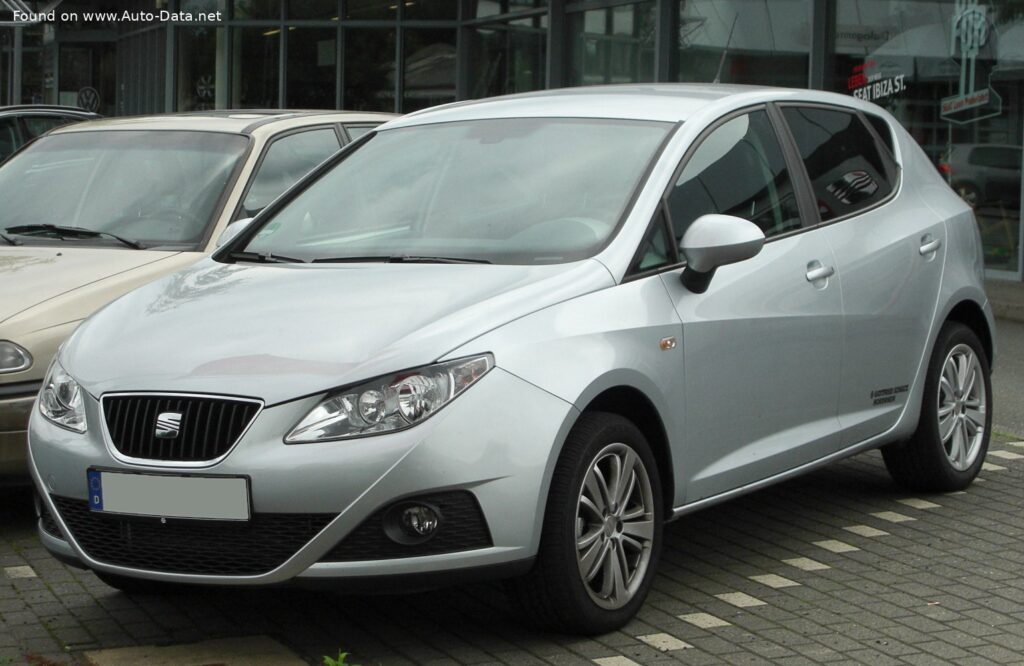
The Seat Ibiza IV 1.2 TSI (105 hp) DSG was a front-wheel-drive hatchback produced between April 2010 and 2012. It represented a key variant within the fourth generation of the Ibiza (Ibiza IV), which utilized the Volkswagen Group’s PQ25 platform, also known as the 1HX0/A3 platform. This particular model aimed to bridge the gap between the more basic Ibiza trims and the higher-performance versions, offering a balance of fuel efficiency, reasonable performance, and modern convenience through its dual-clutch gearbox (DSG).
The 1.2 TSI Engine and DSG Transmission
At the heart of the Ibiza 1.2 TSI DSG lies the CBZB engine code, a 1.2-liter turbocharged four-cylinder gasoline engine. This engine was part of Volkswagen Group’s EA111 family, known for its direct fuel injection and turbocharging technology. The 1.2 TSI produced 105 horsepower at 5000 rpm and 175 Nm (129.07 lb-ft) of torque between 1550 and 4100 rpm. The direct injection system, combined with the turbocharger and intercooler, allowed for a relatively high power output for its displacement, contributing to improved fuel economy compared to older, naturally aspirated engines.
The engine featured a double overhead camshaft (DOHC) valvetrain with four valves per cylinder. The turbocharger provided boost on demand, minimizing turbo lag and delivering a more responsive driving experience. The engine’s compression ratio was 10:1. Crucially, this variant was paired exclusively with a 7-speed dual-clutch transmission (DSG). The DSG transmission offered quicker and smoother gear changes compared to a traditional automatic transmission, enhancing both performance and driving comfort. The DSG unit allowed for both fully automatic operation and manual gear selection via the shift lever or steering wheel-mounted paddles (depending on the specific trim level).
Powertrain Characteristics and Fuel Injection
The 1.2 TSI engine utilized a sophisticated direct injection system. Unlike port fuel injection, direct injection sprays fuel directly into the combustion chamber, allowing for more precise fuel metering and improved combustion efficiency. This contributed to the engine’s relatively low fuel consumption and reduced emissions. The engine also featured variable valve timing, further optimizing performance and efficiency across a wider range of engine speeds. The engine oil capacity was 3.6 liters (3.8 US qt | 3.17 UK qt) and required a specification adhering to Volkswagen Group standards.
Driving Characteristics
The Seat Ibiza 1.2 TSI DSG offered a noticeable step up in performance compared to the lower-powered 1.2-liter non-turbocharged versions. Acceleration from 0 to 100 km/h (0-62 mph) took approximately 9.7 seconds, while 0-60 mph was achieved in around 9.2 seconds. The maximum speed was 190 km/h (118.06 mph). While not a sports car, the 1.2 TSI DSG provided sufficient power for everyday driving and overtaking maneuvers. The DSG transmission played a significant role in maximizing the engine’s potential, providing quick and seamless gear changes that kept the engine within its optimal power band.
Compared to the higher-performance Ibiza Cupra or FR models, the 1.2 TSI DSG felt less eager to rev and lacked the same level of outright acceleration. However, it offered a more refined and comfortable driving experience, particularly on longer journeys. The DSG transmission also contributed to better fuel economy than the manual transmission options available on other Ibiza models. The gear ratios were optimized for a balance of acceleration and fuel efficiency, with a relatively tall seventh gear for highway cruising.
Equipment & Trim Levels
The Ibiza 1.2 TSI DSG typically occupied a mid-range position in the Ibiza IV lineup. Standard equipment generally included air conditioning, power windows, central locking, an audio system with MP3 compatibility, and alloy wheels. Safety features such as ABS (Anti-lock Braking System) and front airbags were also standard. Interior upholstery was typically cloth, with a functional and modern dashboard design.
Optional extras varied depending on the market and specific trim level, but could include features such as a trip computer, climate control, parking sensors, a navigation system, and upgraded audio systems. Higher trim levels often featured sport seats, leather steering wheel, and additional chrome trim. The Ibiza offered a five-seat configuration with a practical hatchback body style.
Chassis & Braking
The Seat Ibiza 1.2 TSI DSG utilized an independent McPherson strut suspension system at the front, providing good handling and ride comfort. The rear suspension employed a semi-dependent torsion beam setup, which was a cost-effective solution that offered a reasonable balance of comfort and stability. A stabilizer bar was included at both the front and rear to reduce body roll during cornering.
The braking system consisted of ventilated discs at the front (256×22 mm) and solid discs at the rear (232×9 mm). ABS was standard, providing enhanced braking performance and stability in emergency situations. The steering system was a rack and pinion type with electric power steering, offering light and precise steering feel.
Market Reception & Comparison
The Seat Ibiza 1.2 TSI DSG was generally well-received by automotive critics. It was praised for its fuel efficiency, comfortable ride, and the responsiveness of the DSG transmission. However, some reviewers noted that the engine could feel slightly strained when fully loaded or driving uphill. Compared to the 1.6-liter gasoline and 1.9 TDI diesel versions of the Ibiza, the 1.2 TSI offered a good compromise between performance and economy. The 1.6-liter engine provided more power but consumed more fuel, while the 1.9 TDI offered excellent fuel economy but lacked the refinement of the TSI engine.
The 1.2 TSI DSG’s fuel economy figures were competitive for its class, achieving approximately 5.3 l/100 km (44.4 US mpg, 53.3 UK mpg) on the combined cycle and emitting 124 g/km of CO2. Reliability was generally good, although some owners reported minor issues with the DSG transmission, such as occasional jerky shifts. Regular maintenance, including DSG fluid changes, was crucial to ensure long-term reliability.
Technical Specifications
| Brand | Seat |
| Model | Ibiza |
| Generation | Ibiza IV |
| Type (Engine) | 1.2 TSI (105 Hp) DSG |
| Start of production | April, 2010 |
| End of production | 2012 |
| Engine Model/Code | CBZB |
| Engine displacement | 1197 cm3 (73.05 cu. in.) |
| Number of cylinders | 4 |
| Power | 105 Hp @ 5000 rpm |
| Torque | 175 Nm @ 1550-4100 rpm (129.07 lb.-ft.) |
| Fuel consumption (urban) | 7 l/100 km (33.6 US mpg, 40.4 UK mpg) |
| Fuel consumption (extra urban) | 4.4 l/100 km (53.5 US mpg, 64.2 UK mpg) |
| Fuel consumption (combined) | 5.3 l/100 km (44.4 US mpg, 53.3 UK mpg) |
| CO2 emissions | 124 g/km |
| Acceleration 0-100 km/h | 9.7 sec |
| Maximum speed | 190 km/h (118.06 mph) |
| Kerb Weight | 1040 kg (2292.81 lbs.) |
| Fuel tank capacity | 45 l (11.89 US gal, 9.9 UK gal) |
| Transmission | 7-speed DSG |
Legacy
The Seat Ibiza IV 1.2 TSI DSG remains a relatively common sight on the used car market. The 1.2 TSI engine and DSG transmission proved to be generally reliable, although regular maintenance is essential to prevent potential issues. The combination of fuel efficiency, reasonable performance, and modern features makes it an attractive option for buyers seeking a practical and affordable hatchback. However, prospective buyers should be aware of the potential for DSG transmission issues and ensure that the vehicle has been properly maintained. The 1.2 TSI engine, while efficient, isn’t known for being particularly robust under sustained high-load conditions, so a well-maintained example is crucial for long-term ownership.