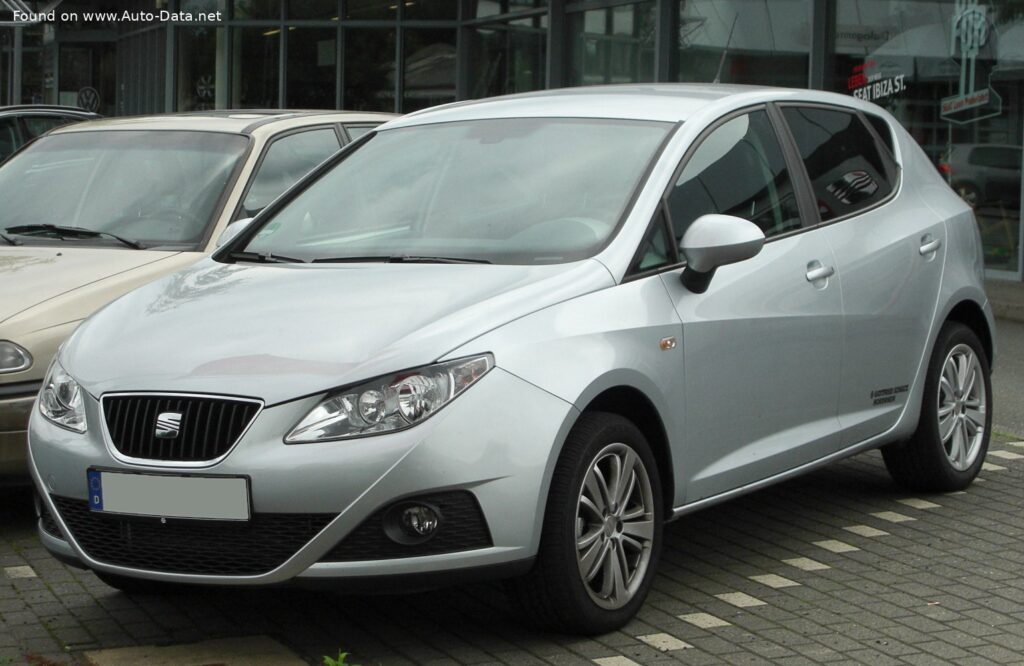
The Seat Ibiza IV 1.6 MPI, producing 105 horsepower, was a mainstay of the fourth-generation Ibiza (2008-2009) lineup. Positioned as a mid-range offering, it bridged the gap between the lower-powered 1.4-liter models and the sportier, more expensive FR variants. Built on the Volkswagen Group’s PQ24 platform (also known as the 1HX0/A3 platform), the 1.6 MPI aimed to provide a balance of affordability, practicality, and reasonable performance for the everyday driver. Production of this specific engine and trim combination was relatively short-lived, spanning from 2008 to November 2009, before being superseded by revised engine options and trim levels within the Ibiza range.
Powertrain & Engine Architecture
The heart of the Ibiza 1.6 MPI is the BTS engine code, a 1.6-liter inline four-cylinder gasoline engine. This engine utilizes a multi-port fuel injection (MPI) system, delivering fuel directly into the intake ports rather than directly into the combustion chamber – a simpler and less expensive system compared to direct injection. The engine features a double overhead camshaft (DOHC) valvetrain with four valves per cylinder, contributing to improved breathing and power output. Compression ratio is set at 12:1. The engine produces 105 hp at 5700 rpm and 148 Nm (109.16 lb-ft) of torque at 4500 rpm. The engine’s displacement is 1598 cm³ (97.52 cu. in.), with a bore of 76.5 mm (3.01 in.) and a stroke of 86.9 mm (3.42 in.).
The 1.6 MPI was typically paired with a five-speed manual transmission, however, an optional four-speed automatic transmission was available, though less common. The automatic transmission was a conventional hydraulic automatic, known for its relative simplicity and durability, but also for its less-than-sporty shift characteristics and slightly reduced fuel efficiency compared to the manual counterpart. The automatic transmission’s gear ratios were geared towards fuel economy and smooth operation rather than outright acceleration.
Engine Code Specifics (BTS)
The BTS engine code designates a specific iteration of the 1.6-liter MPI engine used within the Volkswagen Group. While fundamentally similar to other 1.6 MPI engines of the era, the BTS version was tuned specifically for the Ibiza and related models. It’s known for being relatively reliable, though preventative maintenance, particularly regarding timing belt replacement, is crucial. Engine oil capacity is 3.6 liters (3.8 US qt | 3.17 UK qt), and coolant capacity is 5.6 liters (5.92 US qt | 4.93 UK qt).
Driving Characteristics
The Seat Ibiza 1.6 MPI with the five-speed manual transmission offered a reasonably engaging driving experience. Acceleration from 0-100 km/h (0-62 mph) took approximately 10.5 seconds, while 0-60 mph was achieved in around 10 seconds. Top speed was rated at 187 km/h (116.2 mph). The engine felt responsive enough for everyday driving, with adequate power for overtaking and merging onto highways. However, it lacked the outright punch of the more powerful Ibiza FR models.
The optional four-speed automatic transmission noticeably dulled the driving experience. Acceleration times were slightly slower, and the transmission’s shift points felt less precise. While providing convenience, the automatic version traded performance for ease of use. The automatic’s gear ratios were optimized for fuel efficiency, resulting in a more relaxed driving style. The power delivery was linear, but the engine could feel strained when pushed hard, particularly when attempting quick acceleration or climbing hills.
Equipment & Trim Levels
The 1.6 MPI Ibiza typically came equipped with a reasonable level of standard features. These included power windows, central locking, power steering, an air conditioning system, and an audio system with CD player. Safety features included ABS (Anti-lock Braking System) and driver and passenger airbags. Interior upholstery was typically cloth, with a relatively simple dashboard layout.
Optional extras included alloy wheels, a sunroof, upgraded audio systems, and parking sensors. Higher trim levels, often denoted by “Style” or “Sport” packages, added features such as fog lights, leather steering wheel, and more premium interior trim. The specific availability of options varied depending on the market and the year of production.
Chassis & Braking
The Ibiza 1.6 MPI utilized an independent McPherson strut suspension system at the front, providing a comfortable ride and decent handling. The rear suspension employed a torsion beam setup, which was a cost-effective solution that offered adequate stability. The front brakes were ventilated discs, providing good stopping power, while the rear brakes were also ventilated discs. Hydraulic power steering was standard, offering a light and responsive feel. Tire sizes varied depending on the trim level, ranging from 175/70 R14 to 215/40 R17. Wheel rim sizes ranged from 5.0J x 14 to 7.0J x 17.
Market Reception & Comparison
The Seat Ibiza 1.6 MPI was generally well-received by automotive critics as a practical and affordable hatchback. It was praised for its comfortable ride, decent fuel economy (6.6 l/100 km combined – 35.6 US mpg, 42.8 UK mpg, 15.2 km/l), and relatively spacious interior. However, it was often criticized for its somewhat bland styling and lack of driving excitement compared to rivals like the Ford Fiesta or Volkswagen Polo.
Compared to the lower-powered 1.4-liter Ibiza models, the 1.6 MPI offered a noticeable performance improvement, making it a more suitable choice for drivers who frequently traveled on highways or carried passengers. Compared to the sportier Ibiza FR models, the 1.6 MPI was significantly less expensive and offered better fuel economy, but lacked the FR’s more aggressive styling and enhanced handling characteristics. Reliability was generally good, although regular maintenance, particularly timing belt replacement, was essential.
Technical Specifications
| Brand | Seat |
| Model | Ibiza |
| Generation | Ibiza IV |
| Type (Engine) | 1.6 MPI (105 Hp) |
| Start of production | 2008 |
| End of production | November, 2009 |
| Powertrain Architecture | Internal Combustion engine |
| Body type | Hatchback |
| Seats | 5 |
| Doors | 5 |
| Fuel consumption (urban) | 8.9 l/100 km (26.4 US mpg, 31.7 UK mpg, 11.2 km/l) |
| Fuel consumption (extra urban) | 5.3 l/100 km (44.4 US mpg, 53.3 UK mpg, 18.9 km/l) |
| Fuel consumption (combined) | 6.6 l/100 km (35.6 US mpg, 42.8 UK mpg, 15.2 km/l) |
| Fuel Type | Petrol (Gasoline) |
| Acceleration 0 – 100 km/h | 10.5 sec |
| Acceleration 0 – 62 mph | 10.5 sec |
| Acceleration 0 – 60 mph | 10 sec (Calculated) |
| Maximum speed | 187 km/h (116.2 mph) |
| Emission standard | Euro 4 |
| Weight-to-power ratio | 9.8 kg/Hp |
| Power | 105 Hp @ 5700 rpm |
| Torque | 148 Nm @ 4500 rpm (109.16 lb.-ft. @ 4500 rpm) |
| Engine layout | Front, Transverse |
| Engine Model/Code | BTS |
| Engine displacement | 1598 cm3 (97.52 cu. in.) |
| Number of cylinders | 4 |
| Engine configuration | Inline |
| Cylinder Bore | 76.5 mm (3.01 in.) |
| Piston Stroke | 86.9 mm (3.42 in.) |
| Compression ratio | 12:1 |
| Number of valves per cylinder | 4 |
| Fuel injection system | Multi-port manifold injection |
| Engine aspiration | Naturally aspirated |
| Engine oil capacity | 3.6 l (3.8 US qt | 3.17 UK qt) |
| Coolant capacity | 5.6 l (5.92 US qt | 4.93 UK qt) |
| Kerb Weight | 1025 kg (2259.74 lbs.) |
| Max. weight | 1526 kg (3364.25 lbs.) |
| Max load | 501 kg (1104.52 lbs.) |
| Trunk (boot) space – minimum | 292 l (10.31 cu. ft.) |
| Fuel tank capacity | 45 l (11.89 US gal | 9.9 UK gal) |
| Length | 4034 mm (158.82 in.) |
| Width | 1693 mm (66.65 in.) |
| Height | 1445 mm (56.89 in.) |
| Wheelbase | 2469 mm (97.2 in.) |
Legacy
The Seat Ibiza 1.6 MPI, while not a particularly groundbreaking model, remains a relatively affordable and reliable used car option. The BTS engine, when properly maintained, is known for its durability. However, potential buyers should be aware of the importance of timing belt replacement, as failure can lead to significant engine damage. Today, these Ibizas are often found as economical city cars or first-time driver vehicles. Their simplicity and relatively low running costs continue to appeal to budget-conscious buyers. While not highly sought after by collectors, the 1.6 MPI Ibiza represents a solid and dependable example of early 21st-century small car design.