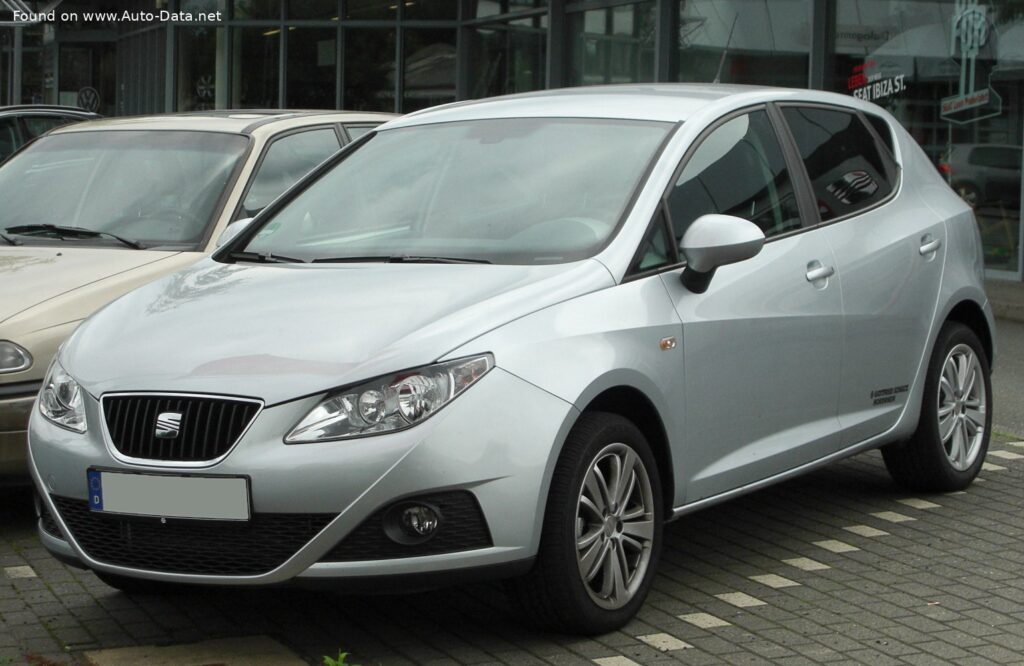
The Seat Ibiza IV 2.0 TDI, producing 143 horsepower, was a performance-oriented variant of the fourth-generation Ibiza (6L/6P) produced between January 2010 and March 2012. Positioned as a near-top-of-the-line offering, it bridged the gap between the more economical lower-powered diesel and gasoline engines and the potential for more focused sporting models. The Ibiza IV generation, based on the Volkswagen Group’s PQ24 platform, represented a significant step forward in terms of interior quality, safety features, and overall refinement compared to its predecessor. This 2.0 TDI model aimed to provide a blend of performance and fuel efficiency, appealing to drivers seeking a more engaging driving experience without sacrificing practicality.
Powertrain & Engine Architecture
The heart of the Ibiza IV 2.0 TDI is the CFHD engine, a 1968cc inline four-cylinder diesel engine. This engine is part of the Volkswagen Group’s common rail diesel family, utilizing direct fuel injection and a turbocharger with intercooler to maximize power and efficiency. The CFHD engine boasts a compression ratio of 16.5:1, contributing to its high torque output. The fuel injection system is a diesel commonrail system, delivering highly pressurized fuel directly into the cylinders for optimized combustion. The engine features a Double Overhead Camshaft (DOHC) valvetrain with four valves per cylinder, enhancing volumetric efficiency and allowing for improved engine breathing.
Unlike some of the lower-powered Ibiza variants which offered manual transmissions exclusively, the 2.0 TDI was primarily paired with a six-speed manual gearbox. This transmission was chosen to handle the increased torque output of the engine and provide a more engaging driving experience. The gearbox ratios were tuned to balance acceleration and fuel economy, with a relatively short first gear for quick take-offs and a taller sixth gear for efficient cruising. The engine oil capacity is 4.3 liters (4.54 US quarts / 3.78 UK quarts), and the coolant capacity is 8 liters (8.45 US quarts / 7.04 UK quarts). A particulate filter was standard equipment to meet Euro 5 emission standards.
Engine Specifications
The CFHD engine delivers a maximum power output of 143 hp at 4200 rpm and a peak torque of 320 Nm (236.02 lb-ft) between 1750 and 2500 rpm. This torque curve provides strong acceleration across a wide range of engine speeds, making the Ibiza 2.0 TDI feel responsive in everyday driving situations. The engine’s power-to-litre ratio is 72.7 hp/l, indicating a relatively high level of specific output for a diesel engine of this displacement.
Driving Characteristics
The Ibiza IV 2.0 TDI offered a noticeable step up in performance compared to the lower-powered engine options. Acceleration from 0 to 100 km/h (0-62 mph) took approximately 8.2 seconds, and 0-60 mph was achieved in around 7.8 seconds. While not a dedicated hot hatch, the 2.0 TDI provided brisk acceleration and ample power for overtaking maneuvers. The six-speed manual transmission allowed drivers to keep the engine in its optimal power band, maximizing performance. The turbocharger provided a noticeable boost in power, but turbo lag was minimal thanks to the intercooler and optimized turbocharger design.
Compared to the 1.6 TDI models, the 2.0 TDI offered significantly more torque, resulting in stronger acceleration in the mid-range. It also felt more relaxed at highway speeds, with less need for frequent gear changes. Compared to the gasoline-powered Ibiza variants, the 2.0 TDI offered superior fuel economy and a more robust feel, but lacked the high-revving character of the petrol engines.
Equipment & Trim Levels
The 2.0 TDI trim level typically included a generous level of standard equipment. This often included air conditioning, electric front windows, power-adjustable door mirrors, a CD/MP3 stereo system, and alloy wheels. Safety features such as ABS (Anti-lock Braking System) and front airbags were also standard. Optional extras included a sunroof, rear parking sensors, upgraded audio systems, and leather upholstery. Interior upholstery was typically cloth, but higher-spec versions could be equipped with partial leather trim. The dashboard layout was consistent across the Ibiza IV range, featuring a functional and modern design. Trim levels varied slightly depending on the specific market, but the 2.0 TDI generally represented a well-equipped and comfortable package.
Chassis & Braking
The Ibiza IV 2.0 TDI utilized an independent McPherson strut suspension system at the front, providing good handling and ride comfort. The rear suspension employed a semi-dependent torsion beam setup, which offered a good balance between space efficiency and handling performance. The front brakes consisted of ventilated discs measuring 288×25 mm, while the rear brakes were solid discs measuring 232×9 mm. The steering system was an electric power steering rack and pinion, providing light and precise steering feel. Stabilizer bars were fitted to both the front and rear axles to reduce body roll during cornering. The kerb weight of the 2.0 TDI model was approximately 1170 kg (2579.41 lbs).
Market Reception & Comparison
The Seat Ibiza IV 2.0 TDI was generally well-received by automotive critics. It was praised for its strong performance, good fuel economy, and comfortable ride. Critics noted that the 2.0 TDI offered a compelling alternative to other small diesel hatchbacks, such as the Volkswagen Polo and the Ford Fiesta. Fuel consumption figures were typically around 4.6 l/100 km (51.1 US mpg / 61.4 UK mpg) on the combined cycle, and CO2 emissions were rated at 119 g/km. Compared to the lower-powered Ibiza models, the 2.0 TDI offered a significant improvement in performance, but at a slightly higher price point. Reliability was generally good, although some owners reported issues with the diesel particulate filter (DPF) system, particularly on vehicles that were primarily used for short journeys.
Technical Specifications
| Brand | Seat |
| Model | Ibiza |
| Generation | Ibiza IV |
| Type (Engine) | 2.0 TDI (143 Hp) |
| Start of production | January, 2010 |
| End of production | March, 2012 |
| Powertrain Architecture | Internal Combustion engine |
| Body type | Hatchback |
| Seats | 5 |
| Doors | 5 |
| Fuel consumption (economy) – urban (NEDC) | 5.9 l/100 km (39.9 US mpg / 47.9 UK mpg) |
| Fuel consumption (economy) – extra urban (NEDC) | 3.9 l/100 km (60.3 US mpg / 72.4 UK mpg) |
| Fuel consumption (economy) – combined (NEDC) | 4.6 l/100 km (51.1 US mpg / 61.4 UK mpg) |
| CO2 emissions (NEDC) | 119 g/km |
| Fuel Type | Diesel |
| Acceleration 0 – 100 km/h | 8.2 sec |
| Acceleration 0 – 62 mph | 8.2 sec |
| Acceleration 0 – 60 mph | 7.8 sec |
| Maximum speed | 210 km/h (130.49 mph) |
| Emission standard | Euro 5 |
| Weight-to-power ratio | 8.2 kg/Hp |
| Weight-to-torque ratio | 3.7 kg/Nm |
| Power | 143 Hp @ 4200 rpm |
| Torque | 320 Nm @ 1750-2500 rpm (236.02 lb.-ft. @ 1750-2500 rpm) |
| Engine layout | Front, Transverse |
| Engine Model/Code | CFHD |
| Engine displacement | 1968 cm3 (120.09 cu. in.) |
| Number of cylinders | 4 |
| Engine configuration | Inline |
| Cylinder Bore | 81 mm (3.19 in.) |
| Piston Stroke | 95.5 mm (3.76 in.) |
| Compression ratio | 16.5:1 |
| Number of valves per cylinder | 4 |
| Fuel injection system | Diesel Commonrail |
| Engine aspiration | Turbocharger, Intercooler |
| Valvetrain | DOHC |
| Engine oil capacity | 4.3 l (4.54 US qt | 3.78 UK qt) |
| Coolant | 8 l (8.45 US qt | 7.04 UK qt) |
| Kerb Weight | 1170 kg (2579.41 lbs.) |
| Max. weight | 1696 kg (3739.04 lbs.) |
| Trunk (boot) space – minimum | 250 l (8.83 cu. ft.) |
| Fuel tank capacity | 45 l (11.89 US gal | 9.9 UK gal) |
| Length | 4088 mm (160.94 in.) |
| Width | 1693 mm (66.65 in.) |
| Height | 1441 mm (56.73 in.) |
| Wheelbase | 2469 mm (97.2 in.) |
| Number of gears and type of gearbox | 6 gears, manual transmission |
Legacy
The Seat Ibiza IV 2.0 TDI remains a relatively popular choice in the used car market, particularly for those seeking a fuel-efficient and reasonably powerful small hatchback. The CFHD engine is generally considered to be robust and reliable, although regular maintenance is essential to prevent issues with the DPF system. The availability of spare parts is good, and the Ibiza IV is relatively easy to maintain. While not a particularly rare or collectible model, the 2.0 TDI variant is often sought after by enthusiasts who appreciate its performance and driving dynamics. Its blend of practicality, efficiency, and performance ensures it continues to hold its own against more modern competitors.