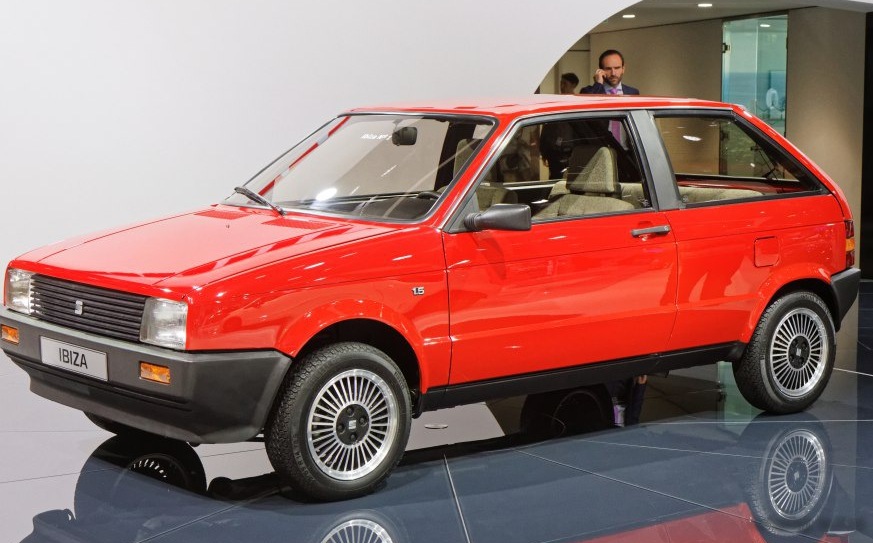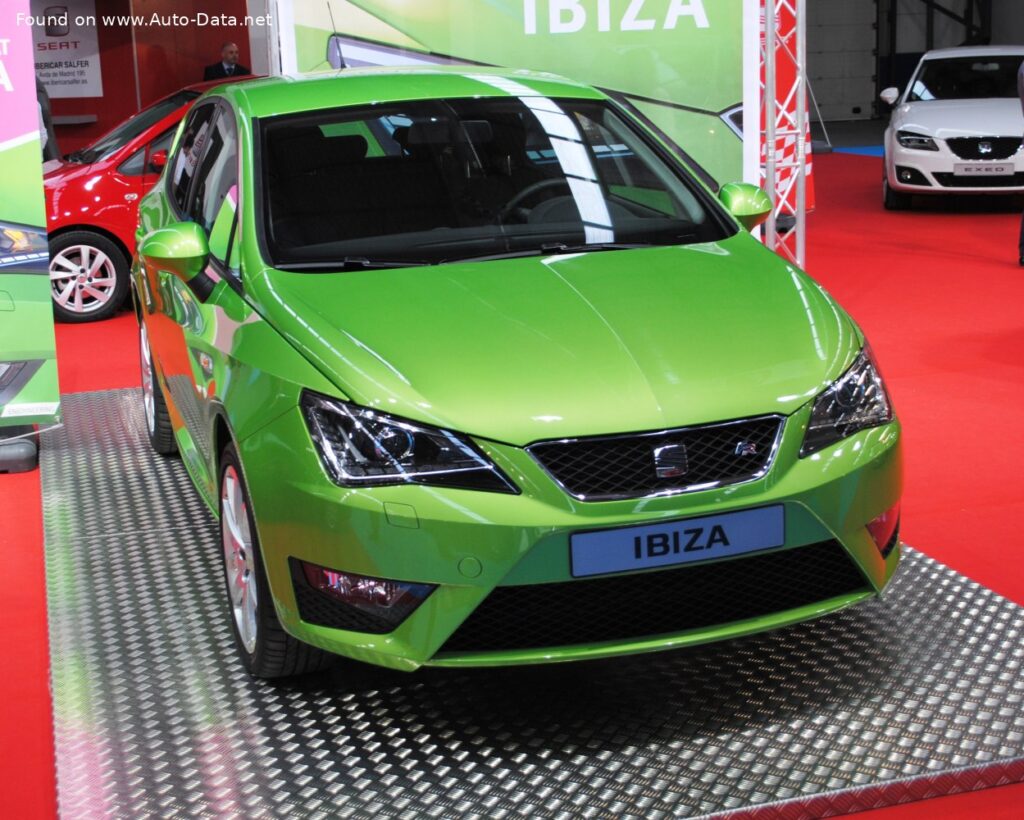
The Seat Ibiza IV (facelift 2012) 1.2 TDI (75 Hp) Start/Stop represents a significant iteration of Seat’s highly successful supermini, a staple in the European automotive market. Unveiled in 2012, this refreshed fourth-generation Ibiza solidified its position as a stylish, practical, and fuel-efficient option within the fiercely competitive B-segment. As a brand under the Volkswagen Group umbrella, Seat leveraged shared platforms and powertrains, allowing the Ibiza to offer compelling technology and engineering at an accessible price point. This particular variant, equipped with the 1.2-liter TDI diesel engine and a start/stop system, was specifically tailored to address the growing demand for low emissions and exceptional fuel economy in its primary European markets, where diesel engines held a strong presence, particularly in urban and commuter roles.
While the Seat brand itself is not officially sold in the United States, the Ibiza’s mechanical underpinnings and market positioning offer valuable insights into global automotive trends. It competed directly with European stalwarts like the Volkswagen Polo (its platform sibling), Ford Fiesta, Renault Clio, and Peugeot 208, carving out its niche with a sportier design aesthetic often associated with the Spanish marque. The 2012 facelift brought subtle but effective styling updates, enhancing its contemporary appeal and ensuring its relevance against newer rivals.
Powertrain & Engine Architecture: The CFWA 1.2 TDI
At the heart of this particular Seat Ibiza IV model lies the 1.2-liter TDI (Turbocharged Direct Injection) diesel engine, a three-cylinder unit designed for efficiency and compact packaging. This powerplant, internally designated CFWA, delivers 75 horsepower (Hp) at 4200 revolutions per minute (rpm) and a robust 132.76 pound-feet (lb.-ft.) of torque at a low 2000 rpm. The inclusion of a turbocharger and an intercooler was crucial for extracting usable power and torque from such a small displacement engine, making it feel more responsive than its modest horsepower figure might suggest, especially in city driving.
The engine’s front, transverse layout and inline configuration are typical for a front-wheel-drive supermini, optimizing interior space and handling dynamics. With a compression ratio of 16.5:1 and a common rail fuel injection system, the 1.2 TDI was engineered for precise fuel delivery and optimal combustion, directly contributing to its impressive fuel economy figures. The cylinder bore of 79.5 millimeters (3.13 inches) and piston stroke of 80.5 millimeters (3.17 inches) indicate a nearly square engine design, balancing torque and revving capability. The CFWA engine utilizes a variable geometry turbocharger (VGT) to optimize boost pressure across the engine’s operating range, improving both low-end torque and high-end power.
The Ibiza 1.2 TDI was typically paired with a five-speed manual transmission, although a seven-speed dual-clutch gearbox (DSG) was offered as an option. The manual transmission featured a conventional shift linkage, providing a direct and engaging driving experience. The DSG, on the other hand, offered smoother and faster gear changes, enhancing both performance and fuel efficiency. The Start & Stop System, a key feature of this variant, utilized a reinforced starter motor and a robust dual-mass flywheel to ensure reliable and seamless engine restarts.
Driving Characteristics
The Ibiza 1.2 TDI was not built for outright speed but for practical everyday driving. It accelerates from 0 to 60 miles per hour (mph) in approximately 13.2 seconds, with a top speed of 107.5 mph. These figures are perfectly adequate for urban commutes and highway cruising in Europe. The engine’s torque band, peaking at 2000 rpm, provides ample pulling power for overtaking maneuvers and navigating hilly terrain. Compared to higher-output versions of the Ibiza, such as those equipped with the 1.4 TSI gasoline engine, the 1.2 TDI offered significantly less acceleration but a substantial improvement in fuel economy.
The five-speed manual transmission’s gear ratios were optimized for maximizing fuel efficiency and minimizing engine noise. First gear was relatively short, providing brisk acceleration from a standstill, while fifth gear was tall, allowing for relaxed cruising at highway speeds. The optional DSG transmission offered even more refined gear changes and improved fuel economy, but at a higher cost. The 1.2 TDI’s relatively low power output meant that it required more frequent gear changes than its more powerful counterparts, but the engine’s responsiveness and the transmission’s smooth operation made this a minor inconvenience.
Equipment & Trim Levels
The Seat Ibiza IV (facelift 2012) 1.2 TDI (75 Hp) Start/Stop was typically offered in several trim levels, ranging from basic “Reference” to more well-equipped “Style” and “Sport” variants. The Reference trim included standard features such as power steering, ABS, front airbags, electric front windows, and a basic audio system. The Style trim added features such as alloy wheels, air conditioning, a multi-function steering wheel, and a more comprehensive audio system. The Sport trim further enhanced the package with features such as sport seats, a lowered suspension, and unique styling cues.
Interior upholstery typically consisted of durable cloth materials, with optional leather upholstery available on higher trim levels. The dashboard configuration was functional and ergonomically designed, with clearly labeled controls and a user-friendly infotainment system. Optional extras included a navigation system, parking sensors, and a panoramic sunroof. The Ibiza’s interior space was competitive for its class, offering ample headroom and legroom for both front and rear passengers.
Chassis & Braking
The Ibiza’s chassis featured an independent McPherson strut suspension at the front and a torsion beam suspension at the rear. This setup provided a good balance of ride comfort and handling agility. The front suspension incorporated a stabilizer bar to reduce body roll during cornering. The steering system was an electric power-assisted rack and pinion system, providing precise and responsive steering feel.
Braking duties were handled by ventilated disc brakes at the front and drum brakes at the rear. ABS (Anti-lock Braking System) was standard on all models, enhancing braking performance and stability. The Ibiza’s braking system was generally considered to be adequate for its weight and performance, providing reliable stopping power in both normal and emergency situations. The suspension and braking systems were tuned to provide a comfortable and predictable driving experience, making the Ibiza easy to handle for drivers of all skill levels.
Market Reception & Comparison
Critics generally praised the Seat Ibiza IV (facelift 2012) 1.2 TDI (75 Hp) Start/Stop for its fuel economy, low emissions, and stylish design. However, some reviewers noted that the engine’s performance was somewhat underwhelming, particularly when compared to higher-output versions of the Ibiza and its competitors. The Ibiza’s interior quality was also sometimes criticized for being somewhat basic, although it was generally considered to be acceptable for its price point.
Compared to other trims in the Ibiza lineup, the 1.2 TDI offered the best fuel economy and lowest emissions, making it an ideal choice for drivers who prioritized efficiency. However, it lacked the performance of the 1.4 TSI gasoline engine, which offered significantly more power and acceleration. In terms of reliability, the 1.2 TDI engine was generally considered to be reliable, although some owners reported issues with the diesel particulate filter (DPF) and the turbocharger. Overall, the Ibiza 1.2 TDI represented a compelling value proposition for buyers seeking a fuel-efficient and stylish supermini.
Technical Specifications
| Category | Specification |
| General Information | |
| Brand | Seat |
| Model | Ibiza |
| Generation | Ibiza IV (facelift 2012) |
| Type (Engine) | 1.2 TDI (75 Hp) start/stop |
| Start of Production | 2012 year |
| End of Production | 2015 year |
| Powertrain Architecture | Internal Combustion engine |
| Body Type | Hatchback |
| Seats | 5 |
| Doors | 5 |
| Performance Specifications | |
| Fuel Consumption (Urban) | 4.1 l/100 km (57.4 US mpg) |
| Fuel Consumption (Extra Urban) | 3 l/100 km (78.4 US mpg) |
| Fuel Consumption (Combined) | 3.4 l/100 km (69.2 US mpg) |
| CO2 Emissions | 89 g/km |
| Fuel Type | Diesel |
| Acceleration 0 – 60 mph | 13.2 sec |
| Acceleration 0 – 100 km/h | 13.9 sec |
| Maximum Speed | 173 km/h (107.5 mph) |
| Emission Standard | Euro 5 |
| Engine Specifications | |
| Power | 75 Hp @ 4200 rpm |
| Torque | 180 Nm @ 2000 rpm (132.76 lb.-ft. @ 2000 rpm) |
| Engine Layout | Front, Transverse |
| Engine Model/Code | CFWA |
| Engine Displacement | 1199 cm3 (73.17 cu. in.) |
| Number of Cylinders | 3 |
| Cylinder Bore | 79.5 mm (3.13 in.) |
| Piston Stroke | 80.5 mm (3.17 in.) |
| Compression Ratio | 16.5:1 |
| Fuel Injection System | Diesel Commonrail |
| Engine Aspiration | Turbocharger, Intercooler |
| Dimensions | |
| Length | 4061 mm (159.88 in.) |
| Width | 1693 mm (66.65 in.) |
| Height | 1445 mm (56.89 in.) |
| Wheelbase | 2469 mm (97.2 in.) |
Legacy
The Seat Ibiza IV (facelift 2012) 1.2 TDI (75 Hp) Start/Stop remains a popular choice in the used car market, particularly for buyers seeking a fuel-efficient and affordable supermini. The CFWA engine, while not known for its blistering performance, has proven to be relatively reliable, provided it has been properly maintained. Common issues include diesel particulate filter (DPF) clogging and turbocharger failure, but these can often be prevented with regular servicing and careful driving habits. The Ibiza’s stylish design and practical interior have also contributed to its enduring appeal. As a result, well-maintained examples of this variant continue to command reasonable prices in the used car market, making it a viable option for budget-conscious buyers.