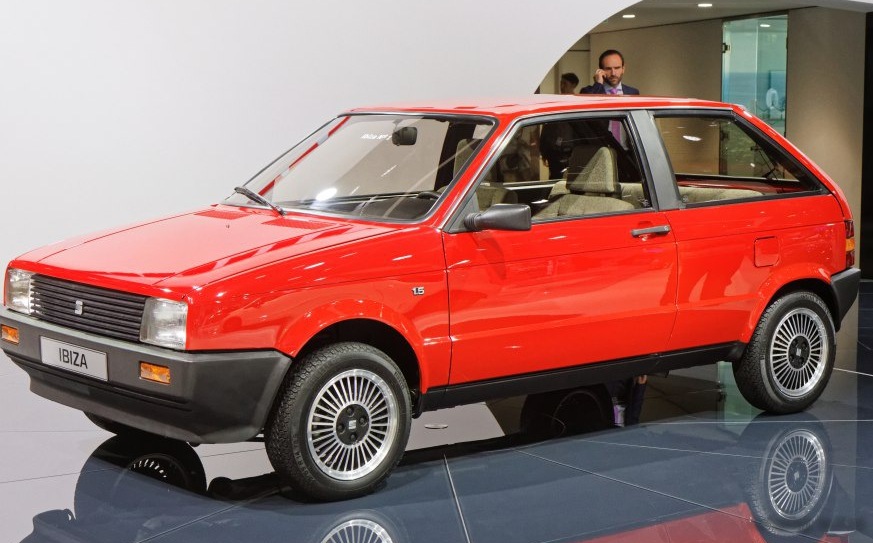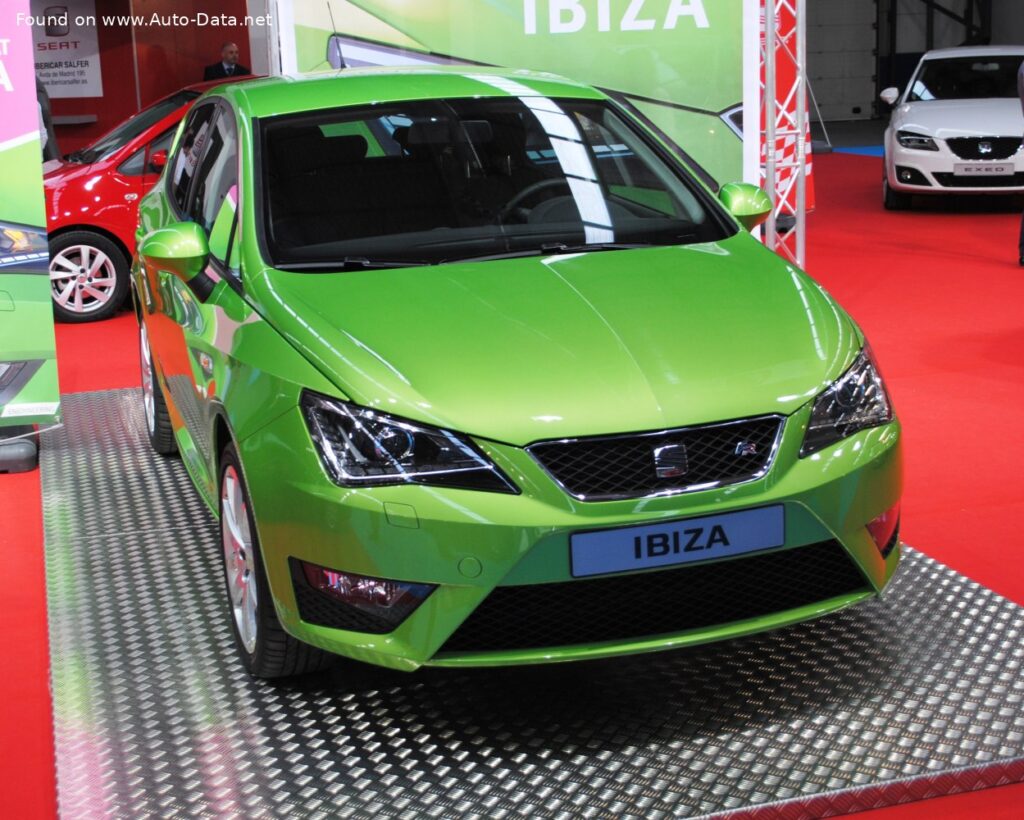
The Seat Ibiza IV (facelift 2012) 1.2 TSI (105 Hp) Eco Technology represents a significant iteration of the popular Spanish automaker’s subcompact or “supermini” hatchback. Unveiled in 2012, this facelifted version of the fourth-generation Ibiza aimed to refresh its appeal in the highly competitive European B-segment. Produced from 2012 to 2015, this particular variant, distinguished by its efficient 1.2-liter TSI engine and “Eco Technology” designation, underscored SEAT’s commitment to delivering a blend of sporty driving dynamics, practicality, and improved fuel economy. While the SEAT brand is not present in the United States market, the Ibiza holds a crucial role in Europe, offering a stylish and more dynamically oriented alternative within the Volkswagen Group’s small car portfolio, sharing its platform with siblings like the Volkswagen Polo and Skoda Fabia. This article delves into the specifics of this model, highlighting its engineering, design, and market positioning within its primary operating regions.
Engine and Performance: The 1.2 TSI Eco Technology Advantage
At the heart of the Seat Ibiza IV (facelift 2012) 1.2 TSI (105 Hp) Eco Technology lies a sophisticated 1.2-liter (1197 cm3) turbocharged inline-four gasoline engine, internally designated CBZB. This powerplant, a staple across various Volkswagen Group models, delivered a robust 105 horsepower at 5000 rpm, translating to a respectable 87.7 horsepower per liter. What truly set this engine apart, especially for a vehicle of its size, was its impressive torque output: 175 Nm (129.07 lb.-ft.) available across a broad rev range, from a low 1550 rpm up to 4100 rpm. This wide torque band ensured flexible performance, making the Ibiza feel responsive in urban traffic and capable on highways.
Power was delivered to the front wheels via a smooth-shifting 5-speed manual transmission, a common setup for efficiency-focused models in this segment. The combination of direct fuel injection and a turbocharger with an intercooler allowed for both spirited acceleration and commendable fuel economy. The Ibiza 1.2 TSI could accelerate from 0 to 60 mph in a brisk 9.3 seconds (0-100 km/h in 9.8 seconds) and reach a maximum speed of 118 mph (190 km/h).
The “Eco Technology” badge was not just for show; it signified SEAT’s efforts to optimize the vehicle for reduced fuel consumption and lower emissions. The combined fuel economy was rated at an impressive 5.1 liters per 100 km, which translates to approximately 46.1 US mpg. Even in urban driving, it achieved 6 liters per 100 km (39.2 US mpg), while extra-urban cruising improved to 4.5 liters per 100 km (52.3 US mpg). These figures were competitive for its class and contributed to its Euro 5 emission standard compliance, reflecting a focus on environmental responsibility alongside performance. The lightweight nature of the vehicle, with a curb weight of 2414.06 lbs (1095 kg), also played a crucial role in its agile handling and efficiency.
Powertrain & Engine Architecture
The CBZB engine utilizes direct fuel injection (FSI – Fuel Stratified Injection) which allows for precise fuel delivery and improved combustion efficiency. This system, coupled with the turbocharger, provides a significant boost in power and torque compared to naturally aspirated engines of similar displacement. The engine features a single overhead camshaft (SOHC) valvetrain with four valves per cylinder, optimizing gas flow for enhanced performance. The turbocharger itself is a wastegate turbo, regulating boost pressure to prevent overboost conditions. The 5-speed manual transmission used in the Ibiza 1.2 TSI is a standard gearbox found across many Volkswagen Group vehicles, known for its durability and relatively smooth shifting characteristics. Gear ratios are tuned for a balance between acceleration and fuel economy, with a relatively tall fifth gear for efficient highway cruising.
Driving Characteristics
The 1.8L 90 hp / Automatic setup offered a distinctly different driving experience compared to the higher-output versions or those equipped with a manual transmission. While the 105 hp 1.2 TSI provided adequate power for everyday driving, it wasn’t designed for outright performance. Acceleration was linear and predictable, making it easy to modulate in traffic. The broad torque band meant that the engine felt responsive at lower speeds, minimizing the need for frequent downshifts. Compared to the manual transmission, the automatic offered greater convenience, particularly in urban environments. However, it did come at the cost of some responsiveness and driver engagement. The automatic transmission, while smooth, wasn’t particularly quick to shift, and lacked the sporty feel of a dual-clutch transmission. The Ibiza 1.2 TSI Eco Technology was positioned as an entry-level or mid-range trim, appealing to buyers who prioritized fuel efficiency and ease of use over outright performance.
Equipment & Trim Levels
The Seat Ibiza IV (facelift 2012) 1.2 TSI (105 Hp) Eco Technology was typically offered in several trim levels, varying by market. Standard equipment generally included power steering, air conditioning, electric front windows, a basic audio system with MP3 compatibility, and ABS brakes. Safety features such as driver and passenger airbags were also standard. Higher trim levels added features like alloy wheels, fog lights, a more advanced audio system with Bluetooth connectivity, cruise control, and automatic climate control. Interior upholstery was typically cloth, with options for upgraded materials and designs. Optional extras included a sunroof, parking sensors, and a navigation system. The dashboard configuration was relatively simple and functional, with a clear instrument cluster and easy-to-use controls.
Chassis & Braking
The Ibiza IV utilized a MacPherson strut front suspension with a torsion beam rear suspension. This setup provided a good balance between ride comfort and handling. The front suspension featured a stabilizer bar to reduce body roll during cornering. The rear suspension, while simpler, was effective at maintaining stability and providing a comfortable ride. Braking was handled by ventilated discs at the front and solid discs at the rear, providing adequate stopping power for the vehicle’s weight and performance. The hydraulic power steering offered a reasonable level of assistance, making it easy to maneuver in tight spaces. Tire sizes varied depending on the trim level, with larger wheels and lower-profile tires offering improved grip and handling.
Market Reception & Comparison
Critics generally praised the Seat Ibiza IV (facelift 2012) 1.2 TSI (105 Hp) Eco Technology for its stylish design, engaging driving dynamics, and impressive fuel economy. The 1.2 TSI engine was lauded for its responsiveness and efficiency, while the car’s handling was considered to be among the best in its class. However, some critics noted that the interior quality was not quite as refined as some of its rivals, and that the rear seats could be a bit cramped for taller passengers. Compared to the higher-output versions of the Ibiza, the 1.2 TSI offered lower running costs but less exhilarating performance. Compared to the 1.6 TDI diesel variant, the 1.2 TSI provided a smoother and quieter driving experience, but with slightly lower fuel economy. The Ibiza’s reliability was generally considered to be good, although some owners reported minor issues with the electronic systems.
Technical Specifications
| Category | Specification |
| General Information | |
| Brand | Seat |
| Model | Ibiza |
| Generation | Ibiza IV (facelift 2012) |
| Type (Engine) | 1.2 TSI (105 Hp) Eco Technology |
| Start of Production | 2012 year |
| End of Production | 2015 year |
| Powertrain Architecture | Internal Combustion engine |
| Body Type | Hatchback |
| Seats | 5 |
| Doors | 5 |
| Performance Specifications | |
| Fuel Consumption (Economy) – Urban | 6 l/100 km (39.2 US mpg) |
| Fuel Consumption (Economy) – Extra Urban | 4.5 l/100 km (52.3 US mpg) |
| Fuel Consumption (Economy) – Combined | 5.1 l/100 km (46.1 US mpg) |
| Fuel Type | Petrol (Gasoline) |
| Acceleration 0 – 60 mph | 9.3 sec |
| Acceleration 0 – 100 km/h | 9.8 sec |
| Maximum Speed | 190 km/h (118.06 mph) |
| Emission Standard | Euro 5 |
| Weight-to-Power Ratio | 10.4 kg/Hp (95.9 Hp/tonne) |
| Weight-to-Torque Ratio | 6.3 kg/Nm (159.8 Nm/tonne) |
| Engine Specifications | |
| Power | 105 Hp @ 5000 rpm |
| Power per Liter | 87.7 Hp/l |
| Torque | 175 Nm @ 1550-4100 rpm (129.07 lb.-ft. @ 1550-4100 rpm) |
| Engine Layout | Front, Transverse |
| Engine Model/Code | CBZB |
| Engine Displacement | 1197 cm3 (1.2 Liters / 73.05 cu. in.) |
| Number of Cylinders | 4 |
| Engine Configuration | Inline |
| Cylinder Bore | 71 mm (2.8 in.) |
| Piston Stroke | 75.6 mm (2.98 in.) |
| Fuel Injection System | Direct injection |
| Engine Aspiration | Turbocharger, Intercooler |
| Engine Oil Capacity | 3.9 l (4.12 US qt) |
| Coolant Capacity | 5.6 l (5.92 US qt) |
| Space, Volume, and Weights | |
| Kerb Weight | 1095 kg (2414.06 lbs.) |
| Max. Weight | 1546 kg (3408.35 lbs.) |
| Max Load | 451 kg (994.28 lbs.) |
| Trunk (boot) Space – Minimum | 292 l (10.31 cu. ft.) |
| Fuel Tank Capacity | 45 l (11.89 US gal) |
| Dimensions | |
| Length | 4061 mm (159.88 in.) |
| Width | 1693 mm (66.65 in.) |
| Height | 1445 mm (56.89 in.) |
| Wheelbase | 2469 mm (97.2 in.) |
| Front Track | 1465 mm (57.68 in.) |
| Rear (Back) Track | 1457 mm (57.36 in.) |
| Minimum Turning Circle (Turning Diameter) | 10.48 m (34.38 ft.) |
| Drivetrain, Brakes, and Suspension Specifications | |
| Drivetrain Architecture | The Internal combustion engine (ICE) drives the front wheels of the vehicle. |
| Drive Wheel | Front-wheel drive |
| Number of Gears and Type of Gearbox | 5 gears, manual transmission |
| Front Suspension | Independent, type McPherson with coil spring and anti-roll bar |
| Rear Suspension | Hydraulic elements |
| Front Brakes | Ventilated discs |
| Rear Brakes | Disc |
| Assisting Systems | ABS (Anti-lock braking system) |
| Steering Type | Steering rack and pinion |
| Power Steering | Hydraulic Steering |
| Tires Size | 185/60 R15; 215/45 R16; 215/40 R17 |
| Wheel Rims Size | 6J x 15; 7J x 16; 7J x 17 |
Legacy
The Seat Ibiza IV (facelift 2012) 1.2 TSI (105 Hp) Eco Technology remains a popular choice in the used car market, particularly for buyers seeking an affordable and fuel-efficient supermini. The CBZB engine is generally considered to be reliable, although regular maintenance is essential to prevent issues such as carbon buildup and turbocharger wear. The Ibiza’s relatively simple construction and readily available parts make it relatively easy and inexpensive to repair. While it may not offer the same level of refinement or technology as more modern superminis, the Ibiza IV (facelift 2012) 1.2 TSI Eco Technology continues to provide a compelling combination of style, practicality, and driving pleasure, making it a worthwhile consideration for budget-conscious buyers.