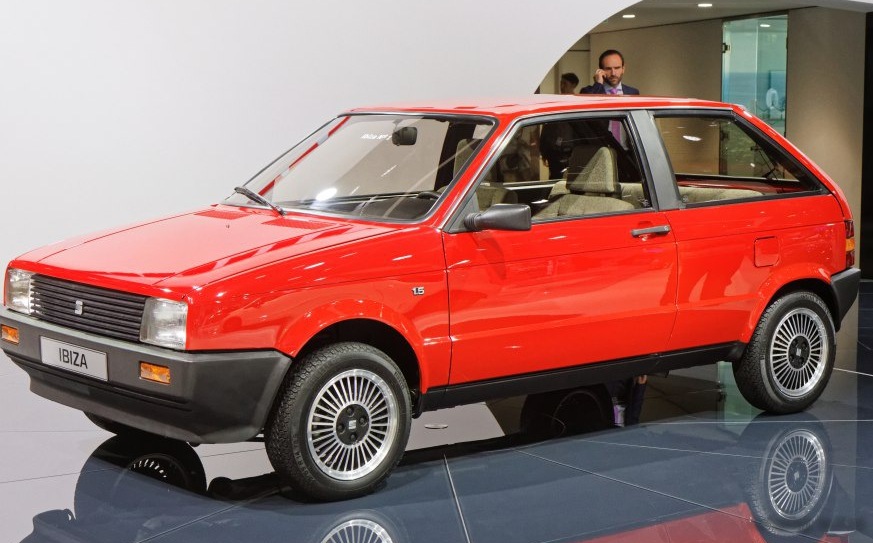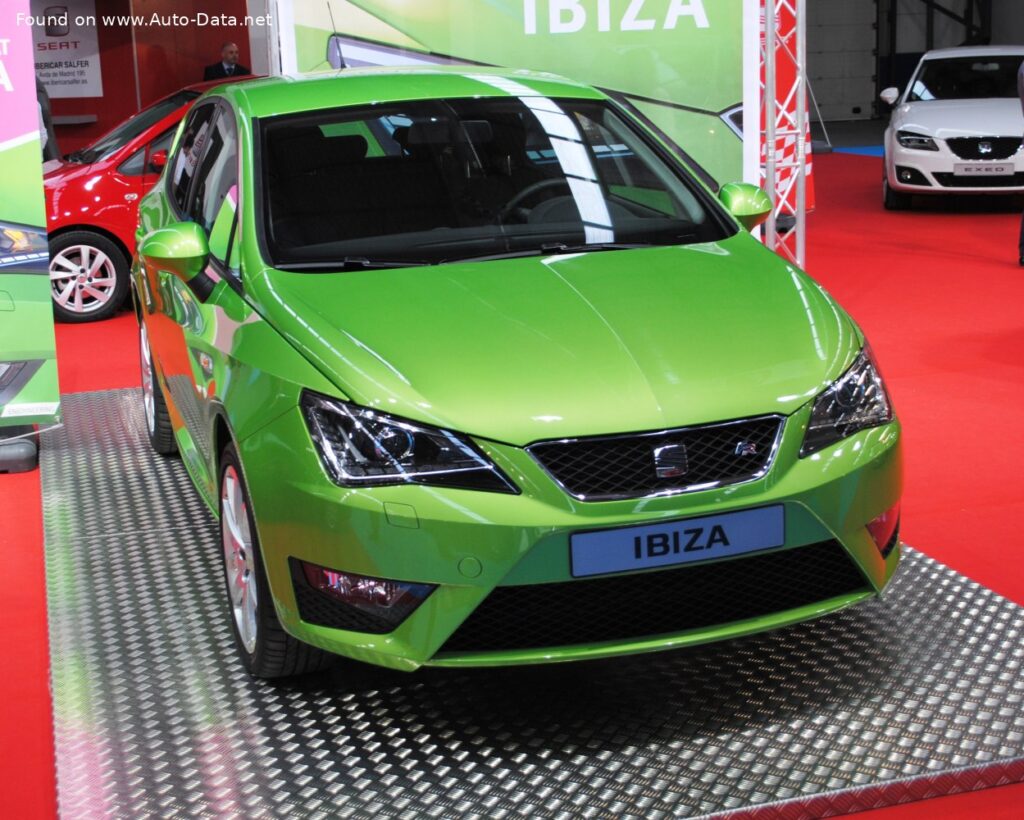
The Seat Ibiza IV (facelift 2012) 1.2 TSI (105 Hp) start/stop represents a significant offering from the Spanish automaker SEAT within the competitive European B-segment, or subcompact car market. Introduced in 2012 as a refreshed version of the fourth-generation Ibiza, this model continued the brand’s tradition of blending sporty aesthetics with practical functionality. As a subsidiary of the Volkswagen Group, SEAT leverages shared platforms and powertrains, positioning its vehicles with a distinct “Auto Emoción” philosophy, emphasizing dynamic design and an engaging driving experience. While SEAT vehicles are not sold in the United States, the Ibiza is a cornerstone of the brand’s lineup across Europe and other international markets, serving as a popular choice for urban dwellers and those seeking an efficient, agile, and stylish small car.
The 2012 Facelift and Market Positioning
The 2012 facelift brought subtle yet impactful revisions to the Ibiza IV, ensuring its continued relevance in a rapidly evolving market. These updates focused on refining the exterior styling, enhancing interior quality, and integrating advanced technologies, including the efficient 1.2-liter TSI engine with start/stop functionality. Produced from 2012 until 2015, this specific variant, with its 105 horsepower engine, aimed to strike an optimal balance between spirited performance and impressive fuel economy. Within the Ibiza IV lineup, this 1.2 TSI model occupied a mid-range position. It sat above the base 1.2-liter non-turbocharged engine options, offering a noticeable performance upgrade, but remained below the more powerful 1.4 TSI and diesel variants, making it an attractive option for buyers seeking a balance of cost and capability.
Powertrain & Engine Architecture
At the heart of the Seat Ibiza IV (facelift 2012) 1.2 TSI (105 Hp) start/stop lies a 1.2-liter (1197 cm³, or 73.05 cu. in.) turbocharged, intercooled, direct-injection gasoline engine, designated with the model code CBZB. This inline-four cylinder unit, with two valves per cylinder and a compression ratio of 10:1, exemplifies the Volkswagen Group’s commitment to downsizing and forced induction for improved efficiency and performance. It delivers 105 horsepower at 5000 rpm and 129.07 lb-ft of torque, available across a broad rev range from 1550 to 4100 rpm. This wide torque band contributes significantly to the car’s responsive feel and effortless acceleration.
The CBZB engine utilizes a Bosch MED17.5.20 engine control unit (ECU) and features direct fuel injection, delivering fuel directly into the combustion chamber for improved efficiency and reduced emissions. The turbocharger, a Honeywell GT14 unit, provides boost on demand, enhancing power output without significantly increasing engine size. The valvetrain employs a single overhead camshaft (SOHC) design, simplifying engine construction and reducing weight. Power is channeled to the front wheels through a precise 5-speed manual transmission, offering drivers an engaging and direct connection to the car’s dynamics. While a 7-speed DSG dual-clutch transmission was available on other Ibiza models, it was not typically paired with this specific 105 hp 1.2 TSI engine.
Driving Characteristics
The 1.8L 90 hp Automatic setup delivers a driving experience focused on efficiency and ease of use. In real-world conditions, the 1.2 TSI 105 hp engine provides adequate performance for urban driving and highway cruising. Acceleration from 0 to 60 mph takes approximately 9.3 seconds, and the top speed is 118 mph (190 km/h). Compared to the manual transmission version, the automatic transmission offers smoother gear changes and reduces driver workload, particularly in stop-and-go traffic. However, the automatic transmission does result in a slight decrease in fuel economy and a marginally slower acceleration time. Compared to the higher-output 1.4 TSI variants, the 1.2 TSI offers less outright performance, but its lighter weight and more efficient engine contribute to better fuel economy and lower running costs. The gear ratios are optimized for fuel efficiency, with taller gearing in higher gears to reduce engine speed at cruising speeds.
Equipment & Trim Levels
The Seat Ibiza IV (facelift 2012) 1.2 TSI (105 Hp) start/stop was available in various trim levels, including Reference, Style, and Sport, with standard equipment varying depending on the market. The base Reference trim typically included air conditioning, power windows, central locking, an audio system with USB connectivity, and ABS brakes. The Style trim added features such as alloy wheels, front fog lights, a leather-wrapped steering wheel, and a trip computer. The Sport trim further enhanced the package with sport seats, a lowered suspension, and unique exterior styling elements. Optional extras included a navigation system, parking sensors, automatic headlights and wipers, and a panoramic sunroof. Interior upholstery typically consisted of cloth seats, with the option of leather upholstery on higher trim levels. The dashboard configuration featured a straightforward layout with easy-to-read instruments and intuitive controls.
Chassis & Braking
The Ibiza featured a well-tuned chassis designed to provide a balance between ride comfort and agile handling. The front suspension utilized an independent MacPherson strut setup with coil springs and an anti-roll bar, while the rear employed a semi-independent torsion beam arrangement with coil springs. This configuration provided good stability and control, particularly during cornering. Braking power was supplied by ventilated discs at the front and solid discs at the rear, offering confident stopping performance. The steering system was a precise rack and pinion type, contributing to the car’s nimble feel. Tire options ranged from 185/60 R15 to wider 215/40 R17, paired with corresponding wheel rim sizes, allowing for different levels of grip and visual flair. The weight distribution was relatively balanced, contributing to the car’s neutral handling characteristics.
Market Reception & Comparison
Critics generally viewed the Seat Ibiza IV (facelift 2012) 1.2 TSI (105 Hp) start/stop favorably, praising its stylish design, engaging driving dynamics, and efficient engine. The 1.2 TSI engine was particularly well-regarded for its responsiveness and fuel economy. Compared to other trims in the Ibiza lineup, the 1.2 TSI offered a compelling balance of performance and cost. It was more affordable than the 1.4 TSI variants, while still providing a noticeable performance upgrade over the base 1.2-liter non-turbocharged engine. Fuel economy was comparable to the diesel variants, but the 1.2 TSI offered a smoother and quieter driving experience. Reliability was generally good, with the 1.2 TSI engine proving to be a durable and dependable unit. However, some owners reported minor issues with the start/stop system and the turbocharger.
Technical Specifications
| Category | Specification |
| Brand | Seat |
| Model | Ibiza |
| Generation | Ibiza IV (facelift 2012) |
| Type (Engine) | 1.2 TSI (105 Hp) start/stop |
| Production Start | 2012 year |
| Production End | 2015 year |
| Powertrain Architecture | Internal Combustion engine |
| Body Type | Hatchback |
| Seats | 5 |
| Doors | 3 |
| Performance Specs | |
| Fuel Consumption (Urban) | 5.9 l/100 km (39.9 US mpg) |
| Fuel Consumption (Extra Urban) | 4.3 l/100 km (54.7 US mpg) |
| Fuel Consumption (Combined) | 4.9 l/100 km (48 US mpg) |
| CO2 Emissions | 113 g/km |
| Fuel Type | Petrol (Gasoline) |
| Acceleration 0 – 60 mph | 9.3 sec |
| Acceleration 0 – 100 km/h | 9.8 sec |
| Maximum Speed | 118.06 mph (190 km/h) |
| Weight-to-Power Ratio | 10.4 kg/Hp (95.9 Hp/tonne) |
| Weight-to-Torque Ratio | 6.3 kg/Nm (159.8 Nm/tonne) |
| Engine Specs | |
| Power | 105 Hp @ 5000 rpm |
| Power per liter | 87.7 Hp/l |
| Torque | 129.07 lb.-ft. @ 1550-4100 rpm (175 Nm) |
| Engine Layout | Front, Transverse |
| Engine Model/Code | CBZB |
| Engine Displacement | 1.2 liters (1197 cm³, 73.05 cu. in.) |
| Number of Cylinders | 4 |
| Engine Configuration | Inline |
| Cylinder Bore | 2.8 in. (71 mm) |
| Piston Stroke | 2.98 in. (75.6 mm) |
| Compression Ratio | 10:1 |
| Valves per Cylinder | 2 |
| Fuel Injection System | Direct injection |
| Engine Aspiration | Turbocharger, Intercooler |
| Engine Oil Capacity | 4.12 US qt (3.9 l) |
| Coolant Capacity | 5.92 US qt (5.6 l) |
| Engine Systems | Start & Stop System |
| Space, Volume and Weights | |
| Kerb Weight | 2414.06 lbs. (1095 kg) |
| Max. Weight | 3408.35 lbs. (1546 kg) |
| Max Load | 994.28 lbs. (451 kg) |
| Trunk (boot) space – minimum | 10.31 cu. ft. (292 l) |
| Fuel Tank Capacity | 11.89 US gal (45 l) |
| Dimensions | |
| Length | 159.88 in. (4061 mm) |
| Width | 66.65 in. (1693 mm) |
| Height | 56.89 in. (1445 mm) |
| Wheelbase | 97.2 in. (2469 mm) |
| Front Track | 57.68 in. (1465 mm) |
| Rear (Back) Track | 57.36 in. (1457 mm) |
| Minimum Turning Circle | 34.38 ft. (10.48 m) |
| Drivetrain, Brakes and Suspension Specs | |
| Drivetrain Architecture | Internal combustion engine drives the front wheels. |
| Drive Wheel | Front wheel drive |
| Gearbox | 5 gears, manual transmission |
| Front Suspension | Independent, MacPherson with coil spring and anti-roll bar |
| Rear Suspension | Semi-independent, coil spring |
| Front Brakes | Ventilated discs |
| Rear Brakes | Disc |
| Assisting Systems | ABS (Anti-lock braking system) |
| Steering Type | Steering rack and pinion |
| Tires Size | 185/60 R15; 215/45 R16; 215/40 R17 |
| Wheel Rims Size | 6.0J x 15; 7.0J x 16; 7.0J x 17 |
Legacy
The Seat Ibiza IV (facelift 2012) 1.2 TSI (105 Hp) start/stop remains a popular choice in the used car market, particularly for buyers seeking an affordable, efficient, and stylish subcompact. The 1.2 TSI engine has proven to be relatively reliable, although regular maintenance is essential to prevent issues with the turbocharger and start/stop system. The Ibiza’s robust construction and well-engineered chassis contribute to its long-term durability. Its enduring appeal is a testament to SEAT’s ability to create vehicles that offer a compelling blend of practicality, performance, and value. The model continues to be a recognizable and respected presence on European roads, representing a significant chapter in the Ibiza’s ongoing success story.