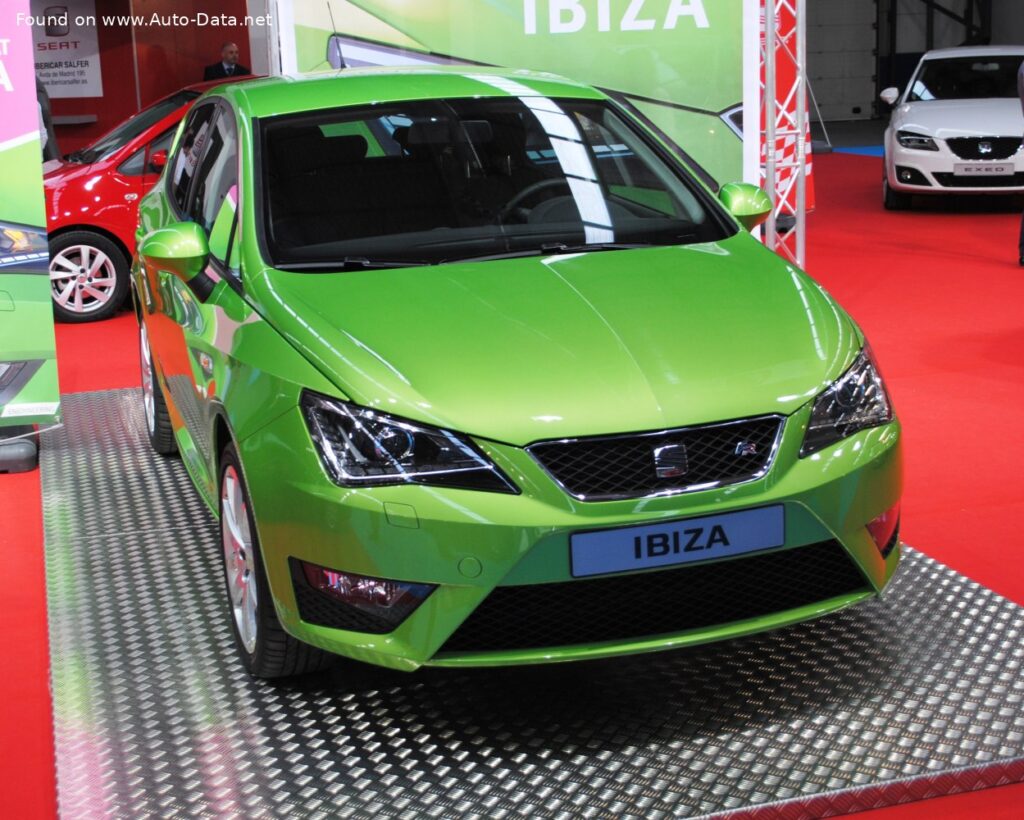
The Seat Ibiza IV (facelift 2012) 1.6 TDI (105 Hp) represents a compelling example of European subcompact engineering, produced from 2012 to 2015. This variant was a key component of the fourth-generation Ibiza (6J series), built on the Volkswagen Group’s A3 platform – also known as the 1HX0 platform. It aimed to deliver a balance of performance, fuel efficiency, and practicality within the highly competitive European B-segment, a class known as the subcompact segment in the United States. While never officially sold in North America, the Ibiza 1.6 TDI held a significant position in the European market, offering a stylish and economical option for urban drivers and small families.
Powertrain & Engine Architecture
The heart of the Seat Ibiza IV (facelift 2012) 1.6 TDI (105 Hp) is a 1.6-liter (1598 cm³) inline four-cylinder turbodiesel engine, designated with the engine code CLNA. This engine is transversely mounted at the front of the vehicle, powering the front wheels. It produces 105 horsepower at 4400 rpm and a substantial 184.39 lb-ft (250 Nm) of torque between 1500 and 2500 rpm. This broad torque curve is a hallmark of modern turbodiesel engines, providing strong pulling power at lower engine speeds.
The CLNA engine utilizes a common rail direct injection system, ensuring precise fuel delivery and optimized combustion. This system, coupled with a turbocharger and intercooler, enhances both power output and fuel efficiency. The engine features four valves per cylinder and a compression ratio of 16.5:1, contributing to its performance and durability. Power is transmitted to the front wheels through a five-speed manual transmission, a common configuration for economy-focused vehicles in Europe. The engine also incorporates a diesel particulate filter (DPF) to reduce harmful emissions, complying with Euro 5 standards.
Driving Characteristics
The 1.6 TDI engine in the Ibiza IV (facelift 2012) delivers a driving experience focused on usability and efficiency rather than outright performance. While not as quick as higher-output versions or those equipped with a gasoline engine, the 105 hp and 184 lb-ft of torque provide adequate acceleration for everyday driving. The engine’s strong low-end torque allows for effortless cruising and responsive acceleration in urban environments. The five-speed manual transmission is well-matched to the engine’s characteristics, offering smooth gear changes and a usable gear ratio spread. Compared to the 1.4-liter gasoline engines available in the Ibiza lineup, the 1.6 TDI offers significantly more torque, making it more comfortable for carrying passengers or navigating hilly terrain. However, it lacks the higher-revving nature and quicker response of the gasoline alternatives. Compared to the more powerful (and often more expensive) TDI variants, the 105 hp version provides a more accessible entry point into the diesel Ibiza range, prioritizing fuel economy over outright performance.
Equipment & Trim Levels
The Seat Ibiza IV (facelift 2012) 1.6 TDI (105 Hp) typically came equipped as a mid-range trim level, offering a good balance of features and affordability. Standard equipment generally included air conditioning, power windows, central locking, and an audio system with MP3 compatibility. Safety features included Anti-lock Braking System (ABS), Electronic Stability Control (ESC), and front and side airbags. Interior upholstery was typically cloth, with a functional and durable design. Optional extras included alloy wheels, a more advanced audio system with Bluetooth connectivity, parking sensors, and a trip computer. Higher trim levels, such as the FR and Cupra, offered sportier styling cues, upgraded interior materials, and additional performance enhancements, but at a higher price point. The 1.6 TDI trim was often chosen by buyers seeking a practical and well-equipped vehicle without the added cost of premium features.
Chassis & Braking
The Seat Ibiza IV (facelift 2012) 1.6 TDI (105 Hp) utilizes a MacPherson strut suspension system at the front, providing a good balance of comfort and handling. The rear suspension employs a torsion beam setup, which is cost-effective and contributes to the vehicle’s compact dimensions. The steering is electric power-assisted, offering light and precise control, particularly useful in urban driving conditions. The braking system consists of ventilated disc brakes at the front and solid disc brakes at the rear, providing adequate stopping power for the vehicle’s weight and performance. Stabilizer bars are fitted to both the front and rear axles to reduce body roll during cornering. The suspension and braking components are tuned to provide a comfortable ride while maintaining a degree of agility and responsiveness. The relatively lightweight nature of the Ibiza, combined with the efficient suspension setup, contributes to its nimble handling characteristics.
Market Reception & Comparison
The Seat Ibiza IV (facelift 2012) 1.6 TDI (105 Hp) was generally well-received by automotive critics for its fuel efficiency, practicality, and engaging driving dynamics. It was praised for its strong torque delivery, making it a comfortable and capable vehicle for both city and highway driving. Fuel economy figures were consistently highlighted as a major strength, with combined cycle consumption averaging around 56 US mpg (4.2 l/100 km). Compared to the gasoline-powered Ibiza models, the 1.6 TDI offered significantly better fuel economy, albeit with a slightly higher purchase price. In terms of reliability, the 1.6 TDI engine proved to be generally robust, although, like all diesel engines, it requires regular maintenance, including oil changes and DPF servicing. Compared to other vehicles in the B-segment, such as the Volkswagen Polo and Ford Fiesta, the Ibiza offered a more sporty and youthful image, appealing to a younger demographic. Its value proposition was strong, offering a good level of equipment and performance for its price.
Technical Specifications
| Category | Specification |
| General Information | |
| Brand | Seat |
| Model | Ibiza |
| Generation | Ibiza IV (facelift 2012) |
| Type (Engine) | 1.6 TDI (105 Hp) |
| Start of Production | 2012 year |
| End of Production | 2015 year |
| Powertrain Architecture | Internal Combustion engine |
| Body Type | Hatchback |
| Seats | 5 |
| Doors | 5 |
| Performance Specs | |
| Fuel Consumption (Urban) | 5.1 l/100 km (46.1 US mpg) |
| Fuel Consumption (Extra Urban) | 3.6 l/100 km (65.3 US mpg) |
| Fuel Consumption (Combined) | 4.2 l/100 km (56 US mpg) |
| CO2 Emissions | 109 g/km |
| Fuel Type | Diesel |
| Acceleration 0-60 mph | 10 sec |
| Acceleration 0-62 mph (0-100 km/h) | 10.5 sec |
| Maximum Speed | 116.82 mph (188 km/h) |
| Emission Standard | Euro 5 |
| Weight-to-Power Ratio | 11.1 kg/Hp (89.7 Hp/tonne) |
| Weight-to-Torque Ratio | 4.7 kg/Nm (213.7 Nm/tonne) |
| Engine Specs | |
| Power | 105 Hp @ 4400 rpm |
| Power per Liter | 65.7 Hp/l |
| Torque | 184.39 lb.-ft. (250 Nm) @ 1500-2500 rpm |
| Engine Layout | Front, Transverse |
| Engine Model/Code | CLNA |
| Engine Displacement | 1598 cm³ (97.52 cu. in.) |
| Number of Cylinders | 4 |
| Engine Configuration | Inline |
| Cylinder Bore | 3.13 in. (79.5 mm) |
| Piston Stroke | 3.17 in. (80.5 mm) |
| Compression Ratio | 16.5:1 |
| Number of Valves per Cylinder | 4 |
| Fuel Injection System | Diesel Commonrail |
| Engine Aspiration | Turbocharger, Intercooler |
| Engine Oil Capacity | 3.8 US qt (3.6 l) |
| Engine Oil Specification | Not specified in data |
| Coolant Capacity | 5.92 US qt (5.6 l) |
| Engine Systems | Particulate filter |
| Space, Volume and Weights | |
| Kerb Weight | 2579.41 lbs. (1170 kg) |
| Max. Weight | 3681.72 lbs. (1670 kg) |
| Max Load | 1102.31 lbs. (500 kg) |
| Trunk (Boot) Space – Minimum | 10.31 cu. ft. (292 l) |
| Fuel Tank Capacity | 11.89 US gal (45 l) |
| Dimensions | |
| Length | 159.88 in. (4061 mm) |
| Width | 66.65 in. (1693 mm) |
| Height | 56.89 in. (1445 mm) |
| Wheelbase | 97.2 in. (2469 mm) |
| Front Track | 57.68 in. (1465 mm) |
| Rear (Back) Track | 57.36 in. (1457 mm) |
| Minimum Turning Circle | 34.38 ft. (10.48 m) |
| Drivetrain, Brakes and Suspension Specs | |
| Drivetrain Architecture | Front-wheel drive (ICE drives front wheels) |
| Drive Wheel | Front wheel drive |
| Number of Gears and Type of Gearbox | 5 gears, manual transmission |
| Front Suspension | Independent, McPherson type with coil spring and anti-roll bar |
| Rear Suspension | Hydraulic elements |
| Front Brakes | Ventilated discs |
| Rear Brakes | Disc |
| Assisting Systems | ABS (Anti-lock braking system) |
| Steering Type | Steering rack and pinion |
| Power Steering | Electric Steering |
| Tires Size | 185/60 R15; 215/45 R16 |
| Wheel Rims Size | 6J x 15; 7J x 16 |
Legacy
The Seat Ibiza IV (facelift 2012) 1.6 TDI (105 Hp) continues to be a popular choice in the used car market, particularly in Europe. The CLNA engine is known for its reliability, provided it has been properly maintained. Regular servicing, including oil changes and DPF regeneration, is crucial for ensuring its longevity. Common issues include wear and tear on suspension components and potential problems with the turbocharger, particularly on higher-mileage examples. However, these are generally manageable with preventative maintenance. The Ibiza’s relatively simple mechanical design and readily available parts contribute to its affordability and ease of repair. Its fuel efficiency and practicality continue to appeal to buyers seeking an economical and reliable subcompact vehicle. While it may not offer the same level of refinement or technology as more modern vehicles, the Ibiza 1.6 TDI remains a capable and well-rounded option for those seeking a dependable and affordable European car.