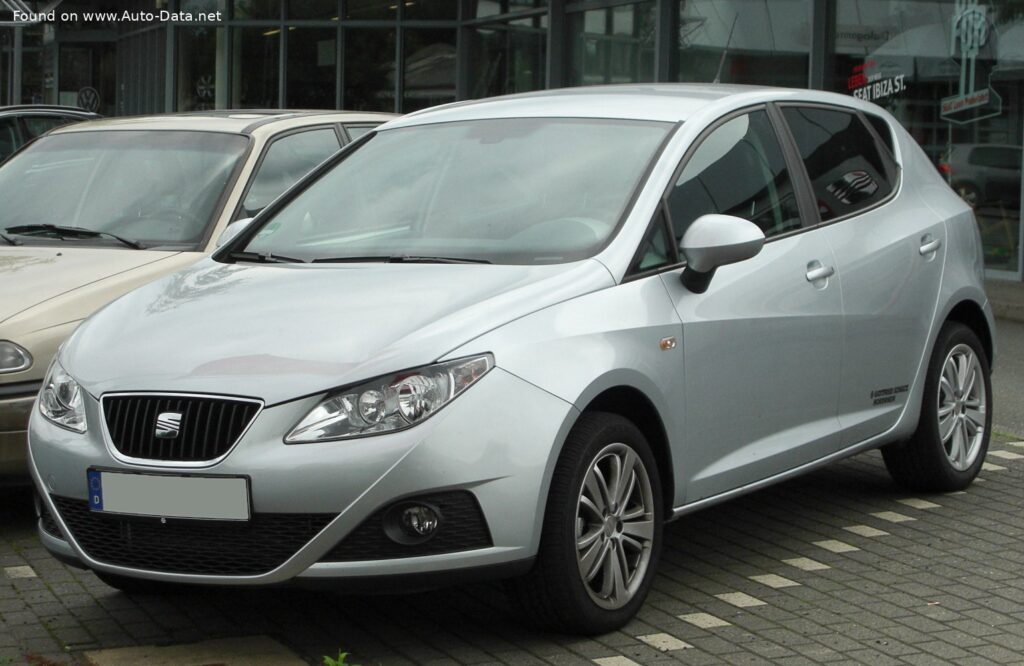
The Seat Ibiza IV FR 1.4 TSI (150 Hp) DSG represents a pivotal moment for the Spanish automaker SEAT (Sociedad Española de Automóviles de Turismo) within the highly competitive European B-segment, often referred to as the supermini or subcompact class in the United States. Produced between 2009 and 2012, this particular variant of the fourth-generation Ibiza solidified its position as a sporty and technologically advanced offering, especially for a vehicle not officially sold in the North American market. As a product of the Volkswagen Group, the Ibiza IV shared its architecture (the PQ25 platform) with well-regarded siblings like the Volkswagen Polo V and Audi A1, benefiting from robust engineering and sophisticated powertrain options. The FR (Formula Racing) trim level, in particular, emphasized performance and a more aggressive aesthetic, appealing to drivers seeking a spirited driving experience without sacrificing everyday practicality.
The Ibiza IV FR: Positioning and Overview
The fourth-generation Ibiza, internally designated 6J, was initially unveiled at the 2008 Madrid Auto Show, with the FR variant following shortly thereafter. Its design, penned by Luc Donckerwolke, brought a sharper, more angular look to the Ibiza lineup, moving away from the softer lines of its predecessor. The integration of advanced engine technology, specifically the 1.4-liter TSI engine paired with a dual-clutch DSG transmission, set the FR model apart, offering a blend of performance and efficiency that was highly desirable in its primary European markets. The Ibiza IV FR occupied a mid-range performance position within the lineup, sitting above the base models with smaller displacement engines and below the potential for even higher-performance, limited-edition variants. This article delves into the technical prowess, design philosophy, and market impact of the Seat Ibiza IV FR 1.4 TSI (150 Hp) DSG, presenting a comprehensive overview for automotive enthusiasts.
Powertrain & Engine Architecture
At the heart of the Seat Ibiza IV FR 1.4 TSI (150 Hp) DSG lies a sophisticated 1.4-liter (1390 cm3 or 84.82 cu. in.) inline four-cylinder engine, a testament to Volkswagen Group’s pioneering efforts in small-displacement, forced-induction powertrains. This engine, identified by codes such as CAVF, CNUB, CTHF, or CTJB, utilized direct injection and a turbocharger with an intercooler to achieve impressive output figures for its size. It produced a robust 150 horsepower at 5800 rpm, translating to a specific output of 107.9 Hp per liter, a figure more commonly associated with larger displacement engines.
Crucially, the engine delivered a peak torque of 220 Nm (162.26 lb.-ft.) across a broad rev range, from a low 1250 rpm all the way up to 4500 rpm. This wide torque band was instrumental in making the Ibiza FR feel responsive and eager, whether navigating urban traffic or accelerating on the highway. The combination of direct injection and turbocharging not only boosted power but also contributed to improved fuel efficiency, a key consideration in European markets. The fuel injection system employed stratified charge operation under certain conditions to further optimize combustion efficiency and reduce emissions.
Power was seamlessly transmitted to the front wheels via a 7-speed automatic DSG (Direct Shift Gearbox) transmission. This dual-clutch gearbox was a significant technological highlight, offering lightning-fast shifts and contributing to both performance and fuel economy. The DSG utilizes two separate clutches, one for odd-numbered gears and one for even-numbered gears, allowing for pre-selection of the next gear and virtually seamless transitions. The Ibiza FR could sprint from 0 to 60 mph in a brisk 7.4 seconds (0-100 km/h in 7.8 seconds) and reach a top speed of 131.11 mph (211 km/h). These figures placed it firmly in the “warm hatch” category, offering a compelling blend of everyday usability and genuine performance.
Driving Characteristics
The 1.8L 90 hp Automatic configuration, while not available on the Ibiza FR, was a common entry-level option in the broader Ibiza IV range. Compared to the FR’s 1.4 TSI, the 1.8L offered a significantly more relaxed driving experience. The 90 hp engine, while adequate for city driving, felt strained during highway overtaking or when fully loaded. The automatic transmission, typically a four-speed unit, prioritized fuel economy over performance, resulting in noticeable delays during downshifts and a less engaging driving experience. The FR, with its turbocharging and DSG, provided a much more immediate and responsive throttle response, quicker acceleration, and a more refined overall driving feel. The FR’s suspension was also tuned for sportier handling, offering reduced body roll and increased cornering grip compared to the standard Ibiza.
The 1.8L automatic’s gear ratios were optimized for fuel efficiency, with taller gearing in higher gears. This contributed to its lower fuel consumption but also meant that the engine often lacked the power to maintain speed on inclines without downshifting. In contrast, the DSG in the FR model offered a wider range of gear ratios and quicker shifts, allowing the engine to stay within its optimal power band more frequently.
Equipment & Trim Levels
The Seat Ibiza IV FR 1.4 TSI (150 Hp) DSG came equipped with a range of features designed to enhance both the driving experience and the overall ownership experience. Standard equipment typically included air conditioning, power windows, central locking, a quality audio system with MP3 compatibility, and alloy wheels. The FR trim also added unique styling elements such as a sport suspension, a leather-wrapped steering wheel, aluminum pedals, and sport seats with distinctive upholstery. Optional extras included a sunroof, parking sensors, a navigation system, and upgraded audio systems. The interior featured a functional yet sporty cabin designed for five occupants. The dashboard was well-laid-out with clear instrumentation and intuitive controls, typical of Volkswagen Group vehicles.
Chassis & Braking
The Ibiza IV FR featured a robust chassis designed to handle the increased power and performance of the 1.4 TSI engine. The front suspension utilized an independent MacPherson strut system with coil springs and an anti-roll bar, providing responsive handling and good ride comfort. The rear suspension employed a torsion beam setup, which offered a good balance of space efficiency and handling characteristics. The braking system consisted of ventilated disc brakes at the front and solid disc brakes at the rear, providing ample stopping power. The Anti-lock Braking System (ABS) was standard, enhancing safety and stability during emergency braking maneuvers. The hydraulic power steering provided direct feedback, enhancing the sporty feel.
Market Reception & Comparison
The Seat Ibiza IV FR 1.4 TSI (150 Hp) DSG was generally well-received by automotive critics, who praised its sporty handling, responsive engine, and advanced DSG transmission. It was often lauded as a compelling alternative to more established rivals such as the Ford Fiesta S and Renault Clio GT. Fuel economy was also a strong point, with the Ibiza FR achieving respectable figures for a performance-oriented compact car. Reliability was generally good, although some owners reported minor issues with the DSG transmission. Compared to the lower-powered Ibiza variants, the FR offered a significantly more engaging driving experience and a more premium feel. However, it also came at a higher price point. The 1.8L automatic models, while more affordable, were often criticized for their lack of performance and less refined driving experience.
Technical Specifications
| Category | Specification |
| General Information | |
| Brand | Seat |
| Model | Ibiza |
| Generation | Ibiza IV |
| Type (Engine) | FR 1.4 TSI (150 Hp) DSG |
| Start of Production | 2009 year |
| End of Production | 2012 year |
| Powertrain Architecture | Internal Combustion engine |
| Body type | Hatchback |
| Seats | 5 |
| Doors | 5 |
| Performance Specs | |
| Fuel consumption (economy) – urban | 8.1 l/100 km (29 US mpg) |
| Fuel consumption (economy) – extra urban | 5.3 l/100 km (44.4 US mpg) |
| Fuel consumption (economy) – combined | 6.3 l/100 km (37.3 US mpg) |
| Fuel Type | Petrol (Gasoline) |
| Acceleration 0 – 60 mph | 7.4 sec |
| Acceleration 0 – 100 km/h | 7.8 sec |
| Maximum speed | 211 km/h (131.11 mph) |
| Emission standard | Euro 5 |
| Weight-to-power ratio | 8.4 kg/Hp |
| Engine Specs | |
| Power | 150 Hp @ 5800 rpm |
| Power per liter | 107.9 Hp/l |
| Torque | 220 Nm @ 1250-4500 rpm (162.26 lb.-ft.) |
| Engine layout | Front, Transverse |
| Engine Model/Code | CAVF, CNUB, CTHF, CTJB |
| Engine displacement | 1390 cm3 (1.4 liters) |
| Number of cylinders | 4 |
| Engine configuration | Inline |
Legacy
The Seat Ibiza IV FR 1.4 TSI (150 Hp) DSG remains a popular choice among enthusiasts seeking a well-rounded and engaging compact car. Its combination of performance, fuel efficiency, and practicality has ensured its continued appeal in the used car market. The 1.4 TSI engine and DSG transmission have proven to be relatively reliable, although regular maintenance is essential to ensure long-term durability. The Ibiza FR’s sporty styling and dynamic driving characteristics have cemented its place as a memorable and desirable model within the Seat lineup. It represents a high point in SEAT’s development, showcasing the brand’s ability to create vehicles that are both fun to drive and practical for everyday use.