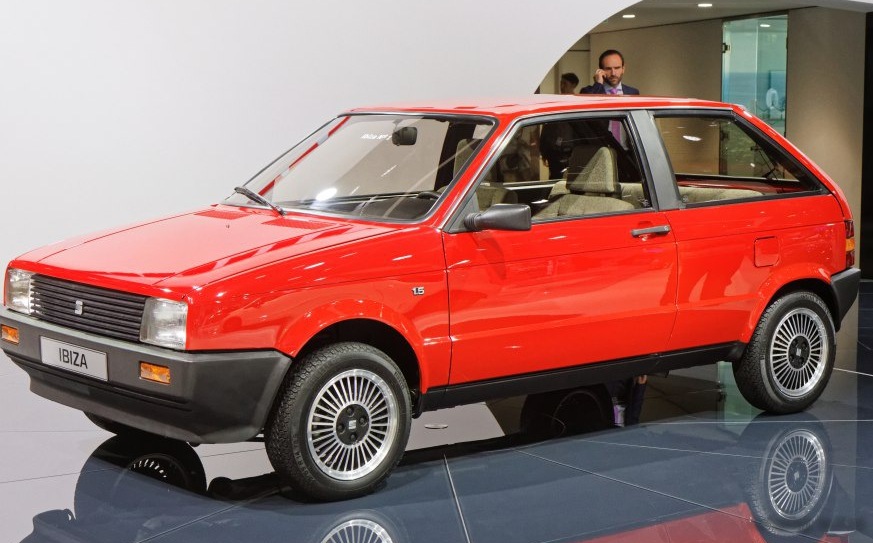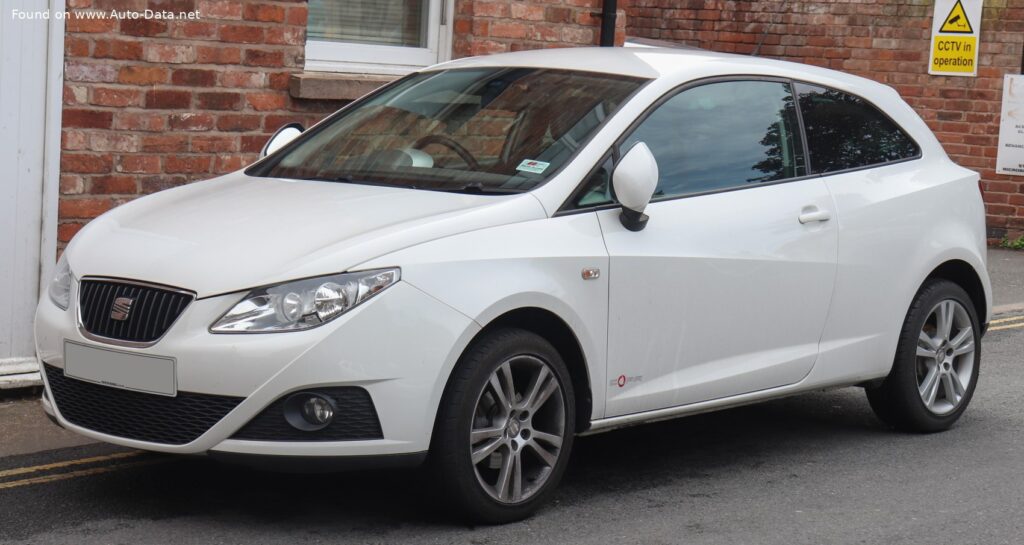
The Seat Ibiza IV SC 1.2 TDI (75 Hp) represents a significant offering within the highly competitive European subcompact, or B-segment, market. Produced by the Spanish automaker Seat, a subsidiary of the Volkswagen Group, the fourth generation Ibiza (6J) debuted in 2008, showcasing a more dynamic and sculpted design language penned by Luc Donckerwolke. The “SC” designation stands for “SportCoupe,” indicating the three-door hatchback variant, which emphasized a sportier aesthetic compared to its five-door counterpart. This particular model, equipped with the economical 1.2-liter TDI diesel engine, was available for a brief production run in 2010, positioning itself as an exceptionally fuel-efficient and environmentally conscious choice for urban and highway driving in its primary European markets.
During its tenure, the Seat Ibiza IV SC aimed to blend youthful appeal with the robust engineering of the Volkswagen Group. While Seat models are not traditionally sold in the United States, their role in the European automotive landscape is crucial, often serving as a sportier, more design-led alternative to the Volkswagen Polo, with which it shares its platform. The 1.2 TDI variant specifically catered to a market increasingly concerned with fuel economy and lower emissions, offering a compelling package of practicality, style, and efficiency.
Powertrain and Engine Architecture
At the heart of the Seat Ibiza IV SC 1.2 TDI (75 Hp) is a meticulously engineered 1.2-liter (1199 cm3 or 73.17 cu. in.) inline three-cylinder diesel engine, identified by the engine code CFWA. This compact powerhouse was designed with efficiency and low emissions as primary objectives, adhering to the Euro 5 emission standard prevalent at the time. The engine utilizes a sophisticated Commonrail direct fuel injection system, which allows for precise fuel delivery and contributes significantly to its impressive fuel economy and reduced particulate matter output, further aided by an integrated particulate filter.
Despite its modest displacement, the engine benefits from forced induction via a turbocharger and intercooler system. This setup boosts the engine’s volumetric efficiency, allowing it to produce a respectable 75 horsepower at 4000 rpm. More importantly for its segment and intended use, the engine delivers a robust 180 Nm (132.76 lb.-ft.) of torque from a low 1500 rpm. This characteristic low-end torque is a hallmark of modern diesel engines and ensures brisk acceleration and flexible in-gear performance, making the Ibiza SC 1.2 TDI feel more responsive in city traffic and less strained on the open road than its horsepower figure might suggest. The power-per-liter ratio stands at 62.6 Hp/l, a solid figure for a small displacement diesel.
Power is channeled to the front wheels through a precise 5-speed manual transmission, a common and reliable setup for vehicles in this class. The front-wheel-drive architecture, combined with a front, transverse engine layout, optimizes interior space and contributes to predictable handling. The engine’s compression ratio of 16.5:1 is typical for a diesel, optimizing combustion efficiency. With an engine oil capacity of 4.3 liters (4.54 US qt) and a coolant capacity of 8 liters (8.45 US qt), the powertrain is designed for durability and ease of maintenance within standard service intervals.
Driving Characteristics
The Seat Ibiza IV SC 1.2 TDI (75 Hp) offered a driving experience geared towards practicality and fuel efficiency rather than outright performance. While not a sports car, the engine’s low-end torque provided adequate acceleration for everyday driving situations. Compared to higher-output versions of the Ibiza IV, such as those equipped with the 1.6-liter gasoline engine, the 1.2 TDI felt noticeably slower, particularly when accelerating at higher speeds or overtaking. However, the 1.2 TDI’s strength lay in its responsiveness at lower RPMs, making it well-suited for navigating city streets. The 5-speed manual transmission was well-matched to the engine’s characteristics, offering smooth gear changes and allowing drivers to keep the engine within its optimal torque band. Compared to the 1.4-liter gasoline engine, the TDI offered significantly better fuel economy, but at the expense of overall power and refinement. The manual transmission also provided a more engaging driving experience than the optional automatic transmission available on other Ibiza models.
Equipment & Trim Levels
The Seat Ibiza IV SC 1.2 TDI (75 Hp) typically occupied an entry-level to mid-range position within the Ibiza SC lineup. Standard equipment generally included air conditioning, power steering, electric front windows, a basic audio system with MP3 compatibility, and ABS brakes. Safety features such as driver and passenger airbags were also standard. Interior upholstery was typically cloth, with a functional and durable design. Optional extras included alloy wheels, a more advanced audio system, rear electric windows, and parking sensors. Higher trim levels, such as the “Sport” or “Style” variants, added features like sport seats, leather steering wheel, and fog lights. The dashboard configuration was relatively simple and straightforward, prioritizing functionality over luxury. The overall focus was on providing a well-equipped, yet affordable, package for budget-conscious buyers.
Chassis & Braking
The Ibiza IV SC 1.2 TDI utilized a robust chassis designed to balance ride comfort and handling. The front suspension consisted of independent McPherson struts with coil springs and an anti-roll bar, providing responsive steering and good stability. The rear suspension employed a semi-dependent torsion beam with a lateral stabilizer, offering a compromise between comfort and handling. Braking was provided by ventilated disc brakes at the front and drum brakes at the rear, a common configuration for vehicles in this weight class. The ABS system enhanced braking performance and safety, particularly on slippery surfaces. Stabilizer bar thickness was relatively modest, reflecting the car’s focus on comfort and fuel efficiency rather than aggressive handling. The steering system was typically hydraulic power steering, providing a light and easy steering feel, particularly useful for maneuvering in urban environments.
Market Reception & Comparison
Critics generally praised the Seat Ibiza IV SC 1.2 TDI (75 Hp) for its fuel efficiency, low emissions, and surprisingly responsive engine. However, some reviewers noted that the engine could feel strained at higher speeds or when carrying a full load. Compared to other trims in the Ibiza lineup, the 1.2 TDI offered the best fuel economy, making it an attractive option for drivers who prioritized running costs. Against competitors like the Volkswagen Polo 1.2 TDI, Ford Fiesta 1.4 TDCi, and Renault Clio 1.5 dCi, the Ibiza offered a compelling blend of style, practicality, and efficiency. The Ibiza’s more aggressive styling and sportier driving dynamics often appealed to a younger demographic compared to the more conservative Polo. Reliability was generally good, with the 1.2 TDI engine proving to be a durable and dependable unit. However, like all diesel engines, it was susceptible to issues related to the diesel particulate filter (DPF) if not driven on longer journeys periodically.
Technical Specifications: Seat Ibiza IV SC 1.2 TDI (75 Hp)
| Category | Specification |
| General Information | |
| Brand | Seat |
| Model | Ibiza |
| Generation | Ibiza IV SC |
| Type (Engine) | 1.2 TDI (75 Hp) |
| Start of Production | 2010 year |
| End of Production | 2010 year |
| Powertrain Architecture | Internal Combustion engine |
| Body Type | Coupe (3-Door Hatchback) |
| Seats | 5 |
| Doors | 3 |
| Performance Specs | |
| Fuel Type | Diesel |
| Emission Standard | Euro 5 |
| Engine Specs | |
| Power | 75 Hp @ 4000 rpm |
| Power per Liter | 62.6 Hp/l |
| Torque | 180 Nm (132.76 lb.-ft.) @ 1500 rpm |
| Engine Layout | Front, Transverse |
| Engine Model/Code | CFWA |
| Engine Displacement | 1199 cm3 (73.17 cu. in.) |
| Number of Cylinders | 3 |
| Engine Configuration | Inline |
| Cylinder Bore | 79.5 mm (3.13 in.) |
| Piston Stroke | 80.5 mm (3.17 in.) |
| Compression Ratio | 16.5:1 |
| Number of Valves per Cylinder | 4 |
| Fuel Injection System | Diesel Commonrail |
| Engine Aspiration | Turbocharger, Intercooler |
| Engine Oil Capacity | 4.3 l (4.54 US qt) |
| Engine Oil Specification | Not specified |
| Coolant Capacity | 8 l (8.45 US qt) |
| Engine Systems | |
| Particulate Filter | Yes |
| Space, Volume and Weights | |
| Trunk (boot) Space – Minimum | 284 l (10.03 cu. ft.) |
| Fuel Tank Capacity | 45 l (11.89 US gal) |
| Dimensions | |
| Length | 4034 mm (158.82 in.) |
| Width | 1693 mm (66.65 in.) |
| Height | 1428 mm (56.22 in.) |
| Wheelbase | 2469 mm (97.2 in.) |
| Front Track | 1465 mm (57.68 in.) |
| Rear (Back) Track | 1457 mm (57.36 in.) |
| Minimum Turning Circle (Turning Diameter) | 10.48 m (34.38 ft.) |
| Drivetrain, Brakes and Suspension Specs | |
| Drivetrain Architecture | The Internal combustion engine (ICE) drives the front wheels of the vehicle. |
| Drive Wheel | Front wheel drive |
| Number of Gears and Type of Gearbox | 5 gears, manual transmission |
| Front Suspension | Independent, type McPherson with coil spring and anti-roll bar |
| Rear Suspension | Semi-dependent beam with stabilizer lateral stability |
| Front Brakes | Ventilated discs |
| Rear Brakes | Drum |
| Assisting Systems | ABS (Anti-lock braking system) |
| Power Steering | Electric Steering |
| Tires Size Options | 175/70 R14; 185/60 R15; 195/50 R16; 215/40 R17 |
| Wheel Rims Size Options | 5.0J x 14; 6.0J x 15; 7.0J x 16; 7.0J x 17 |
Legacy
The Seat Ibiza, particularly the fourth generation, holds a significant place in the brand’s history as its best-selling model and a cornerstone of its European strategy. The SC variant, with its three-door body and sporty design, was instrumental in attracting a younger demographic seeking style and affordability. The Seat Ibiza IV SC 1.2 TDI (75 Hp), though a niche within the broader Ibiza lineup due to its specific engine and short production window, played a crucial role in enhancing the model’s reputation for efficiency and environmental responsibility.
In the highly competitive B-segment, the Ibiza IV SC faced stiff competition from European stalwarts like the Volkswagen Polo (its platform mate), Ford Fiesta, Renault Clio, Peugeot 207/208, and Opel Corsa. Seat successfully carved out its niche by offering a more emotional and design-driven alternative. While the Polo might have been perceived as more conservative, the Ibiza leaned into its Spanish heritage with passionate styling and a sportier driving feel, often offering compelling value for money. The 1.2 TDI engine specifically allowed it to compete strongly on running costs against similarly sized diesel offerings from its rivals, appealing to drivers looking to minimize fuel expenses and carbon footprint.
The introduction of the 1.2 TDI engine in 2010 was a direct response to the increasing demand for ultra-efficient, low-emission vehicles in Europe, driven by rising fuel prices and stricter environmental regulations. This engine, a variant of Volkswagen Group’s EA189 family, demonstrated that even small, affordable cars could deliver impressive efficiency without sacrificing too much in terms of driveability. The combination of a lightweight body, a torquey three-cylinder diesel, and a manual transmission made it an economical choice for urban commuters and those traveling longer distances on a budget. Today, well-maintained examples of the Ibiza IV SC 1.2 TDI can still be found on the used car market, offering a cost-effective and fuel-efficient option for those seeking a small, practical hatchback. However, potential buyers should be aware of the potential for DPF issues and ensure that the vehicle has been properly serviced throughout its life.