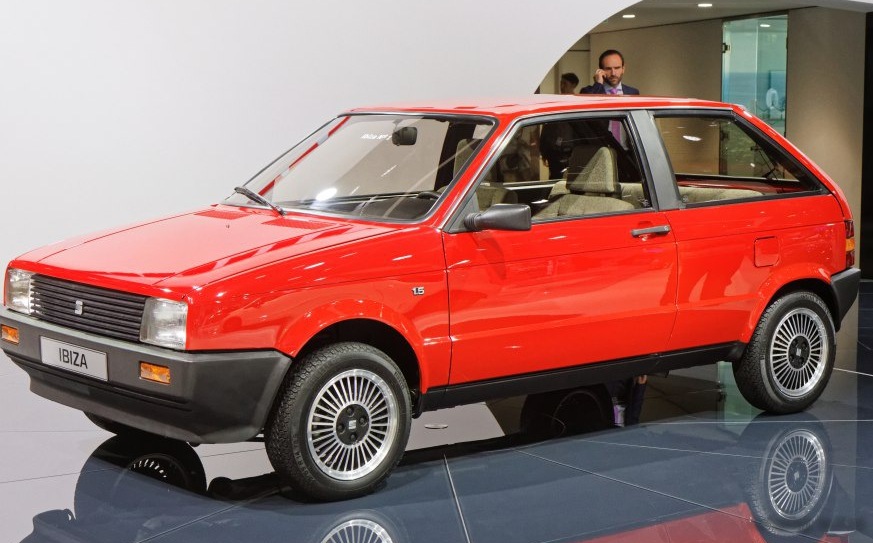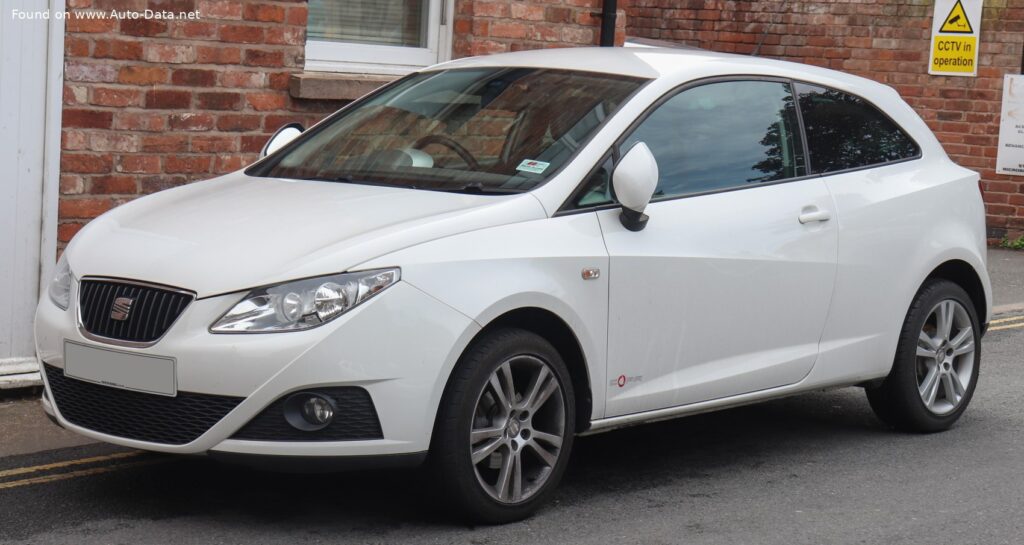
The SEAT Ibiza IV SC 1.2 TSI (105 Hp) represents a compelling entry in the European subcompact segment, produced by the Spanish automaker SEAT, a subsidiary of the Volkswagen Group. Launched in April 2010 as part of the fourth generation (6J) of the popular Ibiza line, the “SC” designation stands for “SportCoupe,” indicating its three-door, more dynamically styled body. This particular variant, powered by a 1.2-liter Turbocharged Stratified Injection (TSI) engine delivering 105 horsepower, was positioned as an efficient yet spirited option for buyers seeking a blend of practicality, style, and engaging performance in a compact package. While SEAT vehicles are not officially sold in the United States, the Ibiza holds significant market presence across Europe, offering a distinctly Spanish flair to proven German engineering. The Seat Ibiza IV SC 1.2 TSI (105 Hp) carved out a niche for itself by combining youthful design with modern powertrain technology during its production run from 2010 to 2012.
Powertrain & Engine Architecture
At the heart of the Seat Ibiza IV SC 1.2 TSI (105 Hp) lies a sophisticated 1.2-liter (1197 cm³ or 73.05 cu. in.) inline four-cylinder engine, designated by the code CBZB. This engine is a prime example of the Volkswagen Group’s commitment to downsizing and forced induction, utilizing a turbocharger and intercooler to extract impressive power and torque from a relatively small displacement. The power output is rated at 105 horsepower, delivered at 5000 revolutions per minute (rpm), translating to a respectable power-per-liter figure of 87.7 Hp/l. More critically for everyday drivability, the engine produces a robust 175 Newton meters (129.07 lb.-ft.) of torque available from a remarkably low 1550 rpm. This broad torque band ensures responsive acceleration and reduced need for frequent gear changes, a hallmark of modern turbocharged engines.
The engine’s advanced features include direct fuel injection, which precisely delivers gasoline into the combustion chambers, optimizing fuel efficiency and reducing emissions. With a compression ratio of 10:1 and two valves per cylinder, the engine is designed for both performance and efficiency. It adheres to the Euro 5 emission standard, reflecting its environmental consciousness during its production period. Power is sent to the front wheels via a crisp 5-speed manual transmission, offering drivers direct control over the vehicle’s dynamics. The powertrain architecture, a front, transverse-mounted internal combustion engine driving the front wheels, is typical for the segment, ensuring efficient packaging and predictable handling characteristics.
Fuel Injection and Valvetrain
The CBZB engine utilizes a Bosch MED17.5.20 engine control unit (ECU) to manage fuel delivery and ignition timing. The direct injection system employs solenoid injectors, delivering fuel directly into the cylinder at pressures up to 150 bar (2,175 psi). This precise fuel delivery contributes to improved combustion efficiency and reduced knocking. The valvetrain consists of a single overhead camshaft (SOHC) operating two valves per cylinder – one intake and one exhaust. The camshaft is driven by a timing chain, offering greater durability and reduced maintenance compared to timing belts.
Driving Characteristics
The 1.8L 90 hp Automatic configuration was generally considered the entry-level trim for the Ibiza IV SC. It was aimed at buyers prioritizing affordability and ease of use over outright performance. Compared to the more powerful 1.2 TSI 105 hp version, the 1.8L 90 hp Automatic offered a noticeably more relaxed driving experience. Acceleration was adequate for everyday driving, but lacked the punch of the turbocharged engine. The automatic transmission, typically a four-speed unit, was geared for fuel efficiency rather than sporty acceleration. Gear changes were smooth but not particularly quick, and the transmission could sometimes feel hesitant when downshifting.
The broad torque curve of the 1.8L engine helped to mitigate the limitations of the automatic transmission. The engine felt responsive at lower speeds, making it well-suited for urban driving. However, on the highway, the engine could feel strained when accelerating or climbing hills. The 1.8L Automatic was generally less engaging to drive than the manual transmission versions, which offered more control and a more direct connection to the engine.
Equipment & Trim Levels
The SEAT Ibiza IV SC 1.2 TSI (105 Hp) was available in several trim levels, each offering a different level of equipment and features. The base “Reference” trim included standard features such as air conditioning, power steering, electric front windows, and an audio system with MP3 compatibility. Higher trim levels, such as “Style” and “Sport,” added features like alloy wheels, fog lights, a multi-function steering wheel, and upgraded interior trim. Optional extras included a sunroof, parking sensors, and a navigation system.
Interior upholstery typically consisted of cloth seats, with higher trim levels offering the option of leather or Alcantara upholstery. The dashboard layout was functional and modern, with a clear instrument cluster and easy-to-use controls. The interior space was relatively compact, but offered adequate room for passengers and luggage. The “SportCoupe” body style featured a more sporty interior design, with unique seat patterns and trim accents.
Chassis & Braking
The Ibiza IV SC utilized a MacPherson strut front suspension with coil springs and an anti-roll bar, providing a comfortable and controlled ride. The rear suspension employed a torsion beam setup, which was cost-effective and provided adequate handling characteristics for a subcompact vehicle. The steering system was a hydraulic rack and pinion, offering a direct and responsive feel. Braking performance was provided by ventilated discs at the front and drum brakes at the rear. ABS (Anti-lock Braking System) was standard on all models, enhancing stopping power and control. The chassis was designed to be lightweight and rigid, contributing to the vehicle’s agility and handling.
Market Reception & Comparison
Critics generally viewed the SEAT Ibiza IV SC 1.2 TSI (105 Hp) favorably, praising its stylish design, efficient engine, and engaging driving dynamics. The 1.2 TSI engine was particularly well-regarded for its balance of performance and fuel economy. However, some critics noted that the interior quality was not as refined as some of its competitors. Compared to the Volkswagen Polo, the Ibiza SC offered a more sporty and youthful image, but lacked the Polo’s perceived build quality and brand prestige. Compared to other subcompacts, such as the Ford Fiesta and Renault Clio, the Ibiza SC offered a compelling combination of value, style, and performance.
Fuel economy was a strong point for the Ibiza IV SC 1.2 TSI (105 Hp), with combined fuel consumption figures typically ranging from 4.9 to 5.5 liters per 100 kilometers (48 to 51 mpg). Reliability was generally good, with the 1.2 TSI engine proving to be a durable and dependable unit. However, some owners reported issues with the turbocharger and fuel injectors. Overall, the Ibiza IV SC 1.2 TSI (105 Hp) offered a competitive package in the European subcompact segment.
Technical Specifications: Seat Ibiza IV SC 1.2 TSI (105 Hp)
| Category | Specification |
| General Information | |
| Brand | SEAT |
| Model | Ibiza |
| Generation | Ibiza IV SC |
| Type (Engine) | 1.2 TSI (105 Hp) |
| Production Start | April, 2010 |
| Production End | 2012 |
| Powertrain Architecture | Internal Combustion engine |
| Body type | Coupe |
| Seats | 5 |
| Doors | 3 |
| Performance Specs | |
| Fuel Type | Petrol (Gasoline) |
| Emission Standard | Euro 5 |
| Power | 105 Hp @ 5000 rpm |
| Power per liter | 87.7 Hp/l |
| Torque | 175 Nm @ 1550 rpm |
| Engine Specs | |
| Engine Layout | Front, Transverse |
| Engine Model/Code | CBZB |
| Engine Displacement | 1197 cm³ |
| Number of Cylinders | 4 |
| Engine Configuration | Inline |
| Compression Ratio | 10:1 |
| Number of Valves per Cylinder | 2 |
| Fuel Injection System | Direct injection |
| Engine Aspiration | Turbocharger, Intercooler |
| Space, Volume and Weights | |
| Trunk (boot) space – minimum | 284 l |
| Fuel Tank Capacity | 45 l |
| Dimensions | |
| Length | 4043 mm |
| Width | 1693 mm |
| Height | 1428 mm |
| Wheelbase | 2469 mm |
| Drivetrain, Brakes and Suspension Specs | |
| Drivetrain Architecture | Internal combustion engine drives front wheels |
| Drive Wheel | Front wheel drive |
| Gearbox | 5 gears, manual transmission |
| Front Suspension | Independent, McPherson with coil spring and anti-roll bar |
| Rear Suspension | Torsion Beam |
| Front Brakes | Ventilated discs |
| Rear Brakes | Disc |
| Assisting Systems | ABS (Anti-lock braking system) |
| Steering Type | Steering rack and pinion |
Legacy
The SEAT Ibiza IV SC 1.2 TSI (105 Hp) played a significant role in SEAT’s product lineup and the competitive European B-segment. As a brand within the Volkswagen Group, SEAT often leveraged platforms and powertrains shared with its siblings, such as the Volkswagen Polo and Skoda Fabia. However, SEAT consistently aimed to differentiate itself through a more emotional, sporty, and youthful design language, often referred to as “auto emoción.” The Ibiza SC perfectly embodied this philosophy, offering a more dynamic aesthetic than its more conservative Volkswagen counterpart, without compromising on the underlying engineering quality.
In its primary markets, the Ibiza IV SC competed against a host of well-established subcompacts, including the Ford Fiesta, Renault Clio, Peugeot 207, and Opel Corsa, as well as its platform-mates. Its appeal lay in its combination of sharp styling, a modern and efficient turbocharged engine, and Volkswagen Group build quality. The 1.2 TSI engine, in particular, was praised for offering a compelling balance of performance and fuel economy, making it an attractive option for both urban commuters and those who occasionally ventured onto the highway. The availability of a 3-door “SportCoupe” body style broadened its appeal, attracting buyers who prioritized style and a sportier image over the ultimate in rear-door practicality.
The Ibiza line, and specifically the fourth generation, helped solidify SEAT’s reputation as a brand that delivers stylish, well-engineered, and value-oriented vehicles. The 1.2 TSI (105 Hp) variant was a strong seller, demonstrating the market’s growing appetite for downsized, turbocharged engines that offered both efficiency and enjoyable performance. Its legacy is one of a stylish, practical, and fun-to-drive subcompact that successfully blended Spanish passion with German engineering precision, making it a memorable entry in the European automotive landscape of the early 2010s. Today, well-maintained examples of the Ibiza IV SC 1.2 TSI (105 Hp) can still be found on the used car market, offering an affordable and stylish option for buyers seeking a compact and efficient vehicle.