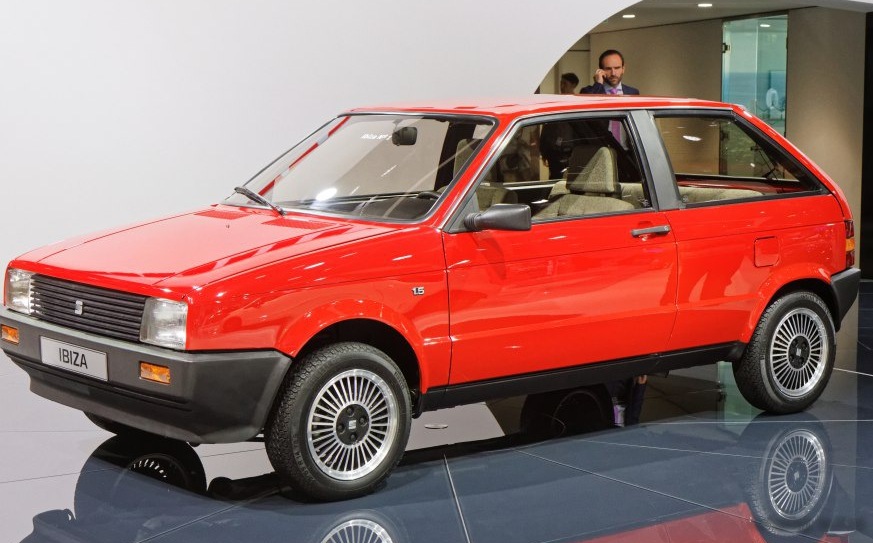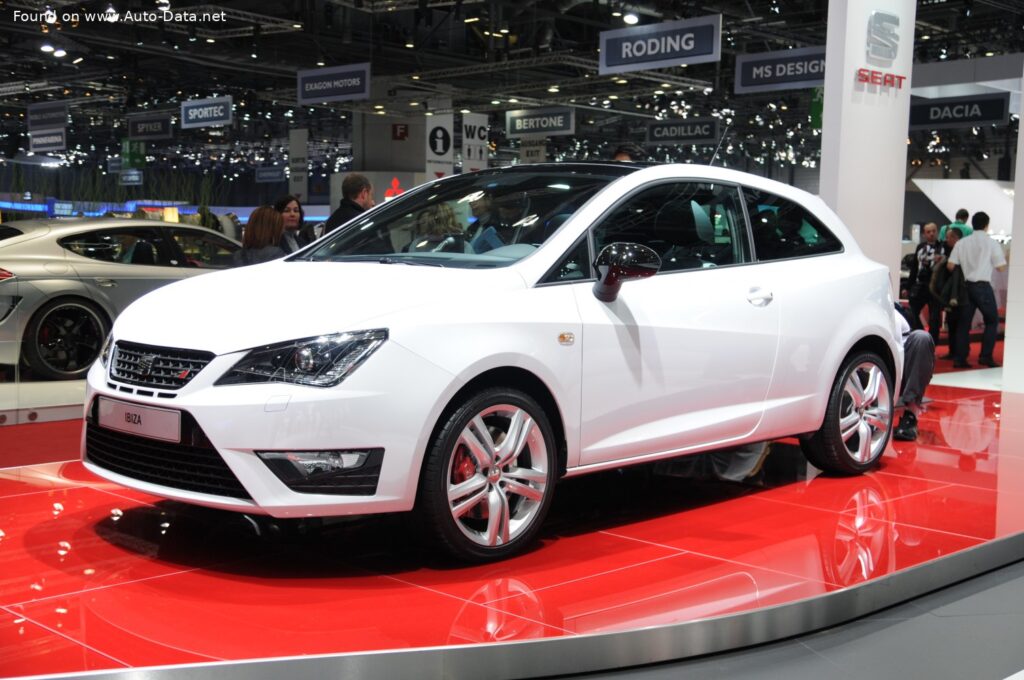
The Seat Ibiza, a cornerstone of the Spanish automaker’s lineup, has long been recognized for its blend of spirited driving dynamics, contemporary design, and practical urban usability. The fourth generation, introduced in 2008, received a significant refresh in 2012, bringing updated aesthetics and refined powertrains to the popular supermini segment. Among the variants, the Seat Ibiza IV SC (facelift 2012) 1.2 TSI (105 Hp) Eco Technology stood out as a compelling option, particularly in its primary European market. The “SC” designation, short for SportCoupé, denoted the three-door body style, emphasizing a sportier profile compared to its five-door sibling.
Produced from 2012 to 2015, this specific iteration of the Ibiza was a prime example of Volkswagen Group’s strategy of offering advanced, downsized turbocharged engines across its brands. The “Eco Technology” label highlighted Seat’s commitment to efficiency, integrating features designed to minimize fuel consumption and emissions without sacrificing performance. While the Seat brand is not officially sold in the United States, the Ibiza’s role in Europe is akin to popular subcompacts like the Ford Fiesta or Chevrolet Sonic, serving as an accessible and stylish entry point into the automotive market, particularly for younger buyers or those prioritizing urban maneuverability and fuel economy.
Powertrain & Engine Architecture
At the heart of the Seat Ibiza IV SC (facelift 2012) 1.2 TSI (105 Hp) Eco Technology lies a highly efficient 1.2-liter (1197 cm3 or 73.05 cu. in.) turbocharged inline-four gasoline engine. This direct-injection unit, designated with the internal code CBZB, was a testament to the advancements in small-displacement engine technology during the early 2010s. Despite its modest size, the turbocharger and intercooler allowed it to punch well above its weight, delivering a respectable 105 horsepower at 5000 revolutions per minute. This power output, combined with the engine’s inherent efficiency, resulted in a power-per-liter ratio of 87.7 Hp/l, impressive for a non-performance-oriented compact car.
The CBZB engine utilizes a Bosch MED17.5.20 engine control unit (ECU) managing direct fuel injection, a key component in its efficiency. Fuel is delivered via high-pressure injectors directly into the combustion chamber, optimizing combustion and reducing knocking. The engine features a single overhead camshaft (SOHC) valvetrain with four valves per cylinder, contributing to its breathing efficiency. The turbocharger is a wastegate turbo, providing boost across a broad RPM range. The engine also incorporates variable valve timing on the intake side, further enhancing its flexibility and responsiveness.
Power was sent to the front wheels via a smooth-shifting 5-speed manual transmission, a common and reliable choice for this segment. This transmission was a standard Volkswagen Group unit, known for its durability and relatively simple maintenance requirements. The gearbox ratios were tuned to prioritize fuel efficiency and everyday drivability, rather than outright performance. The clutch was a conventional single-plate dry clutch, offering a predictable and engaging feel.
Driving Characteristics
The Seat Ibiza IV SC (facelift 2012) 1.2 TSI (105 Hp) Automatic setup offered a balanced driving experience, prioritizing fuel efficiency and ease of use over outright performance. Compared to the higher-output 1.4 TSI variants or the diesel-powered models, the 1.2 TSI felt less urgent in acceleration, particularly at higher speeds. However, the broad torque band – 175 Nm (129.07 lb.-ft.) available from 1550 to 4100 rpm – ensured that the car felt responsive in everyday driving situations, such as overtaking or merging onto highways. The 5-speed manual transmission, while not offering the most aggressive gear ratios, was well-matched to the engine’s characteristics, providing smooth and predictable shifts.
The Ibiza SC’s gearing was optimized for fuel economy. First gear was relatively short for quick acceleration from a standstill, while higher gears were spaced to keep engine RPMs low during cruising. This resulted in a comfortable and efficient driving experience on the highway. The steering was light and precise, making it easy to maneuver in urban environments. The suspension, tuned for comfort, absorbed bumps and imperfections in the road well, providing a relatively smooth ride. However, it wasn’t as sporty or engaging as the suspension found in some of its rivals, such as the Ford Fiesta.
Equipment & Trim Levels
The Seat Ibiza IV SC (facelift 2012) 1.2 TSI (105 Hp) Eco Technology typically occupied a mid-range position within the Ibiza lineup. Standard equipment included power steering (electric), air conditioning, a basic audio system with MP3 compatibility, and electric front windows. Safety features included ABS, electronic brake-force distribution (EBD), and front airbags. The “Eco Technology” designation added features such as stop-start technology, which automatically shut off the engine when the car was stationary, further improving fuel economy.
Interior upholstery was typically cloth, with a range of color options available. The dashboard featured a simple and functional design, with a clear instrument cluster and easy-to-use controls. Optional extras included alloy wheels, a more advanced audio system with Bluetooth connectivity, rear parking sensors, and a panoramic sunroof. Higher trim levels offered additional features such as automatic headlights, rain-sensing wipers, and cruise control. The interior plastics were of decent quality, typical for a car in this segment, but didn’t feel particularly luxurious.
Chassis & Braking
The Seat Ibiza IV SC (facelift 2012) 1.2 TSI (105 Hp) Eco Technology utilized a MacPherson strut front suspension with a torsion beam rear suspension. This setup provided a good balance of comfort and handling, suitable for everyday driving. The front suspension featured a stabilizer bar to reduce body roll during cornering. The rear suspension was relatively simple, but effective at providing a comfortable ride. The chassis was relatively lightweight, contributing to the car’s agility and fuel efficiency.
Braking duties were handled by ventilated disc brakes at the front and solid disc brakes at the rear. ABS (Anti-lock Braking System) was standard, providing enhanced stopping power and control in emergency situations. The brake calipers were single-piston units, providing adequate stopping performance for the car’s weight and power. The braking system was generally reliable and offered a predictable feel.
Market Reception & Comparison
Critics generally viewed the Seat Ibiza IV SC (facelift 2012) 1.2 TSI (105 Hp) Eco Technology favorably, praising its fuel efficiency, stylish design, and engaging driving experience. The 1.2 TSI engine was particularly well-regarded for its blend of performance and economy. However, some critics noted that the car’s interior was somewhat basic compared to some of its rivals. Compared to the higher-output 1.4 TSI variants, the 1.2 TSI offered lower performance but significantly better fuel economy. The diesel-powered models offered even better fuel economy, but at the expense of refinement and driving enjoyment.
In terms of reliability, the 1.2 TSI engine proved to be generally reliable, although some owners reported issues with the timing chain. Regular maintenance, including oil changes and timing chain inspections, was crucial to ensuring the engine’s longevity. The Ibiza SC’s overall build quality was considered good, and the car generally held up well over time. Fuel economy was a key strength, with combined figures averaging around 46.1 US mpg (5.1 l/100 km).
Technical Specifications
| General Information | |
| Brand | Seat |
| Model | Ibiza |
| Generation | Ibiza IV SC (facelift 2012) |
| Type (Engine) | 1.2 TSI (105 Hp) Eco Technology |
| Start of production | 2012 year |
| End of production | 2015 year |
| Powertrain Architecture | Internal Combustion engine |
| Body type | Coupe |
| Seats | 5 |
| Doors | 3 |
| Performance Specifications | |
| Fuel consumption (economy) – urban | 6 l/100 km (39.2 US mpg) |
| Fuel consumption (economy) – extra urban | 4.5 l/100 km (52.3 US mpg) |
| Fuel consumption (economy) – combined | 5.1 l/100 km (46.1 US mpg) |
| Fuel Type | Petrol (Gasoline) |
| Acceleration 0 – 60 mph | 9.3 sec |
| Acceleration 0 – 100 km/h | 9.8 sec |
| Maximum speed | 190 km/h (118.06 mph) |
| Emission standard | Euro 5 |
| Weight-to-power ratio | 10.4 kg/Hp (22.93 lbs/Hp), 95.9 Hp/tonne |
| Weight-to-torque ratio | 6.3 kg/Nm (13.89 lbs/Nm), 159.8 Nm/tonne |
| Engine Specifications | |
| Power | 105 Hp @ 5000 rpm |
| Power per liter | 87.7 Hp/l |
| Torque | 175 Nm @ 1550-4100 rpm (129.07 lb.-ft. @ 1550-4100 rpm) |
| Engine layout | Front, Transverse |
| Engine Model/Code | CBZB |
| Engine displacement | 1197 cm3 (73.05 cu. in.) |
| Number of cylinders | 4 |
| Engine configuration | Inline |
| Cylinder Bore | 71 mm (2.8 in.) |
| Piston Stroke | 75.6 mm (2.98 in.) |
| Number of valves per cylinder | 2 |
| Fuel injection system | Direct injection |
| Engine aspiration | Turbocharger, Intercooler |
| Engine oil capacity | 3.9 l (4.12 US qt) |
| Coolant | 5.6 l (5.92 US qt) |
| Space, Volume and Weights | |
| Kerb Weight | 1095 kg (2414.06 lbs) |
| Max. weight | 1546 kg (3408.35 lbs) |
| Max load | 451 kg (994.28 lbs) |
| Trunk (boot) space – minimum | 284 l (10.03 cu. ft.) |
| Fuel tank capacity | 45 l (11.89 US gal) |
| Dimensions | |
| Length | 4043 mm (159.17 in.) |
| Width | 1693 mm (66.65 in.) |
| Height | 1428 mm (56.22 in.) |
| Wheelbase | 2469 mm (97.2 in.) |
| Front track | 1465 mm (57.68 in.) |
| Rear (Back) track | 1457 mm (57.36 in.) |
| Minimum turning circle (turning diameter) | 10.48 m (34.38 ft.) |
| Drivetrain, Brakes and Suspension Specifications | |
| Drivetrain Architecture | The Internal combustion engine (ICE) drives the front wheels of the vehicle. |
| Drive wheel | Front wheel drive |
| Number of gears and type of gearbox | 5 gears, manual transmission |
| Front suspension | Independent, type McPherson with coil spring and anti-roll bar |
| Rear suspension | Trailing arm |
| Front brakes | Ventilated discs |
| Rear brakes | Disc |
| Assisting systems | ABS (Anti-lock braking system) |
| Steering type | Steering rack and pinion |
| Power steering | Electric Steering |
| Tires size | 185/60 R15; 215/45 R16; 215/40 R17 |
| Wheel rims size | 6J x 15; 7J x 16; 7J x 17 |
Legacy
The Seat Ibiza has consistently been a strong performer for the Spanish brand, and the fourth-generation facelift, particularly models like the Seat Ibiza IV SC (facelift 2012) 1.2 TSI (105 Hp) Eco Technology, played a crucial role in maintaining its competitive edge in the fiercely contested European supermini segment. As a member of the Volkswagen Group, the Ibiza benefited from shared platforms and powertrains with its cousins, the Volkswagen Polo and Skoda Fabia. This allowed Seat to offer advanced engineering and reliability at a more accessible price point, often with a distinctively sportier design flair.
In the used car market today, the Ibiza IV SC 1.2 TSI (105 Hp) Eco Technology represents a relatively affordable and practical option for buyers seeking a small, fuel-efficient car. While higher mileage examples may require attention to the timing chain, well-maintained cars can provide years of reliable service. The car’s stylish design and engaging driving experience continue to appeal to a wide range of buyers. The Ibiza’s reputation as a reliable, stylish, and engaging compact car solidified Seat’s position as a key player in the European automotive landscape. The SC variant, with its three-door coupé styling, resonated with buyers who prioritized aesthetics and a sportier image over maximum practicality. While not a global model, the success of the Ibiza, including this specific facelifted generation, allowed Seat to grow its brand identity and market share, proving that a blend of German engineering and Spanish passion could create a compelling product. The Seat Ibiza IV SC (facelift 2012) 1.2 TSI (105 Hp) Eco Technology remains a significant example of how compact cars can deliver a complete package of style, performance, and efficiency, setting a benchmark for its segment during its production run.