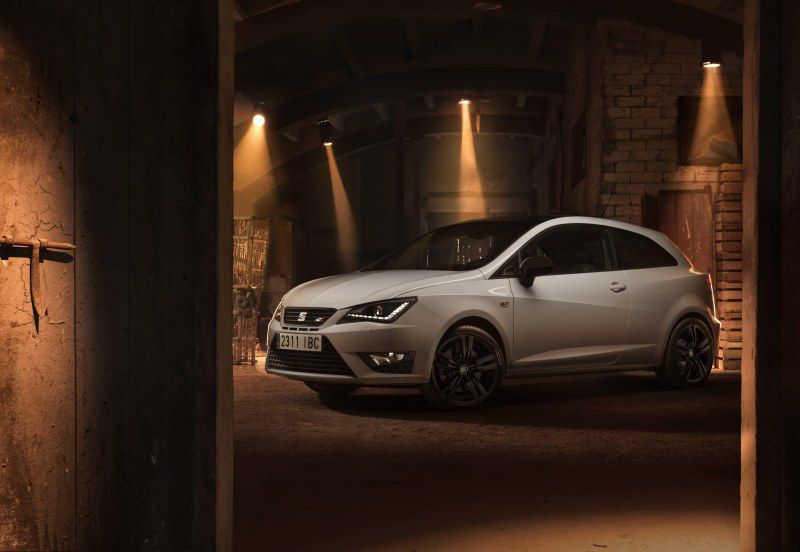
The Seat Ibiza IV SC (facelift 2015) 1.4 TDI (75 Hp) represents a key iteration of the Spanish automaker’s popular supermini, specifically the Sport Coupe (SC) variant. Launched in May 2015 as part of a significant mid-cycle refresh for the fourth generation Ibiza, this model continued production until 2017. As a product of Seat, a subsidiary of the Volkswagen Group, the Ibiza shares much of its underlying architecture and powertrain technology with other popular European compacts, most notably the Volkswagen Polo. However, Seat’s distinct brand identity, characterized by a more youthful, sporty, and design-focused approach, allowed the Ibiza to carve out its own niche. Primarily targeted at the vibrant European market, where small, fuel-efficient vehicles are highly prized, this particular 1.4 TDI variant exemplified economical motoring without sacrificing a degree of driving engagement, a hallmark of the Ibiza line.
Unlike many vehicles commonly found on American roadways, the Seat Ibiza has never been officially sold in the United States. Its role is deeply rooted in the European automotive landscape, where it competes fiercely in the B-segment (supermini category) against established rivals. The “SC” designation denotes a three-door “Sport Coupe” body style, emphasizing a more dynamic and visually appealing profile compared to its five-door hatchback sibling. The facelift introduced a host of subtle but impactful changes, including revised exterior styling, updated interior materials, and enhanced infotainment options, further solidifying its position as a compelling choice for European consumers seeking a blend of practicality, style, and impressive fuel efficiency from its diesel powertrain.
Engine & Performance: The Efficient Heart of the Seat Ibiza IV SC (facelift 2015) 1.4 TDI (75 Hp)
At the core of the Seat Ibiza IV SC (facelift 2015) 1.4 TDI (75 Hp) lies a highly optimized 1.4-liter (1422 cm³ or 86.78 cu. in.) three-cylinder inline diesel engine, identified by the CUSA engine code. This powertrain architecture, a common sight in European compacts, is renowned for its excellent fuel economy and robust low-end torque delivery. Generating a modest but entirely adequate 75 horsepower (Hp) at 3500 revolutions per minute (rpm), this engine is designed for efficiency and usable power in everyday driving scenarios. What truly sets it apart, however, is its torque output: 210 Nm (154.89 lb.-ft.) available across a very accessible band from 1750 to 2000 rpm. This broad torque plateau ensures responsive acceleration from lower speeds, making it particularly well-suited for urban environments and navigating congested European city streets.
Power is transferred to the front wheels via a smooth-shifting 5-speed manual transmission, a common and reliable setup for this class of vehicle. The engine benefits from a sophisticated Diesel Commonrail fuel injection system and is equipped with a turbocharger and intercooler, enhancing both performance and efficiency. This advanced setup, combined with a compression ratio of 16.2:1 and four valves per cylinder, allows the engine to achieve remarkable fuel consumption figures. The combined fuel economy is rated at an impressive 3.4 liters per 100 kilometers, which translates to approximately 69.2 US miles per gallon. With CO2 emissions of just 88 g/km, the 1.4 TDI variant comfortably met the stringent Euro 6 emission standard, a crucial factor for its competitiveness in the European market.
In terms of outright performance, the Seat Ibiza IV SC (facelift 2015) 1.4 TDI (75 Hp) is not a speed demon, but it offers competent acceleration for its class. It can sprint from 0 to 60 mph in a calculated 12.4 seconds (0 to 100 km/h in 13 seconds) and reach a maximum speed of 107.5 mph (173 km/h). The vehicle’s lightweight kerb weight of 2380.99 lbs (1080 kg) contributes to a favorable weight-to-power ratio of 14.4 kg/Hp, allowing the 75-horsepower engine to move the car with reasonable agility. This balance of performance and exceptional economy made the 1.4 TDI a popular choice for drivers prioritizing low running costs and environmental responsibility.
Design & Features: Sporty Aesthetics and Practicality
The Seat Ibiza IV SC (facelift 2015) retained the sharp, angular design language that defined the fourth generation, but the facelift introduced subtle refinements to keep it fresh and competitive. As an “SC” (Sport Coupe), its defining characteristic is the three-door body style, which gives it a more dynamic and athletic stance compared to the more conventional five-door hatchback. Measuring 159.17 inches (4043 mm) in length, 66.65 inches (1693 mm) in width, and 56.22 inches (1428 mm) in height, the Ibiza SC presents a compact yet purposeful profile. The short overhangs and crisp lines contribute to its sporty appeal, aligning with Seat’s brand philosophy.
Inside, the facelift brought noticeable improvements to material quality and ergonomics. While still a supermini, the Ibiza SC offered a comfortable cabin for five occupants, though the rear seats, accessed via the front doors, were naturally more suited for shorter journeys or younger passengers. The trunk space, at 10.31 cubic feet (292 liters), was competitive for its segment, offering sufficient room for daily errands or weekend getaways. The interior design mirrored the exterior’s clean lines, with a focus on functionality and user-friendly controls. Updates often included new upholstery options, a revised instrument cluster, and, crucially, enhanced infotainment systems with better connectivity options – a growing priority for buyers in the mid-2010s.
From a safety and handling perspective, the Ibiza IV SC was well-equipped for its time and segment. It featured an independent McPherson strut front suspension with coil springs and an anti-roll bar, providing responsive handling and a comfortable ride. The rear utilized a semi-independent setup with coil springs. Braking was handled by ventilated discs at the front and reliable drum brakes at the rear, complemented by an Anti-lock Braking System (ABS) as a standard assisting system. The steering rack and pinion setup offered precise control, contributing to the Ibiza’s reputation for agile handling. Standard tire size was 185/60 R15 84H on 15-inch wheel rims, a practical choice balancing grip, comfort, and rolling resistance for optimal fuel economy. The inclusion of a particulate filter was also standard, showcasing its commitment to environmental standards.
Technical Specifications
| Category | Specification |
| Brand | Seat |
| Model | Ibiza |
| Generation | Ibiza IV SC (facelift 2015) |
| Type (Engine) | 1.4 TDI (75 Hp) |
| Production Start | May, 2015 |
| Production End | 2017 |
| Powertrain Architecture | Internal Combustion engine |
| Body Type | Coupe |
| Seats | 5 |
| Performance Specs | |
| Fuel Consumption (Combined) | 3.4 l/100 km |
| CO2 Emissions | 88 g/km |
| Fuel Type | Diesel |
| Acceleration 0 – 62 mph (0-100 km/h) | 13 sec |
| Acceleration 0 – 60 mph (Calculated) | 12.4 sec |
| Maximum Speed | 173 km/h |
| Emission Standard | Euro 6 |
| Weight-to-Power Ratio | 14.4 kg/Hp |
| Weight-to-Torque Ratio | 5.1 kg/Nm |
| Engine Specs | |
| Power | 75 Hp @ 3500 rpm |
| Power per liter | 52.7 Hp/l |
| Torque | 210 Nm @ 1750-2000 rpm |
| Engine Layout | Front, Transverse |
| Engine Model/Code | CUSA |
| Engine Displacement | 1422 cm³ |
| Number of Cylinders | 3 |
| Cylinder Bore | 79.5 mm |
| Piston Stroke | 95.5 mm |
| Compression Ratio | 16.2:1 |
| Valves per Cylinder | 4 |
| Fuel Injection System | Diesel Commonrail |
| Engine Aspiration | Turbocharger, Intercooler |
| Space, Volume & Weights | |
| Kerb Weight | 1080 kg |
| Max. Weight | 1630 kg |
| Trunk (Boot) Space – Minimum | 292 l |
| Fuel Tank Capacity | 45 l |
| Dimensions | |
| Length | 4043 mm |
| Width | 1693 mm |
| Height | 1428 mm |
| Wheelbase | 2469 mm |
| Drivetrain, Brakes & Suspension | |
| Gearbox Type | 5 gears, manual transmission |
Legacy & Market Impact in Europe
The Seat Ibiza, particularly in its fourth generation and with the 2015 facelift, solidified its reputation as a cornerstone of the European supermini segment. The Seat Ibiza IV SC (facelift 2015) 1.4 TDI (75 Hp) variant played a crucial role in this success, primarily due to its exceptional fuel efficiency and low running costs, which are paramount considerations for European consumers. In a market dominated by compact vehicles, the Ibiza consistently stood out for its distinctive design, which offered a more emotional and sporty alternative to its more conservatively styled Volkswagen Polo stablemate.
Competitors for the Ibiza SC in its primary European market were numerous and formidable, including the Ford Fiesta, Renault Clio, Peugeot 208, Opel Corsa (Vauxhall Corsa in the UK), and the aforementioned VW Polo. What allowed the Ibiza to maintain its competitive edge was its unique blend of Spanish flair – characterized by sharp lines and a youthful appeal – coupled with German engineering reliability and efficiency derived from its Volkswagen Group parentage. The SC’s three-door “coupe” body style also offered a niche appeal for buyers prioritizing style over maximum practicality, though it still provided adequate space for a compact car.
The 1.4 TDI engine, while not the most powerful option available in the Ibiza range, was a strategic offering. It perfectly catered to the demand for highly economical vehicles in Europe, where diesel fuel was historically more affordable and widely available, and where taxation often favored low CO2 emissions. Its Euro 6 compliance further ensured its relevance in an increasingly environmentally conscious market. The combination of its impressive 69.2 US mpg fuel economy and low CO2 output made it an attractive proposition for both private buyers and fleet operators seeking to minimize their environmental footprint and operational expenses.
Ultimately, the Seat Ibiza IV SC (facelift 2015) 1.4 TDI (75 Hp) left a legacy as a smart, stylish, and incredibly efficient choice within the competitive European supermini segment. It demonstrated Seat’s ability to infuse Volkswagen Group technology with a distinctive personality, appealing to a demographic that valued dynamic aesthetics and a lively driving experience alongside practical considerations like fuel economy and reliability. While never crossing the Atlantic to American shores, its impact on the European automotive landscape was significant, reinforcing Seat’s identity as a brand that delivers spirited design and accessible performance.