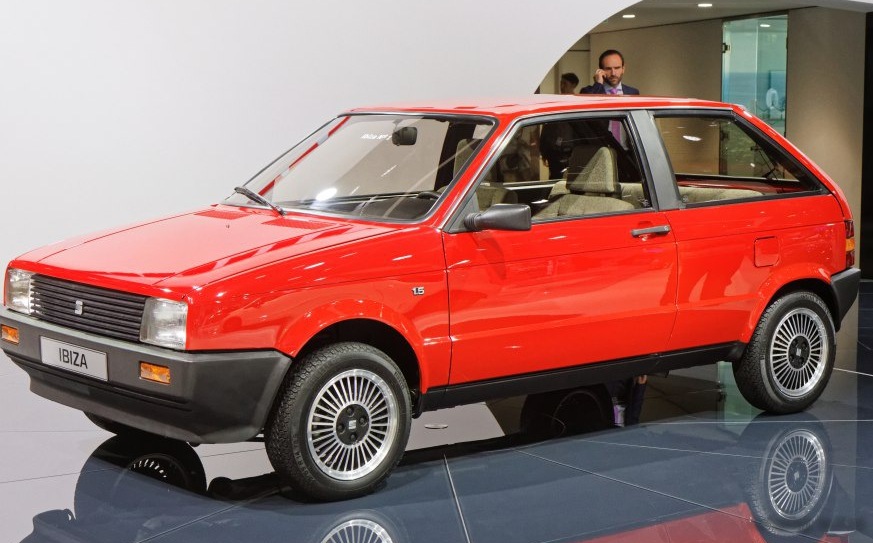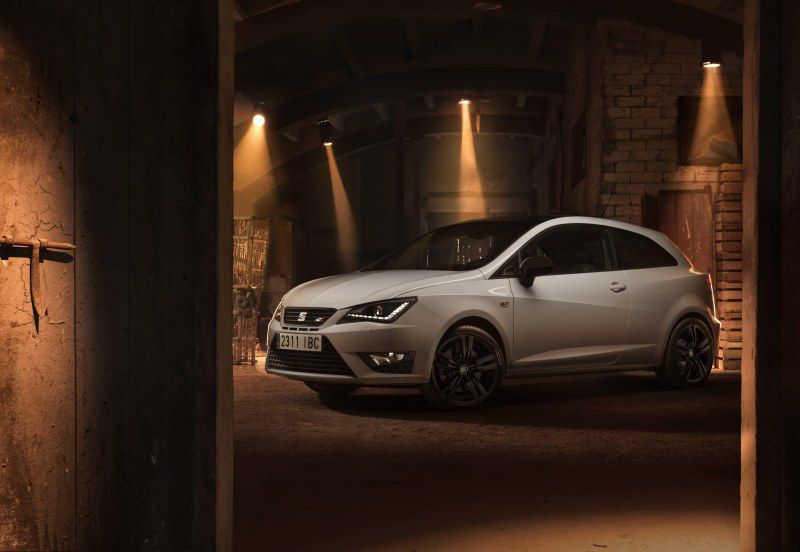
The Seat Ibiza IV SC (facelift 2015) 1.4 TDI (90 Hp) DSG represents a significant iteration of Seat’s long-running and highly successful subcompact car, the Ibiza. First introduced in 1984, the Ibiza has consistently served as the Spanish automaker’s entry into the fiercely competitive European B-segment, often referred to as the supermini category. This particular model, produced from May 2015 to 2017, belongs to the fourth generation (internally designated 6J/6P) and specifically the “SC” (Sport Coupe) variant, which denotes a three-door body style. While the Seat brand, a subsidiary of the Volkswagen Group, is not sold in the United States, the Ibiza is a cornerstone of the European automotive landscape, celebrated for its youthful design, agile handling, and access to Volkswagen Group’s robust engineering.
The Seat Ibiza IV SC (facelift 2015): A European Supermini
The 2015 facelift brought a series of enhancements to the fourth-generation Ibiza, aiming to keep it fresh against newer rivals. These updates typically included subtle exterior revisions, improved interior materials, and crucially, updated powertrain options and infotainment technology. The 1.4 TDI (90 Hp) DSG variant, with its efficient diesel engine and advanced automatic transmission, was particularly geared towards consumers prioritizing low running costs and ease of driving in urban and highway environments across Europe.
Engine & Performance: The Heart of the Ibiza SC
At the core of this particular Ibiza model lies a sophisticated 1.4-liter TDI (Turbocharged Direct Injection) diesel engine, a testament to Volkswagen Group’s expertise in diesel technology. This inline three-cylinder engine, designated with the code CUSB, produces a respectable 90 horsepower at 3500 revolutions per minute (rpm). While 90 HP might seem modest by American standards, it is perfectly suited for the Ibiza’s lightweight chassis and the driving conditions prevalent in its primary European markets, where fuel efficiency and lower emissions are paramount.
More impressive than the horsepower figure is the torque output: 230 Nm, or approximately 169.64 lb.-ft., delivered across a broad and accessible rev range from 1750 to 2500 rpm. This strong low-end torque is characteristic of modern diesel engines and provides the Ibiza with excellent responsiveness for city driving and effortless highway cruising, allowing for confident overtakes without constantly needing to downshift. The engine benefits from a Commonrail fuel injection system, a turbocharger, and an intercooler, all working in concert to optimize power delivery, fuel atomization, and thermal efficiency.
Power is channeled to the front wheels through a 7-speed automatic DSG (Direct-Shift Gearbox) transmission. This dual-clutch transmission is a highlight, offering rapid and smooth gear changes that combine the convenience of an automatic with the efficiency and engagement typically associated with a manual gearbox. The DSG helps the Ibiza achieve a competitive acceleration time of 0 to 60 mph in a calculated 10.4 seconds, with a top speed of 113.09 mph. These figures underscore the car’s capability to handle both urban commutes and longer journeys with ease.
Fuel economy is a standout feature of the 1.4 TDI. It boasts an impressive combined fuel consumption of 3.7 liters per 100 kilometers, which translates to an outstanding 63.6 US miles per gallon. This exceptional efficiency, coupled with CO2 emissions of just 97 grams per kilometer, allowed the Ibiza to meet the stringent Euro 6 emission standard, making it an environmentally conscious choice in its time. The engine also includes a particulate filter, a crucial component for reducing emissions in diesel vehicles.
Design & Features of the Ibiza SC Facelift
The “SC” in the model name stands for “Sport Coupe,” a designation for the three-door variant of the Ibiza. This body style emphasizes a more dynamic and youthful aesthetic compared to its five-door sibling. With its sleek profile, sloping roofline, and distinctive character lines, the Ibiza SC aimed to appeal to younger buyers or those seeking a sportier, more compact package. The 2015 facelift subtly refined this design, typically incorporating updated front and rear bumpers, revised grille designs, and potentially new alloy wheel options, along with LED daytime running lights or taillight graphics, to enhance its contemporary appeal.
Despite its “coupe” moniker, the Ibiza SC offers practical interior space for its segment. It is designed to accommodate five occupants, though the rear seats are naturally more suited for two adults on shorter trips or children due to the three-door configuration. The vehicle’s compact dimensions—159.17 inches in length, 66.65 inches in width, and 56.22 inches in height—make it exceptionally maneuverable in tight European city streets and parking spaces. The wheelbase measures 97.2 inches, contributing to its stable yet agile handling characteristics.
Inside, the facelift typically brought improvements to material quality and ergonomics. While specific details on the infotainment system are not provided in the technical data, a 2015 facelift would almost certainly include upgrades to the central display, connectivity options (such as Bluetooth and USB), and potentially improved navigation systems, all aimed at enhancing the user experience. Standard features would include an anti-lock braking system (ABS) for enhanced safety, and power steering with a rack and pinion setup for precise control.
The Ibiza’s suspension setup comprises an independent McPherson strut system with coil springs and an anti-roll bar at the front, paired with a semi-independent rear suspension also utilizing coil springs. This configuration is common in the segment, providing a good balance of ride comfort and dynamic handling. Braking is handled by ventilated discs at the front and solid discs at the rear, offering ample stopping power. The car could be equipped with various tire and wheel sizes, ranging from 175/70 R14 up to 215/40 R17, allowing buyers to customize the vehicle’s appearance and handling characteristics.
Technical Specifications
| Category | Specification |
| General Information | Brand |
| Seat | |
| Model | Ibiza |
| Generation | Ibiza IV SC (facelift 2015) |
| Type (Engine) | 1.4 TDI (90 Hp) DSG |
| Start of Production | May, 2015 |
| End of Production | 2017 |
| Powertrain Architecture | Internal Combustion engine |
| Body type | Coupe |
| Seats | 5 |
| Doors | 3 |
| Performance Specs | Fuel consumption (economy) – combined |
| 3.7 l/100 km | |
| 63.6 US mpg | |
| CO2 emissions | 97 g/km |
| Fuel Type | Diesel |
| Acceleration 0 – 60 mph (Calculated) | 10.4 sec |
| Acceleration 0 – 62 mph | 10.9 sec |
| Maximum speed | 182 km/h |
| 113.09 mph | |
| Emission standard | Euro 6 |
| Weight-to-power ratio | 12.1 kg/Hp |
| 26.68 lbs/Hp | |
| Weight-to-torque ratio | 4.7 kg/Nm |
| 10.36 lbs/Nm | |
| Engine Specs | Power |
| 90 Hp @ 3500 rpm | |
| Power per liter | 63.3 Hp/l |
| Torque | 230 Nm @ 1750-2500 rpm |
| 169.64 lb.-ft. @ 1750-2500 rpm | |
| Engine layout | Front, Transverse |
| Engine Model/Code | CUSB |
| Engine displacement | 1422 cm3 |
| 86.78 cu. in. | |
| Number of cylinders | 3 |
| Engine configuration | Inline |
| Cylinder Bore | 79.5 mm |
| 3.13 in. | |
| Piston Stroke | 95.5 mm |
| 3.76 in. | |
| Compression ratio | 16.2:1 |
| Number of valves per cylinder | 4 |
| Fuel injection system | Diesel Commonrail |
| Engine aspiration | Turbocharger, Intercooler |
| Engine oil capacity | 4.1 l |
| 4.33 US qt | |
| Coolant | 8 l |
| 8.45 US qt | |
| Engine Systems | Particulate filter |
| Yes | |
| Space, Volume and Weights | Kerb Weight |
| 1090 kg | |
| 2403.04 lbs. | |
| Max. weight | 1670 kg |
| 3681.72 lbs. | |
| Max load | 580 kg |
| 1278.68 lbs. | |
| Trunk (boot) space – minimum | 292 l |
| 10.31 cu. ft. | |
| Fuel tank capacity | 45 l |
| 11.89 US gal | |
| Dimensions | Length |
| 4043 mm | |
| 159.17 in. | |
| Width | 1693 mm |
| 66.65 in. | |
| Height | 1428 mm |
| 56.22 in. | |
| Wheelbase | 2469 mm |
| 97.2 in. | |
| Front track | 1465 mm |
| 57.68 in. | |
| Rear (Back) track | 1457 mm |
| 57.36 in. | |
| Minimum turning circle (turning diameter) | 10 m |
| 32.81 ft. | |
| Drivetrain, Brakes and Suspension Specs | Drivetrain Architecture |
| ICE drives front wheels | |
| Drive wheel | Front wheel drive |
| Number of gears and type of gearbox | 7 gears, automatic transmission DSG |
| Front suspension | Independent, type McPherson with coil spring and anti-roll bar |
| Rear suspension | Semi-independent, coil spring |
| Front brakes | Ventilated discs |
| Rear brakes | Disc |
| Assisting systems | ABS (Anti-lock braking system) |
| Steering type | Steering rack and pinion |
| Tires size | 175/70 R14; 185/60 R15; 215/45 R16; 215/40 R17 |
| Wheel rims size | 14; 15; 16; 17 |
Legacy and Market Impact
The Seat Ibiza, particularly in its fourth generation and facelifted form, carved out a significant niche in the highly competitive European subcompact segment. It consistently ranked among the top sellers in several European countries, appealing to a diverse range of buyers from first-time car owners to small families and urban commuters. Its reputation was built on a compelling blend of factors: striking design, dynamic driving characteristics inherited from its Volkswagen Group underpinnings, and competitive pricing.
In its primary markets, the Ibiza faced formidable rivals such as the Ford Fiesta, Renault Clio, Peugeot 208, Opel/Vauxhall Corsa, and its platform mates, the Volkswagen Polo and Skoda Fabia. Within the Volkswagen Group, the Ibiza was strategically positioned as the “sportier” and more design-conscious alternative to the more conservative Polo and the value-oriented Fabia. The SC (Sport Coupe) variant further emphasized this sporty image, targeting individuals who prioritized style and a more engaging driving experience over the ultimate practicality of a five-door hatchback.
The 1.4 TDI (90 Hp) DSG model specifically played a crucial role in the Ibiza’s appeal, particularly in markets where diesel engines were highly favored for their fuel efficiency and lower running costs. This variant offered an excellent balance of performance for daily driving and remarkable economy, making it an economical choice for those with higher mileage needs. The advanced DSG transmission further enhanced its marketability, providing a smooth and effortless driving experience that was increasingly sought after by European consumers.
While the Seat brand and the Ibiza were never officially imported into the United States, understanding its impact in Europe highlights broader automotive trends. The Ibiza’s success demonstrates the demand for well-engineered, efficient, and stylish compact cars that prioritize maneuverability and fuel economy. Its continued evolution also reflects the shift towards advanced powertrain technologies, such as the efficient three-cylinder TDI and sophisticated DSG gearbox, which became hallmarks of modern European automotive engineering in the mid-2010s. The Ibiza’s legacy is that of a youthful, energetic, and highly capable supermini that successfully blended Spanish passion with German engineering precision.