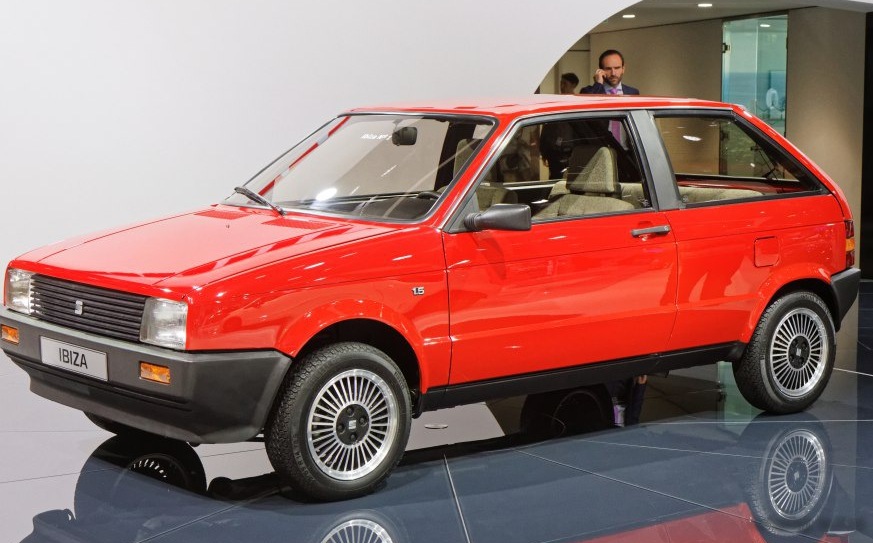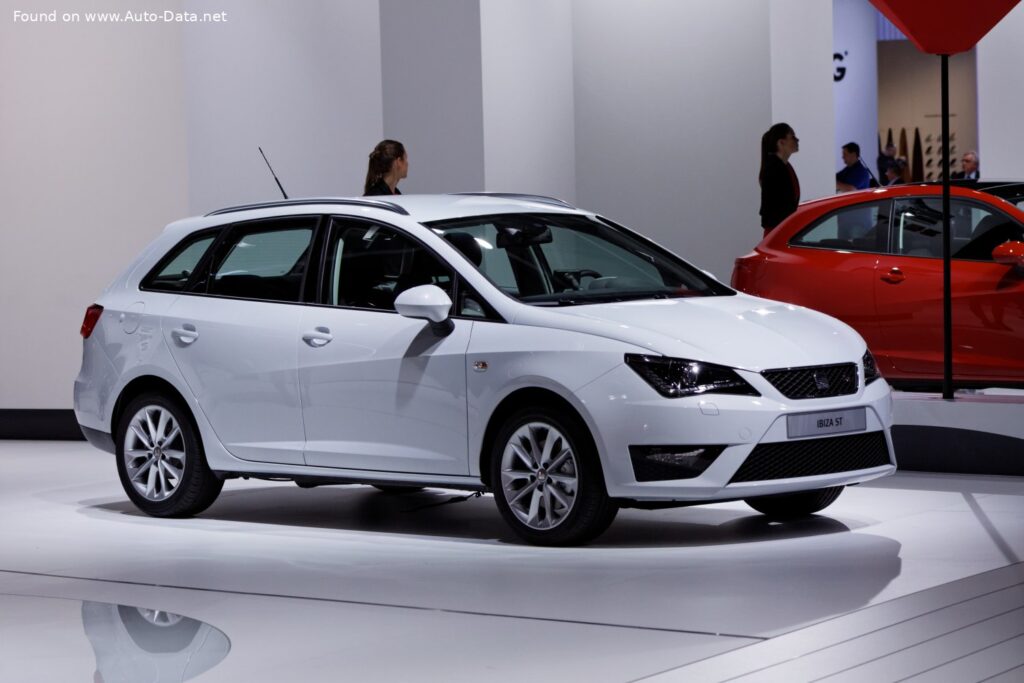
The Seat Ibiza IV ST (facelift 2012) represents a significant iteration of the Spanish automaker’s popular subcompact model, specifically the station wagon (or “estate” in European parlance) variant. Launched in 2012 as a refreshed version of the fourth-generation Ibiza, this model targeted the discerning European market, offering a compelling blend of practicality, efficiency, and the distinctive sporty flair characteristic of the SEAT brand, a member of the Volkswagen Group. While never officially imported to the United States, the Ibiza IV ST played a crucial role in Europe’s highly competitive B-segment, providing a more spacious alternative to traditional hatchbacks without sacrificing the agility and urban maneuverability expected from a car of its class. The facelift introduced subtle but effective design updates and technological enhancements, ensuring the Ibiza remained a strong contender against rivals across the continent.
Seat Ibiza IV ST: A European Subcompact
The Seat Ibiza has a long history dating back to 1984, initially conceived as a replacement for the aging Seat Fura. The fourth generation, launched in 2008, represented a significant step forward in terms of design, technology, and overall quality. The Ibiza IV ST, introduced as the station wagon derivative, expanded the model’s appeal by catering to buyers needing increased cargo capacity. Unlike many American vehicles focused on size and power, the European B-segment prioritizes fuel efficiency, maneuverability, and affordability. The Ibiza ST successfully balanced these priorities, becoming a popular choice for families and individuals in Europe.
Engine & Performance: The 1.2 TDI Powertrain
At the heart of this particular Seat Ibiza IV ST (facelift 2012) model is the highly efficient 1.2-liter TDI diesel engine, a three-cylinder unit designed for impressive fuel economy and reduced emissions, paramount concerns in the European market. This compact powerplant, identified by the engine code CFWA, delivers 75 horsepower at 4200 rpm and a robust 132.76 lb.-ft. of torque available from a low 2000 rpm. Its front, transverse layout and inline-three configuration contribute to a compact and efficient packaging within the Ibiza’s engine bay.
The engine’s technical sophistication includes a common rail direct fuel injection system and a turbocharger with an intercooler, optimizing combustion and power delivery. With a compression ratio of 16.5:1 and four valves per cylinder, it was engineered for both performance and frugality. Mated to a crisp 5-speed manual transmission, this powertrain sends power to the front wheels, a typical setup for vehicles in this segment. While not a performance powerhouse, the 1.2 TDI offers respectable acceleration for daily driving, reaching 60 mph from a standstill in an estimated 13.8 seconds and achieving a maximum speed of 104.39 mph.
Where this variant truly shines is its fuel efficiency. The 1.2 TDI (75 Hp) boasts exceptional economy figures: an urban consumption of 4.9 liters per 100 kilometers (equivalent to 48 US mpg), an extra-urban figure of 3.4 l/100 km (an impressive 69.2 US mpg), and a combined rating of 3.9 l/100 km (60.3 US mpg). These numbers underscore its design philosophy as an economical workhorse, further supported by its low CO2 emissions of 102 g/km, allowing it to meet the Euro 5 emission standard prevalent at the time. The inclusion of a particulate filter was standard, reflecting the growing emphasis on environmental responsibility in European automotive design.
Design & Features: Practicality and Spanish Styling
The Seat Ibiza IV ST (facelift 2012) maintains the core design language of the fourth-generation Ibiza, characterized by sharp lines, aggressive headlights, and a dynamic stance, all refreshed with subtle updates to keep it contemporary. The “ST” designation stands for “Sport Tourer,” indicating its station wagon body type, a practical five-door, five-seat configuration. This body style was crucial for SEAT to cater to families and individuals requiring more cargo space than a standard hatchback, without moving up to a larger and more expensive segment.
Measuring 166.77 inches in length, 66.65 inches in width, and 56.89 inches in height, with a wheelbase of 97.2 inches, the Ibiza ST offers a surprisingly spacious interior for its compact footprint. The station wagon design translates directly into enhanced utility, providing a generous minimum trunk space of 15.19 cubic feet (430 liters). This made it an attractive option for buyers needing to transport luggage, groceries, or sports equipment, a common requirement in European lifestyles. The exterior facelift brought revised front and rear bumpers, new wheel designs, and updated lighting signatures, aligning its aesthetics with SEAT’s evolving design identity.
Inside, the Ibiza ST featured a driver-focused cockpit with quality materials and a straightforward layout. While specific trim levels and optional features would vary by market, standard equipment typically included essential safety and convenience features. The car was equipped with an Anti-lock Braking System (ABS) for enhanced stopping power and stability, a critical safety system for the era. Steering was managed by an electric power steering system, offering light effort for urban maneuvering and greater feedback at higher speeds. The suspension setup, featuring independent McPherson struts with coil springs and an anti-roll bar at the front and a trailing arm design at the rear, provided a balanced ride, combining comfort with responsive handling, a hallmark of SEAT’s ‘dynamic’ positioning within the VW Group. Braking performance was handled by ventilated discs at the front and drum brakes at the rear.
Technical Specifications: Seat Ibiza IV ST (facelift 2012) 1.2 TDI (75 Hp)
| Category | Specification |
| General Information | |
| Brand | Seat |
| Model | Ibiza |
| Generation | Ibiza IV ST (facelift 2012) |
| Type (Engine) | 1.2 TDI (75 Hp) |
| Start of production | 2012 year |
| End of production | 2015 year |
| Powertrain Architecture | Internal Combustion engine |
| Body type | Station wagon (estate) 5 Doors, 5 Seats |
| Seats | 5 |
| Doors | 5 |
| Performance Specs | |
| Fuel consumption (economy) – urban | 4.9 l/100 km (48 US mpg) |
| Fuel consumption (economy) – extra urban | 3.4 l/100 km (69.2 US mpg) |
| Fuel consumption (economy) – combined | 3.9 l/100 km (60.3 US mpg) |
| CO2 emissions | 102 g/km |
| Fuel Type | Diesel |
| Acceleration 0 – 60 mph | 13.8 sec |
| Acceleration 0 – 100 km/h | 14.5 sec |
| Maximum speed | 168 km/h (104.39 mph) |
| Emission standard | Euro 5 |
| Weight-to-power ratio | 15.9 kg/Hp (63 Hp/tonne) |
| Weight-to-torque ratio | 6.6 kg/Nm (151.3 Nm/tonne) |
| Engine Specs | |
| Power | 75 Hp @ 4200 rpm |
| Power per liter | 62.6 Hp/l |
| Torque | 180 Nm @ 2000 rpm (132.76 lb.-ft. @ 2000 rpm) |
| Engine layout | Front, Transverse |
| Engine Model/Code | CFWA |
| Engine displacement | 1199 cm³ (1.2 liters / 73.17 cu. in.) |
| Number of cylinders | 3 (Inline configuration) |
| Cylinder Bore | 79.5 mm (3.13 in.) |
| Piston Stroke | 80.5 mm (3.17 in.) |
| Compression ratio | 16.5:1 |
| Number of valves per cylinder | 4 |
| Fuel injection system | Diesel Commonrail |
| Engine aspiration | Turbocharger, Intercooler |
| Engine oil capacity | 4.3 l (4.54 US qt) |
| Coolant capacity | 8 l (8.45 US qt) |
| Engine systems | Particulate filter |
| Space, Volume and Weights | |
| Kerb Weight | 1190 kg (2623.5 lbs.) |
| Max. weight | 1680 kg (3703.77 lbs.) |
| Max load | 490 kg (1080.27 lbs.) |
| Trunk (boot) space – minimum | 430 l (15.19 cu. ft.) |
| Fuel tank capacity | 45 l (11.89 US gal) |
| Dimensions | |
| Length | 4236 mm (166.77 in.) |
| Width | 1693 mm (66.65 in.) |
| Height | 1445 mm (56.89 in.) |
| Wheelbase | 2469 mm (97.2 in.) |
| Front track | 1465 mm (57.68 in.) |
| Rear (Back) track | 1457 mm (57.36 in.) |
| Minimum turning circle (turning diameter) | 10.48 m (34.38 ft.) |
| Drivetrain, Brakes and Suspension | |
| Drivetrain Architecture | The Internal combustion engine (ICE) drives the front wheels of the vehicle. |
| Drive wheel | Front wheel drive |
| Number of gears and type of gearbox | 5 gears, manual transmission |
| Front suspension | Independent, type McPherson with coil spring and anti-roll bar |
| Rear suspension | Trailing arm |
| Front brakes | Ventilated discs |
| Rear brakes | Drum |
| Assisting systems | ABS (Anti-lock braking system) |
| Steering type | Steering rack and pinion |
| Power steering | Electric Steering |
Legacy & Market Impact of the Seat Ibiza IV ST
The Seat Ibiza IV ST (facelift 2012), particularly with the 1.2 TDI engine, carved out a distinct niche in the highly competitive European subcompact segment. Its primary market impact stemmed from its ability to offer the practicality of a station wagon in a compact, fuel-efficient package. In Europe, where diesel engines were historically popular due to their superior fuel economy and lower running costs (especially for high-mileage drivers), the 1.2 TDI was a particularly attractive proposition. It appealed to young families, small businesses, and individuals who needed more cargo capacity than a traditional hatchback but found larger estates too cumbersome or expensive.
SEAT, positioned as the “sporty” brand within the Volkswagen Group, aimed to inject a sense of dynamism into its models, even its utilitarian ones. The Ibiza ST, despite its practical focus, retained the sharp styling and relatively engaging driving dynamics that were characteristic of the Ibiza line. This helped it stand out against more conservative rivals. Competitors in its segment included other subcompact estates or highly practical hatchbacks such as the Skoda Fabia Combi (with which it shared many underpinnings), the Renault Clio Estate, and later, models like the Kia Rio SW. The Ibiza ST often distinguished itself with a slightly more youthful and expressive design.
The facelift in 2012 was crucial for keeping the Ibiza line fresh and competitive. It helped maintain sales momentum by updating the aesthetics and incorporating minor technological improvements, ensuring the car didn’t look dated against newer arrivals. The 1.2 TDI engine’s compliance with Euro 5 emissions standards also reflected SEAT’s commitment to environmental regulations and consumer demands for greener vehicles, even before the widespread push towards electrification.
While its tenure concluded in 2015 with the arrival of the next-generation Ibiza, the Ibiza IV ST, particularly this efficient diesel variant, left a legacy as a smart and practical choice for European consumers. It demonstrated that a compact car could offer significant utility without sacrificing efficiency or the driving pleasure associated with the SEAT brand. Its absence from the American market highlights the vastly different automotive landscapes and consumer preferences between continents, where the demand for small diesel station wagons simply never materialized to the same extent as in Europe. Nevertheless, for those who experienced it across the Atlantic, the Ibiza IV ST was a commendable example of thoughtful, market-specific automotive engineering.