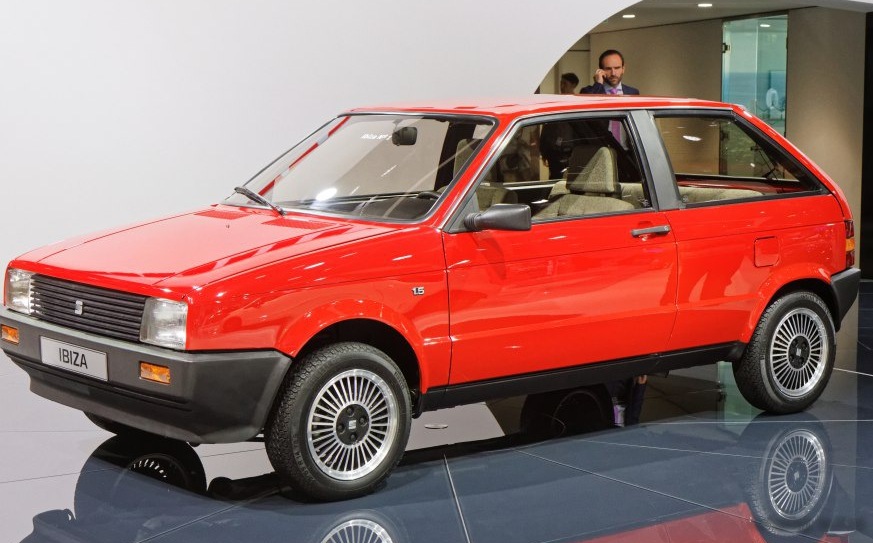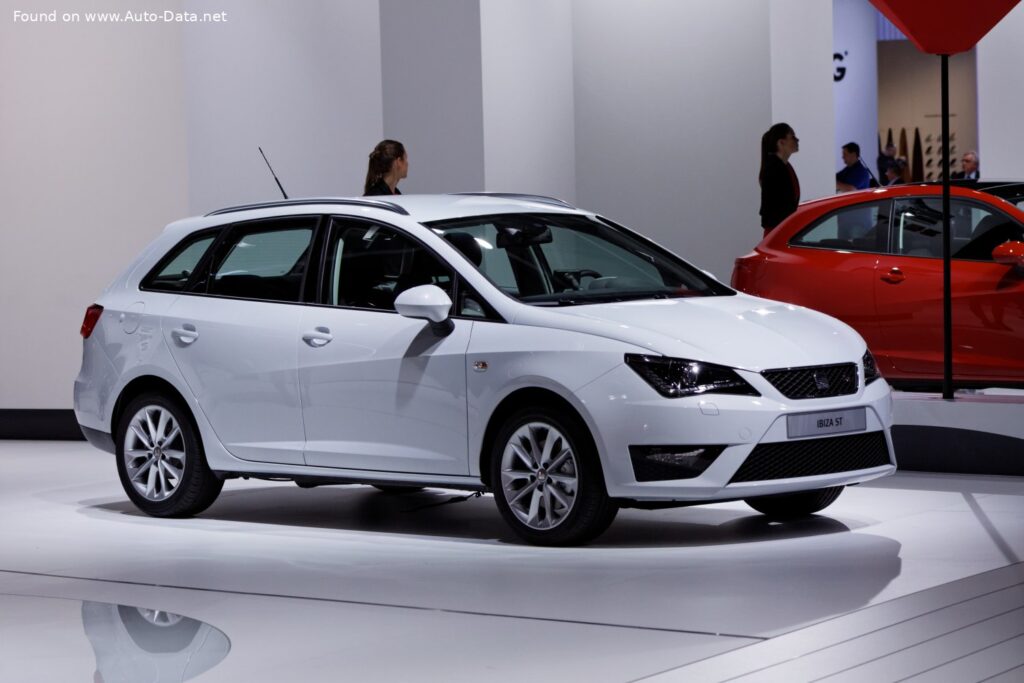
The Seat Ibiza, a cornerstone of the Spanish automaker’s lineup, has long been recognized for its youthful appeal, sharp styling, and engaging driving dynamics. The fourth generation (6J/6P), introduced in 2008, received a significant facelift in 2012, refreshing its aesthetic and refining its mechanical offerings. Among the various configurations, the Seat Ibiza IV ST (facelift 2012) 1.2 TSI (105 Hp) stood out as a particularly compelling option, blending the practicality of a station wagon with the efficiency and spirited performance of a modern turbocharged gasoline engine. Primarily targeting the highly competitive B-segment in Europe, this model offered a versatile solution for families and individuals seeking a compact vehicle with enhanced cargo capacity without compromising on Seat’s characteristic sporty flair.
As a brand within the Volkswagen Group, Seat typically positions itself as the more emotional and design-driven choice, often sharing platforms and powertrains with its German and Czech siblings (Volkswagen Polo and Skoda Fabia, respectively). The Ibiza IV ST, or Sport Tourer, exemplified this strategy, taking the well-established Ibiza hatchback platform and extending it to create a more capacious and family-friendly variant. The 2012 facelift brought subtle but effective updates, including revised front and rear bumpers, restyled headlights with optional LED daytime running lights, and a refreshed interior that aimed to elevate perceived quality and ergonomics. The 1.2 TSI engine, a popular choice across the VW Group’s compact offerings, further underscored the vehicle’s modern approach to balancing performance with fuel economy, making the Ibiza IV ST a highly relevant contender in its segment.
Engine & Performance of the Seat Ibiza IV ST (facelift 2012)
At the heart of the Seat Ibiza IV ST (facelift 2012) 1.2 TSI (105 Hp) was a sophisticated, small-displacement turbocharged gasoline engine, a hallmark of the Volkswagen Group’s powertrain philosophy during this era. The 1.2-liter (1197 cm3) inline four-cylinder engine, designated with the code CBZB, represented a significant step forward in efficiency and power delivery compared to larger, naturally aspirated units. This engine utilized direct fuel injection and a turbocharger with an intercooler to achieve an impressive output of 105 horsepower at 5000 revolutions per minute. More critically for daily driving, it produced a robust 129.07 lb.-ft. of torque across a broad and accessible rev range, from just 1550 rpm up to 4100 rpm. This wide torque band ensured excellent responsiveness and flexibility, minimizing the need for frequent downshifts, especially in urban environments or when carrying a full load.
Power was channeled to the front wheels via a precise 5-speed manual transmission, a common setup for compact cars of its time, offering a direct and engaging driving experience. Despite its relatively modest horsepower figure, the Ibiza IV ST 1.2 TSI delivered respectable performance. It could accelerate from 0 to 60 mph in a swift 9.7 seconds, with a top speed of 118.06 mph. These figures were competitive for its class and body style, allowing for confident highway cruising and nimble maneuvering. Fuel economy was another strong suit, with a combined rating of 46.1 US mpg (5.1 l/100 km). Urban consumption was rated at 36.2 US mpg, while extra-urban driving could achieve an impressive 53.5 US mpg. This efficiency was complemented by relatively low CO2 emissions of 119 g/km, allowing the vehicle to meet the Euro 5 emission standard, a key consideration for European buyers.
The engine’s design featured two valves per cylinder and a compression ratio of 10:1, optimized for turbocharged operation. With a bore of 2.8 inches and a piston stroke of 2.98 inches, it was engineered for durability and smooth operation. The powertrain architecture, with the internal combustion engine mounted transversely at the front, driving the front wheels, provided a compact and efficient layout that maximized interior space and contributed to the car’s balanced handling characteristics. The combination of a lightweight chassis (kerb weight of 2535.32 lbs.) and the spirited 1.2 TSI engine resulted in a favorable weight-to-power ratio of 11 kg/Hp, further enhancing its dynamic capabilities.
Design & Features
The Seat Ibiza IV ST (facelift 2012) adopted the practical and versatile station wagon body type, a popular choice in European markets for its blend of compact dimensions and enhanced cargo capacity. With five doors and seating for five occupants, it was designed to cater to the needs of small families or individuals requiring more utility than a standard hatchback. The facelift introduced a more aggressive and modern front fascia, characterized by sharper lines, a redesigned grille, and updated headlights that gave the car a more contemporary and assertive presence on the road. The rear also received subtle tweaks, maintaining the Ibiza’s distinctive and sporty appearance even in its elongated ST form.
Measuring 166.77 inches in length, 66.65 inches in width, and 56.89 inches in height, the Ibiza ST maintained a relatively compact footprint, making it easy to maneuver in tight urban spaces. Its 97.2-inch wheelbase provided a stable ride and contributed to a surprisingly spacious interior for its class. The primary advantage of the ST variant was its generous trunk space, offering a minimum of 15.19 cubic feet (430 liters) of cargo volume. This was a significant improvement over the hatchback, providing ample room for luggage, groceries, or sports equipment, and could be further expanded by folding the rear seats.
The interior of the Ibiza IV ST (facelift 2012) benefited from the general updates, featuring improved material quality and revised trim options. While not luxurious, the cabin was ergonomically laid out, with controls intuitively placed for ease of use. Standard features typically included air conditioning, power windows, and a basic infotainment system, often with CD playback and auxiliary input. For safety, the vehicle was equipped with an Anti-lock Braking System (ABS) as standard, along with multiple airbags. The chassis was engineered for a balance of comfort and agility. It featured an independent McPherson strut front suspension with coil springs and an anti-roll bar, while the rear utilized a trailing arm setup. This combination provided stable handling and a comfortable ride. The braking system comprised ventilated discs at the front and disc brakes at the rear, ensuring confident stopping power. Electric power steering, a rack and pinion system, offered light and precise steering feel, particularly beneficial for city driving and parking maneuvers. The car was available with various tire sizes, including 175/70 R14, 185/60 R15, and 215/45 R16, allowing for different levels of grip and ride comfort based on trim and owner preference.
Technical Specifications
| Category | Specification |
| Brand | Seat |
| Model | Ibiza |
| Generation | Ibiza IV ST (facelift 2012) |
| Type (Engine) | 1.2 TSI (105 Hp) |
| Start of production | 2012 year |
| End of production | 2015 year |
| Powertrain Architecture | Internal Combustion engine |
| Body type | Station wagon (estate) |
| Seats | 5 |
| Doors | 5 |
| Fuel consumption (economy) – urban | 6.5 l/100 km (36.2 US mpg) |
| Fuel consumption (economy) – extra urban | 4.4 l/100 km (53.5 US mpg) |
| Fuel consumption (economy) – combined | 5.1 l/100 km (46.1 US mpg) |
| CO2 emissions | 119 g/km |
| Fuel Type | Petrol (Gasoline) |
| Acceleration 0 – 60 mph | 9.7 sec |
| Maximum speed | 190 km/h (118.06 mph) |
| Emission standard | Euro 5 |
| Weight-to-power ratio | 11 kg/Hp (91.3 Hp/tonne) |
| Weight-to-torque ratio | 6.6 kg/Nm (152.2 Nm/tonne) |
| Power | 105 Hp @ 5000 rpm. |
| Power per liter | 87.7 Hp/l |
| Torque | 175 Nm @ 1550-4100 rpm. (129.07 lb.-ft. @ 1550-4100 rpm.) |
| Engine layout | Front, Transverse |
| Engine Model/Code | CBZB |
| Engine displacement | 1197 cm3 (1.2 liters / 73.05 cu. in.) |
| Number of cylinders | 4 |
| Engine configuration | Inline |
| Cylinder Bore | 71 mm (2.8 in.) |
| Piston Stroke | 75.6 mm (2.98 in.) |
| Compression ratio | 10:1 |
| Number of valves per cylinder | 2 |
| Fuel injection system | Direct injection |
| Engine aspiration | Turbocharger, Intercooler |
| Engine oil capacity | 3.9 l (4.12 US qt) |
| Coolant | 5.6 l (5.92 US qt) |
| Kerb Weight | 1150 kg (2535.32 lbs.) |
| Max. weight | 1605 kg (3538.42 lbs.) |
| Max load | 455 kg (1003.1 lbs.) |
| Trunk (boot) space – minimum | 430 l (15.19 cu. ft.) |
| Fuel tank capacity | 45 l (11.89 US gal) |
| Length | 4236 mm (166.77 in.) |
| Width | 1693 mm (66.65 in.) |
| Height | 1445 mm (56.89 in.) |
| Wheelbase | 2469 mm (97.2 in.) |
| Front track | 1465 mm (57.68 in.) |
| Rear (Back) track | 1457 mm (57.36 in.) |
| Minimum turning circle (turning diameter) | 10.48 m (34.38 ft.) |
| Drivetrain Architecture | The Internal combustion engine (ICE) drives the front wheels of the vehicle. |
| Drive wheel | Front wheel drive |
| Number of gears and type of gearbox | 5 gears, manual transmission |
| Front suspension | Independent, type McPherson with coil spring and anti-roll bar |
| Rear suspension | Trailing arm |
| Front brakes | Ventilated discs |
| Rear brakes | Disc |
| Assisting systems | ABS (Anti-lock braking system) |
| Steering type | Steering rack and pinion |
| Power steering | Electric Steering |
| Tires size | 175/70 R14; 185/60 R15; 215/45 R16 |
Legacy & Market Impact of the Seat Ibiza IV ST (facelift 2012)
The Seat Ibiza IV ST (facelift 2012) 1.2 TSI (105 Hp) played a significant role in its primary market, Europe, as a versatile and appealing option in the compact segment. Seat, often considered the “hot-blooded” Spanish brand of the Volkswagen Group, infused its models with a distinctive design language and a focus on dynamic driving, even in practical body styles like the station wagon. The Ibiza, as Seat’s best-selling model for many years, was crucial to the brand’s identity and market presence. The ST variant extended the Ibiza’s appeal to a broader demographic, particularly those needing the practicality of a larger trunk without wanting to step up to a C-segment (compact) vehicle.
In the highly competitive European B-segment, the Ibiza IV ST faced stiff competition from a variety of rivals, including its platform siblings like the Volkswagen Polo Variant (though less common) and Skoda Fabia Combi, which offered similar practicality with a different brand character. Other key competitors included the Ford Fiesta, Renault Clio Estate, Peugeot 208, and Opel Corsa. The Ibiza ST differentiated itself with its more expressive styling, often perceived as sportier and more youthful than its direct utilitarian competitors. Its engaging handling, a trait shared across the Ibiza range, further enhanced its appeal among drivers who appreciated a more spirited driving experience.
The introduction of the 1.2 TSI engine, especially in its 105 HP guise, was a critical factor in the car’s market success. This engine showcased the industry’s shift towards downsizing and turbocharging, offering a compelling blend of power, refinement, and impressive fuel efficiency. It allowed the Ibiza ST to deliver performance comparable to larger, naturally aspirated engines while significantly reducing fuel consumption and CO2 emissions, an increasingly important consideration for European buyers due to environmental regulations and taxation. The engine’s reliability and widespread use across the VW Group also instilled confidence in consumers.
The legacy of the Seat Ibiza IV ST (facelift 2012) lies in its demonstration of how a compact car could effectively combine practicality, efficiency, and driving enjoyment. It proved that a station wagon didn’t have to be dull, and that a smaller engine could deliver ample performance for everyday needs. While Seat does not have a presence in the USA market, models like the Ibiza ST are excellent examples of the diverse and highly specialized compact car segments that thrive in Europe. The Ibiza IV ST ultimately contributed to Seat’s reputation as a brand offering stylish, well-engineered, and value-packed vehicles that cater to a wide range of consumer preferences, particularly those prioritizing a blend of utility and dynamic character in a compact package.