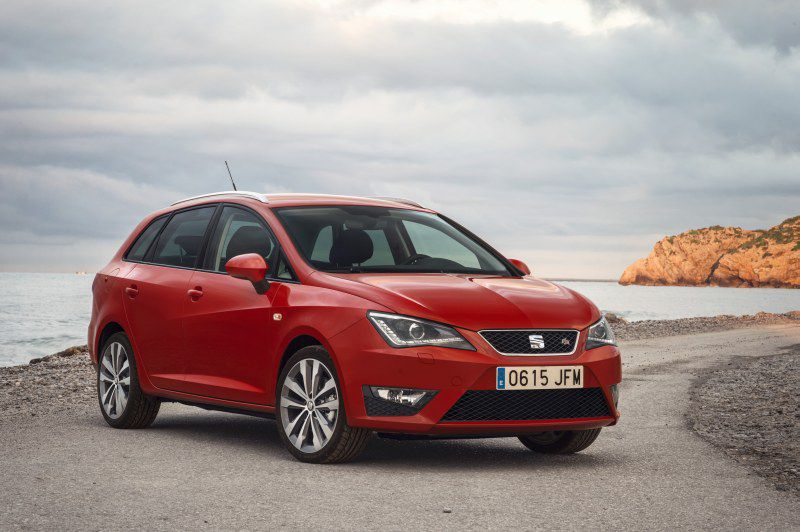
The Seat Ibiza IV ST (facelift 2015) represents a significant refresh of the fourth-generation Ibiza, a popular subcompact car produced by the Spanish automaker SEAT. As a subsidiary of the Volkswagen Group, SEAT often shares platforms and powertrains with its German counterparts, blending Spanish flair with German engineering precision. This particular variant, the ST (Sport Tourer) or station wagon, equipped with the 1.4 TDI (105 Hp) diesel engine, was designed primarily for the European market, where compact dimensions, fuel efficiency, and practicality are highly valued. Produced from May 2015 until 2017, this facelifted model aimed to keep the Ibiza competitive in a fiercely contested segment, offering updated styling, enhanced features, and more refined powertrains, including the economical three-cylinder diesel.
While the SEAT brand is not officially sold in the United States, understanding its offerings provides insight into global automotive trends and the diverse needs of international markets. The Ibiza, particularly in its ST guise, served as a versatile option for European consumers seeking the maneuverability of a small car combined with the added cargo capacity of a wagon, making it suitable for both urban commutes and longer journeys.
Engine & Performance of the Seat Ibiza IV ST (facelift 2015)
At the heart of this particular Seat Ibiza IV ST (facelift 2015) model lies a compact yet potent 1.4-liter TDI (Turbocharged Direct Injection) diesel engine. Designated with the internal code CUTA, this three-cylinder, inline configuration engine was a hallmark of the Volkswagen Group’s commitment to downsizing and efficiency during this era. Featuring four valves per cylinder and a common rail fuel injection system, it delivered a robust 105 horsepower at 3500 rpm. The power output per liter stood at a respectable 73.8 horsepower per liter, showcasing the engine’s advanced design for its displacement.
Perhaps more impressive than its horsepower, especially for a vehicle of its class, was its torque output. The 1.4 TDI generated 184.39 lb.-ft. (250 Nm) of torque, available across a broad rev range from 1750 to 2500 rpm. This ample torque, characteristic of modern diesel engines, provided excellent low-end grunt, making the Ibiza feel responsive in city driving and capable of relaxed highway cruising without frequent downshifts. Power was sent to the front wheels via a five-speed manual transmission, a common setup for efficiency-focused subcompacts.
Performance figures for the Ibiza ST 1.4 TDI were competitive for its segment. It could accelerate from 0 to 60 mph in an estimated 9.8 seconds, with a top speed of 119.3 mph. However, the true strength of this powertrain was its fuel economy. With a combined fuel consumption rating of 63.6 US mpg (3.7 liters per 100 km), it was exceptionally frugal, making it an attractive option for budget-conscious European drivers. Furthermore, its CO2 emissions of just 97 g/km and compliance with the Euro 6 emission standard highlighted its environmental consideration for the time, aided by a particulate filter system. The engine’s compression ratio of 16.2:1 and the use of a turbocharger with an intercooler were key to achieving this blend of power and efficiency from a small displacement.
Design & Features
The Seat Ibiza IV ST (facelift 2015) maintained the sporty and youthful design language that SEAT is known for, even in its more practical station wagon (or “estate” in European terminology) body style. The facelift brought subtle but effective updates, including revised headlights, a redesigned grille, and updated wheel options, giving it a sharper and more contemporary appearance. The overall dimensions of the vehicle were compact, with a length of 166.77 inches (4236 mm), a width of 66.65 inches (1693 mm), and a height of 56.89 inches (1445 mm). Its wheelbase measured 97.2 inches (2469 mm), contributing to its agile handling and a respectable turning circle of 32.81 feet (10 meters).
Despite its subcompact classification, the ST variant offered impressive practicality. With five doors and seating for five occupants, it provided easy access and reasonable passenger comfort. The primary appeal of the ST was its enhanced cargo capacity; the trunk offered a minimum of 15.19 cubic feet (430 liters) of space, significantly more than the standard Ibiza hatchback, making it a viable option for small families or individuals needing extra utility.
Inside, the facelift updated the cabin with improved materials, new trim options, and a more modern infotainment system, which was a crucial aspect for modern buyers. While specific details on interior features are not exhaustive in the provided data, typical amenities for this segment would include air conditioning, power windows, and a range of connectivity options. Safety was addressed with standard features such as ABS (Anti-lock Braking System), and typical for its era, it would have included multiple airbags and electronic stability control systems to meet European safety standards.
The vehicle’s chassis featured an independent McPherson strut front suspension with coil springs and an anti-roll bar, paired with a semi-independent rear suspension also utilizing coil springs. This setup balanced ride comfort with dynamic handling, a characteristic often praised in SEAT models. Braking duties were handled by ventilated discs at the front and solid discs at the rear, providing adequate stopping power. Various tire sizes were offered, ranging from 185/60 R15 to 215/40 R17, paired with corresponding wheel rim sizes from 15 to 17 inches, allowing for personalization and varying levels of grip and ride comfort.
Technical Specifications
| Category | Specification |
| General Information | |
| Brand | Seat |
| Model | Ibiza |
| Generation | Ibiza IV ST (facelift 2015) |
| Type (Engine) | 1.4 TDI (105 Hp) |
| Start of Production | May, 2015 |
| End of Production | 2017 |
| Powertrain Architecture | Internal Combustion engine |
| Body Type | Station wagon (estate) |
| Seats | 5 |
| Doors | 5 |
| Performance Specs | |
| Fuel Consumption (combined) | 63.6 US mpg (3.7 l/100 km) |
| CO2 Emissions | 97 g/km |
| Fuel Type | Diesel |
| Acceleration 0 – 60 mph | 9.8 sec |
| Maximum Speed | 119.3 mph (192 km/h) |
| Emission Standard | Euro 6 |
| Weight-to-Power Ratio | 10.8 kg/Hp (92.4 Hp/tonne) |
| Weight-to-Torque Ratio | 4.5 kg/Nm (220.1 Nm/tonne) |
| Engine Specs | |
| Power | 105 Hp @ 3500 rpm |
| Power per liter | 73.8 Hp/l |
| Torque | 184.39 lb.-ft. (250 Nm) @ 1750-2500 rpm |
| Engine Layout | Front, Transverse |
| Engine Model/Code | CUTA |
| Engine Displacement | 86.78 cu. in. (1422 cm3) |
| Number of Cylinders | 3 |
| Engine Configuration | Inline |
| Cylinder Bore | 3.13 in. (79.5 mm) |
| Piston Stroke | 3.76 in. (95.5 mm) |
| Compression Ratio | 16.2:1 |
| Number of Valves per Cylinder | 4 |
| Fuel Injection System | Diesel Commonrail |
| Engine Aspiration | Turbocharger, Intercooler |
| Engine Oil Capacity | 4.33 US qt (4.1 l) |
| Coolant Capacity | 8.45 US qt (8 l) |
| Engine Systems | Particulate filter |
| Space, Volume and Weights | |
| Kerb Weight | 2504.45 lbs. (1136 kg) |
| Max. Weight | 3725.81 lbs. (1690 kg) |
| Max Load | 1221.36 lbs. (554 kg) |
| Trunk (boot) space – minimum | 15.19 cu. ft. (430 l) |
| Fuel Tank Capacity | 11.89 US gal (45 l) |
| Dimensions | |
| Length | 166.77 in. (4236 mm) |
| Width | 66.65 in. (1693 mm) |
| Height | 56.89 in. (1445 mm) |
| Wheelbase | 97.2 in. (2469 mm) |
| Front Track | 57.68 in. (1465 mm) |
| Rear (Back) Track | 57.36 in. (1457 mm) |
| Minimum Turning Circle | 32.81 ft. (10 m) |
| Drivetrain, Brakes and Suspension Specs | |
| Drivetrain Architecture | Front-wheel drive, Internal Combustion engine |
| Drive Wheel | Front wheel drive |
| Number of Gears and Type of Gearbox | 5 gears, manual transmission |
| Front Suspension | Independent, type McPherson with coil spring and anti-roll bar |
| Rear Suspension | Semi-independent, coil spring |
| Front Brakes | Ventilated discs |
| Rear Brakes | Disc |
| Assisting Systems | ABS (Anti-lock braking system) |
| Steering Type | Steering rack and pinion |
| Tires Size | 185/60 R15; 215/45 R16; 215/40 R17 |
| Wheel Rims Size | 15; 16; 17 |
Legacy and Market Impact: The Seat Ibiza IV ST (facelift 2015) in its Market Context
The Seat Ibiza IV ST (facelift 2015), particularly with the 1.4 TDI engine, played a crucial role in SEAT’s product lineup and the broader European subcompact segment. SEAT, often positioned as the more youthful and performance-oriented brand within the Volkswagen Group, aimed to inject a sense of dynamism into its vehicles, even practical ones like the Ibiza ST. This specific model, therefore, appealed to a demographic that desired the practicality of a small family car but with a more engaging driving experience and distinctive styling than some of its more conservative rivals.
In its primary market, the Ibiza ST faced competition from a relatively small but significant group of subcompact station wagons, a segment that has largely diminished in recent years due to the rise of crossovers. Key competitors included the Skoda Fabia Combi (sharing the same platform and many mechanicals, but with a more utilitarian focus), and to a lesser extent, the Renault Clio Estate and Peugeot 207 SW/208 SW (depending on market availability and exact model years). The Ibiza ST differentiated itself with its slightly sportier aesthetics and a reputation for being more fun to drive than its platform-mate, the Fabia.
The 1.4 TDI engine was particularly impactful for its exceptional fuel economy and low emissions, which were highly valued in European markets with stringent environmental regulations and high fuel prices. Its efficiency made it an ideal choice for company car fleets and private buyers looking to minimize running costs. The robust torque delivery from the small diesel also contributed to a perceived sense of effortlessness, especially on highways, despite its modest horsepower figure.
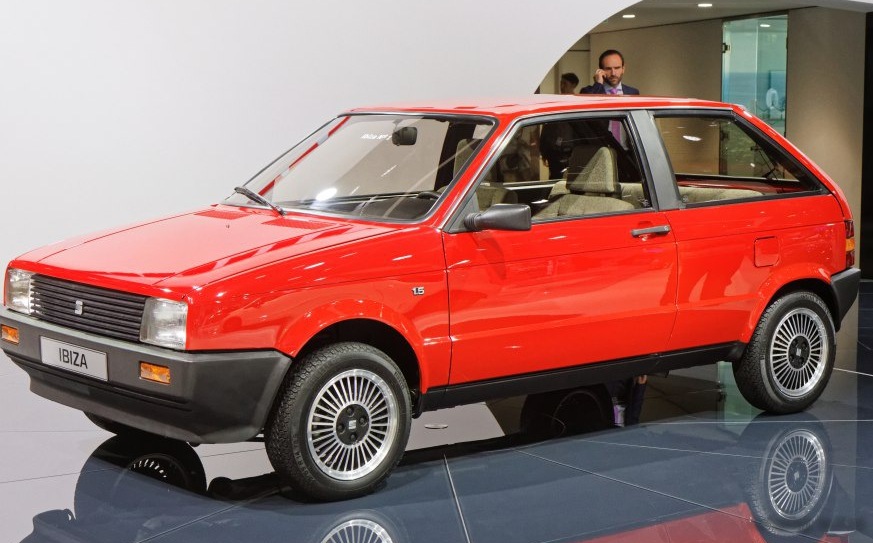
Historically, the Ibiza series has been a cornerstone of SEAT’s success since its introduction in 1984. The fourth-generation, and particularly this facelifted ST variant, showcased SEAT’s ability to adapt to evolving market demands by offering practical body styles within popular segments. Its legacy lies in demonstrating that a subcompact car could be both economical and versatile, offering genuine utility beyond just city driving. While the demand for small station wagons has waned in favor of SUVs and crossovers, the Ibiza ST stands as a testament to a period when automakers explored various body configurations to maximize practicality within compact footprints. Its consistent sales performance in its segment reinforced SEAT’s position as a relevant and competitive player in the European automotive landscape during its production run.