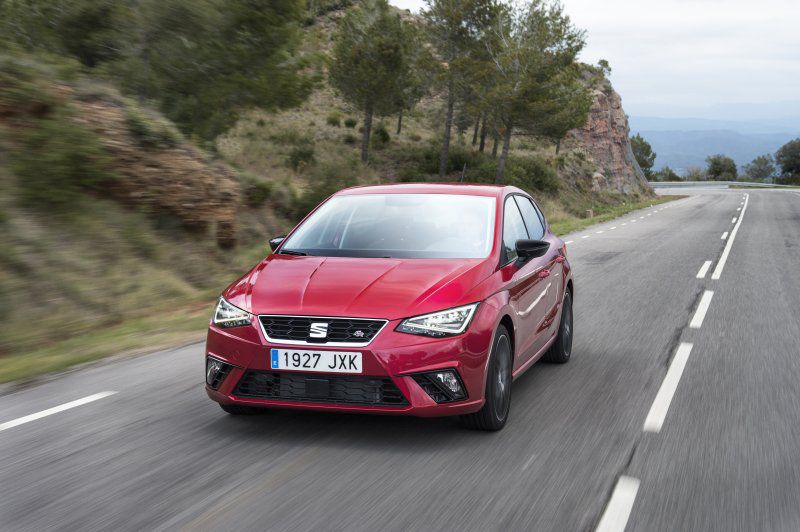
The Seat Ibiza V 1.0 EcoTSI (95 Hp) represents the fifth generation of Seat’s venerable subcompact hatchback, a critical model in the highly competitive European B-segment. Produced from 2019 to June 2021, this iteration of the Ibiza continued Seat’s tradition of offering a stylish, engaging, and practical small car, leveraging the robust engineering of its parent company, the Volkswagen Group. As a vehicle primarily designed for and sold in European and select international markets, the Ibiza V, particularly this 1.0 EcoTSI variant, embodies the modern European automotive philosophy: compact dimensions, efficient small-displacement turbocharged engines, and a focus on maneuverability and fuel economy without sacrificing desirable technology or a spirited driving experience. While not available in the United States, its influence on the global small car market, particularly within the VW Group’s diverse portfolio, is significant, showcasing advanced powertrain technology and platform sharing that underpins many popular models worldwide.
Seat Ibiza V: A European Subcompact Standard-Bearer
The fifth-generation Ibiza, introduced in 2017, marked a significant leap forward, being the first model to utilize the Volkswagen Group’s new MQB A0 platform, a modular transverse matrix designed for smaller vehicles. This platform provided a foundation for improved interior space, enhanced driving dynamics, and the integration of advanced safety and infotainment technologies. The 1.0 EcoTSI (95 Hp) variant, specifically, was positioned as a sensible yet lively option within the lineup, appealing to a broad demographic ranging from first-time car buyers to urban dwellers seeking an economical and easy-to-park daily driver.
Engine & Performance
At the heart of the Seat Ibiza V 1.0 EcoTSI (95 Hp) is a highly efficient and surprisingly peppy 1.0-liter (999 cm3 or 60.96 cubic inches) three-cylinder turbocharged gasoline engine. This powerplant, designated with the code DKLA, is a testament to modern engine downsizing, delivering a commendable 95 horsepower at 5000-5500 rpm. The “EcoTSI” designation highlights its emphasis on fuel efficiency and lower emissions, achieved through technologies like direct fuel injection, a turbocharger with an intercooler, and a DOHC (Double Overhead Camshaft) valvetrain with four valves per cylinder.
Perhaps even more impressive than its horsepower figure is the torque output: 175 Newton-meters (129.07 lb.-ft.) available across a wide and accessible band from 1500 to 3500 rpm. This broad torque curve is crucial for a small-displacement engine, providing strong low-end pull that makes the Ibiza feel more responsive than its power figures might suggest, especially in urban environments. It allows for confident acceleration from a standstill and flexible in-gear performance, reducing the need for constant downshifting.
Power is channeled to the front wheels via a slick-shifting 5-speed manual transmission, a common and reliable setup for this segment. This combination enables the Ibiza to accelerate from 0 to 60 mph in a respectable 10.4 seconds (calculated by Auto-Data.net, 0-100 km/h in 10.9 seconds) and reach a top speed of 113 mph (182 km/h). While not a performance car, these figures are more than adequate for daily commuting and highway cruising in Europe, where speed limits are often lower and traffic denser than in the US.
Fuel economy is a strong suit for this variant, with a combined WLTP rating of 5.4-5.6 liters per 100 km, translating to an impressive 43.6 – 42 US mpg. Under the older NEDC testing cycle, combined consumption was even lower at 4.6 l/100 km (51.1 US mpg), with extra-urban driving potentially yielding up to 58.8 US mpg (4.0 l/100 km). CO2 emissions are kept in check at 121-126 g/km (WLTP) or 104 g/km (NEDC), allowing it to meet the stringent Euro 6 DG emission standard. Further efficiency is gained through features like a Start & Stop System and a particulate filter, both essential for modern European gasoline engines.
Design & Features
The Seat Ibiza V boasts a contemporary and sporty design language, characterized by sharp lines, distinctive LED lighting signatures (depending on trim), and a dynamic stance. As a 5-door hatchback, it offers a practical body style that is immensely popular in Europe, blending compact exterior dimensions with a surprisingly spacious interior. With a length of 159.8 inches (4059 mm), a width of 70.08 inches (1780 mm), and a height of 56.85 inches (1444 mm), the Ibiza V is perfectly proportioned for navigating tight city streets and fitting into smaller parking spaces. The wheelbase of 100.94 inches (2564 mm) contributes to both stable highway cruising and a comfortable ride.
Despite its compact footprint, the Ibiza V is designed to maximize interior utility. It comfortably seats five occupants, a standard for the segment. The trunk (boot) space is generous for a subcompact, offering a minimum of 12.54 cubic feet (355 liters) with the rear seats in place, expanding to a substantial 41.14 cubic feet (1165 liters) when the rear seats are folded down. This flexibility makes it suitable for everything from weekly grocery runs to weekend getaways.
The chassis benefits from an independent McPherson strut front suspension with coil springs and an anti-roll bar, providing precise steering and good road holding. The rear employs a semi-independent setup with coil springs, a cost-effective and space-efficient solution common in this class, offering a good balance of comfort and handling. Braking is handled by ventilated discs at the front for effective stopping power, complemented by drum brakes at the rear. Safety is further enhanced by an Anti-lock Braking System (ABS) as standard. The electric power steering system, with its rack and pinion setup, offers light effort at low speeds for easy maneuvering and firms up at higher speeds for better control.
Technical Specifications
| General Information | |
| Brand | Seat |
| Model | Ibiza |
| Generation | Ibiza V |
| Engine Type | 1.0 EcoTSI (95 Hp) |
| Start of Production | 2019 year |
| End of Production | June, 2021 year |
| Powertrain Architecture | Internal Combustion engine |
| Body Type | Hatchback |
| Seats | 5 |
| Doors | 5 |
| Performance Specs | |
| Combined Fuel Consumption (WLTP) | 5.4-5.6 l/100 km (43.6 – 42 US mpg) |
| CO2 Emissions (WLTP) | 121-126 g/km |
| Fuel Consumption (Urban) | 5.6 l/100 km (42 US mpg) |
| Fuel Consumption (Extra Urban) | 4.0 l/100 km (58.8 US mpg) |
| Fuel Consumption (Combined NEDC) | 4.6 l/100 km (51.1 US mpg) |
| CO2 Emissions (NEDC) | 104 g/km |
| Fuel Type | Petrol (Gasoline) |
| Acceleration 0 – 62 mph (0-100 km/h) | 10.9 sec |
| Acceleration 0 – 60 mph (Calculated) | 10.4 sec |
| Maximum Speed | 182 km/h (113.09 mph) |
| Emission Standard | Euro 6 DG |
| Weight-to-Power Ratio | 11.1 kg/Hp (89.7 Hp/tonne) |
| Weight-to-Torque Ratio | 6.1 kg/Nm (165.3 Nm/tonne) |
| Engine Specs | |
| Power | 95 Hp @ 5000-5500 rpm |
| Power per liter | 95.1 Hp/l |
| Torque | 175 Nm @ 1500-3500 rpm (129.07 lb.-ft.) |
| Engine Layout | Front, Transverse |
| Engine Model/Code | DKLA |
| Engine Displacement | 999 cm3 (60.96 cu. in.) |
| Number of Cylinders | 3 |
| Engine Configuration | Inline |
| Cylinder Bore | 74.5 mm (2.93 in.) |
| Piston Stroke | 76.4 mm (3.01 in.) |
| Compression Ratio | 10.5:1 |
| Number of Valves per Cylinder | 4 |
| Fuel Injection System | Direct injection |
| Engine Aspiration | Turbocharger, Intercooler |
| Valvetrain | DOHC |
| Engine Oil Capacity | 4 l (4.23 US qt) |
| Engine Oil Specification | Not specified |
| Coolant Capacity | 10 l (10.57 US qt) |
| Engine Systems | Start & Stop System, Particulate filter |
| Space, Volume and Weights | |
| Kerb Weight | 1059 kg (2334.7 lbs.) |
| Max. Weight | 1640 kg (3615.58 lbs.) |
| Max Load | 581 kg (1280.89 lbs.) |
| Trunk (boot) space – minimum | 355 l (12.54 cu. ft.) |
| Trunk (boot) space – maximum | 1165 l (41.14 cu. ft.) |
| Fuel Tank Capacity | 40 l (10.57 US gal) |
| Max. Roof Load | 75 kg (165.35 lbs.) |
| Permitted Trailer Load with Brakes (8%) | 1100 kg (2425.08 lbs.) |
| Permitted Trailer Load with Brakes (12%) | 1000 kg (2204.62 lbs.) |
| Permitted Trailer Load without Brakes | 560 kg (1234.59 lbs.) |
| Permitted Towbar Download | 50 kg (110.23 lbs.) |
| Dimensions | |
| Length | 4059 mm (159.8 in.) |
| Width | 1780 mm (70.08 in.) |
| Width including mirrors | 1942 mm (76.46 in.) |
| Height | 1444 mm (56.85 in.) |
| Wheelbase | 2564 mm (100.94 in.) |
| Front Track | 1525 mm (60.04 in.) |
| Rear (Back) Track | 1505 mm (59.25 in.) |
| Front Overhang | 796 mm (31.34 in.) |
| Rear Overhang | 699 mm (27.52 in.) |
| Minimum Turning Circle (turning diameter) | 10.6 m (34.78 ft.) |
| Drivetrain, Brakes and Suspension Specs | |
| Drivetrain Architecture | Front-wheel drive, Internal Combustion Engine (ICE) |
| Drive Wheel | Front-wheel drive |
| Number of Gears and Type of Gearbox | 5 gears, manual transmission |
| Front Suspension | Independent, type McPherson with coil spring and anti-roll bar |
| Rear Suspension | Semi-independent, coil spring |
| Front Brakes | Ventilated discs |
| Rear Brakes | Drum |
| Assisting Systems | ABS (Anti-lock braking system) |
| Steering Type | Steering rack and pinion |
| Power Steering | Electric Steering |
| Tires Size | 185/65 R15; 215/40 R18 |
| Wheel Rims Size | 5.5J x 15; 7J x 18 |
Legacy & Market Impact
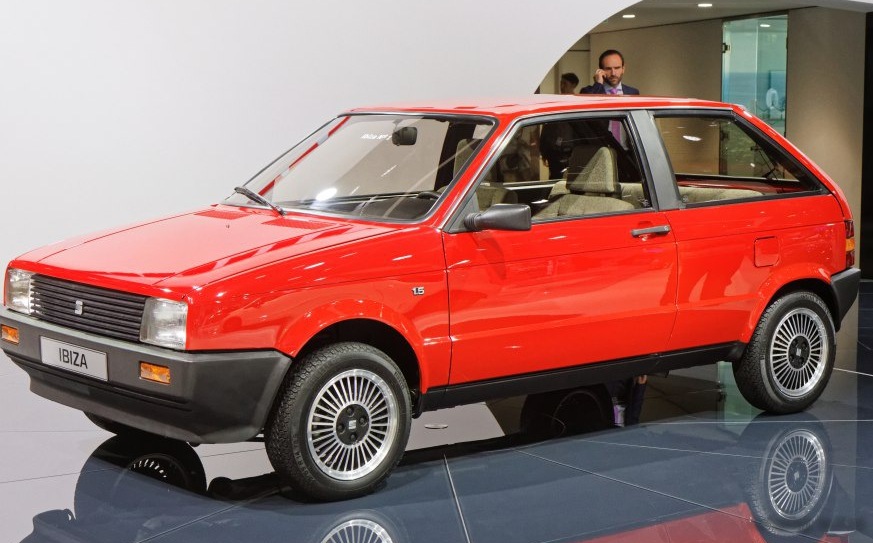
The Seat Ibiza has consistently been one of Seat’s best-selling models since its inception in 1984, serving as a cornerstone of the brand’s identity and market presence. The fifth-generation Seat Ibiza V, particularly the 1.0 EcoTSI (95 Hp) variant, continued this legacy by offering a compelling package in the fiercely competitive European subcompact segment. Its position within the Volkswagen Group allowed it to benefit from shared platforms, engines, and technologies, ensuring a high standard of engineering and reliability that resonated with consumers.
In its primary European markets, the Ibiza competed directly with established rivals such as the Ford Fiesta, Volkswagen Polo (its platform sibling), Renault Clio, Peugeot 208, and Opel Corsa. What set the Ibiza apart was its distinct brand character: a focus on a sportier driving experience and a more youthful, expressive design compared to some of its more conservative German counterparts. This appeal helped Seat attract a demographic that valued dynamic aesthetics and engaging handling without sacrificing practicality or affordability.
The 1.0 EcoTSI engine played a pivotal role in the Ibiza V’s market success. Its blend of adequate power for daily driving and exceptional fuel economy made it an ideal choice for European consumers facing high fuel prices and increasing environmental regulations. The Euro 6 DG emission standard compliance also ensured its longevity in a market constantly evolving with stricter mandates. The widespread adoption of small-displacement turbocharged engines across the industry, pioneered in part by the Volkswagen Group, demonstrates the foresight and effectiveness of this powertrain strategy.
The Ibiza V’s adoption of the MQB A0 platform was a significant development, allowing for improved cabin space, better safety structures, and a more refined driving experience than previous generations. This modularity also streamlined production and allowed for greater flexibility in offering various body styles and powertrains across the VW Group’s brands. The success of the Ibiza V underscored the effectiveness of platform sharing in delivering sophisticated, segment-leading vehicles at competitive prices.
While the Seat brand and the Ibiza model are not present in the North American market, the technological advancements and market strategies employed in its development have had a ripple effect globally. It showcases how manufacturers adapt to regional demands, focusing on efficiency, compact design, and advanced safety features to meet the specific needs of dense urban environments and evolving regulatory landscapes. The Seat Ibiza V 1.0 EcoTSI (95 Hp) therefore stands as a prime example of a modern, well-engineered European subcompact that successfully balanced performance, economy, and style during its production run.