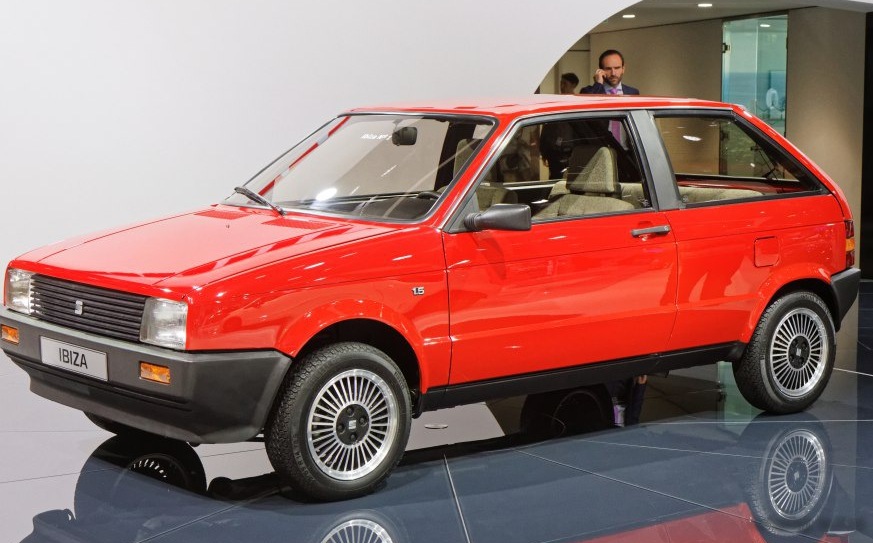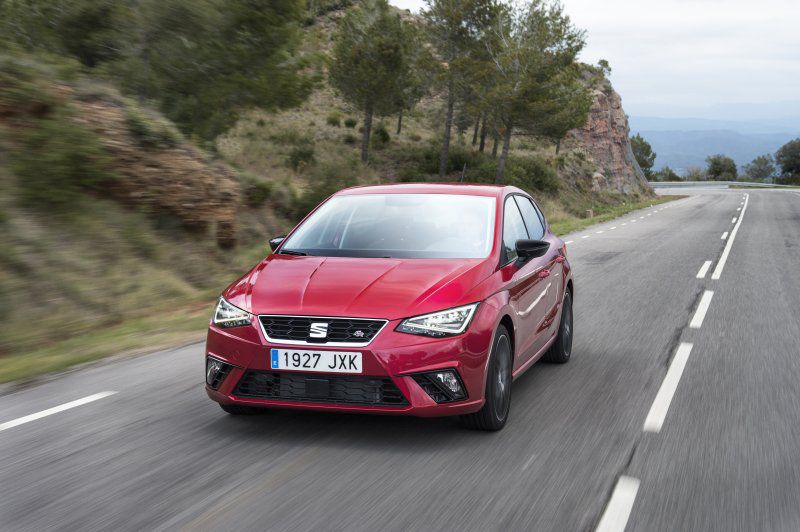
The Seat Ibiza V 1.6 TDI (80 Hp) Start&Stop represents a significant iteration in the long-running history of Seat’s popular subcompact hatchback. Produced between 2017 and 2018, this fifth-generation Ibiza cemented its position as a key player in the highly competitive European B-segment market. As a brand within the Volkswagen Group, Seat typically targets a younger, more design-conscious demographic, emphasizing sporty aesthetics and dynamic driving characteristics. While the Seat brand and its Ibiza model are not officially sold in the United States, understanding its role in its primary European market provides valuable insight into global automotive trends and the diverse needs of international consumers. This particular diesel-powered model was engineered for efficiency and low emissions, a crucial factor in European vehicle taxation and consumer preference during its production run.
The Seat Ibiza V: Architecture and Market Placement
Launched in 2017, the fifth-generation Seat Ibiza was a landmark model for the Spanish automaker, being the first car to utilize the Volkswagen Group’s new MQB A0 platform. This modular architecture, also underpinning successful models like the Volkswagen Polo and Audi A1, allowed for greater economies of scale, improved structural rigidity, and enhanced packaging efficiency. The Ibiza V maintained its traditional 5-door hatchback body style, offering a practical yet stylish solution for urban dwellers and small families across Europe. Its design, characterized by sharp lines, prominent creases, and a distinctive front fascia, conveyed a sense of athleticism and modernity, aligning perfectly with Seat’s brand identity. In a segment teeming with rivals, the Ibiza V carved out its niche by offering a compelling blend of Spanish flair, German engineering, and competitive pricing, making it a formidable contender against established players.
Engine & Performance: Efficiency Meets Everyday Driveability
At the heart of the Seat Ibiza V 1.6 TDI (80 Hp) Start&Stop lies a 1.6-liter (1598 cm³ or 97.52 cubic inches) inline four-cylinder turbocharged diesel engine. This unit, designated with the engine code DGTC, was a testament to the era’s focus on diesel efficiency for smaller vehicles in Europe. Generating 80 horsepower at a broad range of 2700-4800 rpm, the engine delivered its power smoothly. More critically for a diesel, it produced a robust 230 Nm (169.64 lb.-ft.) of torque available from a low 1400 rpm up to 2400 rpm. This ample low-end torque was instrumental in providing responsive acceleration in city driving and effortless cruising on highways, despite its modest horsepower figure.
Power was delivered to the front wheels via a 5-speed manual transmission, a common setup for economy-focused models in this segment. The powertrain architecture, featuring a front, transverse engine layout, is typical for modern front-wheel-drive vehicles, optimizing cabin space and handling. Performance figures for the 1.6 TDI (80 Hp) variant included an acceleration time from 0 to 60 mph in a calculated 12.6 seconds (0-100 km/h in 13.3 seconds) and a top speed of 106.88 mph (172 km/h). While not a performance powerhouse, these figures were perfectly adequate for its intended purpose as an economical and practical daily driver.
A key feature of this specific model was the “Start&Stop System,” which automatically shuts off the engine when the vehicle is stationary and restarts it when the driver intends to move. This technology, combined with a diesel particulate filter, contributed significantly to its impressive fuel economy and lower emissions. The Ibiza 1.6 TDI boasted a combined fuel consumption of 3.8 liters per 100 kilometers (61.9 US mpg), with urban consumption at 4.5 l/100 km (52.3 US mpg) and extra-urban at 3.4 l/100 km (69.2 US mpg). With CO2 emissions of just 99 g/km, it met the stringent Euro 6 emission standard, making it an environmentally conscious choice for its time.
Design & Features: Dynamic Styling and Practicality
The Seat Ibiza V’s design was a significant leap forward, showcasing a more mature and sophisticated aesthetic while retaining its youthful appeal. The 5-door hatchback body type offered excellent versatility, combining compact exterior dimensions with a surprisingly spacious interior. Measuring 159.8 inches in length, 70.08 inches in width (76.46 inches including mirrors), and 56.85 inches in height, the Ibiza V was ideally sized for navigating crowded European city streets while still providing comfortable seating for five occupants. The 100.94-inch wheelbase contributed to a stable ride and generous cabin space.
Inside, the Ibiza offered a well-appointed cabin with a focus on ergonomics and modern connectivity. The trunk space was practical, ranging from 12.54 cubic feet (355 liters) with all seats in place, expanding to a substantial 41.14 cubic feet (1165 liters) with the rear seats folded down. This flexibility made it suitable for anything from weekly grocery runs to weekend getaways.
In terms of chassis and safety, the Ibiza V featured an independent McPherson strut front suspension with coil springs and an anti-roll bar, paired with a semi-independent rear suspension with coil springs. This setup provided a balanced ride, combining comfort with agile handling. Braking was handled by ventilated discs at the front and disc brakes at the rear, augmented by an Anti-lock Braking System (ABS) for enhanced stopping power and control. The electric power steering system, coupled with a rack and pinion steering type, ensured light and precise steering, particularly beneficial in urban environments. The vehicle offered a variety of tire and wheel options, ranging from 185/65 R15 to 215/40 R18, allowing for customization of both aesthetics and driving dynamics.
Safety Features
While detailed safety specifications are limited, the Ibiza V incorporated standard safety equipment for its class, including ABS, Electronic Stability Control (ESC), and multiple airbags (driver, passenger, and side airbags). These features were crucial for meeting European safety regulations and providing a reasonable level of protection for occupants in the event of a collision.
Technical Specifications: Seat Ibiza V 1.6 TDI (80 Hp) Start&Stop
| Category | Specification |
| General Information | |
| Brand | Seat |
| Model | Ibiza |
| Generation | Ibiza V |
| Type (Engine) | 1.6 TDI (80 Hp) Start&Stop |
| Start of production | 2017 year |
| End of production | 2018 year |
| Powertrain Architecture | Internal Combustion engine |
| Body type | Hatchback |
| Seats | 5 |
| Doors | 5 |
| Performance Specifications | |
| Fuel consumption (economy) – urban | 4.5 l/100 km |
| Fuel consumption (economy) – extra urban | 3.4 l/100 km |
| Fuel consumption (economy) – combined | 3.8 l/100 km |
| CO2 emissions | 99 g/km |
| Fuel Type | Diesel |
| Acceleration 0 – 100 km/h | 13.3 sec |
| Acceleration 0 – 62 mph | 13.3 sec |
| Acceleration 0 – 60 mph (Calculated) | 12.6 sec |
| Maximum speed | 172 km/h |
| Emission standard | Euro 6 |
| Weight-to-power ratio | 14.7 kg/Hp |
| Weight-to-torque ratio | 5.1 kg/Nm |
| Engine Specifications | |
| Power | 80 Hp @ 2700-4800 rpm |
| Power per liter | 50.1 Hp/l |
| Torque | 230 Nm @ 1400-2400 rpm |
| Engine layout | Front, Transverse |
| Engine Model/Code | DGTC |
| Engine displacement | 1598 cm³ |
| Number of cylinders | 4 |
| Engine configuration | Inline |
| Cylinder Bore | 79.5 mm |
| Piston Stroke | 80.5 mm |
| Compression ratio | 16.2:1 |
| Number of valves per cylinder | 4 |
| Fuel injection system | Diesel Commonrail |
| Engine aspiration | Turbocharger, Intercooler |
| Space, Volume and Weights | |
| Kerb Weight | 1172 kg |
| Max. weight (Gross Vehicle Weight) | 1750 kg |
| Trunk (boot) space – minimum | 355 l |
| Trunk (boot) space – maximum | 1165 l |
| Fuel tank capacity | 40 l |
| Dimensions | |
| Length | 4059 mm |
| Width | 1780 mm |
| Height | 1444 mm |
| Wheelbase | 2564 mm |
Legacy & Market Impact: A Key Player in Europe’s B-Segment
The Seat Ibiza V 1.6 TDI (80 Hp) Start&Stop, like the Ibiza line as a whole, played a pivotal role in Seat’s strategy within the European market. It was positioned as a more emotionally charged and youthful alternative to its platform-sharing siblings, the Volkswagen Polo and Skoda Fabia, offering a distinct Spanish flavor. Its sharp styling and agile handling characteristics resonated with buyers looking for something beyond the conventional. In its segment, the Ibiza competed fiercely with other European stalwarts such as the Ford Fiesta, Renault Clio, Peugeot 208, Opel Corsa, and even Asian imports like the Toyota Yaris and Mazda2, all vying for dominance in the fiercely contested subcompact space.
The 1.6 TDI variant, despite its relatively modest horsepower, was particularly significant in an era where diesel engines were still a popular and economically viable choice for many European motorists, especially given the higher fuel prices and greater emphasis on fuel efficiency over raw power. Its excellent combined fuel economy and low CO2 emissions made it an attractive option for those seeking low running costs and reduced environmental impact, benefiting from favorable tax incentives in many European countries. The inclusion of the Start&Stop system further underscored its commitment to efficiency, making it well-suited for congested urban environments.
While the Seat Ibiza never made its way to the North American market, primarily due to Seat’s lack of brand presence in the U.S. and the declining popularity of subcompact cars in favor of larger SUVs and crossovers, its success in Europe is undeniable. The Ibiza V demonstrated Seat’s capability to produce a highly competitive, stylish, and technologically advanced vehicle within the challenging B-segment. It reinforced Seat’s image as a dynamic and youthful brand within the Volkswagen Group, showcasing how shared platforms could be leveraged to create distinct and appealing products for different market tastes. The 1.6 TDI variant, in particular, stands as a testament to the engineering prowess dedicated to maximizing efficiency and meeting the specific demands of its primary European customer base during its production run.