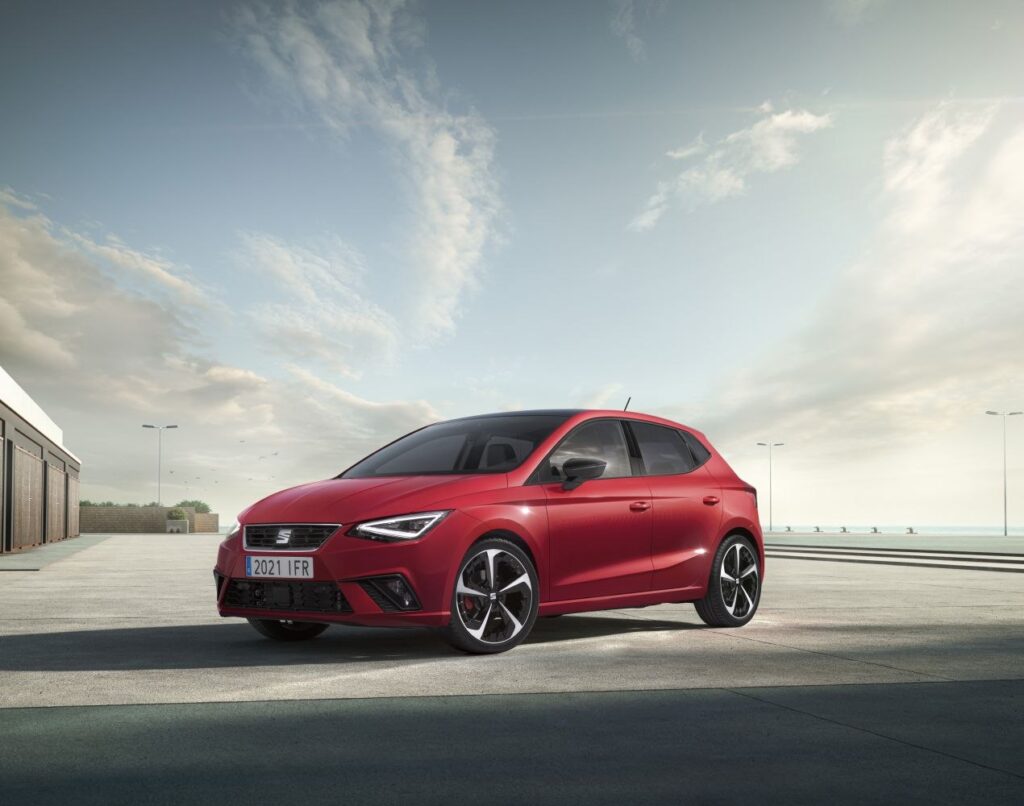
The Seat Ibiza V (facelift 2021) represents a significant iteration of the Spanish automaker’s enduring subcompact hatchback, a segment often referred to as a “supermini” in European markets. Launched in June 2021 as a refresh of the fifth-generation Ibiza, this model reinforces SEAT’s commitment to offering a stylish, practical, and efficient vehicle for urban and suburban drivers. While the SEAT brand, and thus the Ibiza, is not officially sold in the United States, it plays a crucial role in the competitive European automotive landscape, serving as a gateway model for many first-time buyers and a reliable companion for families seeking compact versatility. The 2021 facelift brought a series of subtle yet impactful updates, focusing on modernizing its design, enhancing its technological offerings, and refining its powertrain options to meet contemporary demands for efficiency and connectivity.
The Seat Ibiza V (facelift 2021): A European Supermini
As a key player in the highly contested B-segment, the Ibiza shares its foundational MQB A0 platform with other Volkswagen Group siblings like the Volkswagen Polo and Skoda Fabia, benefiting from shared engineering excellence while maintaining its distinct SEAT identity. This particular variant, powered by the 1.0 TSI (95 Hp) engine, exemplifies the trend towards smaller, turbocharged gasoline engines that deliver a commendable balance of performance and fuel economy, crucial factors for its target demographic across Europe.
Engine & Performance: The Heart of the Ibiza
At the core of the Seat Ibiza V (facelift 2021) 1.0 TSI (95 Hp) lies a modern, compact powertrain designed for efficiency and responsiveness. This variant features a 1.0-liter (999 cm³ or 60.96 cubic inches) inline three-cylinder engine, a configuration that has become increasingly popular in the supermini segment due to its inherent balance, compact size, and fuel-saving potential. Equipped with direct fuel injection, a turbocharger, and an intercooler, this engine, designated by the code DLAC, is a testament to contemporary automotive engineering.
The engine produces a respectable 95 horsepower, available between 5000 and 5500 revolutions per minute (rpm). More impressively for its size, it generates 129.07 lb.-ft. of torque across a broad and accessible range, from 2000 to 3500 rpm. This wide torque band is critical for a small engine, providing brisk acceleration in city traffic and sufficient passing power on highways without constantly needing to downshift. Power is sent to the front wheels via a smooth-shifting 5-speed manual transmission, offering an engaging driving experience typical of SEAT’s “sporty” brand image.
In terms of performance, the Ibiza 1.0 TSI (95 Hp) accelerates from 0 to 60 mph in an estimated 10.4 seconds, making it agile enough for everyday driving. Its maximum speed is rated at 115.58 mph (186 km/h). These figures underscore its role as a practical, rather than overtly performance-oriented, vehicle. Fuel efficiency is a strong suit, with a combined WLTP rating of 45.2 to 42 US mpg (5.2-5.6 l/100 km). Under the NEDC equivalent cycle, it achieves an impressive 49 US mpg combined, with urban driving yielding 39.2 US mpg and extra-urban conditions reaching up to 56 US mpg. These figures highlight the engine’s optimization for varied driving conditions. Furthermore, the vehicle meets stringent Euro 6 AP emission standards, with CO2 emissions ranging from 118-128 g/km (WLTP), aided by a Start & Stop System and a particulate filter, showcasing SEAT’s commitment to environmental responsibility.
Design & Features of the Facelifted Ibiza
The Seat Ibiza V (facelift 2021) maintains its characteristic 5-door hatchback body style, a practical choice that combines urban maneuverability with ample passenger and cargo space. The facelift introduced subtle yet effective design enhancements, primarily focused on refining its exterior aesthetics and upgrading its interior technology. On the outside, the Ibiza received revised full-LED lighting signatures, giving it a more modern and assertive presence, particularly at night. The front grille and bumpers were also subtly restyled to align with SEAT’s contemporary design language.
Dimensionally, the Ibiza measures 159.8 inches (4059 mm) in length, 70.08 inches (1780 mm) in width (76.46 inches or 1942 mm including mirrors), and 56.85 inches (1444 mm) in height. Its wheelbase of 100.94 inches (2564 mm) contributes to a stable ride and generous interior volume for a vehicle in its class. The cabin comfortably seats five occupants, offering practical solutions for daily commutes and longer journeys. Cargo capacity is competitive, with a minimum trunk space of 12.54 cubic feet (355 liters), expanding to a substantial 41.14 cubic feet (1165 liters) with the rear seats folded, making it versatile for various hauling needs.
Key features include a robust chassis with independent McPherson struts and an anti-roll bar at the front, paired with a semi-independent coil spring rear suspension, providing a balanced ride and competent handling. Braking is handled by ventilated discs at the front (256×22 mm) and drum brakes at the rear (228×42 mm), complemented by an Anti-lock Braking System (ABS) for enhanced safety. The electric power steering system ensures light and precise control, ideal for navigating tight city streets and parking. A range of tire and wheel options are available, from 185/70 R14 to larger 215/40 R18, allowing for customization in both aesthetics and driving dynamics. The vehicle’s fuel tank capacity of 10.57 US gallons (40 liters) provides a good cruising range given its excellent fuel economy.
Technical Specifications
| Category | Specification |
| Brand | Seat |
| Model | Ibiza V (facelift 2021) |
| Engine Type | 1.0 TSI (95 Hp) |
| Production Start | June, 2021 |
| Production End | October, 2025 |
| Body Type | Hatchback |
| Seats | 5 |
| Doors | 5 |
| Power | 95 Hp @ 5000-5500 rpm |
| Torque | 129.07 lb.-ft. (175 Nm) @ 2000-3500 rpm |
| Acceleration 0-60 mph | 10.4 sec |
| Maximum Speed | 115.58 mph (186 km/h) |
| Combined Fuel Consumption (WLTP) | 45.2 – 42 US mpg (5.2-5.6 l/100 km) |
| Combined Fuel Consumption (NEDC equiv.) | 49 US mpg (4.8 l/100 km) |
| CO2 Emissions (WLTP) | 118-128 g/km |
| Emission Standard | Euro 6 AP |
| Fuel Type | Gasoline |
| Engine Layout | Front, Transverse |
| Engine Model/Code | DLAC |
| Engine Displacement | 1.0 l (999 cm³ / 60.96 cu. in.) |
| Number of Cylinders | 3 |
| Engine Configuration | Inline |
| Compression Ratio | 11.5:1 |
| Valves per Cylinder | 4 |
| Fuel Injection System | Direct injection |
| Engine Aspiration | Turbocharger, Intercooler |
| Engine Oil Capacity | 4.23 US qt (4 l) |
| Coolant Capacity | 10.57 US qt (10 l) |
| Length | 159.8 in (4059 mm) |
| Width | 70.08 in (1780 mm) |
| Width including mirrors | 76.46 in (1942 mm) |
| Height | 56.85 in (1444 mm) |
| Wheelbase | 100.94 in (2564 mm) |
| Front Track | 60.04 in (1525 mm) |
| Rear Track | 59.25 in (1505 mm) |
| Kerb Weight | 2358.95 lbs (1070 kg) |
| Max. Weight (GVWR) | 3637.63 lbs (1650 kg) |
| Max Load | 1278.68 lbs (580 kg) |
| Trunk Space (min/max) | 12.54 – 41.14 cu. ft. (355 – 1165 l) |
| Fuel Tank Capacity | 10.57 US gal (40 l) |
| Min. Turning Circle | 34.78 ft (10.6 m) |
| Drive Wheel | Front-wheel drive |
| Gearbox Type | 5-speed manual transmission |
| Front Suspension | Independent, McPherson with coil spring and anti-roll bar |
| Rear Suspension | Semi-independent, coil spring |
| Front Brakes | Ventilated discs, 256×22 mm |
| Rear Brakes | Drum, 228×42 mm |
| Assisting Systems | ABS (Anti-lock braking system) |
| Steering Type | Rack and pinion, Electric Power Steering |
| Tires Size | 185/70 R14 88H to 215/40 R18 91W XL |
Legacy and Market Impact in the European Landscape
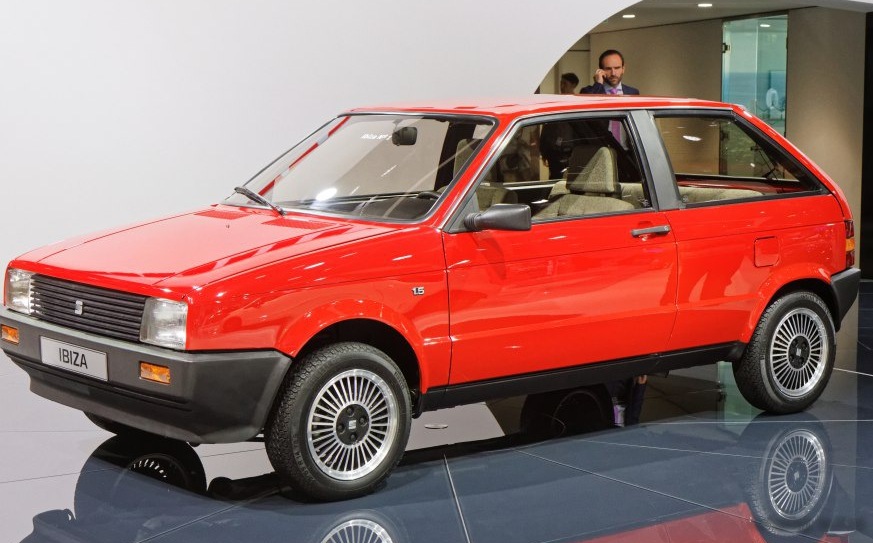
The Seat Ibiza holds a significant place in the European automotive market, having been a cornerstone of the SEAT brand’s success since its introduction in 1984. The fifth generation, and particularly the Seat Ibiza V (facelift 2021), continues this legacy, embodying SEAT’s brand identity as a youthful, sporty, and design-focused alternative within the Volkswagen Group. While it shares its underpinnings with the more conservative Volkswagen Polo and the value-oriented Skoda Fabia, the Ibiza distinguishes itself with a more dynamic exterior design, a driver-centric interior, and a generally more engaging driving character.
In its primary European market, the Ibiza competes fiercely in the B-segment, a category dominated by formidable rivals. Key competitors include the segment-leading Ford Fiesta, the stylish Renault Clio, the popular Peugeot 208, and its platform sibling, the Volkswagen Polo. Despite this intense competition, the Ibiza has consistently proven to be a top seller for SEAT, appealing to a broad demographic ranging from young professionals to small families. Its reputation is built on a strong foundation of reliability, affordable running costs, and a fun-to-drive demeanor that makes it well-suited for both city commutes and longer trips.
The 2021 facelift helped to maintain the Ibiza’s competitive edge by integrating the latest infotainment technologies, connectivity features, and subtle design tweaks that kept it fresh against newer entrants. Its efficient 1.0 TSI engine, with its balance of power and impressive fuel economy, is particularly relevant in an era of increasing environmental awareness and rising fuel prices in Europe. The Ibiza’s continued success is crucial for SEAT, solidifying its position as a vibrant, design-led brand within the Volkswagen empire and demonstrating its ability to deliver compelling products that resonate with European consumers. Its enduring appeal underscores its historical significance as a model that has consistently adapted to market demands, remaining a benchmark in the supermini class.