
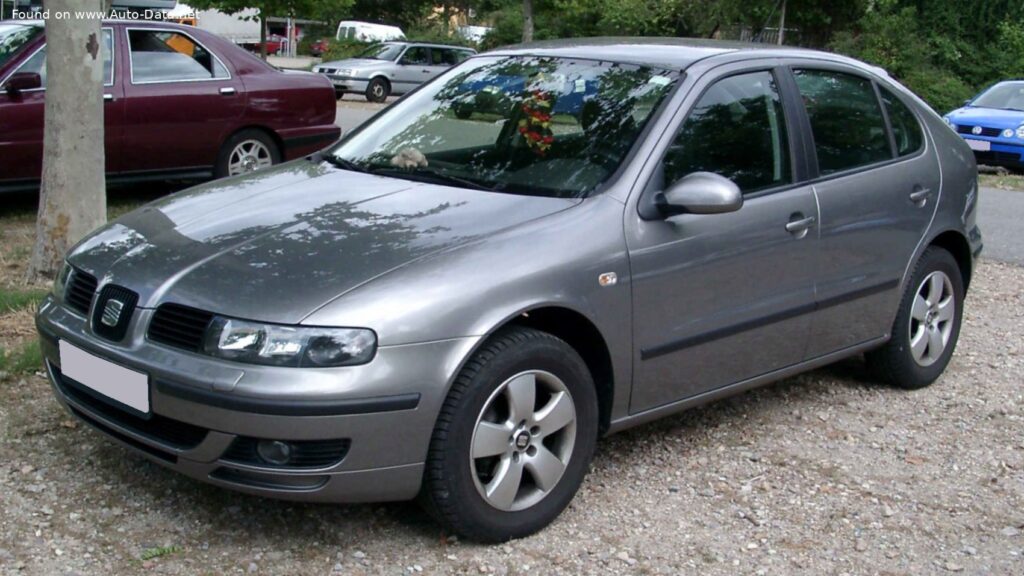
The Seat Leon I (1M) 1.9 TDI (130 Hp) represents a compelling chapter in the history of SEAT, the Spanish automotive manufacturer known for its sporty flair within the Volkswagen Group. Produced from May 2003 to June 2006, this specific variant of the first-generation Leon carved out a niche in the highly competitive European C-segment (compact car market). While SEAT vehicles were not officially imported into the United States, the Leon I (1M) was a significant player across Europe, offering a potent blend of performance, fuel efficiency, and distinctive Spanish design, all underpinned by robust German engineering from its VW Group platform. This particular model, equipped with the lauded 1.9-liter TDI engine, combined impressive torque and economy, making it a popular choice for drivers seeking a dynamic yet economical daily driver.
Seat Leon I (1M) 1.9 TDI (130 Hp): A European Hot Hatch
The first generation Seat Leon, designated the 1M series, was SEAT’s entry into the competitive compact hatchback segment. It aimed to provide a more emotionally engaging alternative to the Volkswagen Golf, while leveraging the benefits of the shared Volkswagen Group platform and technology. The 1.9 TDI (130 Hp) variant specifically targeted drivers who prioritized fuel efficiency and strong low-end torque without sacrificing driving enjoyment. It became a popular choice for those covering significant distances or seeking a responsive and economical vehicle for daily commutes.
Engine & Performance
At the heart of the Seat Leon I (1M) 1.9 TDI (130 Hp) was Volkswagen Group’s widely acclaimed 1.9-liter TDI (Turbocharged Direct Injection) inline-four engine, designated with the internal code ASZ. This powertrain architecture, featuring a front, transverse engine layout, was renowned for its robust construction and impressive power delivery for its displacement. With a total engine displacement of 1,896 cubic centimeters (115.7 cu. in.), the engine produced a healthy 130 horsepower at 4000 rpm, translating to a specific output of 68.6 horsepower per liter. More significantly, it generated a substantial 228.64 lb.-ft. of torque at a low 1900 rpm. This characteristic low-end torque was a hallmark of the TDI engines, providing strong acceleration and effortless cruising capability.
The engine utilized a sophisticated pump-nozzle (unit injector) fuel injection system, a technology that was cutting-edge for its time, allowing for precise fuel delivery and optimal combustion efficiency. Coupled with a turbocharger and intercooler, this setup ensured a strong, linear power band and reduced turbo lag. The valvetrain was a Single Overhead Camshaft (SOHC) configuration with two valves per cylinder, balancing performance with reliability. Power was transmitted to the front wheels via a slick-shifting 6-speed manual transmission, a desirable feature for enthusiasts and a rarity in the compact segment at the time, offering greater control and optimizing the engine’s power band across various driving conditions. Performance figures were commendable for a diesel hatchback of its era, achieving 0 to 60 mph in 9.3 seconds and a top speed of 127.38 mph. Fuel economy was a key strength, with a combined fuel consumption of 45.2 US mpg and CO2 emissions of 140 g/km.
Design & Features
The first-generation Seat Leon I (1M) was designed with a distinct identity, setting it apart from its platform mates like the Volkswagen Golf IV and Audi A3. Its styling, often attributed to Giorgetto Giugiaro’s influence on earlier SEAT models and later refined by Walter de Silva’s team, featured a more aggressive and sporty aesthetic. The 5-door hatchback body type offered a practical solution for families and individuals alike, blending dynamic looks with everyday usability. Its sharp lines, pronounced wheel arches, and distinctive grille gave it a more passionate and youthful appeal compared to its more conservative German relatives.
Measuring 164.69 inches in length, 68.58 inches in width, and 56.65 inches in height, with a wheelbase of 98.86 inches, the Leon I (1M) was compact yet offered a surprisingly spacious interior for five occupants. The cabin, while sharing some switchgear with other VW Group vehicles, had its own character, often with sportier trim and seating options. The vehicle provided a practical cargo solution, with a minimum trunk space of 12.01 cubic feet, expandable to 37.08 cubic feet with the rear seats folded down. The chassis featured an independent McPherson strut front suspension and a semi-independent elastic beam rear suspension, providing a balance of handling and ride comfort. Braking was handled by ventilated front discs and solid rear discs, equipped with an Anti-lock Braking System (ABS) for enhanced safety.
Technical Specifications: Seat Leon I (1M) 1.9 TDI (130 Hp)
| Category | Specification |
| General Information | |
| Brand | Seat |
| Model | Leon |
| Generation | Leon I (1M) |
| Type (Engine) | 1.9 TDI (130 Hp) |
| Production Start | May, 2003 |
| Production End | June, 2006 |
| Powertrain Architecture | Internal Combustion Engine |
| Body Type | Hatchback |
| Seats | 5 |
| Doors | 5 |
| Performance Specifications | |
| Fuel Consumption (Urban) | 33.6 US mpg (7.0 l/100 km) |
| Fuel Consumption (Extra Urban) | 54.7 US mpg (4.3 l/100 km) |
| Fuel Consumption (Combined) | 45.2 US mpg (5.2 l/100 km) |
| CO2 Emissions | 140 g/km |
| Fuel Type | Diesel |
| Acceleration 0-60 mph | 9.3 sec |
| Maximum Speed | 127.38 mph (205 km/h) |
| Emission Standard | Euro 3 |
| Weight-to-Power Ratio | 9.9 kg/Hp, 100.5 Hp/tonne |
| Weight-to-Torque Ratio | 4.2 kg/Nm, 239.8 Nm/tonne |
| Engine Specifications | |
| Power | 130 Hp @ 4000 rpm |
| Power per Liter | 68.6 Hp/l |
| Torque | 228.64 lb.-ft. @ 1900 rpm (310 Nm) |
| Maximum Engine Speed | 4800 rpm |
| Engine Layout | Front, Transverse |
| Engine Model/Code | ASZ |
| Engine Displacement | 115.7 cu. in. (1896 cm³) |
| Number of Cylinders | 4 |
| Engine Configuration | Inline |
| Cylinder Bore | 3.13 in. (79.5 mm) |
| Piston Stroke | 3.76 in. (95.5 mm) |
| Compression Ratio | 19.5:1 |
| Number of Valves per Cylinder | 2 |
| Fuel Injection System | Pump-nozzle (Unit Injector) |
| Engine Aspiration | Turbocharger, Intercooler |
| Valvetrain | SOHC |
Legacy & Market Impact
The Seat Leon I (1M) 1.9 TDI (130 Hp) left a significant mark on the European automotive landscape. It was instrumental in cementing SEAT’s reputation as the “sporty” brand within the Volkswagen Group, offering a more dynamic and emotionally charged alternative to the more staid Volkswagen Golf or the premium Audi A3, despite sharing their fundamental underpinnings. The 1M Leon, particularly in its more powerful diesel variants like the 130 Hp TDI, was praised for its engaging driving dynamics, responsive steering, and firm yet compliant suspension setup.
In Europe, the Leon competed with the Volkswagen Golf IV, Audi A3 (8L), Skoda Octavia, Ford Focus, Opel Astra, Peugeot 307, and Renault Mégane. What set the Leon apart was its unique blend of Spanish passion and German engineering precision, offering a compelling value proposition for buyers seeking a car with character that didn’t compromise on build quality or efficiency. The 1.9 TDI engine’s balance of performance and fuel economy resonated with European consumers. The model’s success paved the way for future generations of the Leon to continue SEAT’s trajectory as a mainstream European brand with a distinctive sporty edge.
