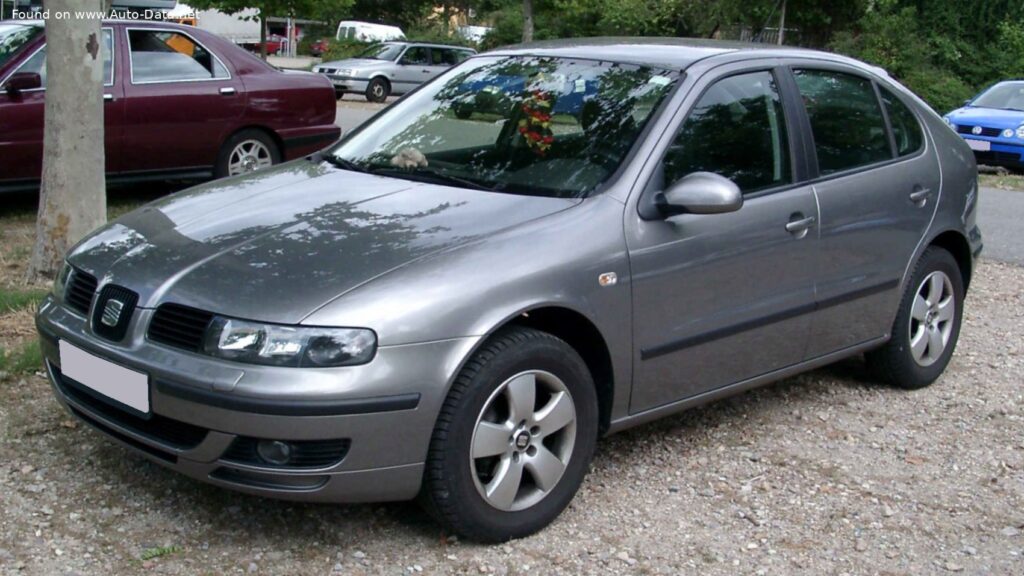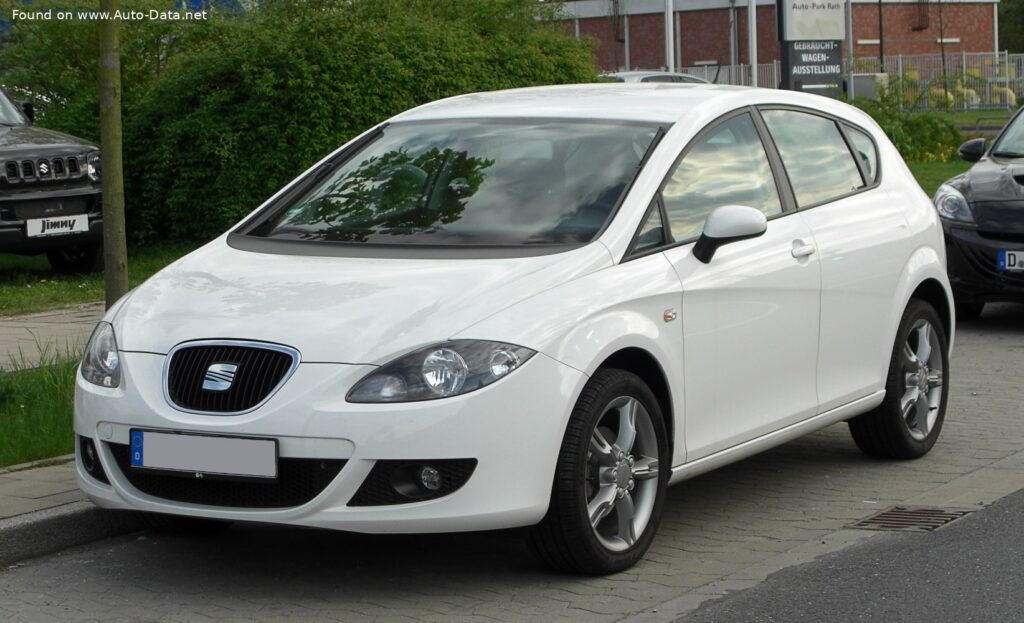
The SEAT León II (1P) 1.9 TDI with 105 horsepower, produced between 2006 and 2009, represents a significant iteration in SEAT’s compact hatchback lineup. While SEAT is now a mainstream brand within the Volkswagen Group, its origins lie in a joint venture between FIAT and the Spanish government. The León, named after a Spanish city, was designed to compete in the highly competitive European C-segment, offering a blend of practicality, style, and performance. This particular model, the 1.9 TDI, was a popular choice for European buyers seeking fuel efficiency and reasonable performance in a compact package. It was not officially sold in the United States, as SEAT has historically focused on the European market.
SEAT León II (1P) 1.9 TDI: A European Compact Hatchback
The León II (1P) marked a departure from its predecessor, offering a more mature and refined design. It shared its platform with the Volkswagen Golf Mk5, Audi A3, and Škoda Octavia, benefiting from the Volkswagen Group’s engineering expertise. The 1.9 TDI variant specifically targeted drivers prioritizing fuel economy and torque, making it well-suited for long-distance driving and everyday commuting. The inclusion of a Diesel Particulate Filter (DPF) reflected growing environmental concerns and stricter emissions regulations in Europe at the time.
Engine & Performance
The heart of the León II 1.9 TDI is a 1.9-liter inline-four cylinder diesel engine, designated EA188 with engine codes BKC or BXE. This engine produces 105 horsepower at 4000 rpm and 250 Nm (184.39 lb.-ft.) of torque at 1900 rpm. The engine utilizes a pump-nozzle (unit injector) fuel injection system and is equipped with a turbocharger and intercooler to enhance performance. While not a particularly powerful engine by modern standards, the 1.9 TDI delivers strong low-end torque, making it responsive in everyday driving situations. Acceleration from 0 to 100 km/h (0-62 mph) takes 11.3 seconds, and it achieves a maximum speed of 185 km/h (114.95 mph). Fuel economy is a key strength, with combined fuel consumption rated at 5.3 l/100 km (44.4 US mpg, 53.3 UK mpg). The engine’s 19:1 compression ratio is typical for a diesel engine, contributing to its efficiency.
Design & Features
The SEAT León II (1P) is a five-door hatchback, offering a practical and versatile body style. Its design, penned by Walter de Silva, was characterized by clean lines and a sporty stance. The interior was designed with functionality in mind, offering comfortable seating for five passengers. Standard features typically included air conditioning, power windows, and a basic audio system. Safety features, while not as comprehensive as those found in modern vehicles, included ABS (Anti-lock Braking System) and driver/passenger airbags. The 341-liter (12.04 cu. ft.) trunk provides ample space for luggage and everyday items. The vehicle’s kerb weight of 1405 kg (3097.49 lbs) contributes to its relatively nimble handling. The suspension setup consists of an independent McPherson strut front suspension and a torsion beam rear suspension, providing a balance between comfort and handling.
Technical Specifications
| Brand | Seat |
| Model | Leon |
| Generation | Leon II (1P) |
| Type (Engine) | 1.9 TDI (105 Hp) DPF |
| Start of production | 2006 |
| End of production | 2009 |
| Powertrain Architecture | Internal Combustion engine |
| Body type | Hatchback |
| Seats | 5 |
| Doors | 5 |
| Fuel consumption (urban) | 6.7 l/100 km (35.1 US mpg, 42.2 UK mpg, 14.9 km/l) |
| Fuel consumption (extra urban) | 4.5 l/100 km (52.3 US mpg, 62.8 UK mpg, 22.2 km/l) |
| Fuel consumption (combined) | 5.3 l/100 km (44.4 US mpg, 53.3 UK mpg, 18.9 km/l) |
| CO2 emissions | 142 g/km |
| Fuel Type | Diesel |
| Acceleration 0 – 100 km/h | 11.3 sec |
| Acceleration 0 – 62 mph | 11.3 sec |
| Acceleration 0 – 60 mph | 10.7 sec |
| Maximum speed | 185 km/h (114.95 mph) |
| Emission standard | Euro 4 |
| Weight-to-power ratio | 13.4 kg/Hp, 74.7 Hp/tonne |
| Weight-to-torque ratio | 5.6 kg/Nm, 177.9 Nm/tonne |
| Power | 105 Hp @ 4000 rpm |
| Power per litre | 55.4 Hp/l |
| Torque | 250 Nm @ 1900 rpm (184.39 lb.-ft. @ 1900 rpm) |
| Engine layout | Front, Transverse |
| Engine Model/Code | EA188 / BKC, BXE |
| Engine displacement | 1896 cm3 (115.7 cu. in.) |
| Number of cylinders | 4 |
| Engine configuration | Inline |
| Cylinder Bore | 79.5 mm (3.13 in.) |
| Piston Stroke | 95.5 mm (3.76 in.) |
| Compression ratio | 19:1 |
| Number of valves per cylinder | 2 |
| Fuel injection system | Pump-nozzle (Unit Injector) |
| Engine aspiration | Turbocharger, Intercooler |
| Engine oil capacity | 4.3 l (4.54 US qt | 3.78 UK qt) |
| Coolant | 5.6 l (5.92 US qt | 4.93 UK qt) |
| Kerb Weight | 1405 kg (3097.49 lbs.) |
| Max. weight | 1868 kg (4118.24 lbs.) |
| Max load | 463 kg (1020.74 lbs.) |
| Trunk (boot) space – minimum | 341 l (12.04 cu. ft.) |
| Fuel tank capacity | 55 l (14.53 US gal | 12.1 UK gal) |
| Max. roof load | 75 kg (165.35 lbs.) |
| Permitted trailer load with brakes (12%) | 1400 kg (3086.47 lbs.) |
| Permitted trailer load without brakes | 680 kg (1499.14 lbs.) |
| Length | 4315 mm (169.88 in.) |
| Width | 1768 mm (69.61 in.) |
| Height | 1458 mm (57.4 in.) |
| Wheelbase | 2578 mm (101.5 in.) |
| Front track | 1525-1533 mm (60.04 – 60.35 in.) |
| Rear (Back) track | 1509-1517 mm (59.41 – 59.72 in.) |
| Front overhang | 949 mm (37.36 in.) |
| Rear overhang | 788 mm (31.02 in.) |
| Minimum turning circle (turning diameter) | 10.7 m (35.1 ft.) |
| Drivetrain Architecture | The Internal combustion engine (ICE) drives the front wheels of the vehicle. |
| Drive wheel | Front wheel drive |
| Number of gears and type of gearbox | 5 gears, manual transmission |
| Front suspension | Independent, type McPherson with coil spring and anti-roll bar |
| Rear suspension | Torsion |
| Front brakes | Ventilated discs |
| Rear brakes | Disc |
| Assisting systems | ABS (Anti-lock braking system) |
| Steering type | Steering rack and pinion |
| Power steering | Electric Steering |
| Tires size | 205/55 R16 |
| Wheel rims size | 6.5J x 16 |
The SEAT León II 1.9 TDI (1P) remains a popular choice in the used car market, particularly in Europe, due to its reliability, fuel efficiency, and relatively low running costs. It represents a well-rounded package for those seeking a practical and economical compact hatchback.