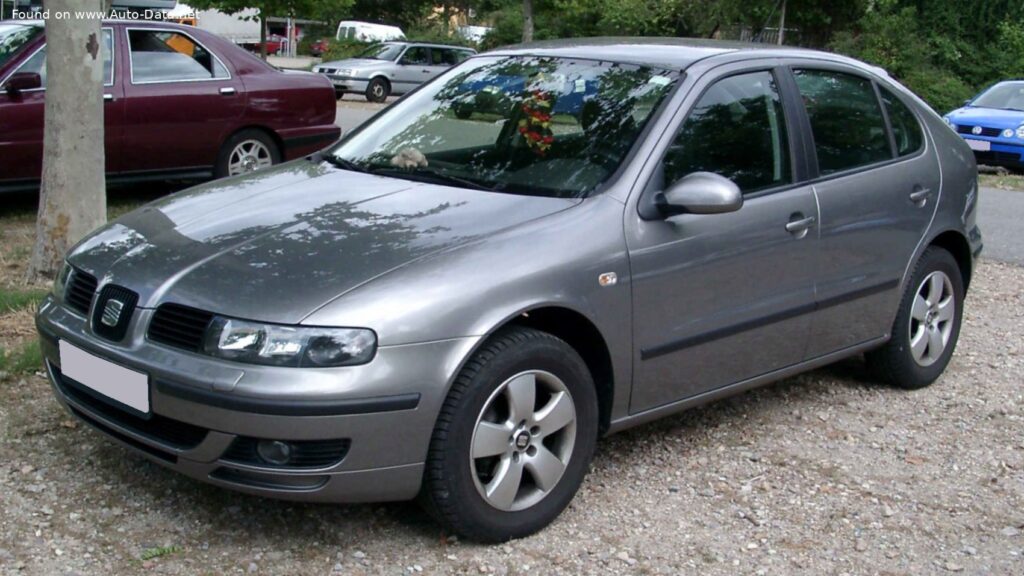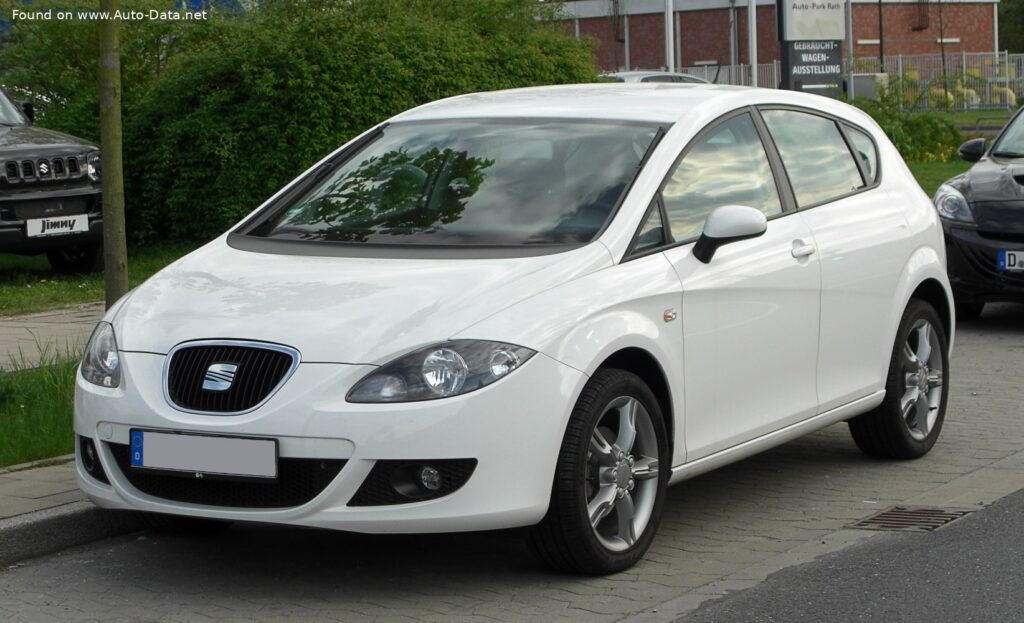
The Seat Leon II (1P) 1.9 TDI (90 Hp) represents a pivotal period for the Spanish automaker, Seat, operating under the Volkswagen Group’s umbrella. Launched in July 2007 as part of the second generation of the popular Leon compact car, this variant was positioned as a practical, economical, and robust offering in the highly competitive European C-segment. While Seat vehicles have limited presence in the United States market, the Leon has consistently been a cornerstone of the brand’s identity in Europe and select international markets, blending Volkswagen Group engineering with a distinctly Spanish, sportier flair. The 1.9 TDI (90 Hp) model, produced until 2009, catered to buyers prioritizing fuel efficiency, reliability, and a solid driving experience without the expense of more powerful engines, providing an accessible entry point into the Leon lineup.
Seat Leon II (1P) 1.9 TDI: A European Compact Car
The Seat Leon II (1P) was a significant evolution for the Leon model line, building upon the success of the first generation. It aimed to elevate the brand’s image, offering a more refined and sophisticated package while retaining the core values of practicality and value. The 1.9 TDI (90 Hp) variant specifically targeted a broad demographic, from urban commuters to small families, seeking a versatile five-door hatchback. Its appeal lay in its ability to deliver a comfortable and efficient driving experience, making it well-suited to the demands of European roads and driving conditions.
Engine & Performance
At the heart of the Seat Leon II (1P) 1.9 TDI (90 Hp) lies the renowned 1.9-liter (1896 cm3) inline-four turbocharged diesel engine, designated with the code BXF. This engine, widely used across various Volkswagen Group models, produced 90 horsepower at 4000 rpm. While the horsepower figure may seem modest by contemporary standards, the engine’s strength resided in its torque output. It generated 154.89 lb.-ft. (210 Nm) of torque between 1800 and 2500 rpm, providing responsive performance in everyday driving, particularly in urban environments and during highway cruising.
Power was transferred to the front wheels via a smooth five-speed manual transmission. This configuration contributed to the vehicle’s commendable fuel efficiency, a key selling point for diesel engines in Europe. Performance figures were pragmatic: a 0-60 mph acceleration time of approximately 12.6 seconds (0-100 km/h in 13.3 seconds) and a top speed of 108.12 mph (174 km/h). The engine featured a turbocharger with an intercooler, optimizing air intake for improved combustion and power. A Pump-nozzle (Unit Injector) fuel injection system, characteristic of Volkswagen Group diesels of the era, ensured precise fuel delivery and efficiency. The engine’s front, transverse layout maximized interior space, and its 18:1 compression ratio and two valves per cylinder were designed for long-term durability.
Design & Features
The Seat Leon II (1P) showcased a distinctive design language penned by Walter de Silva. Its five-door hatchback body style featured flowing lines, an assertive front fascia, and concealed rear door handles, creating a coupe-like aesthetic. The vehicle measured 169.88 inches (4315 mm) in length, 69.61 inches (1768 mm) in width, and 57.4 inches (1458 mm) in height, with a 101.5-inch (2578 mm) wheelbase. These dimensions positioned it firmly within the compact class, offering agility for city driving and sufficient interior space.
The interior prioritized functionality and ergonomics, offering 341 liters (12.04 cu. ft.) of minimum trunk space, expandable with the rear seats folded. Standard safety features included an Anti-lock Braking System (ABS) and a braking system with ventilated front discs and solid rear discs. The suspension system comprised an independent McPherson strut setup with coil springs and an anti-roll bar at the front, and an independent multi-link spring suspension with a stabilizer bar at the rear, providing a balance of ride comfort and handling. A hydraulic rack and pinion steering system offered direct feedback. The vehicle rode on 205/55 R16 tires mounted on 6.5J x 16 wheel rims, and its 14.53 US gallon (55 liters) fuel tank provided a substantial driving range.
Technical Specifications
| Category | Specification |
| Brand | Seat |
| Model | Leon |
| Generation | Leon II (1P) |
| Type (Engine) | 1.9 TDI (90 Hp) |
| Production Start | July, 2007 |
| Production End | 2009 |
| Powertrain Architecture | Internal Combustion engine |
| Body Type | Hatchback |
| Seats | 5 |
| Doors | 5 |
| Fuel Type | Diesel |
| Acceleration 0 – 100 km/h | 13.3 sec |
| Acceleration 0 – 60 mph (Calculated) | 12.6 sec |
| Maximum speed | 174 km/h / 108.12 mph |
| Power | 90 Hp @ 4000 rpm |
| Torque | 210 Nm @ 1800-2500 rpm / 154.89 lb.-ft. @ 1800-2500 rpm |
| Engine displacement | 1896 cm3 / 1.9 Liters / 115.7 cu. in. |
| Engine layout | Front, Transverse |
| Engine Model/Code | BXF |
| Compression ratio | 18:1 |
| Fuel injection system | Pump-nozzle (Unit Injector) |
| Trunk (boot) space – minimum | 341 l / 12.04 cu. ft. |
| Fuel tank capacity | 55 l / 14.53 US gal |
| Length | 4315 mm / 169.88 in. |
| Width | 1768 mm / 69.61 in. |
| Height | 1458 mm / 57.4 in. |
| Wheelbase | 2578 mm / 101.5 in. |
The Seat Leon II (1P) 1.9 TDI (90 Hp) played a crucial role in establishing Seat’s position in the European compact car market. It offered a compelling blend of practicality, efficiency, and a sporty design, appealing to a wide range of buyers. While not a high-performance model, its robust engine, comfortable ride, and economical operation made it a popular choice for everyday driving. Its legacy lies in its ability to deliver a well-rounded package that embodied Seat’s commitment to providing stylish and practical cars with a touch of Spanish flair, backed by the engineering prowess of the Volkswagen Group.