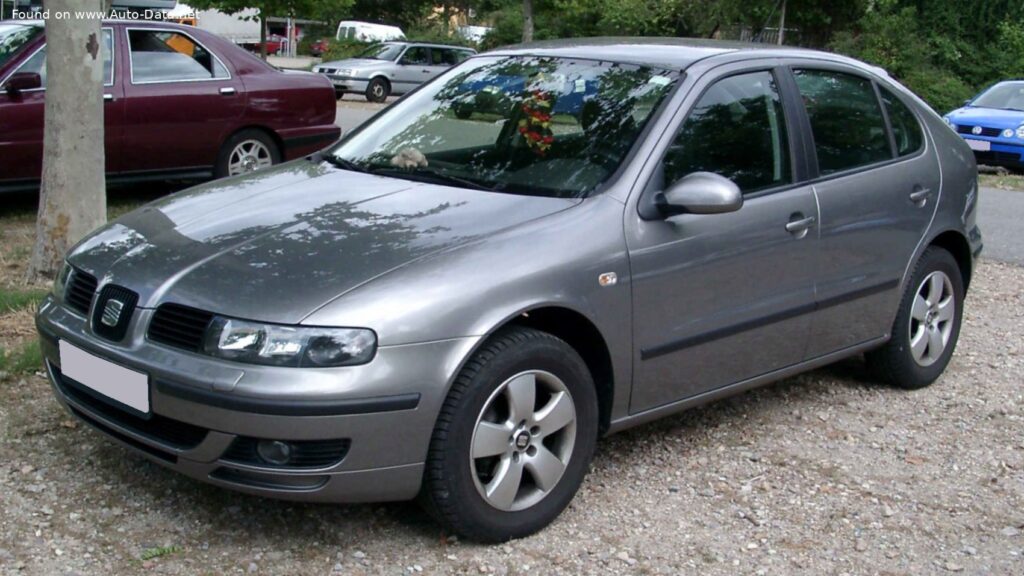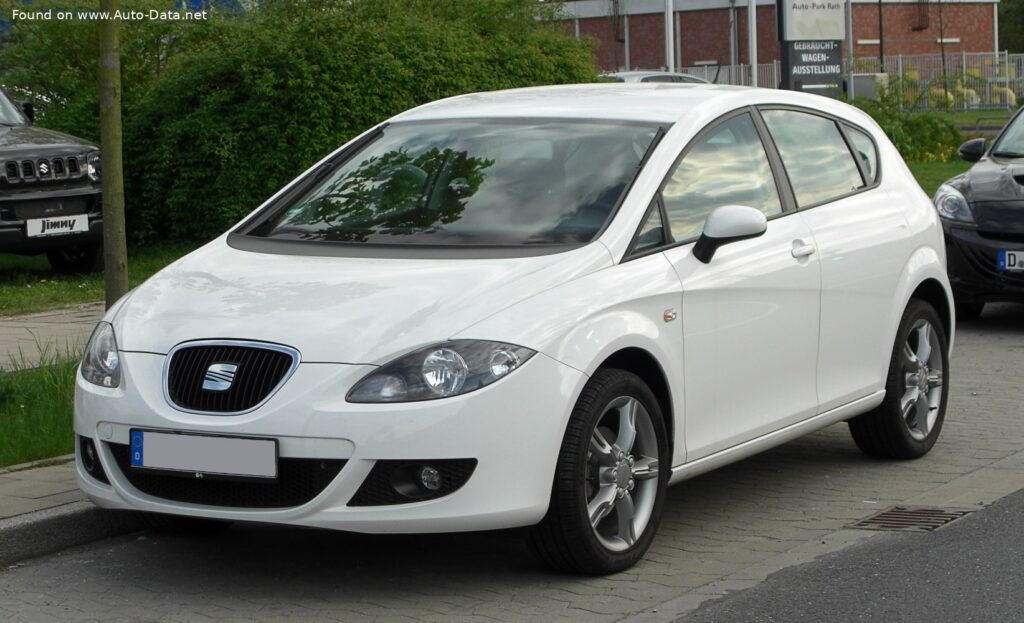
The SEAT León II (1P) 2.0 TDI 16V, producing 136 horsepower, represents a significant evolution in SEAT’s compact hatchback offerings. Introduced in July 2005 and continuing through 2009, this generation of the León aimed to elevate the brand’s image with a focus on design, driving dynamics, and technology. While SEAT is a Spanish automobile manufacturer, the León was primarily marketed throughout Europe, competing with vehicles like the Volkswagen Golf, Ford Focus, and Opel Astra. The 2.0 TDI variant, in particular, was a popular choice due to its blend of fuel efficiency and respectable performance, catering to the growing demand for diesel-powered vehicles in the European market. This model offered a practical and stylish option for buyers seeking a versatile and economical compact car.
SEAT León II (1P) 2.0 TDI 16V: Overview
The León II (1P) marked a departure from its predecessor, adopting a more mature and sophisticated design language. It was built on the Volkswagen Group’s A5 platform, shared with models like the Golf Mk5 and Audi A3, providing a solid foundation for handling and refinement. The 2.0 TDI 16V engine was a key component of the lineup, offering a balance between power and fuel economy that appealed to a broad range of drivers. This model year saw improvements in interior quality and available features, further enhancing the León’s appeal in the competitive compact segment.
Engine & Performance
The heart of the SEAT León II (1P) 2.0 TDI 16V is a 1.968-liter inline four-cylinder diesel engine, designated the AZV. This engine utilizes pump-nozzle (unit injector) fuel injection and a turbocharger with an intercooler to deliver 136 horsepower at 4,000 rpm and a substantial 320 Nm (236.02 lb.-ft.) of torque between 1,750 and 2,500 rpm. This torque output provides strong acceleration and effortless cruising, making it well-suited for both urban driving and long-distance journeys. The engine’s power-to-weight ratio is 10.5 kg/Hp, and the torque-to-weight ratio is 4.4 kg/Nm. The León 2.0 TDI could accelerate from 0 to 100 km/h (0-62 mph) in 9.4 seconds, and 0 to 60 mph in 8.9 seconds, reaching a top speed of 203 km/h (126.14 mph). Fuel economy is a strong point, with combined fuel consumption rated at 5.7 l/100 km (41.3 US mpg, 49.6 UK mpg), and CO2 emissions of 154 g/km, meeting Euro 4 emission standards.
Design & Features
The SEAT León II (1P) is a five-door hatchback, offering a practical and versatile body style. Its design is characterized by clean lines, a sporty stance, and a relatively understated aesthetic. The interior provides seating for five passengers and offers a reasonable amount of space for both passengers and luggage. The trunk (boot) space is 341 liters (12.04 cu. ft.) minimum. Key features of the León II included ABS (Anti-lock braking system), electric power steering, and a McPherson strut front suspension paired with a torsion beam rear suspension. The vehicle’s dimensions are 4,315 mm (169.88 in.) in length, 1,768 mm (69.61 in.) in width, and 1,458 mm (57.4 in.) in height, with a wheelbase of 2,578 mm (101.5 in.). The car’s kerb weight is 1,422 kg (3,134.97 lbs), with a maximum permissible weight of 1,885 kg (4,155.71 lbs). The 2.0 TDI model typically came equipped with 225/45 R17 tires on 7J x 17 alloy wheels.
Technical Specifications
| Brand | Seat |
| Model | Leon |
| Generation | Leon II (1P) |
| Type (Engine) | 2.0 TDI 16V (136 Hp) |
| Start of production | July, 2005 |
| End of production | 2009 |
| Powertrain Architecture | Internal Combustion engine |
| Body type | Hatchback |
| Seats | 5 |
| Doors | 5 |
| Fuel consumption (urban) | 7.5 l/100 km (31.4 US mpg, 37.7 UK mpg) |
| Fuel consumption (extra urban) | 4.7 l/100 km (50 US mpg, 60.1 UK mpg) |
| Fuel consumption (combined) | 5.7 l/100 km (41.3 US mpg, 49.6 UK mpg) |
| CO2 emissions | 154 g/km |
| Fuel Type | Diesel |
| Acceleration 0 – 100 km/h | 9.4 sec |
| Acceleration 0 – 62 mph | 9.4 sec |
| Acceleration 0 – 60 mph | 8.9 sec |
| Maximum speed | 203 km/h (126.14 mph) |
| Emission standard | Euro 4 |
| Weight-to-power ratio | 10.5 kg/Hp |
| Weight-to-torque ratio | 4.4 kg/Nm |
| Power | 136 Hp @ 4000 rpm |
| Torque | 320 Nm @ 1750-2500 rpm (236.02 lb.-ft.) |
| Engine layout | Front, Transverse |
| Engine Model/Code | AZV |
| Engine displacement | 1968 cm3 (120.09 cu. in.) |
| Number of cylinders | 4 |
| Engine configuration | Inline |
| Cylinder Bore | 81 mm (3.19 in.) |
| Piston Stroke | 95.5 mm (3.76 in.) |
| Compression ratio | 18.5:1 |
| Number of valves per cylinder | 4 |
| Fuel injection system | Pump-nozzle (Unit Injector) |
| Engine aspiration | Turbocharger, Intercooler |
| Engine oil capacity | 4.3 l (4.54 US qt | 3.78 UK qt) |
| Coolant | 8 l (8.45 US qt | 7.04 UK qt) |
| Kerb Weight | 1422 kg (3134.97 lbs.) |
| Max. weight | 1885 kg (4155.71 lbs.) |
| Max load | 463 kg (1020.74 lbs.) |
| Trunk (boot) space – minimum | 341 l (12.04 cu. ft.) |
| Fuel tank capacity | 55 l (14.53 US gal | 12.1 UK gal) |
| Max. roof load | 75 kg (165.35 lbs.) |
| Permitted trailer load with brakes (12%) | 1400 kg (3086.47 lbs.) |
| Permitted trailer load without brakes | 690 kg (1521.19 lbs.) |
| Length | 4315 mm (169.88 in.) |
| Width | 1768 mm (69.61 in.) |
| Height | 1458 mm (57.4 in.) |
| Wheelbase | 2578 mm (101.5 in.) |
| Front track | 1525-1533 mm (60.04 – 60.35 in.) |
| Rear (Back) track | 1509-1517 mm (59.41 – 59.72 in.) |
| Front overhang | 949 mm (37.36 in.) |
| Rear overhang | 788 mm (31.02 in.) |
| Minimum turning circle (turning diameter) | 10.7 m (35.1 ft.) |
| Drivetrain Architecture | Front wheel drive |
| Number of gears and type of gearbox | 6 gears, manual transmission |
| Front suspension | Independent, type McPherson with coil spring and anti-roll bar |
| Rear suspension | Torsion |
| Front brakes | Ventilated discs |
| Rear brakes | Disc |
The SEAT León II (1P) 2.0 TDI 16V offered a compelling package for European drivers, combining practicality, efficiency, and a degree of driving enjoyment. Its success contributed to SEAT’s growing reputation as a manufacturer of well-rounded and stylish vehicles.