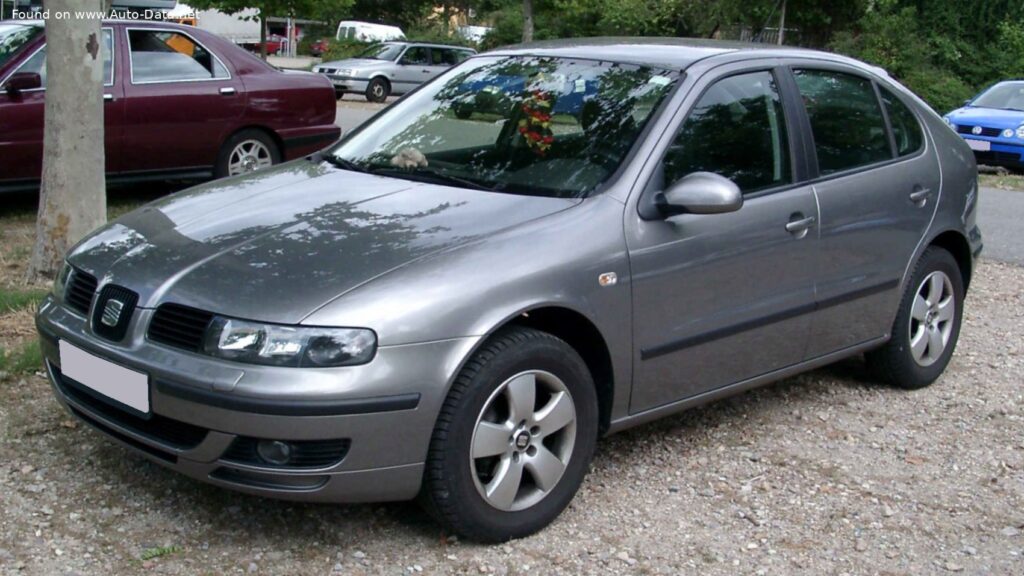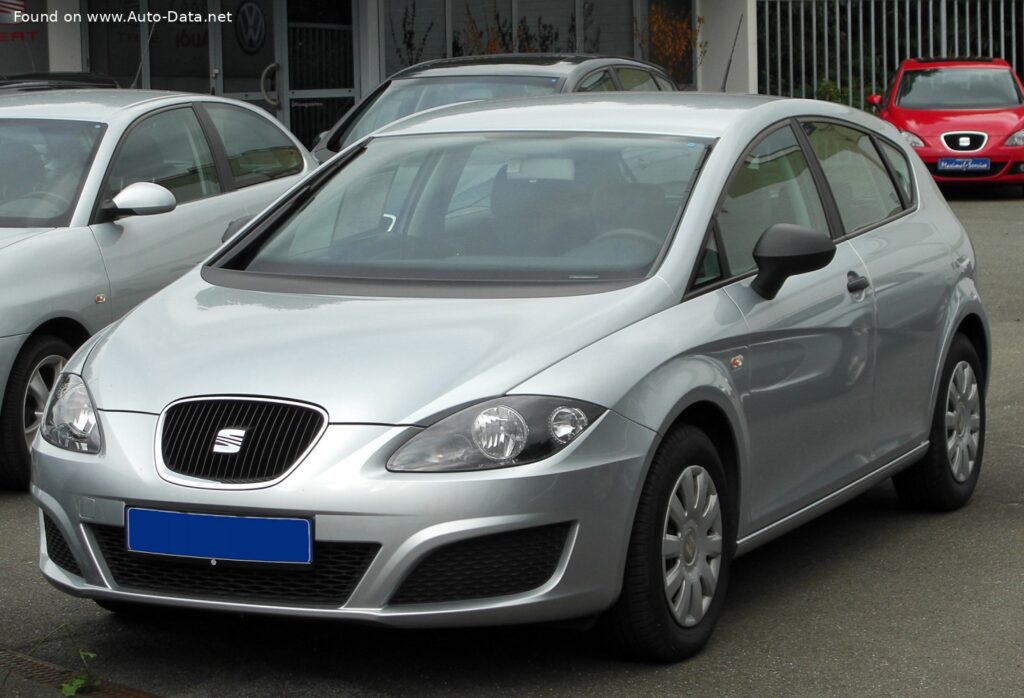
The SEAT León II (1P), particularly the facelifted version introduced in 2009, represents a significant step forward for the Spanish automaker. Positioned as a compact hatchback, the León aimed to compete directly with established European rivals like the Volkswagen Golf, Ford Focus, and Opel Astra. While SEAT is a brand not widely sold in the United States, the León was a crucial model for the company within Europe, offering a blend of style, practicality, and value. The 1.6 TDI CR (105 Hp) Ecomotive variant, produced from 2010 to 2012, specifically focused on fuel efficiency and reduced emissions, aligning with growing environmental concerns and stricter European regulations.
SEAT León II (1P) 1.6 TDI CR Ecomotive: A Detailed Overview
The León II, launched in 2005, was the first SEAT model to be designed under the leadership of Walter de Silva, resulting in a more mature and sophisticated aesthetic compared to its predecessor. The 2009 facelift brought revised front and rear styling, updated interior materials, and improvements to the engine lineup. The 1.6 TDI CR Ecomotive model was a key part of this update, emphasizing SEAT’s commitment to eco-friendly technology. This version was designed to deliver low running costs without sacrificing everyday usability.
Engine & Performance
The heart of the León 1.6 TDI CR Ecomotive is a 1.6-liter inline four-cylinder diesel engine, designated CAYC. This engine utilizes common rail direct injection and a turbocharger with an intercooler to produce 105 horsepower at 4400 rpm and 250 Nm (184.39 lb.-ft.) of torque between 1500 and 2500 rpm. The ‘CR’ in the name denotes the Common Rail injection system, which allows for more precise fuel delivery and improved combustion efficiency. This translates to excellent fuel economy, with combined cycle figures of 4.2 l/100 km (56 US mpg or 67.3 UK mpg). Performance is adequate for everyday driving, with a 0-100 km/h (0-62 mph) acceleration time of 11.5 seconds and a top speed of 190 km/h (118.06 mph). The engine’s power-to-weight ratio is 11.9 kg/Hp, and the torque-to-weight ratio is 5 kg/Nm, contributing to a responsive driving experience.
Design & Features
The SEAT León II is a five-door hatchback, offering a practical and versatile body style. The 2009 facelift brought a more prominent grille, redesigned headlights, and a revised front bumper, giving the car a more modern appearance. Inside, the cabin was functional and well-built, with a focus on ergonomics. The Ecomotive variant often included specific features aimed at maximizing fuel efficiency, such as optimized aerodynamics and low rolling resistance tires. Standard equipment typically included air conditioning, power windows, and a basic audio system. Safety features, while not as comprehensive as in modern vehicles, included ABS (Anti-lock Braking System) and driver/passenger airbags. The trunk offers 341 liters (12.04 cu. ft.) of space with the rear seats up, expanding to 1166 liters (41.18 cu. ft.) when folded down, providing ample cargo capacity for everyday needs. The vehicle’s dimensions are 4315 mm (169.88 in) in length, 1768 mm (69.61 in) in width, and 1459 mm (57.44 in) in height.
Technological Innovations
The 1.6 TDI CR Ecomotive incorporated several technologies aimed at reducing fuel consumption and emissions. The diesel particulate filter (DPF) was a key component, trapping soot particles and preventing them from being released into the atmosphere. The common rail injection system, as mentioned earlier, optimized fuel delivery for cleaner and more efficient combustion. The Ecomotive package also included aerodynamic enhancements and low rolling resistance tires to minimize drag and improve fuel economy. While not a cutting-edge feature by today’s standards, these technologies were significant advancements for the time, helping the León II meet increasingly stringent emission standards.
Technical Specifications
| Brand | Seat |
| Model | Leon |
| Generation | Leon II (1P, facelift 2009) |
| Type (Engine) | 1.6 TDI CR (105 Hp) Ecomotive Tehnology |
| Start of production | 2010 year |
| End of production | 2012 year |
| Powertrain Architecture | Internal Combustion engine |
| Body type | Hatchback |
| Seats | 5 |
| Doors | 5 |
| Fuel consumption (urban) | 5.1 l/100 km (46.1 US mpg, 55.4 UK mpg, 19.6 km/l) |
| Fuel consumption (extra urban) | 3.7 l/100 km (63.6 US mpg, 76.3 UK mpg, 27 km/l) |
| Fuel consumption (combined) | 4.2 l/100 km (56 US mpg, 67.3 UK mpg, 23.8 km/l) |
| Fuel Type | Diesel |
| Acceleration 0 – 100 km/h | 11.5 sec |
| Acceleration 0 – 62 mph | 11.5 sec |
| Acceleration 0 – 60 mph | 10.9 sec |
| Maximum speed | 190 km/h (118.06 mph) |
| Emission standard | Euro 5 |
| Weight-to-power ratio | 11.9 kg/Hp, 84 Hp/tonne |
| Weight-to-torque ratio | 5 kg/Nm, 200 Nm/tonne |
| Power | 105 Hp @ 4400 rpm |
| Power per litre | 65.7 Hp/l |
| Torque | 250 Nm @ 1500-2500 rpm (184.39 lb.-ft. @ 1500-2500 rpm) |
| Engine layout | Front, Transverse |
| Engine Model/Code | CAYC |
| Engine displacement | 1598 cm3 (97.52 cu. in.) |
| Number of cylinders | 4 |
| Engine configuration | Inline |
| Cylinder Bore | 79.5 mm (3.13 in.) |
| Piston Stroke | 80.5 mm (3.17 in.) |
| Number of valves per cylinder | 4 |
| Fuel injection system | Diesel Commonrail |
| Engine aspiration | Turbocharger, Intercooler |
| Engine oil capacity | 4.3 l (4.54 US qt | 3.78 UK qt) |
| Coolant | 8 l (8.45 US qt | 7.04 UK qt) |
| Kerb Weight | 1250 kg (2755.78 lbs.) |
| Max. weight | 1820 kg (4012.41 lbs.) |
| Max load | 570 kg (1256.63 lbs.) |
| Trunk (boot) space – minimum | 341 l (12.04 cu. ft.) |
| Trunk (boot) space – maximum | 1166 l (41.18 cu. ft.) |
| Fuel tank capacity | 55 l (14.53 US gal | 12.1 UK gal) |
| Max. roof load | 75 kg (165.35 lbs.) |
| Permitted trailer load with brakes (8%) | 1500 kg (3306.93 lbs.) |
| Permitted trailer load with brakes (12%) | 1400 kg (3086.47 lbs.) |
| Permitted trailer load without brakes | 660 kg (1455.05 lbs.) |
| Length | 4315 mm (169.88 in.) |
| Width | 1768 mm (69.61 in.) |
| Height | 1459 mm (57.44 in.) |
| Wheelbase | 2578 mm (101.5 in.) |
| Front track | 1539 mm (60.59 in.) |
| Rear (Back) track | 1523 mm (59.96 in.) |
| Minimum turning circle (turning diameter) | 10.7 m (35.1 ft.) |
| Drivetrain Architecture | The Internal combustion engine (ICE) drives the front wheels of the vehicle. |
| Drive wheel | Front wheel drive |
| Number of gears and type of gearbox | 5 gears, manual transmission |
| Front suspension | Independent, type McPherson with coil spring and anti-roll bar |
| Rear suspension | Independent multi-link suspension |
| Front brakes | Ventilated discs |
| Rear brakes | Disc |
| Assisting systems | ABS (Anti-lock braking system) |
| Steering type | Steering rack and pinion |
| Power steering | Electric Steering |
| Tires size | 205/55 R16 |
| Wheel rims size | 6.5J x 16 |