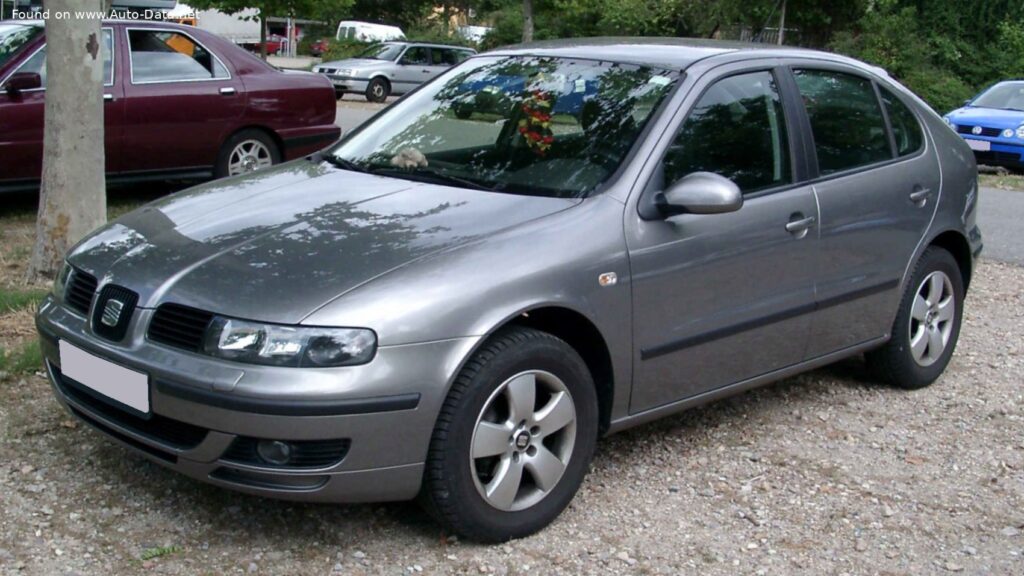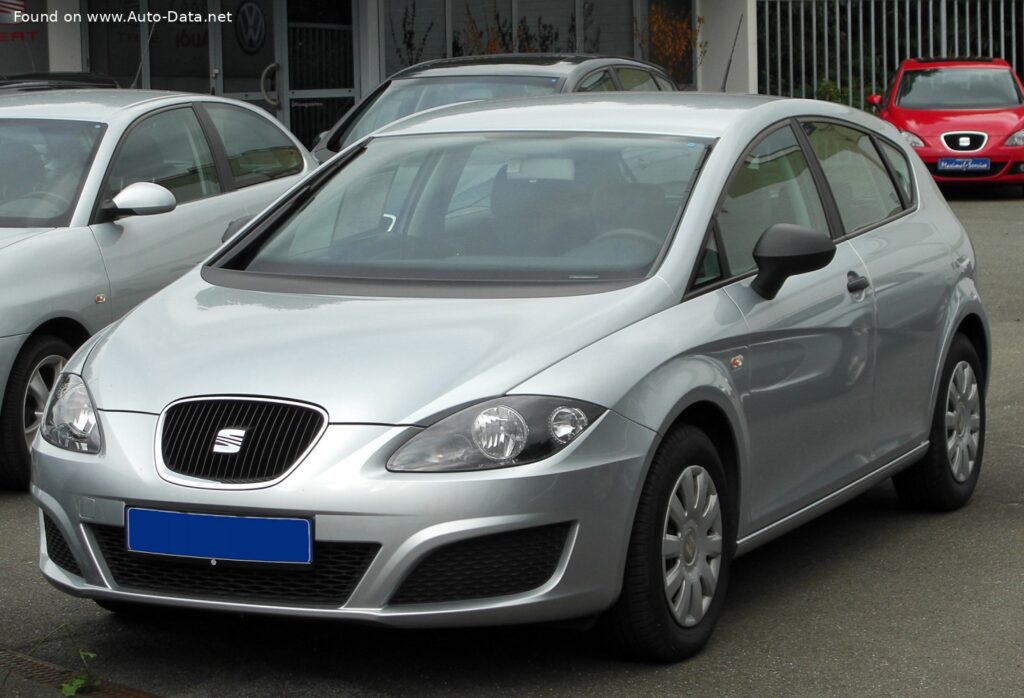
The SEAT León II (1P), particularly the facelifted version introduced in 2009, represents a significant step forward for the Spanish automaker. Positioned as a compact hatchback, the León aimed to deliver a blend of style, practicality, and driving enjoyment within the highly competitive European C-segment. While SEAT is not a major player in the North American market, the León II was a crucial model for the brand’s success in Europe, offering a compelling alternative to established rivals like the Volkswagen Golf, Ford Focus, and Opel Astra. The 1.8 TSI (160 Hp) variant, produced from 2009 to 2012, became a popular choice due to its efficient turbocharged engine and balanced performance.
SEAT León II (1P) 1.8 TSI: A Detailed Overview
The León II, launched in 2005, was the second generation of SEAT’s compact hatchback. The 2009 facelift brought revised styling, improved interior quality, and crucially, the introduction of advanced engine technologies like the 1.8 TSI. This engine, part of the Volkswagen Group’s modular engine family, offered a significant power upgrade over previous León engines while maintaining reasonable fuel economy. The facelifted model aimed to refine the original León’s design and address some criticisms regarding interior materials and overall refinement.
Engine & Performance
The heart of the León 1.8 TSI is its 1798 cc (109.72 cu. in.) inline-four cylinder engine. This powerplant utilizes direct fuel injection and is coupled with a turbocharger and intercooler to deliver a potent 160 horsepower at 4500-6200 rpm and 250 Nm (184.39 lb.-ft.) of torque between 1500-4500 rpm. This configuration results in a power-to-liter ratio of 89 hp/l. The engine’s broad torque curve provides strong acceleration in everyday driving situations. Performance figures include a 0-100 km/h (0-62 mph) time of 7.9 seconds and a 0-60 mph time of approximately 7.5 seconds. The car achieves a maximum speed of 213 km/h (132.35 mph). Fuel economy is rated at 7.0 l/100 km (33.6 US mpg) combined, with 9.4 l/100 km (25 US mpg) in urban conditions and 5.6 l/100 km (42 US mpg) on the extra-urban cycle. The engine meets Euro 5 emission standards, producing 163 g/km of CO2.
Design & Features
The SEAT León II is a five-door hatchback, offering seating for five passengers. The 2009 facelift brought subtle but effective changes to the exterior, including a redesigned front grille, headlights, and bumper. These alterations gave the car a more modern and sophisticated appearance. Inside, the cabin benefited from improved material quality and a more ergonomic layout. Standard features typically included air conditioning, power windows, central locking, and an audio system. Safety features, crucial for a modern vehicle, included ABS (Anti-lock Braking System) and front and side airbags. The León’s practical interior offers 341 liters (12.04 cu. ft.) of trunk space with the rear seats up, expanding to 1166 liters (41.18 cu. ft.) when the seats are folded down. The car’s relatively compact dimensions – 4315 mm (169.88 in.) in length, 1768 mm (69.61 in.) in width, and 1459 mm (57.44 in.) in height – make it easy to maneuver in urban environments.
Technical Specifications
| Brand | Seat |
| Model | Leon |
| Generation | Leon II (1P, facelift 2009) |
| Type (Engine) | 1.8 TSI (160 Hp) |
| Start of production | 2009 |
| End of production | 2012 |
| Powertrain Architecture | Internal Combustion engine |
| Body type | Hatchback |
| Seats | 5 |
| Doors | 5 |
| Fuel consumption (urban) | 9.4 l/100 km (25 US mpg) |
| Fuel consumption (extra urban) | 5.6 l/100 km (42 US mpg) |
| Fuel consumption (combined) | 7.0 l/100 km (33.6 US mpg) |
| CO2 emissions | 163 g/km |
| Fuel Type | Petrol (Gasoline) |
| Acceleration 0 – 100 km/h | 7.9 sec |
| Acceleration 0 – 62 mph | 7.9 sec |
| Acceleration 0 – 60 mph | 7.5 sec |
| Maximum speed | 213 km/h (132.35 mph) |
| Emission standard | Euro 5 |
| Weight-to-power ratio | 8 kg/Hp |
| Weight-to-torque ratio | 5.1 kg/Nm |
| Power | 160 Hp @ 4500-6200 rpm |
| Torque | 250 Nm @ 1500-4500 rpm (184.39 lb.-ft.) |
| Engine layout | Front, Transverse |
| Engine Model/Code | BZB |
| Engine displacement | 1798 cm3 (109.72 cu. in.) |
| Number of cylinders | 4 |
| Engine configuration | Inline |
| Cylinder Bore | 82.5 mm (3.25 in.) |
| Piston Stroke | 84.2 mm (3.31 in.) |
| Compression ratio | 10.5:1 |
| Number of valves per cylinder | 4 |
| Fuel injection system | Direct injection |
| Engine aspiration | Turbocharger, Intercooler |
| Engine oil capacity | 4.6 l (4.86 US qt | 4.05 UK qt) |
| Coolant | 8 l (8.45 US qt | 7.04 UK qt) |
| Kerb Weight | 1280 kg (2821.92 lbs.) |
| Max. weight | 1850 kg (4078.55 lbs.) |
| Max load | 570 kg (1256.63 lbs.) |
| Trunk (boot) space – minimum | 341 l (12.04 cu. ft.) |
| Trunk (boot) space – maximum | 1166 l (41.18 cu. ft.) |
| Fuel tank capacity | 55 l (14.53 US gal | 12.1 UK gal) |
| Max. roof load | 75 kg (165.35 lbs.) |
| Permitted trailer load with brakes (8%) | 1500 kg (3306.93 lbs.) |
| Permitted trailer load with brakes (12%) | 1400 kg (3086.47 lbs.) |
| Permitted trailer load without brakes | 670 kg (1477.1 lbs.) |
| Length | 4315 mm (169.88 in.) |
| Width | 1768 mm (69.61 in.) |
| Height | 1459 mm (57.44 in.) |
| Wheelbase | 2578 mm (101.5 in.) |
| Front track | 1539 mm (60.59 in.) |
| Rear track | 1523 mm (59.96 in.) |
| Minimum turning circle | 10.7 m (35.1 ft.) |
| Drivetrain | Front wheel drive |
| Number of gears | 6 gears, manual transmission |
| Front suspension | Independent, type McPherson with coil spring and anti-roll bar |
| Rear suspension | Independent multi-link suspension |
| Front brakes | Ventilated discs |
| Rear brakes | Disc |
| Tires size | 225/45 R17 |
| Wheel rims size | 7J x 17 |
The SEAT León II 1.8 TSI (160 Hp) offered a compelling package for European buyers seeking a stylish, practical, and efficient compact hatchback. Its turbocharged engine provided a good balance of performance and fuel economy, while its refined design and improved interior quality helped it stand out in a crowded segment. Although not officially sold in the United States, the León II represents a significant achievement for SEAT and a testament to the Volkswagen Group’s engineering prowess.