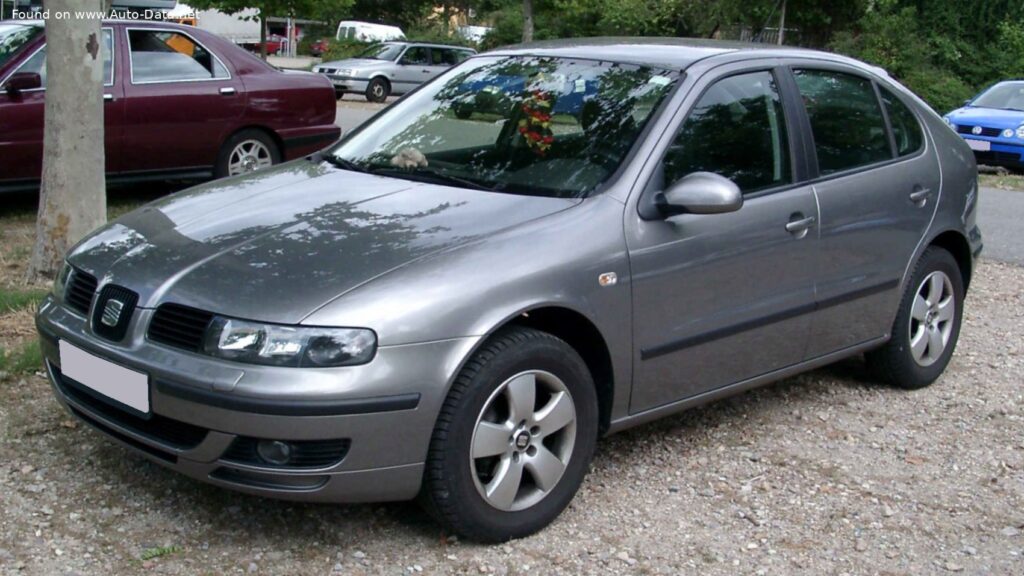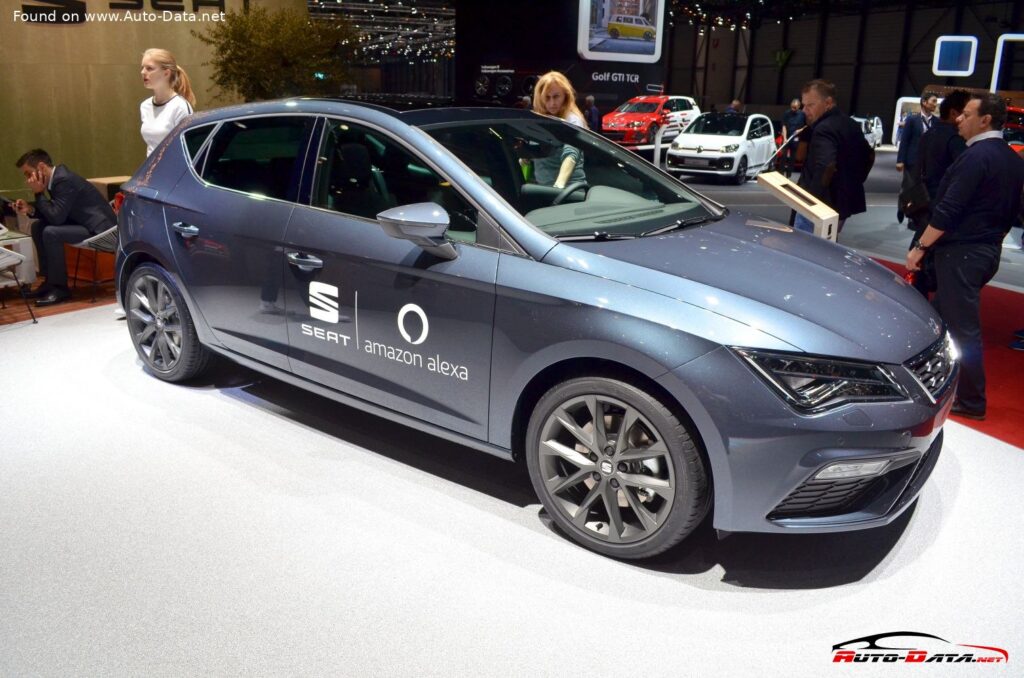
The SEAT Leon III, particularly the facelifted version introduced in 2016, represents a significant evolution in the Spanish automaker’s compact hatchback offering. Positioned as a competitor to vehicles like the Volkswagen Golf, Ford Focus, and Opel Astra, the Leon aimed to deliver a blend of sporty handling, modern design, and efficient engine options. The 1.6 TDI variant, producing 115 horsepower, was a popular choice in European markets, prioritizing fuel economy and reasonable performance for everyday driving. While SEAT has a limited official presence in the United States, the Leon is a well-regarded vehicle in Europe, known for its value and driving dynamics.
SEAT Leon III (Facelift 2016) 1.6 TDI: Overview
The Leon III, launched in 2012, was a pivotal model for SEAT, marking a shift towards a more mature and sophisticated design language. The 2016 facelift brought updated styling, improved technology, and refined engine options. The 1.6 TDI model specifically targeted buyers seeking a practical and economical hatchback. It offered a balance between performance and fuel efficiency, making it suitable for both urban commutes and longer journeys. This generation of the Leon was exclusively a five-door hatchback, foregoing the three-door option of previous iterations to cater to a broader customer base.
Engine & Performance
The heart of the SEAT Leon III 1.6 TDI is a 1.6-liter, four-cylinder turbocharged diesel engine, designated DDYA. This engine produces 115 horsepower at 3250-4000 rpm and 250 Nm (184.39 lb.-ft.) of torque between 1500-3250 rpm. The engine features a diesel commonrail fuel injection system and an intercooler to enhance performance and efficiency. Power is delivered to the front wheels via a five-speed manual transmission. Acceleration from 0 to 100 km/h (0-62 mph) takes 9.8 seconds, while 0-60 mph is achieved in approximately 9.3 seconds. The vehicle boasts a top speed of 197 km/h (122.41 mph). The engine’s design prioritizes fuel economy, achieving a combined fuel consumption of 4 liters per 100 kilometers (58.8 US mpg or 70.6 UK mpg), with CO2 emissions of 105 g/km, meeting Euro 6 emission standards.
Design & Features
The SEAT Leon III (facelift 2016) features a sleek and modern hatchback design. The exterior styling is characterized by sharp lines, a distinctive front grille, and available LED headlights. The interior is well-appointed, with a focus on ergonomics and practicality. The cabin comfortably seats five passengers and offers a minimum trunk capacity of 380 liters (13.42 cu. ft.). Standard features typically included air conditioning, power windows, central locking, and an audio system. Higher trim levels offered features such as a touchscreen infotainment system, navigation, automatic climate control, and various driver-assistance systems like ABS. Safety features were a key consideration, with the Leon III incorporating ABS, and a robust body structure designed to protect occupants in the event of a collision. The vehicle’s dimensions are 4282 mm (168.58 in) in length, 1816 mm (71.5 in) in width, and 1459 mm (57.44 in) in height, with a wheelbase of 2636 mm (103.78 in).
Technical Specifications
| Brand | SEAT |
| Model | Leon |
| Generation | Leon III (facelift 2016) |
| Type (Engine) | 1.6 TDI (115 Hp) |
| Start of production | 2016 |
| End of production | 2020 |
| Powertrain Architecture | Internal Combustion engine |
| Body type | Hatchback |
| Seats | 5 |
| Doors | 5 |
| Fuel consumption (combined) | 4 l/100 km (58.8 US mpg, 70.6 UK mpg, 25 km/l) |
| CO2 emissions | 105 g/km |
| Fuel Type | Diesel |
| Acceleration 0 – 100 km/h | 9.8 sec |
| Acceleration 0 – 62 mph | 9.8 sec |
| Acceleration 0 – 60 mph | 9.3 sec |
| Maximum speed | 197 km/h (122.41 mph) |
| Emission standard | Euro 6 |
| Weight-to-power ratio | 10.3 kg/Hp, 97 Hp/tonne |
| Weight-to-torque ratio | 4.7 kg/Nm, 211 Nm/tonne |
| Power | 115 Hp @ 3250-4000 rpm |
| Power per litre | 72 Hp/l |
| Torque | 250 Nm @ 1500-3250 rpm (184.39 lb.-ft.) |
| Engine layout | Front, Transverse |
| Engine Model/Code | DDYA |
| Engine displacement | 1598 cm3 (97.52 cu. in.) |
| Number of cylinders | 4 |
| Engine configuration | Inline |
| Cylinder Bore | 79.5 mm (3.13 in.) |
| Piston Stroke | 80.5 mm (3.17 in.) |
| Compression ratio | 16.2:1 |
| Number of valves per cylinder | 4 |
| Fuel injection system | Diesel Commonrail |
| Engine aspiration | Turbocharger, Intercooler |
| Engine oil capacity | 4.6 l (4.86 US qt | 4.05 UK qt) |
| Coolant | 8 l (8.45 US qt | 7.04 UK qt) |
| Kerb Weight | 1185 kg (2612.48 lbs.) |
| Max. weight | 1810 kg (3990.37 lbs.) |
| Max load | 625 kg (1377.89 lbs.) |
| Trunk (boot) space – minimum | 380 l (13.42 cu. ft.) |
| Fuel tank capacity | 50 l (13.21 US gal | 11 UK gal) |
| Permitted trailer load with brakes (12%) | 1500 kg (3306.93 lbs.) |
| Length | 4282 mm (168.58 in.) |
| Width | 1816 mm (71.5 in.) |
| Height | 1459 mm (57.44 in.) |
| Wheelbase | 2636 mm (103.78 in.) |
| Front track | 1534-1549 mm (60.39 – 60.98 in.) |
| Rear (Back) track | 1508-1520 mm (59.37 – 59.84 in.) |
| Minimum turning circle | 10.3 m (33.79 ft.) |
| Drivetrain Architecture | Front wheel drive |
| Number of gears and type of gearbox | 5 gears, manual transmission |
| Front suspension | Independent, type McPherson with coil spring and anti-roll bar |
| Rear suspension | Semi-independent, coil spring |
| Front brakes | Ventilated discs |
| Rear brakes | Disc |
| Tires size | 195/65 R15; 205/55 R16; 225/40 R17; 225/40 R18 |
| Wheel rims size | 15; 16; 17; 18 |