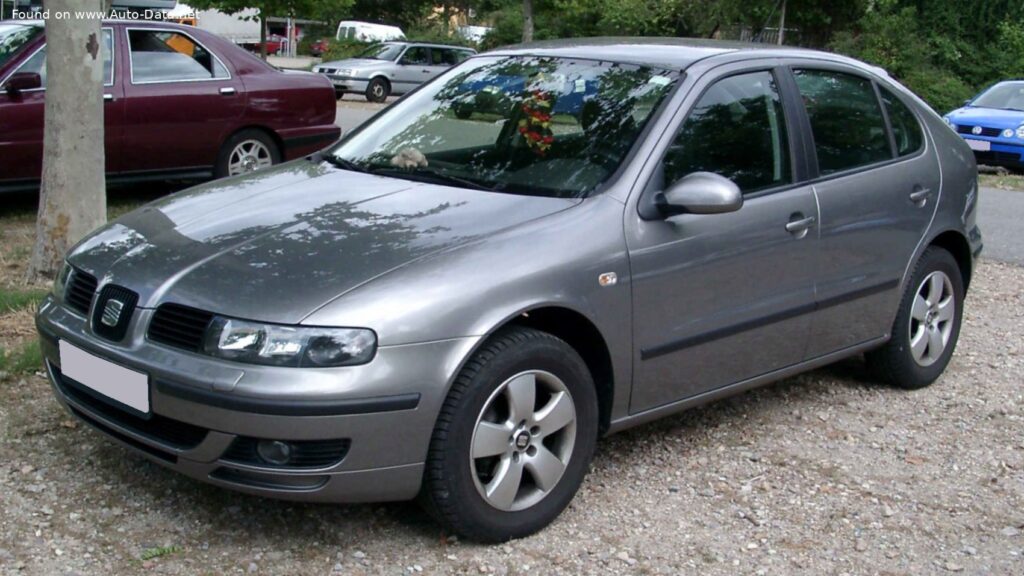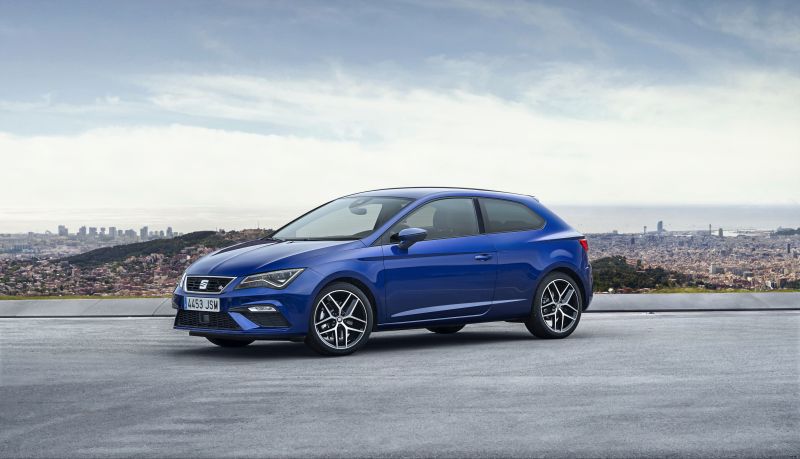
The SEAT Leon III SC Cupra 2.0 TSI (300 Hp) DSG, produced from 2017 to 2018, represents a performance-oriented iteration of SEAT’s popular compact hatchback. As part of the Leon III generation, which underwent a facelift in 2016, the Cupra model aimed to deliver a compelling blend of sporty handling, respectable fuel efficiency, and practical hatchback versatility. While SEAT is not officially sold in the United States, the Leon is a significant vehicle in the European market, competing with models like the Volkswagen Golf GTI, Ford Focus ST, and Opel Astra OPC. The “SC” designation denotes the three-door body style, offering a slightly more coupe-like aesthetic compared to the five-door version.
SEAT Leon III SC Cupra: Performance and Engineering
The heart of the Leon III SC Cupra is the EA888 2.0-liter turbocharged four-cylinder gasoline engine. This engine, designated CJXC, produces 300 horsepower at 5500-6200 rpm and 380 Nm (280.27 lb.-ft.) of torque between 1800 and 5500 rpm. This output translates to a power-to-weight ratio of 4.4 kg/Hp and a torque-to-weight ratio of 3.5 kg/Nm, contributing to its spirited performance. The engine utilizes direct injection combined with multi-port manifold injection, optimizing both power delivery and fuel efficiency. A turbocharger with an intercooler further enhances performance. The engine’s 1984 cm³ (121.07 cu. in.) displacement and inline configuration are typical for this class of performance hatchbacks.
Power is delivered to the front wheels via a six-speed dual-clutch transmission (DSG). This transmission provides rapid and seamless gear changes, enhancing both acceleration and driving engagement. The Leon Cupra achieves a 0-100 km/h (0-62 mph) time of 5.6 seconds, and a 0-60 mph time of approximately 5.3 seconds. Top speed is electronically limited to 250 km/h (155.34 mph). The car incorporates a Start & Stop system to improve fuel economy during urban driving.
Fuel Economy and Emissions
Despite its performance capabilities, the Leon III SC Cupra offers reasonable fuel economy figures according to the New European Driving Cycle (NEDC) standards. Combined fuel consumption is rated at 6.7 l/100 km (35.1 US mpg, 42.2 UK mpg, 14.9 km/l). Urban fuel consumption is 8.4 l/100 km (28 US mpg, 33.6 UK mpg, 11.9 km/l), while extra-urban consumption is 5.7 l/100 km (41.3 US mpg, 49.6 UK mpg, 17.5 km/l). CO2 emissions are rated at 153 g/km, placing it within Euro 6 emission standards.
Design and Features
The SEAT Leon III SC is a three-door hatchback, offering a more compact and sporty profile than its five-door counterpart. The Cupra variant features distinctive styling cues, including a more aggressive front bumper, rear diffuser, and a rear spoiler. The interior is designed with a driver-focused layout, featuring supportive sports seats and a leather-wrapped steering wheel. The car seats five passengers and offers 380 liters (13.42 cu. ft.) of trunk space, expandable to 1150 liters (40.61 cu. ft.) with the rear seats folded down.
In terms of safety and technology, the Leon III SC Cupra is equipped with ABS (Anti-lock Braking System) and features an electric power steering system. The suspension consists of an independent McPherson strut setup at the front and an independent multi-link setup at the rear, providing a balance between comfort and handling. Braking is handled by ventilated discs on all four wheels, measuring 340×30 mm at the front and 310×22 mm at the rear. The car rides on 7.5J x 18 or 8J x 19 inch alloy wheels, fitted with 225/40 R18 or 235/35 R19 tires respectively.
Technical Specifications
| Brand | Seat |
| Model | Leon |
| Generation | Leon III SC (facelift 2016) |
| Type (Engine) | Cupra 2.0 TSI (300 Hp) DSG |
| Start of production | 2017 |
| End of production | 2018 |
| Powertrain Architecture | Internal Combustion engine |
| Body type | Hatchback |
| Seats | 5 |
| Doors | 3 |
| Fuel consumption (economy) – urban (NEDC) | 8.4 l/100 km (28 US mpg, 33.6 UK mpg, 11.9 km/l) |
| Fuel consumption (economy) – extra urban (NEDC) | 5.7 l/100 km (41.3 US mpg, 49.6 UK mpg, 17.5 km/l) |
| Fuel consumption (economy) – combined (NEDC) | 6.7 l/100 km (35.1 US mpg, 42.2 UK mpg, 14.9 km/l) |
| CO2 emissions (NEDC) | 153 g/km |
| Fuel Type | Petrol (Gasoline) |
| Acceleration 0 – 100 km/h | 5.6 sec |
| Acceleration 0 – 62 mph | 5.6 sec |
| Acceleration 0 – 60 mph | 5.3 sec |
| Maximum speed | 250 km/h (155.34 mph) |
| Emission standard | Euro 6 |
| Weight-to-power ratio | 4.4 kg/Hp |
| Weight-to-torque ratio | 3.5 kg/Nm |
| Power | 300 Hp @ 5500-6200 rpm |
| Torque | 380 Nm @ 1800-5500 rpm (280.27 lb.-ft. @ 1800-5500 rpm) |
| Engine layout | Front, Transverse |
| Engine Model/Code | EA888 / CJXC |
| Engine displacement | 1984 cm3 (121.07 cu. in.) |
| Number of cylinders | 4 |
| Engine configuration | Inline |
| Cylinder Bore | 82.5 mm (3.25 in.) |
| Piston Stroke | 92.8 mm (3.65 in.) |
| Compression ratio | 9.3:1 |
| Number of valves per cylinder | 4 |
| Fuel injection system | Direct injection and Multi-port manifold injection |
| Engine aspiration | Turbocharger, Intercooler |
| Valvetrain | DOHC |
| Engine oil capacity | 5.7 l (6.02 US qt | 5.02 UK qt) |
| Coolant | 10 l (10.57 US qt | 8.8 UK qt) |
| Kerb Weight | 1320 kg (2910.1 lbs.) |
| Max. weight | 1880 kg (4144.69 lbs.) |
| Max load | 560 kg (1234.59 lbs.) |
| Trunk (boot) space – minimum | 380 l (13.42 cu. ft.) |
| Trunk (boot) space – maximum | 1150 l (40.61 cu. ft.) |
| Fuel tank capacity | 50 l (13.21 US gal | 11 UK gal) |
| Length | 4236 mm (166.77 in.) |
| Width | 1810 mm (71.26 in.) |
| Height | 1423 mm (56.02 in.) |
| Wheelbase | 2596 mm (102.2 in.) |
| Number of gears and type of gearbox | 6 gears, automatic transmission DSG |