
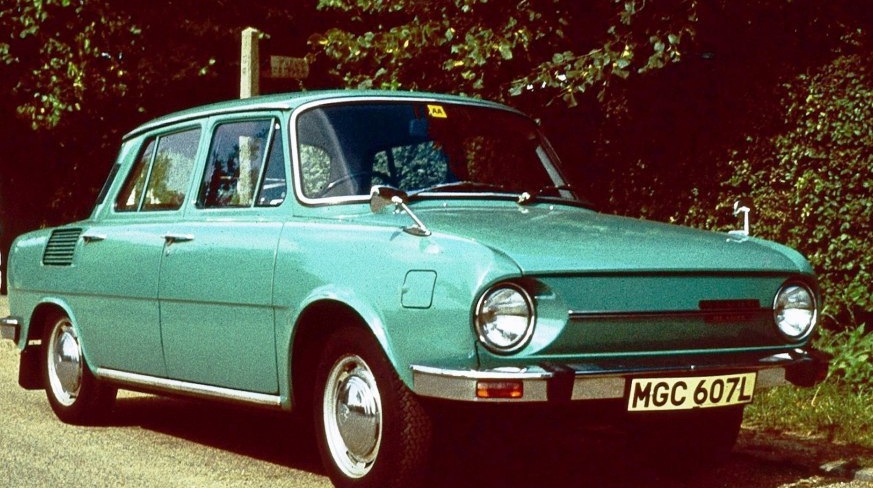
The Skoda 100 1.0, produced between 1969 and 1977, represents a significant entry point into the Skoda model range during a period of substantial development for the Czech automaker. Positioned as the base model within the 100 series, it served as an affordable and practical family sedan, primarily aimed at the Eastern European market and select export destinations. This variant, powered by a modest 1.0-liter engine producing 39 horsepower, played a crucial role in making automobile ownership accessible to a wider segment of the population. It was a key component of Skoda’s strategy to offer reliable transportation in a politically and economically constrained environment. The 100 series itself was a modernization of earlier Skoda designs, incorporating updated styling and mechanical components, and the 1.0-liter version was the most economical and basic offering.
Technical Specifications
| Brand | Skoda |
| Model | 100 |
| Generation | 100 |
| Type (Engine) | 1.0 (39 Hp) |
| Start of production | 1969 |
| End of production | 1977 |
| Powertrain Architecture | Internal Combustion engine |
| Body type | Sedan |
| Seats | 5 |
| Doors | 4 |
| Fuel Type | Petrol (Gasoline) |
| Power | 39 Hp |
| Engine aspiration | Naturally aspirated engine |
| Engine oil capacity | 4 l / 4.23 US qt / 3.52 UK qt |
Powertrain & Engine Architecture
The heart of the Skoda 100 1.0 was a 988cc, inline-four cylinder engine. This engine, designated as the 766 series, was a relatively simple design, reflecting the manufacturing capabilities and technological constraints of the time. It featured a single overhead camshaft (SOHC) operating a two-valve per cylinder configuration. Fuel delivery was managed by a single, down-draft carburetor – typically a Jikov 29 DIF – a common setup for Eastern European vehicles of this era. The engine’s compression ratio was approximately 8.5:1. The engine block was cast iron, providing durability, while the cylinder head was aluminum. The 100 1.0 was exclusively paired with a four-speed manual transmission. This transmission was a fully synchronized unit, a significant improvement over earlier Skoda models. The drivetrain was rear-wheel drive, a conventional layout for sedans of this period. The engine’s modest output was a result of its small displacement and relatively conservative tuning, prioritizing fuel economy and reliability over outright performance.
Driving Characteristics
The Skoda 100 1.0 offered a predictably unhurried driving experience. With only 39 horsepower on tap, acceleration was slow, particularly when fully loaded with passengers and luggage. Top speed was estimated to be around 75 mph (120 km/h), although sustaining that speed for extended periods was not advisable. The four-speed manual transmission was characterized by relatively long gear ratios, further emphasizing fuel efficiency. The clutch was light and easy to operate, making it suitable for novice drivers. Handling was adequate for everyday driving, but the car exhibited noticeable body roll in corners. The suspension, consisting of independent front suspension with trailing arms and a rigid rear axle with leaf springs, provided a reasonably comfortable ride on well-maintained roads. However, it could become harsh on rough surfaces. Compared to the later, more powerful 110 and 120 variants, the 1.0-liter model felt significantly underpowered, especially when climbing hills or overtaking other vehicles. The difference in performance was substantial, making the higher-spec models considerably more desirable for drivers who prioritized speed and responsiveness.
Equipment & Trim Levels
The Skoda 100 1.0 was deliberately spartan in its equipment levels, reflecting its position as the entry-level model. Standard features included basic cloth upholstery, a simple dashboard with minimal instrumentation (speedometer, fuel gauge, and temperature gauge), and manually operated windows and door locks. Heating was standard, but air conditioning was not available. Exterior features were equally basic, with unpainted black plastic trim and small hubcaps. Optional extras were limited, typically including a radio, upgraded upholstery, and whitewall tires. The interior was functional and durable, designed to withstand the rigors of daily use. The dashboard layout was straightforward and easy to understand, prioritizing practicality over aesthetics. The overall impression was one of simplicity and robustness.
Chassis & Braking
The Skoda 100 1.0 utilized a body-on-frame construction, a common practice for vehicles of this era. The chassis was relatively heavy, contributing to the car’s overall weight. The front suspension featured independent trailing arms with coil springs and hydraulic shock absorbers. The rear suspension employed a rigid axle with leaf springs. Braking was provided by drum brakes on all four wheels. The braking system was mechanically operated and lacked power assistance. While adequate for normal driving conditions, the brakes required a firm pedal effort and offered limited stopping power in emergencies. Steering was of the worm-and-roller type, providing a relatively indirect steering feel. The car’s wheelbase was approximately 2480 mm (97.6 inches), providing a stable platform for highway driving.
Market Reception & Comparison
The Skoda 100 1.0 was primarily marketed in Eastern European countries, where it served as a popular and affordable family car. It also saw limited export sales to Western Europe and other regions. Critics generally praised the car’s reliability and durability, but criticized its lack of performance and basic equipment levels. Compared to its siblings, the 110 and 120 models, the 1.0-liter version offered significantly lower fuel economy, but also considerably less power and refinement. The 110, with its 1089cc engine producing around 52 horsepower, provided a much more enjoyable driving experience. The 120, equipped with a 1198cc engine and around 68 horsepower, offered even greater performance. The 1.0-liter model was often seen as a compromise, offering basic transportation at the lowest possible price. Its main advantage was its affordability and ease of maintenance.
Legacy
The Skoda 100 1.0, while not a performance icon, holds a significant place in Skoda’s history. It represented a crucial step in the modernization of the brand and helped to establish Skoda as a reliable and affordable automobile manufacturer. The 766 engine, while simple, proved to be remarkably durable and long-lasting. Today, surviving examples of the 100 1.0 are relatively rare, but they are sought after by collectors and enthusiasts who appreciate their simplicity and historical significance. Parts availability can be challenging, but the car’s robust construction and straightforward design make it relatively easy to maintain. The 100 1.0 serves as a reminder of a bygone era of automotive engineering, when practicality and reliability were prioritized over speed and luxury. It remains a testament to Skoda’s ability to produce durable and affordable vehicles even under challenging circumstances.
