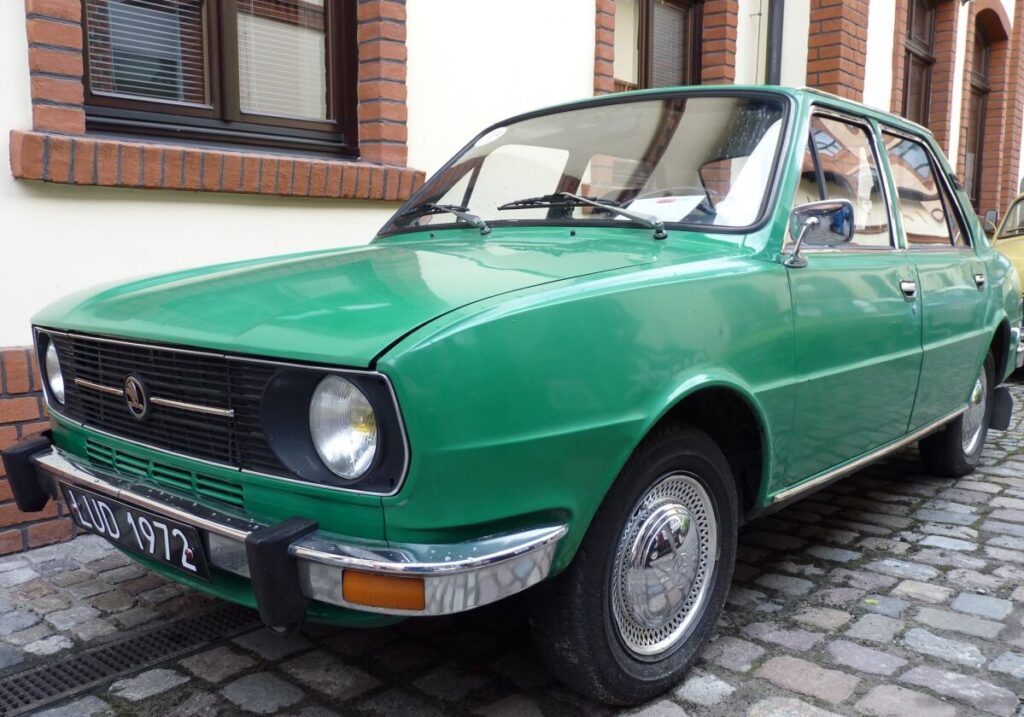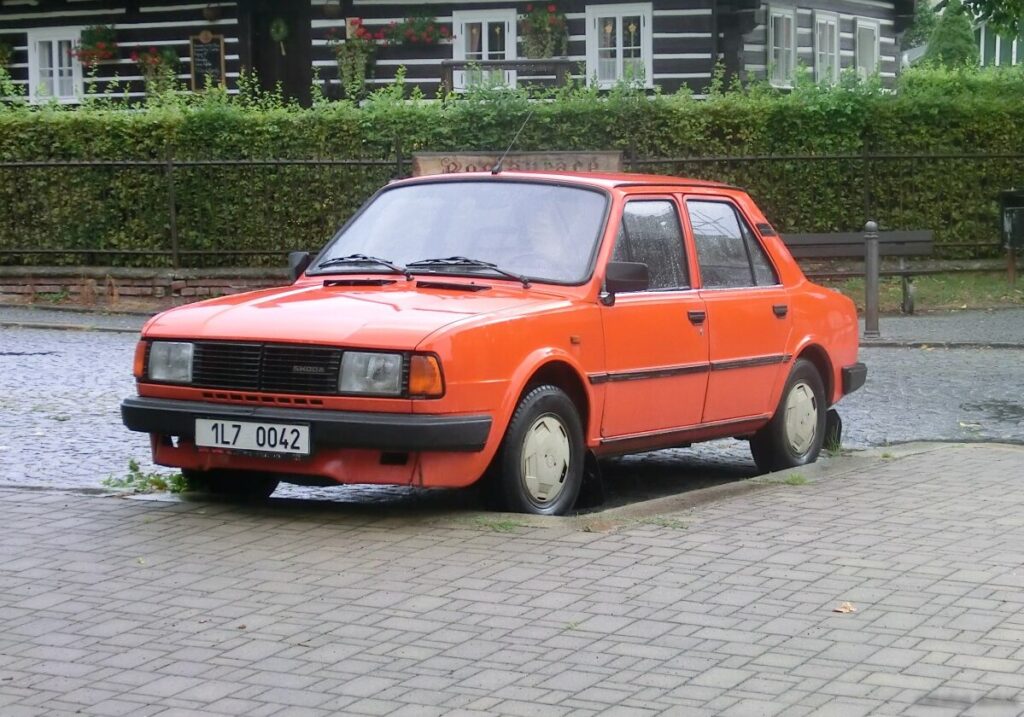
The Skoda 105 and 120, internally designated the 744 series, represented a significant modernization of Skoda’s rear-engine lineup during the late 1980s. Produced from 1987 to 1990, these models were a continuation of the long-running series that dated back to the 1960s, but with updated styling and, crucially, revised engine options. The 120 L variant, equipped with the 1.2-liter engine producing 48 horsepower, served as the entry-level offering, aimed at providing affordable transportation within the Eastern European market and, increasingly, Western Europe as Skoda began to expand its reach. This particular configuration occupied the base trim level, prioritizing economy and practicality over outright performance.
Technical Specifications
| Brand | Skoda |
| Model | 105, 120 (744) |
| Type (Engine) | 1.2 120 L (48 Hp) |
| Start of Production | 1987 |
| End of Production | 1990 |
| Powertrain Architecture | Internal Combustion Engine |
| Body Type | Sedan |
| Seats | 5 |
| Doors | 4 |
| Fuel Type | Petrol (Gasoline) |
| Power | 48 Hp |
| Engine Aspiration | Naturally Aspirated |
| Engine Oil Capacity | 4 l (4.23 US qt | 3.52 UK qt) |
| Coolant Capacity | 11.5 l (12.15 US qt | 10.12 UK qt) |
| Fuel Tank Capacity | 37 l (9.77 US gal | 8.14 UK gal) |
Powertrain & Engine Architecture
The 120 L utilized a 1198cc, inline-four cylinder engine. This engine, while sharing a lineage with earlier Skoda powerplants, featured some refinements aimed at improving reliability and reducing emissions. It was a naturally aspirated engine, relying on atmospheric pressure for intake, and employed a single carburetor for fuel delivery. The engine’s valvetrain consisted of an overhead camshaft operating two valves per cylinder. The engine code for this specific variant is often referenced as 742.13, though variations existed depending on the specific production year and market. The engine was mounted in a rear-engine, rear-wheel-drive configuration, a defining characteristic of the Skoda 105/120 series. The transmission was a four-speed manual gearbox, chosen for its simplicity and cost-effectiveness. While an automatic transmission was offered on some 120 models, it was not typically paired with the base 1.2-liter engine due to the limited power output.
Driving Characteristics
The 1.2-liter, 48 horsepower engine in the 120 L provided modest performance. Acceleration was leisurely, and the car was best suited for urban driving and shorter trips. Top speed was around 80 mph (130 km/h), though sustaining that speed for extended periods was not practical. The rear-engine layout contributed to a unique driving experience, with noticeable rear weight bias. This could lead to oversteer in cornering if pushed aggressively, but generally resulted in predictable handling at moderate speeds. The four-speed manual transmission offered relatively wide gear ratios, prioritizing fuel economy over rapid acceleration. Compared to the more powerful 1.6-liter versions of the 120, the 1.2 L felt significantly slower, particularly when fully loaded with passengers and luggage. The manual transmission, while basic, was relatively robust and easy to operate.
Equipment & Trim Levels
The 120 L represented the base trim level, and as such, it was equipped with fairly basic amenities. Standard features typically included cloth upholstery, vinyl floor covering, and simple steel wheels with hubcaps. The dashboard was functional but lacked extensive instrumentation. A basic AM radio was often included, though it was sometimes an optional extra. Power steering and central locking were not available on the 120 L. Optional extras included upgraded upholstery, a more comprehensive instrument cluster, and a sunroof. The interior was designed for durability and ease of cleaning, reflecting the car’s intended role as a practical and affordable family vehicle. The exterior trim was minimal, with black plastic bumpers and relatively simple chrome accents.
Chassis & Braking
The Skoda 105/120 series utilized a relatively simple chassis design. The suspension consisted of independent trailing arms at the rear and MacPherson struts at the front. The rear suspension geometry was designed to accommodate the rear-engine layout. The 120 L typically featured drum brakes on all four wheels, which were adequate for the car’s performance but lacked the stopping power of disc brakes. A stabilizer bar was fitted to the front suspension to reduce body roll during cornering. The steering was a recirculating ball system, providing relatively heavy but precise steering feel. The car’s relatively light weight (around 2200 lbs or 1000 kg) helped to offset the limitations of the braking and suspension systems.
Market Reception & Comparison
The Skoda 120 L was primarily marketed in Eastern Europe and as an affordable option in Western European markets. Critics generally acknowledged the car’s practicality and affordability, but also noted its limited performance and somewhat dated design. Compared to other cars in its class, such as the Fiat Uno or Renault 5, the Skoda 120 L offered a more spacious interior and a larger trunk, but lacked the refinement and modern features of its Western European competitors. Fuel economy was a strong point, with the 1.2-liter engine achieving around 35-40 mpg (6.7-7.1 L/100km) in typical driving conditions. Reliability was generally good, although the rear-engine layout could present challenges for maintenance and repair. The 1.6-liter versions of the 120 offered significantly better performance, but at a higher price point.
Legacy
The Skoda 120 L, and the 744 series as a whole, represents a transitional period for the Czech automaker. It was one of the last iterations of the rear-engine Skoda design, paving the way for the front-wheel-drive Felicia in the early 1990s. While not a particularly groundbreaking vehicle, the 120 L played an important role in Skoda’s expansion into Western European markets. Today, the 120 L is a relatively rare sight on the road, but it has gained a following among classic car enthusiasts who appreciate its unique design and historical significance. The 1.2-liter engine, while not known for its power, proved to be reasonably durable, and well-maintained examples can still be found in running condition. Parts availability can be a challenge, but a dedicated community of Skoda enthusiasts continues to support the preservation of these classic vehicles.