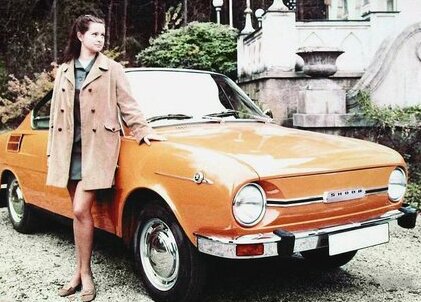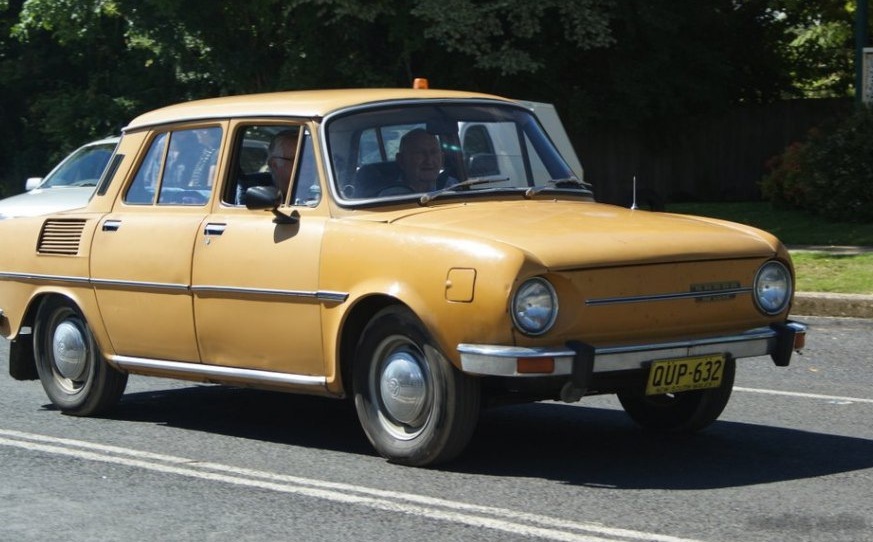
The Škoda 110 1.1 L, producing 45 horsepower, represents a significant iteration in the evolution of Škoda’s rear-engined passenger cars. Produced between 1969 and 1977, it was a mainstay of the Czechoslovakian automotive market and a notable export, particularly within the Eastern Bloc. This variant occupied the entry-level position within the 110 series, offering affordable transportation to a wider audience. It built upon the foundations laid by the Škoda 1000 MB and 1100 MB, refining the design and offering a slightly more powerful, though still economical, engine option. The 110 series, and specifically this 1.1L variant, played a crucial role in modernizing Škoda’s image and establishing a foothold in Western European markets, albeit a modest one.
Technical Specifications
| Brand | Škoda |
| Model | 110 |
| Generation | 110 |
| Type (Engine) | 1.1 L (45 Hp) |
| Start of production | 1969 |
| End of production | 1977 |
| Powertrain Architecture | Internal Combustion engine |
| Body type | Sedan |
| Seats | 5 |
| Doors | 4 |
| Fuel Type | Petrol (Gasoline) |
| Power | 45 Hp |
| Engine aspiration | Naturally aspirated engine |
| Engine oil capacity | 4 l (4.23 US qt | 3.52 UK qt) |
| Coolant capacity | 6.8 l (7.19 US qt | 5.98 UK qt) |
Powertrain & Engine Architecture
The Škoda 110 1.1 L was powered by a 1,108 cc (67.6 cu in) inline four-cylinder, air-cooled engine. This engine, designated as the 742.11, was an evolution of the earlier 1000 MB and 1100 MB engines. It featured a single overhead camshaft (SOHC) operating two valves per cylinder. The engine utilized a Solex JIKOV 32 carburetor for fuel delivery, a common setup for European cars of this era aiming for fuel efficiency. The compression ratio was 8.2:1. While relatively simple in design, the engine was robust and proved reliable, though it lacked the sophistication of more modern engines. The 45 horsepower output was achieved at 5,200 rpm, and peak torque of 68 Nm (50 lb-ft) arrived at 3,100 rpm. The engine was mounted in the rear of the vehicle, a configuration Škoda had employed for decades. The transmission was a four-speed manual gearbox, providing relatively smooth shifts but not particularly sporty performance. An automatic transmission was offered as an optional extra, though it was less common due to its higher cost and perceived impact on fuel economy.
Driving Characteristics
The Škoda 110 1.1 L offered modest performance. Acceleration was leisurely, with a 0-60 mph (0-97 km/h) time estimated around 20-22 seconds. Top speed was approximately 83 mph (134 km/h), though sustaining that speed for extended periods was not recommended. The rear-engine layout contributed to a distinctive driving experience. While it provided good traction in slippery conditions, it also resulted in noticeable understeer when pushed hard. The suspension, consisting of trailing arms at the rear and independent coil springs at the front, provided a reasonably comfortable ride, but it wasn’t particularly refined. The four-speed manual gearbox was well-matched to the engine’s characteristics, allowing drivers to keep the engine in its optimal power band. The optional automatic transmission, while offering convenience, significantly reduced performance and increased fuel consumption. Compared to the later Škoda 110 LS, which featured a 1.2-liter engine with more power, the 1.1 L felt noticeably slower and less responsive.
Equipment & Trim Levels
The Škoda 110 1.1 L was typically equipped with basic, functional features. Standard equipment included cloth upholstery, a simple dashboard with basic instrumentation (speedometer, fuel gauge, and temperature gauge), and manually operated windows. Heating and ventilation were standard, but air conditioning was not available. The interior was relatively spartan, reflecting the car’s affordability. Optional extras included a radio, upgraded upholstery, and whitewall tires. The exterior trim was minimal, with chrome bumpers and relatively simple steel wheels. Later models saw some minor cosmetic updates, such as revised grille designs and different wheel covers. The trim level was largely consistent across the production run, with variations primarily stemming from optional equipment choices.
Chassis & Braking
The Škoda 110 1.1 L utilized a monocoque chassis construction, providing a reasonable level of structural rigidity. The suspension system, as mentioned previously, consisted of trailing arms at the rear and independent coil springs at the front. The braking system was initially equipped with drum brakes on all four wheels. Later models, particularly those destined for export markets, were often upgraded with front disc brakes, offering improved stopping power. The steering was a worm-and-roller system, providing adequate control but lacking the precision of more modern steering setups. Stabilizer bars were not typically fitted to the 1.1 L variant, contributing to its slightly more pronounced body roll in corners. The tires were typically narrow, reflecting the car’s modest power output and focus on fuel economy.
Market Reception & Comparison
The Škoda 110 1.1 L was generally well-received in its primary markets, particularly Czechoslovakia and other Eastern Bloc countries. It offered affordable and reliable transportation, filling a crucial need for personal mobility. Western European reception was more muted, with critics acknowledging the car’s value for money but also pointing out its dated design and lack of refinement compared to competitors like the Volkswagen Beetle or Renault 4. Fuel economy was a strong point, averaging around 35-40 mpg (6.7-7.1 L/100km). Reliability was generally good, although the air-cooled engine required regular maintenance. Compared to the Škoda 110 LS, the 1.1 L offered a lower purchase price but sacrificed performance and some comfort features. The 110 LS was aimed at buyers who were willing to pay a premium for a more refined and capable vehicle.
Legacy
The Škoda 110 1.1 L, while not a groundbreaking vehicle, played a significant role in Škoda’s history. It represented a step towards modernization and helped establish the brand in new markets. The powertrain, while simple, proved to be durable and relatively easy to maintain. Today, the Škoda 110 1.1 L is a popular choice among classic car enthusiasts, particularly in Eastern Europe. Parts availability can be challenging, but a dedicated community of owners and restorers keeps these cars on the road. The 1.1 L variant is often considered the most affordable entry point into Škoda 110 ownership, making it an attractive option for those looking to experience a piece of Czechoslovakian automotive history. Its enduring appeal lies in its simplicity, reliability, and nostalgic charm.